close
Choose Your Site
Global
Social Media
Explore how HLunPACK upgraded chili sauce rollstock from BOPA/PE to a four-layer PET/VMPET/BOPA/low-temperature sealing PE laminate. The design combines barrier protection and puncture resistance with improved hot tack for rotary sealing, targeting up to 100 packs/min after line validation testing.
HLunPACK investigated sauce pouches that leaked 24–48 hours after filling. For 121°C retort processing, it proposed separate laminate and sealing priorities for an 80 packs/min sachet and a 500g four-side-seal pouch, with PET/AL/BOPA/RCPP as a trial structure pending product and process validation.
HLunPACK helped a leading Chinese pet food manufacturer reduce cat treat stick retort laminate thickness from 140 μm toward 100 μm. By combining PET/AL/PA/RCPP film design with longitudinal-seal air cooling, the line achieved stable 50–60 packs/min performance, fewer wrinkles and lower material use.
HLunPACK developed customized automatic shisha packaging solutions for wet, sticky tobacco: a 500g screw-extrusion, cut-off and horizontal HFFS system, plus a 50–100g screw-metering, push-rod VFFS line—ensuring stable weights, clean seals and reliable output.
HLunPACK helped a shisha tobacco producer transition from manual pouch packing to automation while addressing aroma loss after 7–10 days. By replacing basic NY/PE with high-barrier foil or metallized laminates, it improved product protection, machine compatibility, and scalable packaging efficiency.
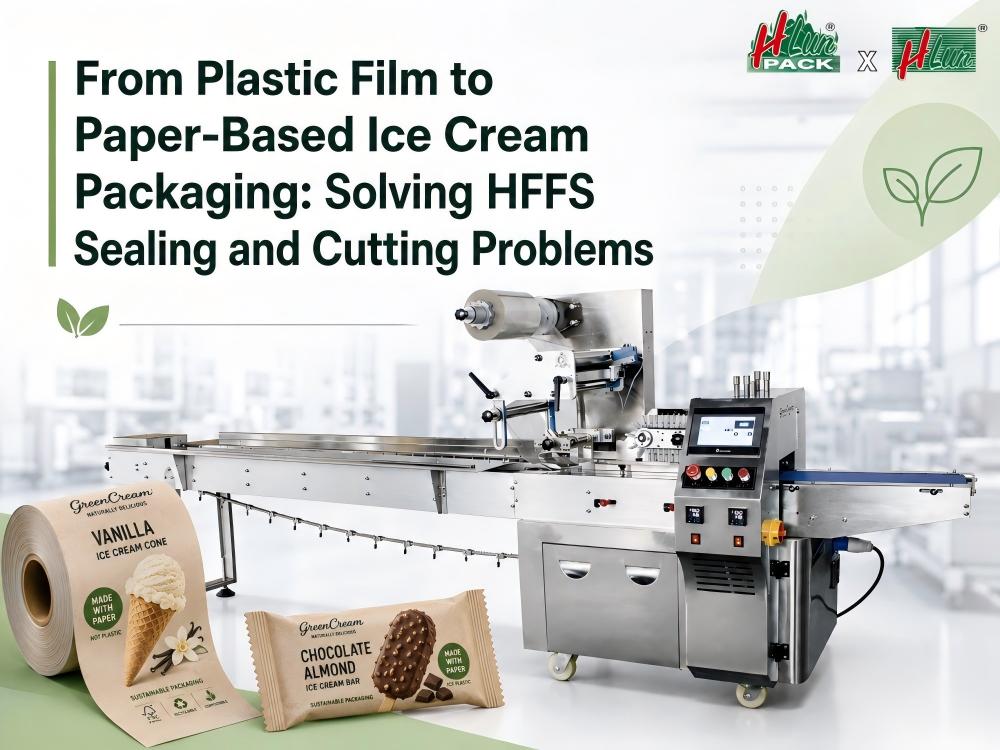
An Australian ice cream manufacturer transitioned from OPP/VMPET/CPP film to paper-based high-barrier rollstock for HFFS wrapping. HLunPACK optimized sealing, cutting, web handling and material parameters to improve seal integrity, package separation and cold-chain performance.
HLunPACK solved a chocolate ball HFFS packaging bottleneck by treating film and machinery as one system. By upgrading to a high-speed flow wrapper and optimizing the film from 52 μm OPP/VMPET/PE to 60–70 μm OPP/VMPET/CPP, the customer increased stable output from about 80 to up to 300 packs per minute.
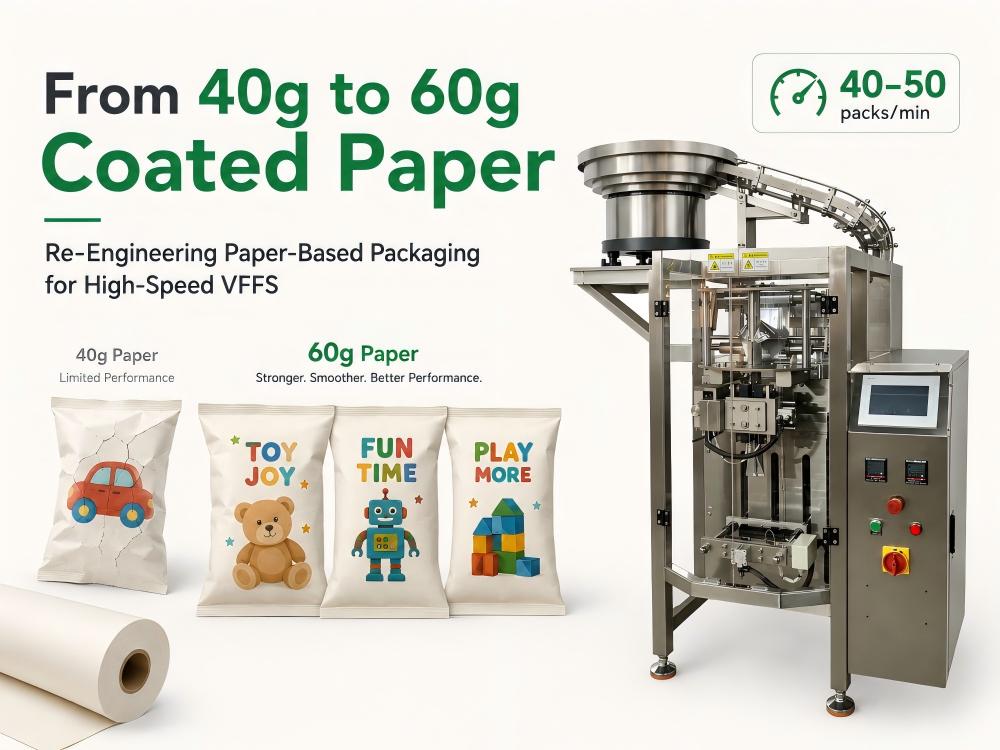
HLunPACK helped a toy exporter achieve stable, paper-based VFFS packaging for Europe and North America. By upgrading from 40g to 60g PE-coated paper and optimizing machine motion, sealing, and pulling force, the line achieved reliable output at 40–50 packs per minute with less tearing and waste.
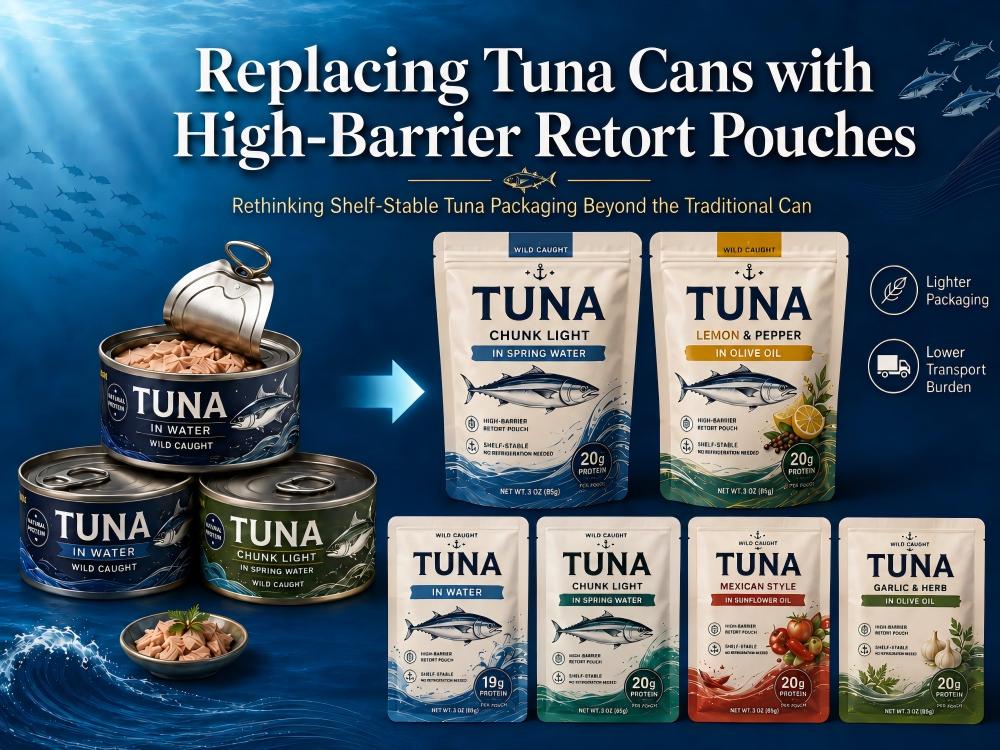
HLunPACK helped a seafood producer explore high-barrier retort pouches as a lightweight alternative to conventional tuna cans. The project focused on reducing empty-pack logistics, improving storage efficiency, enabling flexible portions and flavored products, and maintaining commercially sterile ambient shelf life through validated material, pouch, and retort-process design.
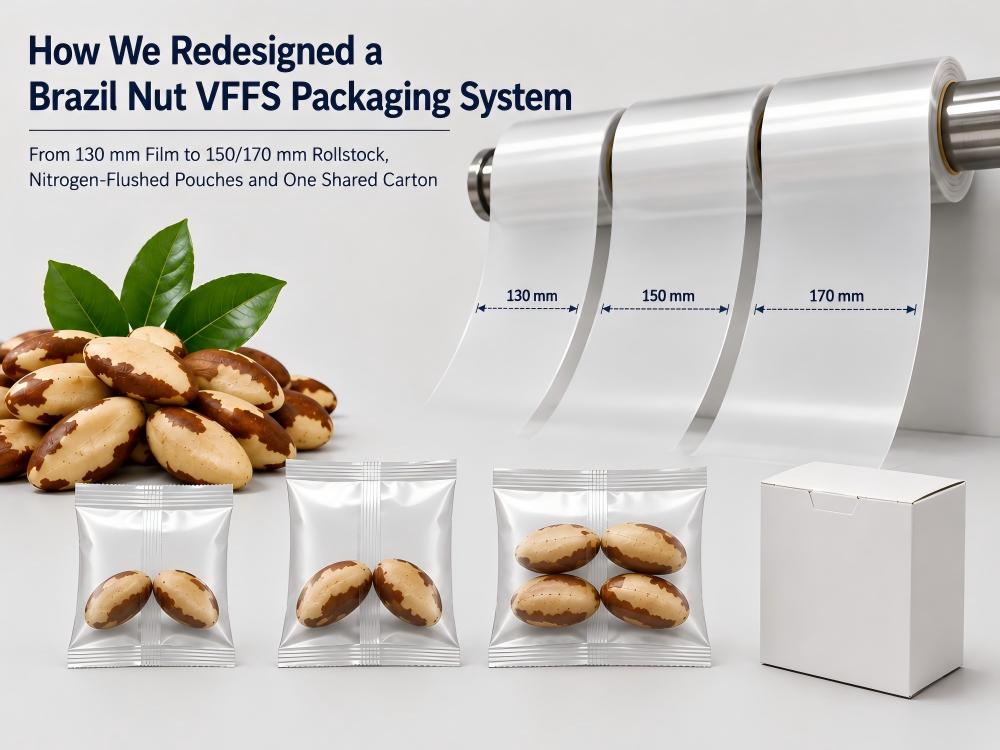
HLunPACK redesigned a Brazil nut packaging line after 130 mm film proved too narrow for stable VFFS feeding. Actual-product tests established 150 mm and 170 mm rollstock formats, nitrogen-flushed pouches, and one shared carton—improving flow, protecting product quality, and simplifying packaging supply.
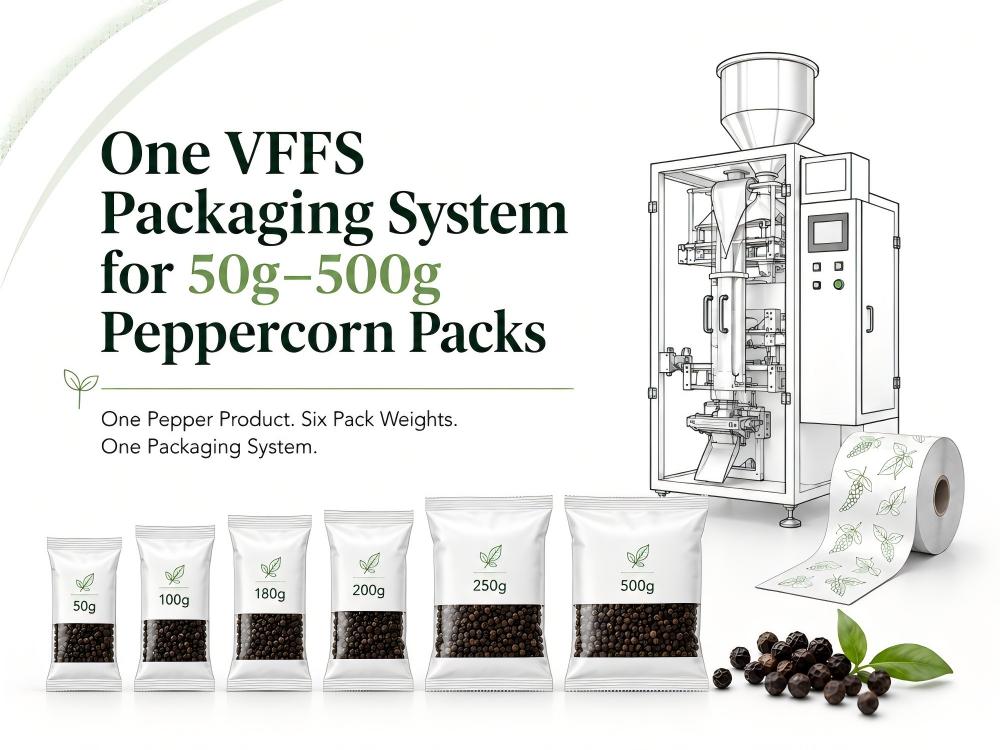
This case study shows how HLunPACK designed one VFFS packaging platform to pack whole peppercorns from 50g to 500g. By combining a linear electronic weigher, back-seal bags, flexible forming-tube design, and shared film-width planning, the solution reduced equipment investment, film inventory, changeovers, and multi-SKU production complexity.
A Southeast Asian jelly manufacturer faced mold and black spot issues in packaging seals despite using high-barrier materials. HLun Pack identified seal contamination caused by inaccurate filling as the root issue. By implementing a servo pump jelly packaging machine, the client achieved precise filling control, eliminated seal defects, and improved product shelf life and quality consistency.