


close
Choose Your Site
Global
Social Media
Views: 209 Author: Tom Publish Time: 2026-09-10 Origin: Hlunpack


A shisha tobacco manufacturer approached HLunPACK while preparing to upgrade from manual pouch packing to automatic packaging. The customer had been using pre-made three-side seal pouches for manual filling and sealing. As production volume increased, labor cost rose and packaging efficiency became difficult to scale.
The new project required two packaging formats:
· Custom printed roll film for future automatic shisha packaging lines
· High-barrier stand-up pouches for larger retail formats
Before developing the new packaging, however, the customer needed to solve a more critical problem: aroma retention.
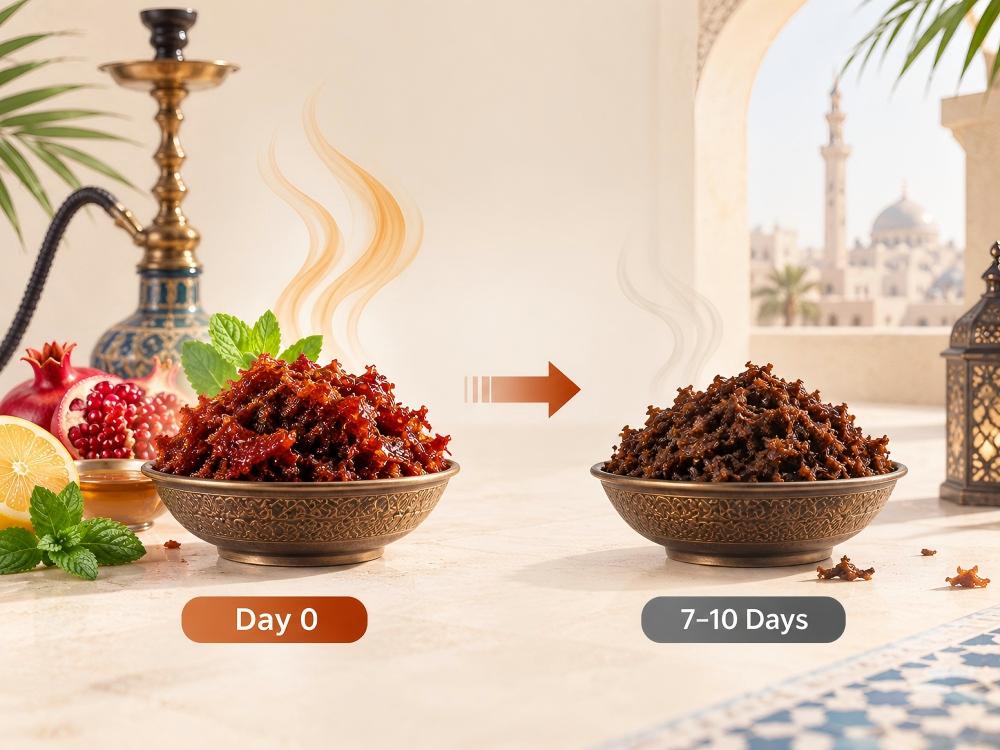
The customer reported that the original aroma and flavor of the shisha became noticeably weaker after approximately 7–10 days of storage under their existing packaging conditions. For a product whose value depends heavily on a distinctive flavor profile, this represented a serious packaging concern.
Shisha tobacco can contain tobacco, glycerin, molasses, flavoring compounds and moisture. Its packaging therefore has to do more than provide mechanical containment. Important performance requirements include:
· Aroma retention
· Oxygen barrier
· Moisture control
· Light protection
· Seal integrity
· Resistance to wet or sticky contents
· Storage stability
The customer did not know the exact laminate structure of the existing pouch, so the material was brought to HLunPACK for laminate identification and layer-separation analysis.
Our analysis indicated a relatively simple structure: NY / PE
The nylon layer contributed toughness and puncture resistance, while PE acted as the heat-sealing layer. However, the laminate did not contain a dedicated high-barrier layer such as aluminum foil or metallized PET.
Key Packaging Principle
Packaging thickness is not the same as barrier performance. A thicker laminate does not automatically provide stronger aroma protection when the required functional barrier layer is missing.
The analysis suggested that the absence of a dedicated aroma, oxygen and light barrier was likely one factor contributing to insufficient flavor retention. We did not treat NY/PE as the sole cause: actual performance can also be influenced by film thickness, seal integrity, residual air, product formulation, storage temperature and package leakage.
Because the customer needed both automatic roll film and pre-made stand-up pouches, the project was not handled with one universal laminate. Each format was designed around its own converting and sealing requirements.
For the customer’s future automatic packaging line, HLunPACK proposed two roll-film structures: a maximum-barrier option and a cost-optimized option.
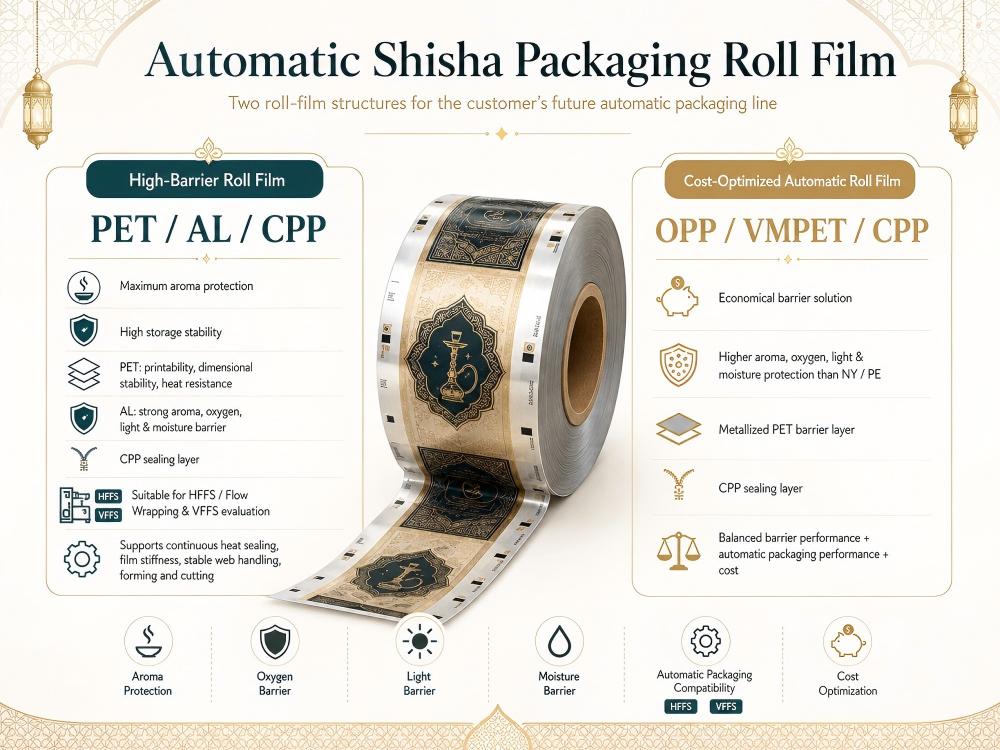
This structure was proposed where maximum aroma protection and storage stability were the priority.
· Good printability
· Dimensional stability
· Heat resistance
· Surface protection
· Stable performance during continuous packaging
The AL layer provides a very high level of protection against aroma transmission, oxygen, light and moisture. For strongly flavored shisha tobacco, this helps reduce exposure to external conditions that can affect aroma stability.
CPP was selected as the sealing layer for this project’s automatic roll-film structures. The customer wanted the film specification to remain suitable for evaluation on both horizontal form-fill-seal / flow-wrapping equipment and vertical form-fill-seal equipment.
Compared with manual pre-made pouches, automatic roll film also needs to support continuous heat sealing, film stiffness, stable web handling, forming performance, cutting stability and production speed. CPP offered a useful combination of thermal stability, stiffness and sealing behavior for the intended applications.
Machine Compatibility Note
CPP does not make a laminate universally compatible with every HFFS or VFFS machine. Final film thickness and sealant grade must still be optimized around the actual sealing jaws, speed, temperature, pressure, forming system and pack dimensions.
For higher-volume products where packaging cost was also important, we proposed OPP / VMPET / CPP. The metallized PET layer provides a higher level of aroma, oxygen, light and moisture protection than the customer’s original transparent NY/PE structure while avoiding the material cost of a full aluminum-foil laminate.
Positioning: Barrier Performance + Automatic Packaging Performance + Cost
A laminate can have excellent barrier properties and still perform poorly on an automatic packaging machine. For roll-film applications, the packaging specification must consider both product protection and machine behavior.
Heat-sealing window: Reliable seals must form repeatedly within the operating temperature and dwell-time range of the machine.
Film stiffness and forming: The laminate must remain stable through rollers, forming sections and sealing stations.
Web handling: Tension, surface friction and dimensional stability influence tracking, wrinkling and registration.
Seal integrity: Wet shisha, glycerin, molasses or small tobacco particles can reach the seal area, making seal strength and contamination tolerance important.
Cutting performance: Film thickness, stiffness and laminate construction influence continuous package separation and cutting stability.
The customer also required pre-made stand-up pouches for larger retail formats. For these pouches, PE was selected as the internal sealing layer to provide flexibility and reliable pouch-making performance.
This structure was proposed for products requiring stronger aroma retention and protection from oxygen, light and moisture. The PE inner layer supports flexible pouch construction, final sealing and repeated flexing in larger pre-made formats.
For cost-sensitive retail applications, PET / VMPET / PE provides a practical balance of aroma protection, light barrier, pouch flexibility, printing appearance and sealing performance.
Packaging Format | High-Barrier Option | Cost-Optimized Option |
Automatic Packaging Roll Film | PET / AL / CPP | OPP / VMPET / CPP |
Stand-Up Pouch | PET / AL / PE | PET / VMPET / PE |
These are project-specific structures proposed for evaluation, not universal standards for every shisha product. Final thickness, sealant grade and laminate configuration should be confirmed according to product formulation, filling weight, pack dimensions, equipment type, production speed, storage conditions and required shelf life.
Previous process: Pre-made three-side seal pouch → manual filling → manual sealing
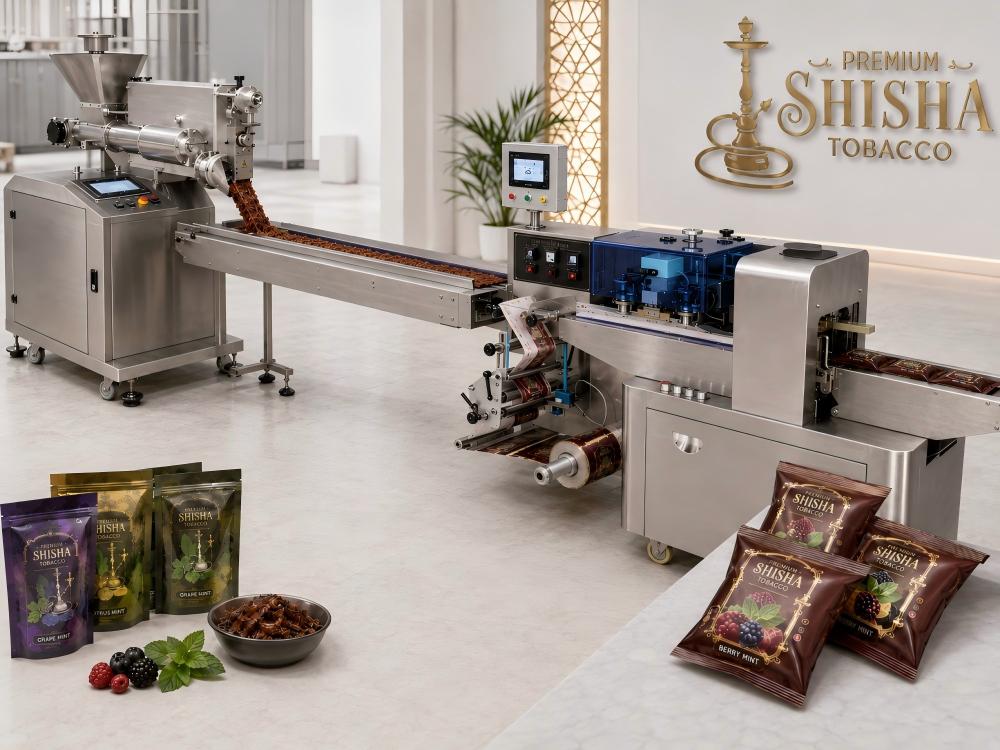
Planned process: Printed roll film → automatic forming → filling → sealing → cutting
As output increased, the customer’s original process required more operators, increased labor cost and limited scalability. Developing the film around the future automatic packaging process allowed the packaging material to become part of the production system rather than a standalone pouch specification.
Changing the laminate structure alone does not guarantee a specific shelf life. Before mass production, HLunPACK recommends validating the selected material using the customer’s actual shisha formulation and final equipment.
· Machine trial
· Heat-sealing window evaluation
· Seal-strength inspection
· Leakage testing
· Filled-product storage test
· Aroma-retention comparison
· Drop testing for larger stand-up pouches
Validation Principle
The final packaging specification should be confirmed using the real product, actual equipment and intended storage environment - not material names or thickness alone.
The objective was not simply to replace NY/PE with a more expensive laminate. The project had to solve two connected challenges: improve aroma protection and prepare the customer for automatic packaging.
The resulting strategy combined:
· High-barrier aluminum-foil structures for maximum protection
· Metallized structures for a more economical barrier option
· CPP-based automatic roll film designed around continuous packaging requirements
· PE-based stand-up pouches for flexible pre-made retail formats
· Material selection linked to HFFS/VFFS machine trials and sealing conditions
HLunPACK provides customized flexible packaging for shisha tobacco and other aroma-sensitive products, including:
· Shisha tobacco packaging roll film
· HFFS and VFFS packaging roll film
· High-barrier laminated film
· Aluminum-foil and metallized packaging
· Shisha stand-up and zipper pouches
· Three-side seal and back-seal sachets
· Custom printed flexible packaging
· Packaging material analysis
· Packaging-machine compatibility support
1.What packaging material is suitable for shisha tobacco?
Explain that the structure depends on aroma barrier, oxygen/light protection, machine type and shelf-life target; reference the project-specific PET / AL / CPP, OPP / VMPET / CPP, PET / AL / PE and PET / VMPET / PE options.
2.Why can shisha lose aroma even when the pouch still looks sealed?
Explain that visual seal appearance alone does not define aroma barrier; laminate structure, actual barrier performance, sealing quality and storage conditions all matter.
3.Can the same shisha roll film run on HFFS and VFFS machines?
Explain that machine compatibility depends on sealant grade, sealing system, film stiffness, COF, temperature, dwell time and speed; CPP was selected for evaluation in this project rather than claimed as universally compatible.
4.Is aluminum foil always required for shisha packaging?
Explain the trade-off between full aluminum high-barrier structures and metallized cost-optimized structures, with final selection verified using the actual product and storage requirements.
HLunPACK | China Flexible Packaging & Packaging Equipment Support


