


close
Choose Your Site
Global
Social Media
Views: 268 Author: HLun PACK Publish Time: 2026-07-16 Origin: Site


Content Menu
● What Is Kraft Paper, Really?
● How The Kraft Pulping Process Works
● Kraft Paper vs Regular Paper
● Main Types of Kraft Paper Used in Packaging
>> Coated Unbleached Kraft (CUK / SUS)
>> Coated Recycled Board (CRB)
● How Kraft Paper Is Used In Modern Packaging
● The Environmental Impact Of Kraft Paper
● Key Benefits Of Kraft Paper For Brands And Manufacturers
>> Sustainability and Market Positioning
>> Brand Experience and Customization
● Turning Kraft Into A Brand Asset
● Sonhab Chocolate's Kraft Packaging
● Choosing Between CUK, SBS, and CRB
● FAQ
Kraft paper has become one of the most strategic materials in modern paper packaging, combining strength, sustainability, and versatility for brands that care about performance and the planet. As a packaging equipment manufacturer focused on paper packaging, we see kraft paper not just as "brown paper," but as a core material in high‑efficiency, eco‑friendly packaging lines for e‑commerce, food, cosmetics, and more. [bdow]
Kraft paper gets its name from the kraft pulping process, a German word meaning "strong," and it lives up to that description. In this process, wood is converted into cellulose pulp and treated with sulfates to dramatically increase its tear resistance and durability compared with regular paper. [bdow]
Unlike conventional printing paper, raw kraft is naturally brown, textured, and more porous, which gives it a distinctly rustic, eco‑friendly appearance that many brands now leverage as part of their visual identity. [bdow]
From an equipment and operations perspective, this material is ideal for:
- Wrapping and cushioning paper in automated lines
- Corrugated boxes for heavy or fragile goods
- Carton and rigid boxes requiring structural strength plus high‑quality branding print. [bdow]
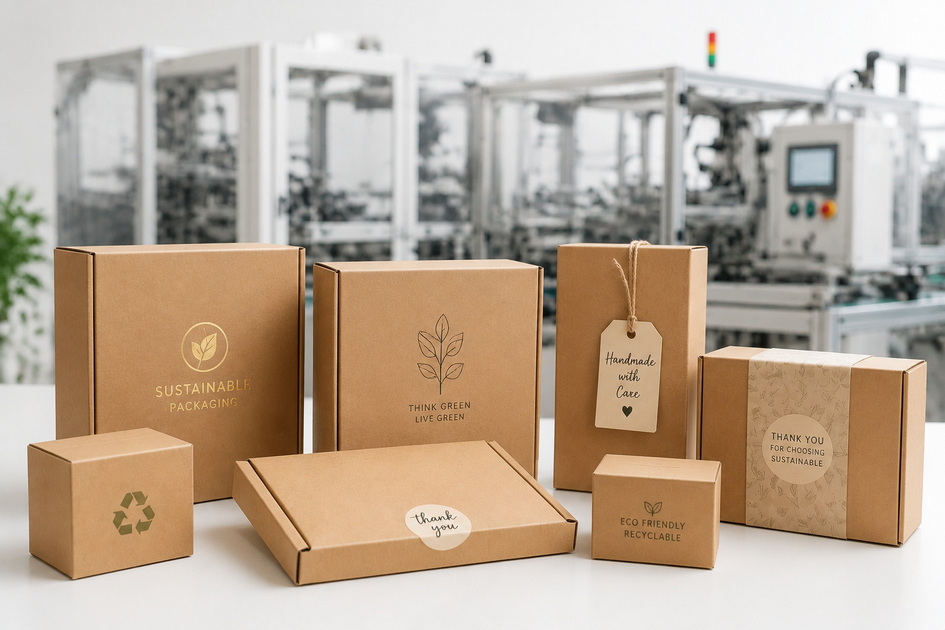
Kraft paper is produced through a specialized chemical pulping process pioneered by Carl F. Dahl in the 1880s. Traditional paper mills mechanically grind wood into pulp, but the kraft process uses sulfate chemicals to selectively remove more lignin (the "glue" in wood) while preserving stronger cellulose fibers. [bdow]
This leads to:
- Higher fiber strength and stiffness
- Better resistance to tearing and bursting
- Improved performance in multi‑layer structures such as corrugated board. [bdow]
When you integrate kraft materials into modern packaging equipment, these properties translate into better box integrity at lower basis weights, allowing brands to reduce material use, shipping weight, and overall packaging costs without compromising protection. [magetop]
Many buyers still ask, "Isn't kraft just paper?" The short answer is no. [bdow]
Compared with regular paper:
- Kraft paper contains more cellulose and less lignin, making it significantly stronger and more tear‑resistant. [bdow]
- Its porous surface is less optimized for fine offset printing, but highly compatible with special finishing like embossing, debossing, and foil stamping. [bdow]
- It tolerates rough handling and high‑speed packing equipment better than standard paper substrates, especially in e‑commerce and industrial applications. [bdow]
From a packaging line perspective, this means fewer damaged boxes, more reliable forming and gluing, and more stable performance when the material meets automated case formers, carton erectors, and sealing systems. [magetop]
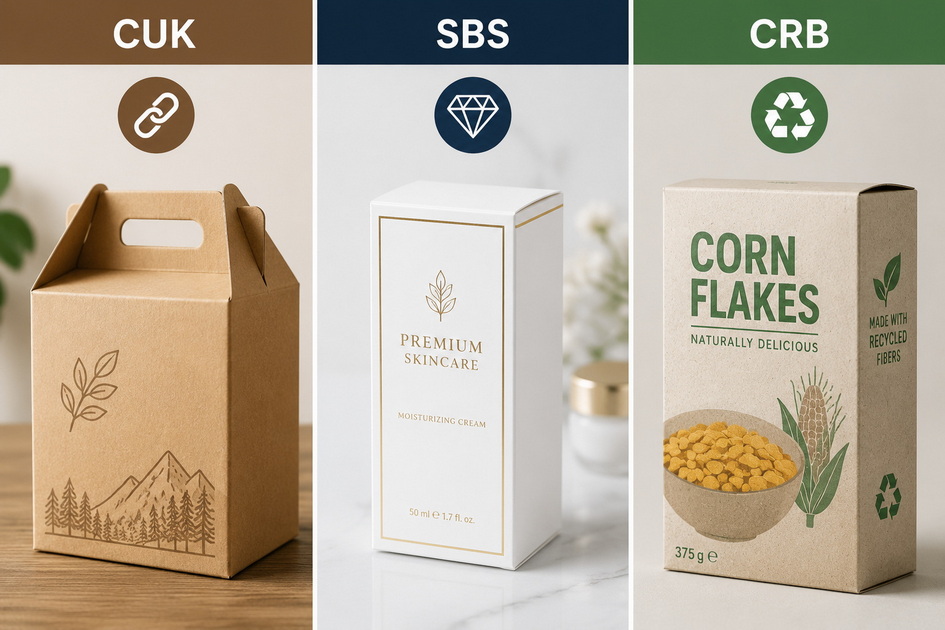
Coated Unbleached Kraft (CUK), also known as Solid Unbleached Sulfate (SUS), is the classic brown kraft substrate many brands start with. It is typically made with around 80% virgin fiber pulp, which delivers high stiffness and tear resistance without excessive thickness. [bdow]
A kaolin clay–titanium dioxide surface coating improves:
- Smoothness
- Printability
- Process stability on automated packaging machinery. [bdow]
CUK is often used for:
- Folding cartons
- Beverage carriers
- Food sleeves and trays that need both strength and a natural appearance. [bdow]
Solid Bleached Kraft (SBS) goes through a bleaching stage that produces a bright white, ultra‑smooth surface optimized for premium graphics. Luxury brands, cosmetics, and high‑end consumer goods often choose SBS for: [bdow]
- Fine, detailed printing
- High‑impact coatings and special finishes
- A clean, premium, shelf‑ready look. [bdow]
The trade‑off is environmental: bleaching adds chemical steps and potential impact, so brands need to balance aesthetic requirements with sustainability goals. Many of our clients now use SBS selectively—reserving it for hero SKUs while shifting everyday packaging to unbleached options. [bdow]
Coated Recycled Board (CRB) is produced from 100% recycled kraft paper, making it one of the most cost‑effective and resource‑efficient kraft-based substrates. [bdow]
Key characteristics include:
- Lower mechanical strength compared with virgin SBS or CUK
- Adequate performance where extreme tear resistance is not essential
- Excellent suitability for cereal boxes, lightweight folding cartons, and promotional packaging. [bdow]
Because CRB is lower cost, many manufacturers use it strategically to reduce packaging spend while still meeting brand and sustainability targets. When combined with optimized packaging equipment, its limitations can be offset through structural design—fluting, inserts, and smart load distribution. [bdow]
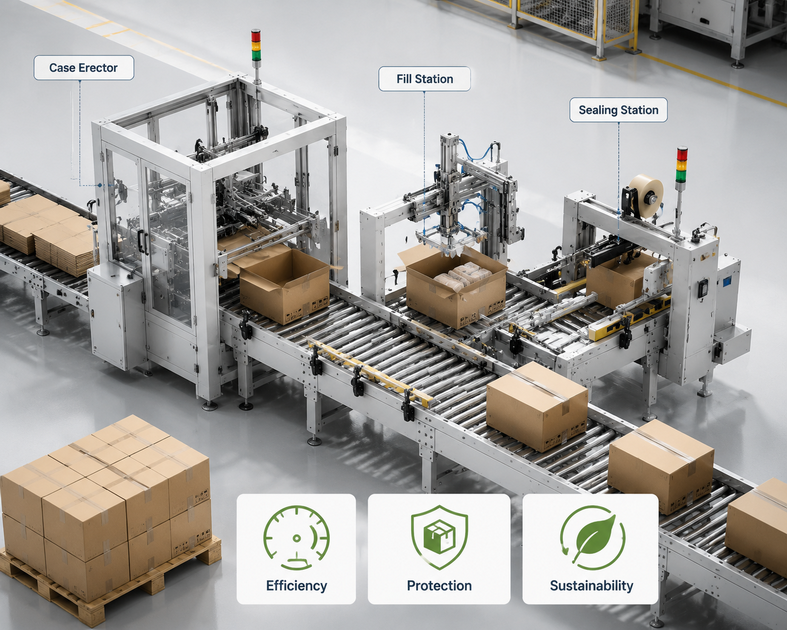
Today, kraft paper is a workhorse material in both corrugated and carton packaging, driven largely by e‑commerce and sustainability pressure. Corrugated kraft boxes protect goods through harsh shipping environments, while lighter kraft carton boxes help brands visually communicate eco‑friendly values. [bdow]
Common applications include:
- E‑commerce shipping boxes designed for repeated drop, crush, and compression forces
- Subscription boxes where unboxing is part of brand storytelling
- Food and confectionery cartons, especially for artisanal and specialty products. [bdow]
Because kraft is so versatile, machinery like case erectors, wrap‑around cartoners, tray packers, and paper‑based void‑fill systems can all be tuned to handle kraft substrates efficiently, increasing throughput and reducing material waste. [magetop]
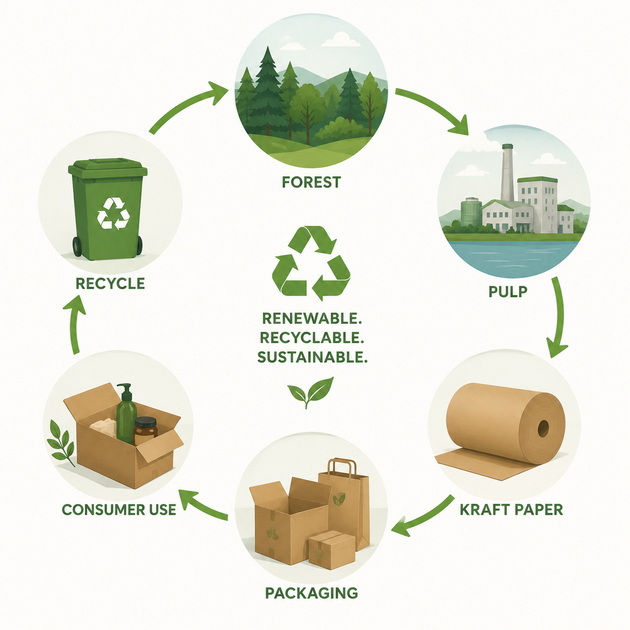
Sustainability is the main reason many brands now prefer kraft paper. It is made from wood pulp, a renewable resource, and is both biodegradable and recyclable, giving it a much lower environmental footprint than plastics or foam. [bdow]
Well‑managed kraft manufacturing uses:
- Responsible forestry practices
- Energy recovery from spent pulping chemicals
- Increasing shares of renewable energy to cut emissions. [bdow]
While the kraft process itself involves chemicals, many mills implement closed‑loop systems and waste‑minimization strategies to reduce environmental impact. For packaging buyers and equipment users, this means you can design high‑performance paper packaging lines that align with ESG goals without sacrificing functionality. [bdow]
Kraft paper offers a combination of mechanical, economic, and branding advantages that make it one of the most future‑proof packaging materials. [magetop]
- Excellent tear resistance and stiffness for demanding transit conditions. [bdow]
- Reliable performance in multi‑layer corrugated structures with tailored fluting. [bdow]
- Reduced risk of product damage and returns in high‑volume shipping environments. [magetop]
- 100% eco‑friendly and naturally degradable, decomposing similarly to fallen leaves. [bdow]
- Recyclable and compatible with FSC‑certified recycled content, supporting circular economy commitments. [bdow]
- Clear, visual signal to consumers that a brand cares about the environment, which can directly support higher sales as sustainability awareness grows. [bdow]
The textured, absorbent surface of kraft paper supports:
- Foil stamping, embossing, and debossing for premium yet natural branding. [bdow]
- High‑impact design using limited color palettes and minimalist graphics.
- Unique unboxing experiences that communicate authenticity and craftsmanship. [bdow]
Modern printing and converting technologies have transformed kraft from "plain brown paper" into a flexible canvas for brand storytelling. [bdow]
You can customize kraft packaging by:
- Adding logos, taglines, and graphic elements through flexo, offset, or digital printing. [bdow]
- Choosing surface finishes—matte or gloss—for different tactile and visual effects. [bdow]
- Introducing colors and patterns that still maintain an eco‑conscious appearance. [bdow]
For brands using automated paper packaging systems, consistent substrate specs and ink adhesion are critical. With the right material choice, our kind of equipment can maintain tight tolerances on box forming, cutting, folding, and sealing, even when complex branding finishes are involved. [magetop]
A compelling example of kraft's potential is Sonhab Chocolate, a small‑batch chocolatier that needed sustainable packaging aligned with its brand values. Working with PakFactory, they adopted kraft paper boxes with foil‑stamped details. [bdow]
This solution allowed them to:
- House delicate, handcrafted chocolates in a durable, protective box. [bdow]
- Use the absorbent kraft surface for handwritten notes, enhancing personalization. [bdow]
- Project a rustic, artisanal look that reinforced their sustainability positioning. [bdow]
The result was a unified brand experience and lower environmental impact, demonstrating how kraft can bridge performance, emotional appeal, and responsible packaging design. [bdow]
From an industry and equipment perspective, selecting the right kraft substrate is a strategic decision, not just a visual preference. [bdow]
- CUK / SUS: Best when your priority is strength, stacking performance, and durability, such as beverage packs or heavy food items. [bdow]
- SBS: Ideal for high‑value retail SKUs where printing precision, color fidelity, and tactile quality drive shelf impact. [bdow]
- CRB: Smart choice for cost‑sensitive, high‑volume applications—cereals, snacks, and promotional cartons—where you can engineer strength through structure instead of material thickness. [bdow]
In practice, many manufacturers combine these substrates across their portfolio and rely on flexible packaging lines that can handle multiple paper grades, basis weights, and converting formats. [magetop]
1. Is kraft paper suitable for food contact applications?
Many kraft grades can be engineered to meet food safety regulations, especially when combined with appropriate coatings or barriers, but you must verify compliance with local and industry standards for each use case. [bdow]
2. Can kraft paper replace plastic in all packaging scenarios?
Kraft can replace plastic in many dry, non‑liquid applications; however, products that require high moisture barriers, transparency, or specific mechanical properties may still need multi‑material solutions or hybrid structures. [bdow]
3. Does printing on kraft always look "rustic"?
Not necessarily—while unbleached kraft has a natural, rustic tone, strategic use of color, white ink underlays, and finishes such as foil or varnish can achieve sophisticated, high‑end visual results. [bdow]
4. How does kraft affect packaging line speed and efficiency?
When machines are correctly calibrated, kraft substrates can run at comparable or even higher speeds than some alternative materials, thanks to their stiffness and predictable behavior in forming and sealing operations. [magetop]
5. Is recycled kraft paper weaker than virgin kraft, and is it worth the trade‑off?
Recycled kraft generally has lower mechanical strength than virgin grades, but in many lightweight applications its performance is more than adequate, making it a cost‑effective and environmentally attractive option. [bdow]
1. PakFactory – *What is Kraft Paper and Why is it a Popular Packaging Choice?*
https://pakfactory.com/blog/what-is-kraft-paper/ [bdow]
2. Magetop – *How SEO Can Transform the Packaging Industry: A Guide for Manufacturers*
https://www.magetop.com/blog/how-seo-can-transform-the-packaging-industry-a-guide-for-manufacturers/ [magetop]
3. Tops – *SEO Blogging Tips: Optimize Your Blog Content for Google*
https://www.tops-int.com/blog/seo-blogging-tips [tops-int]
4. HubSpot – *Blog SEO: How to Search Engine Optimize Your Blog Content*
https://blog.hubspot.com/marketing/blog-search-engine-optimization [blog.hubspot]
5. Semrush – *11 SEO Blog Tips to Rank in Google and Get Cited by AI*
https://www.semrush.com/blog/blog-seo/ [semrush]


