


close
Choose Your Site
Global
Social Media
Views: 255 Author: HLun PACK Publish Time: 2026-07-15 Origin: Site


Content Menu
● The Supercalendering Process
● Key Properties and Performance Advantages
● Glassine vs Other Packaging Papers
● Real-World Applications in Packaging
● Challenges and Limitations You Must Plan For
● Choosing the Right Glassine Grade and Basis Weight
● Expert Equipment Insights from HLun Pack
● Sustainability and Market Outlook
● Practical Steps to Implement Glassine in Your Packaging Line
● Partner with HLun Pack for Glassine Packaging Solutions
Glassine paper is a high-density, translucent, pulp-based paper that offers exceptional grease, moisture, and air resistance, making it a powerful sustainable alternative to plastic and waxed substrates in modern paper packaging workflows. As a packaging equipment manufacturer focused on paper packaging, we increasingly recommend glassine as a strategic material for brands that want premium aesthetics with eco-friendly performance in bags, wraps, and release liners. [futuremarketinsights]
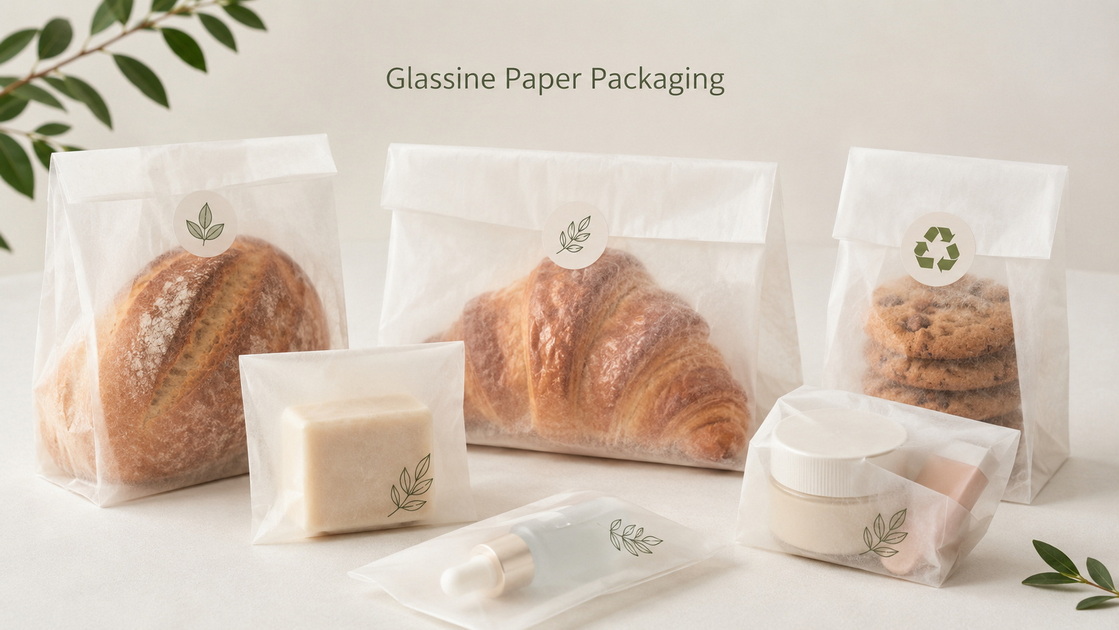
Glassine is not glass, despite its name; it is a super-calendered paper made from hardwood pulp, engineered to be smooth, glossy, and translucent so that the product inside remains visible. It is acid-free, pH-neutral, and resistant to grease, air, and moisture, which makes it ideal for primary and secondary packaging where barrier properties and visual appeal both matter. [packagetheworld]
Unlike regular paper, glassine has a distinct "silky" feel and higher density and stiffness, giving it better tensile strength and folding endurance compared with other thin papers used for bags or wraps. From an equipment perspective at HLun Pack, these mechanical properties translate into stable running behavior on high-speed paper bag machines and overwrapping lines, provided the grammage and calendering grade are correctly matched to the process. [sure-paper]
Glassine production begins with hardwood species such as aspen, oak, and birch, which are converted into pulp in the paper mill. During pulping, lignin and other wood components are carefully removed, because lignin makes paper brittle and prone to discoloration, while its removal contributes to the long-term stability and clarity that glassine is known for. [futuremarketinsights]
After pulping, the fibers are bleached and refined, and the base paper can be modified with additives such as clay, titanium oxide, or calcium carbonate to adjust opacity, brightness, and grade before drying. The result is a carefully engineered base sheet that will later be transformed by supercalendering into the familiar smooth, translucent glassine material used in packaging equipment and converting lines. [sure-paper]
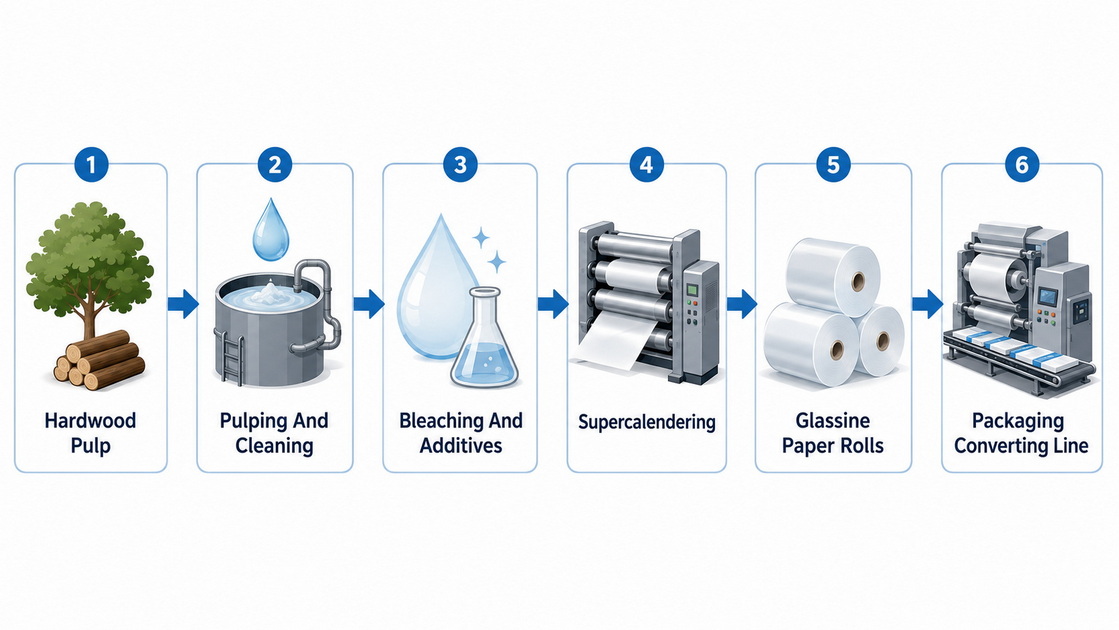
The defining step in glassine papermaking is supercalendering, where the paper web is repeatedly pressed between heated or cooled steel and elastomer rollers (calendars) under high pressure. This process compresses the sheet, aligns fibers, and reduces porosity, giving glassine its characteristic gloss, smoothness, and translucency, while also improving grease and moisture resistance. [futuremarketinsights]
In practice, calendar quality and process control have a direct impact on paper weight, thickness, brightness, and grade, which matters a great deal when you're running automated equipment. At HLun Pack, we actively collaborate with paper suppliers to ensure the supercalendered glassine grades we specify are compatible with our feeding, folding, and sealing modules, minimizing breaks and misfeeds on customer lines. [sure-paper]
Glassine paper combines functional barrier performance with strong visual and tactile qualities that are difficult to achieve with conventional kraft or tissue papers. Its main performance advantages include: [packagetheworld]
- Grease and moisture resistance for food, cosmetics, and industrial components. [futuremarketinsights]
- High density and stiffness, which improve tensile strength and folding endurance in bags and wraps. [sure-paper]
- Translucency and gloss, enabling product visibility and premium shelf appeal without plastic film. [packagetheworld]
- pH-neutral, acid-free composition, making it safe for archival, artwork, and sensitive products. [futuremarketinsights]
Market data reflects these advantages: bleached glassine is projected to account for over 52% of product-type demand in 2026, driven by applications that require high purity and appearance, particularly in food and personal care packaging. The global glassine paper market was valued around USD 3.2 billion in 2025 and is forecast to reach about USD 5.8 billion by 2034, with a CAGR of roughly 6.8% between 2026 and 2034, underscoring long-term industry confidence in this material. [openpr]
Choosing the right packaging material often means balancing printability, barrier performance, recyclability, and cost. Glassine occupies a unique position among paper-based substrates. [packagetheworld]
| Material | Barrier & Strength | Printability | Sustainability |
|---|---|---|---|
| Glassine paper | Strong grease & moisture resistance; high density & stiffness (futuremarketinsights) | Offset/digital possible but challenging; slower drying (futuremarketinsights) | Recyclable & biodegradable wood-pulp material (futuremarketinsights) |
| Vellum | More delicate; easier to tear and damage (futuremarketinsights) | Good printability but lower mechanical strength | Paper-based but less durable in packaging use (futuremarketinsights) |
| Parchment paper | Non-stick, resistant to elements (futuremarketinsights) | Good printability; widely used in baking | Generally not recyclable; limited circularity (futuremarketinsights) |
| Wax paper | Good grease resistance | Difficult to print or customize (futuremarketinsights) | Wax coating complicates recycling and repulping (futuremarketinsights) |
| Cellophane | Clear, good barrier when coated | Customization and printing more complex (futuremarketinsights) | Production is less eco-friendly than glassine (futuremarketinsights) |
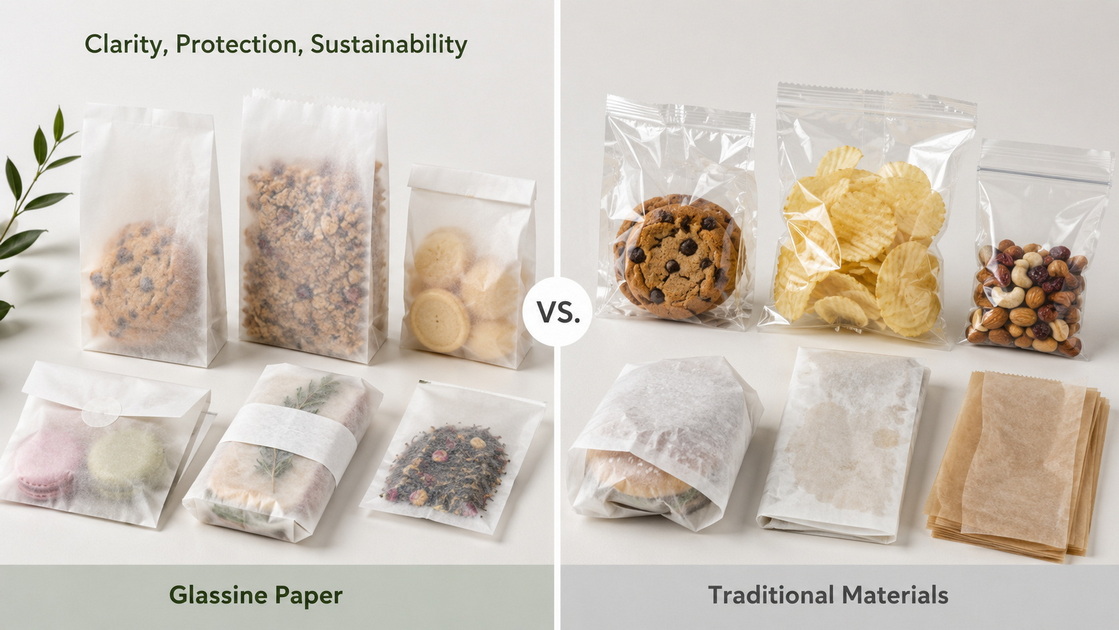
For brands investing in sustainable paper packaging equipment, glassine is often the preferred option because it avoids plastic laminates or wax coatings yet still delivers protective performance, making end-of-life processes (recycling or composting) more straightforward. [packagetheworld]
Glassine is already well established in bag-making, release liners, protective interleaving, and specialty wraps, and its application space continues to expand. [sure-paper]
Common uses include:
- Food packaging: bakery bags, confectionery wraps, sandwich interleaves, and meat separators, where grease resistance and product visibility are essential. [futuremarketinsights]
- Cosmetics and personal care: translucent pouches and sachets that showcase product color and texture while signaling eco-conscious branding. [openpr]
- Pharmaceuticals and medical: release liners for adhesive labels and tapes, plus protective wraps for sensitive items. [sure-paper]
- Archival and artwork protection: interleaving sheets for books, photographs, and prints, thanks to its pH-neutral, acid-free formulation. [futuremarketinsights]
- Laboratory weighing papers and specimen storage: anti-static, non-stick surfaces make handling powders and samples more accurate and clean. [sure-paper]
At HLun Pack, we particularly focus on glassine bag and pouch production, designing equipment that optimizes feeding, folding, and sealing for lightweight to medium-weight grades used in food, cosmetic, and small-component packaging. [sure-paper]
Despite its advantages, glassine is not a "drop-in" replacement for all papers, and ignoring its limitations can lead to disappointing results. [futuremarketinsights]
The most discussed constraint is printability: glassine's low porosity means offset and digital inks absorb more slowly, extending drying times and increasing the risk of smearing or damaged designs. Printers must adjust ink formulations, drying conditions, and coverage to achieve sharp, durable visuals, often with more testing than on standard folding carton board. [packagetheworld]
Embossing and heavy texturing are also possible but can be less crisp, as glassine's tight, smooth structure may feel crinkly compared to corrugated or multi-ply boards. Finally, its smooth surface can complicate adhesive bonding and heat sealing, especially on silicone-coated grades used as release liners, which is why expert equipment configuration and adhesive selection are crucial. [futuremarketinsights]
From a converting and equipment standpoint, basis weight (grammage) and grade selection are critical to unlock glassine's full potential. Typical basis weight ranges and recommended uses include: [sure-paper]
- Lightweight (17–40 gsm): high-transparency interleaving and food separators where flexibility matters more than stiffness. [sure-paper]
- Standard (40–60 gsm): general food bags and standard release liners used on labeling lines. [sure-paper]
- Medium (60–90 gsm): label and tape liners that require higher strength to withstand high-speed dispensing. [sure-paper]
- Heavy (90–200 gsm): specialty labels and heavy-duty release applications where dimensional stability is critical. [sure-paper]
In addition to basis weight, you can specify standard, antistatic, colored, or silicone-coated glassine, each designed for particular performance requirements, such as static control in printing and converting or optimized release characteristics for pressure-sensitive adhesives. HLun Pack's configuration process typically starts with an audit of your product, line speed, sealing method, and downstream automation, then matches a glassine grade that balances machinability with aesthetics and barrier performance. [sure-paper]
As a paper packaging machinery and integrated packaging solutions provider, HLun Pack has seen glassine move from niche to mainstream in several segments over the last five years. Drawing on commissioning projects in food, personal care, and industrial labeling, several best practices consistently deliver better results: [quickcreator]
1. Optimize feeding systems for smooth, low-porosity paper
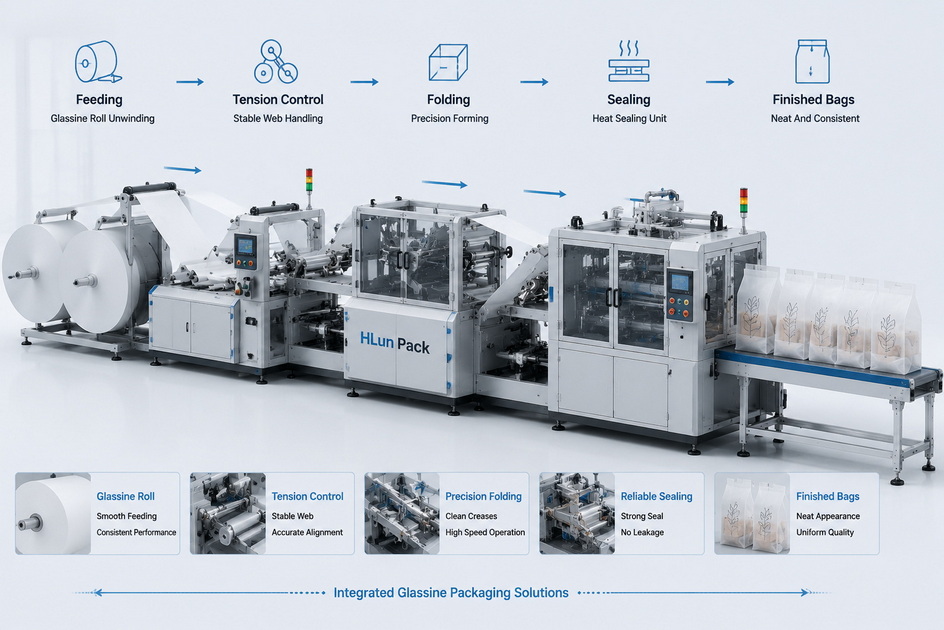
Because glassine has a slick surface, precision tension control and anti-slip feeding systems are essential to prevent misalignment and wrinkling at high speed. We often recommend fine-tuned servo controls and guided infeed designs for narrow web applications. [sure-paper]
2. Match adhesives and sealing technology to glassine grade
For uncoated and wax-coated glassine, high-tack adhesives, adjusted temperature, and pressure profiles are often sufficient for reliable sealing. For demanding applications, laminating glassine with PE or PLA films can create heat-sealable structures that run smoothly on standard heat-seal modules. [sure-paper]
3. Plan for small-batch testing before scaling
We advise customers to run small trial batches to optimize adhesive volumes, nip pressure, sealing dwell time, and line speed, especially when transitioning from kraft or film-based bags to glassine. This reduces downtime and scrap during full-scale rollout. [sure-paper]
4. Integrate sustainability messaging with technical choices
Glassine's recyclability and biodegradability are strong marketing levers, but they must be backed by credible specifications and documentation. HLun Pack supports customers with data sheets and line-level support so packaging and marketing teams can communicate sustainability claims confidently. [packagetheworld]
Rising concern about plastic waste and regulatory pressure on single-use plastics have pushed brands to seek fiber-based alternatives that maintain performance. Glassine meets this demand by offering a wood-pulp-based, fully recyclable or biodegradable substrate that often eliminates the need for additional plastic or wax layers. [magetop]
Analysts project the glassine paper market to reach approximately USD 4.5 billion by 2036, with bleached grades dominating due to their superior purity and appearance. For packaging manufacturers and brand owners, this signals a material class that is not just a temporary trend but a long-term strategic choice, particularly in food, cosmetics, logistics labeling, and specialty bags. [fnfresearch]
For packaging teams evaluating glassine, a structured rollout reduces risk and accelerates ROI. Based on HLun Pack project experience and industry best practices, we recommend:
1. Define your use cases clearly
Start with 1–2 high-impact applications, such as bakery bags, translucent cosmetic pouches, or label release liners, where glassine's barrier and aesthetic benefits are most visible. [futuremarketinsights]
2. Engage suppliers and equipment partners early
Work with your paper supplier and machine provider (e.g., HLun Pack) to align basis weight, calendering grade, coatings, and sealing methods with existing or planned lines. This prevents surprises around web handling and adhesion. [kerkarmedia]
3. Run controlled pilot trials
Use pilot runs to fine-tune machine settings (tension, nip pressure, sealing temperature and dwell, speed) and capture real data on waste, uptime, and throughput. Document these parameters in standard operating procedures for plant-wide rollout. [kerkarmedia]
4. Integrate sustainability and brand messaging
Once technical performance is validated, coordinate with marketing to highlight transparency, eco-friendliness, and recyclability in product storytelling, on-pack claims, and digital content. Many B2B buyers now actively search for terms like "glassine paper bags" and "eco-friendly translucent packaging." [magetop]
5. Measure performance and iterate
Track metrics such as line efficiency, material yield, defect rates, and customer feedback, then work with partners to refine material specs or equipment configuration where needed. This continuous improvement mindset is key to maintaining both performance and cost competitiveness. [gushwork]
If you are exploring glassine paper for bags, wraps, or release liners, partnering with a packaging equipment specialist is the fastest way to move from lab concept to production reality. [gushwork]
At HLun Pack, we design and manufacture paper packaging machinery and integrated solutions that are fully compatible with glassine and other sustainable paper substrates, from bag-making and overwrapping systems to customized sealing and converting modules. [kerkarmedia]
Get in touch with HLun Pack's engineering team to discuss your specific application, evaluate suitable glassine grades, and design a packaging line that delivers both performance and sustainability. Whether you need to retrofit existing equipment or build a new glassine-focused line, we can help you implement a solution that is optimized for modern B2B packaging demands. [quickcreator]
1. Is glassine paper fully recyclable?
Glassine is produced from wood pulp and, when uncoated or appropriately specified, is generally recyclable and biodegradable within standard paper waste streams, making it a strong choice for brands aiming to reduce plastic usage. [packagetheworld]
2. Can I print complex designs on glassine?
Yes, but glassine's low porosity and smooth surface mean ink drying is slower and smear risk is higher, so printers must adjust ink types, coverage, and drying profiles to achieve reliable results. [packagetheworld]
3. Is glassine suitable for high-speed bag-making machines?
With the right basis weight, grade, and tension control, glassine can run successfully on high-speed bag-making equipment; many food and cosmetic brands already use it for bags and wraps. [kerkarmedia]
4. How does glassine compare to parchment paper environmentally?
While parchment offers strong non-stick performance, it is often not recyclable, whereas glassine typically can be recycled or biodegraded, providing better alignment with circular packaging strategies. [packagetheworld]
5. What industries benefit most from switching to glassine?
Industries such as bakery and confectionery, cosmetics and personal care, pharmaceuticals, and archival/printing see strong benefits from glassine's combination of barrier performance, translucency, and sustainability. [openpr]
1. PakFactory Blog – "What is Glassine Paper?" (accessed 2026)
https://pakfactory.com/blog/what-is-glassine-paper/ [futuremarketinsights]
2. PackageTheWorld – "Glassine Paper Packaging: Properties, Uses & Grades" (2026)
https://www.packagetheworld.com/blog/glassine-paper-packaging-properties-uses-guide [packagetheworld]
3. Future Market Insights – "Glassine Paper Market | Global Market Analysis Report" (2026)
https://www.futuremarketinsights.com/reports/glassine-paper-market [futuremarketinsights]
4. OpenPR – "Global Glassine Paper Market to Reach USD 4.5 Billion by 2036" (2026)
https://www.openpr.com/news/4446299/global-glassine-paper-market-to-reach-usd-4-5-billion-by-2036 [openpr]
5. FnF Research – "Glassine Paper Market Size, Growth Research Report [2026–2034]"
https://www.fnfresearch.com/key-players/glassine-paper-market [fnfresearch]
6. Sure Paper – "Glassine Paper in Bag-Making Applications: Comprehensive Guide" (2025)
https://www.sure-paper.com/news/glassine-paper-in-bag-making-applications-comprehensive-guide/ [sure-paper]
7. Magetop – "How SEO Can Transform the Packaging Industry: A Guide for Manufacturers" (2025)
https://www.magetop.com/blog/how-seo-can-transform-the-packaging-industry-a-guide-for-manufacturers/ [magetop]
8. Kerkar Media – "SEO for Packaging Manufacturers" (2026)
https://kerkarmedia.com/seo-for-packaging-manufacturers/ [kerkarmedia]
9. QuickCreator – "SEO for Packaging Manufacturers: 2025 Best Practices" (2025)
https://quickcreator.io/blog/seo-for-packaging-manufacturers-2025-best-practices/ [quickcreator]
10. Gushwork – "SEO Packaging Manufacturers" (2026)
https://www.gushwork.ai/blog/seo-packaging-manufacturers [gushwork]


