


close
Choose Your Site
Global
Social Media
Views: 285 Author: HLun PACK Publish Time: 2026-07-11 Origin: Site


Content Menu
● What Are Custom Box Inserts in Paper Packaging?
● Core Design Considerations for Custom Box Inserts
>> Product Weight and Fragility
>> Space Management and Multi‑Product Layout
>> Product Placement and Weight Distribution
● Materials for Custom Box Inserts in Paper Packaging
>> Comparing Common Insert Materials
>> Sustainability and Brand Perception
● Insert Design from the Customer's Perspective
>> Protection Without Frustration
>> Using Inserts as a Communication Channel
>> Performance Testing for Paper Inserts
>> Designing Inserts for Automated Packaging Lines
>> OEM/ODM Collaboration in Insert Engineering
● Practical Design Checklist for Custom Box Inserts
● When to Work with HLun Pack for Paper Packaging Inserts
>> 1. What is the main advantage of custom paper box inserts over generic fillers?
>> 2. Can paper-based inserts protect heavy or fragile products?
>> 3. How do custom inserts improve the unboxing experience?
>> 4. Are sustainable inserts more expensive than conventional options?
>> 5. How early should I involve a packaging equipment partner like HLun Pack in insert design?
In the paper packaging world, custom box inserts are no longer a "nice-to-have" – they are a core element of product protection, branding, and cost-efficient logistics. As a packaging equipment manufacturer at HLun Pack, I've seen firsthand how a well‑engineered insert can be the difference between a memorable unboxing experience and costly product damage. [packmojo]
Custom inserts transform a simple paper box into a tailored protective system that controls how products sit, move, and feel inside the packaging. When you combine the right insert design with automated paper packaging machinery, you get scalable, sustainable solutions that work for ecommerce brands, manufacturers, and OEM/ODM projects alike. [gleepackaging]
Custom box inserts are structural components placed inside a box to hold products in position, reduce movement, and enhance presentation. They are typically designed around the product's dimensions, weight, and fragility, and can be made from paperboard, corrugated board, molded pulp, or hybrid combinations with foam or EVA. [packaging]
Key roles of paper-based inserts:
- Protect products from impact and abrasion during transport. [casesbysource]
- Organize multiple SKUs or components into a single cohesive kit. [qxpacks]
- Elevate perceived value and unboxing experience for retail and ecommerce. [clearprint]
- Support branding and storytelling with printed graphics, messages, or QR codes. [cefbox]
From a machinery perspective, well‑designed inserts also enable stable, repeatable feeding and forming, which is essential for high‑speed automated packaging lines.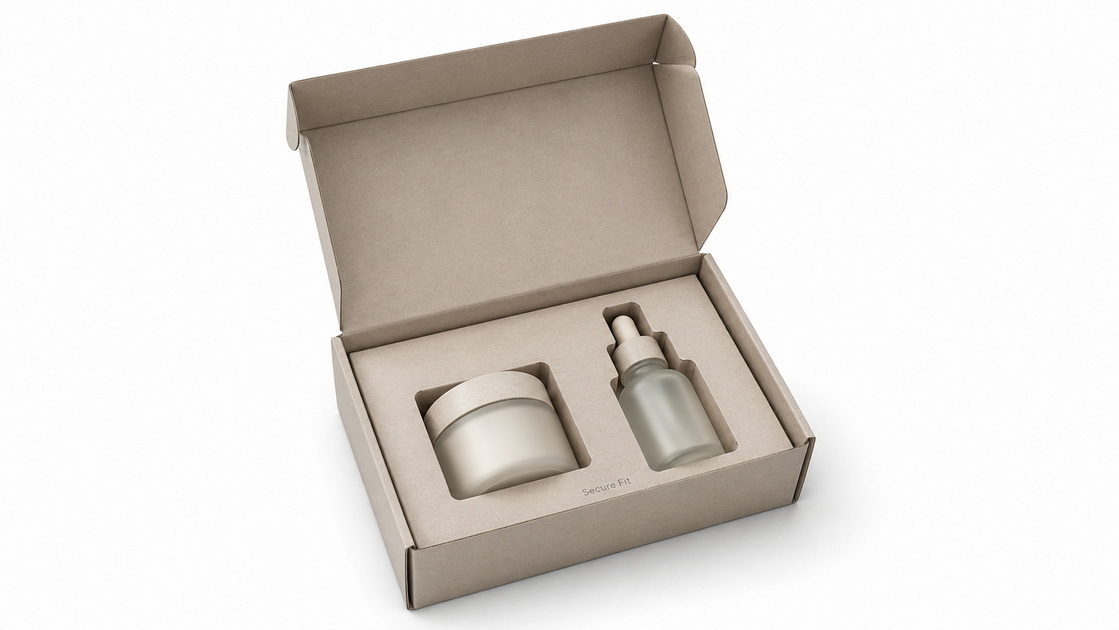
The first question any structural packaging engineer asks is: "How heavy and how fragile is this product?" Weight drives material selection and wall thickness, while fragility dictates cushioning and tolerance for movement. [packmojo]
- Light, non‑fragile items can often use paperboard or thin corrugated inserts with simple cut‑outs. [packaging]
- Heavier or highly fragile items may need reinforced corrugated structures, multi‑layer paper constructions, or hybrid paper–foam solutions. [casesbysource]
From an equipment standpoint, heavy‑duty inserts must still be machine‑friendly: they need precise die‑cuts, consistent scores, and fold lines that will run smoothly through feeding, gluing, and forming systems.
The purpose of the packaging dramatically changes insert requirements. [clearprint]
- Shipping-focused packaging: Prioritizes shock absorption, stack strength, and ISTA‑style drop performance; corrugated and molded pulp inserts are common. [packmojo]
- Display or gift packaging: Prioritizes aesthetics, surface quality, and tactile experience; premium paperboard, wrapped board, and velvet‑covered inserts may be used. [premierrigidboxes]
For HLun Pack and similar manufacturers, this distinction is critical when configuring packaging machines: shipping inserts often run on high‑speed lines, while display inserts may require slower, more precise folding and placement equipment.
In multi‑product kits – cosmetics sets, electronics accessories, sample boxes – space management is both an engineering challenge and a user-experience opportunity. [qxpacks]
Important layout considerations:
- Maintain buffer space between products to prevent collision and abrasion. [blog.soopak]
- Avoid walls that are too thin to cut accurately or that tear under load. [qxpacks]
- Design the insert first, then finalize the outer box size around it to maximize protection. [packmojo]
A well‑planned insert layout also simplifies automation: consistent pocket spacing, standardized modules, and clear registration points allow insert‑placement equipment to perform reliably at scale.
Even with the correct material, poor placement can lead to structural failure or awkward handling. [casesbysource]
- The insert should distribute weight evenly across the base to prevent bowing or collapse. [clearprint]
- Heavy items should sit close to structural support points, not suspended on thin paper walls. [qxpacks]
- Asymmetrical layouts need additional reinforcement or clever geometry to remain balanced. [premierrigidboxes]
For operators, balanced inserts mean cartons feel stable in the hand, move smoothly on conveyors, and stack more safely in warehouses.

While HLun Pack focuses on paper packaging equipment, many projects involve paper-centric materials with occasional hybrid use of foam or EVA for extreme protection. [qxpacks]
Below is a concise view of widely used materials:
| Insert Material | Typical Use Case | Key Advantages |
|---|---|---|
| Paperboard | Light products, retail sets | Cost-effective, printable, good for branding packmojo |
| Corrugated board | Heavier products, ecommerce shipping | Strong, shock-absorbing, compatible with automation packmojo |
| Molded pulp | Eco-conscious brands, electronics, devices | High protection, sustainable image, custom-fit qxpacks |
| Foam/EVA (hybrid) | Highly fragile, precision components | Superior cushioning, custom cavities casesbysource |
| Wrapped rigid board | Luxury boxes, premium gifts | Premium feel, great surface for printing clearprint |
Paper-based inserts integrate best with paper packaging machinery, enabling die-cutting, creasing, folding, and gluing in one streamlined process.
In recent years, sustainability has become a commercial requirement for many brands. Inserts made from recyclable paper, recycled fiber, or molded pulp can significantly improve a brand's environmental profile. [packoi]
Benefits of sustainable inserts:
- Easier recycling for end consumers compared with mixed-material solutions. [packoi]
- Strong alignment with ESG reporting and retailer sustainability demands. [packaging]
- Storytelling opportunities on the insert itself, explaining materials and disposal. [cefbox]
HLun Pack's equipment is designed to handle high‑volume production of paper-based inserts, helping manufacturers shift away from pure plastic foams without sacrificing protective performance.

An effective insert doesn't just protect; it must be easy to interact with. If customers struggle to remove products, the perceived quality drops. [blog.soopak]
UX guidelines for inserts:
- Keep removal steps simple: one motion, not multiple complex pulls. [cefbox]
- Avoid over-tight cavities that require force and damage the product or packaging. [blog.soopak]
- Include clear visual or structural cues (thumb cut‑outs, pull tabs) for intuitive access. [cefbox]
Packaging lines should validate these UX details in pilot runs: operators can simulate consumer handling and flag inserts that are too tight, sharp, or confusing.
Inserts are a prime communication surface because customers must interact with them to reach the product. [blog.soopak]
Effective content ideas printed on paper inserts:
- Short brand story or mission statement in bold, high-contrast text.
- Discount codes, cross‑sell offers, or new product teasers. [cefbox]
- QR codes leading to tutorials, usage guides, or sustainability information. [cefbox]
These messages turn a structural element into a micro-marketing asset, driving repeat purchases and social sharing.

Leading brands and manufacturers increasingly approach inserts with a test-driven mindset. [casesbysource]
Recommended testing steps:
1. Dimensional checks – Verify cavity tolerance against product dimensions and variance. [packmojo]
2. Transit simulation – Run drop, vibration, and compression tests to observe movement and damage. [winpackprinting]
3. User handling trials – Observe how real users open the box, remove items, and interact with printed messaging. [blog.soopak]
For HLun Pack, integrating these tests early reduces rework and ensures packaging equipment is tuned to production-ready designs.
From an equipment manufacturer's perspective, one of the most overlooked aspects is automation compatibility.
Automation‑friendly insert designs typically:
- Use consistent panel sizes and standardized folds across product ranges.
- Avoid extremely thin flaps or complex origami-style structures that jam machines. [qxpacks]
- Incorporate registration marks or structural features that align with insert feeders and placement units.
By aligning structural design with HLun Pack's packaging machinery capabilities, brands can scale from prototype to mass production while keeping unit costs under control and quality consistent.
For OEM/ODM projects, the insert is part of an integrated system solution rather than an isolated component. [gleepackaging]
Best practices in OEM/ODM collaboration:
- Start with a joint engineering review of product portfolio, shipping scenarios, and brand goals.
- Co‑develop standardized insert modules that can be reused across SKUs, reducing tooling costs.
- Align material specs with the client's sustainability commitments and regional regulations. [packoi]
As HLun Pack, we typically provide packaging line configuration advice alongside insert design support, ensuring the final solution is both technically robust and commercially scalable.
To help packaging engineers, brand managers, and operations teams move efficiently, here is a concise checklist:
1. Define the product's weight, fragility, and dimensional tolerance. [casesbysource]
2. Clarify packaging purpose: shipping, display, gifting, or mixed use. [clearprint]
3. Map multi‑product layouts and required buffer zones. [qxpacks]
4. Select material based on protection, sustainability, and machinery compatibility. [qxpacks]
5. Plan UX features: removal ease, messaging, QR codes, and visual hierarchy. [blog.soopak]
6. Validate insert performance via testing (drop, vibration, user trials). [winpackprinting]
7. Confirm automation readiness with your packaging equipment partner (e.g., HLun Pack).
This structured approach ensures every insert design decision is intentional and aligned with brand, logistics, and manufacturing realities.
For brands and manufacturers that rely heavily on paper packaging, partnering with an equipment specialist unlocks more than just hardware.
HLun Pack helps you:
- Engineer inserts that balance protection, sustainability, and UX with realistic production constraints.
- Configure or upgrade packaging lines to handle complex paper inserts at scale.
- Integrate insert design into broader packaging automation and quality control strategies.
If you're planning to launch a new product line, reduce damages in transit, or upgrade from mixed-material inserts to more sustainable paper solutions, working with a paper packaging equipment expert significantly shortens your path from concept to stable mass production. [packaging]
If you are reviewing your current box insert performance or planning a new packaging project, reach out to HLun Pack for a paper packaging insert consultation. Our team can review your product portfolio, recommend optimal insert structures and materials, and advise on machinery configurations that align with your protection, branding, and sustainability goals.
Custom paper inserts are engineered around the product's dimensions and fragility, providing better protection and organization than generic fillers like bubble wrap, while remaining more brandable and sustainable. [packaging]
Yes. With the right combination of corrugated structures, multi-layer designs, and, where necessary, hybrid paper–foam solutions, paper-centric inserts can handle heavy and fragile products effectively when properly tested. [winpackprinting]
Inserts control product placement, create visual order, and offer surfaces for branding, storytelling, and promotions, making the unboxing feel premium and intentional rather than random. [gleepackaging]
Not necessarily. While some eco materials can carry a higher base cost, optimized designs, better stacking efficiency, and reduced damage rates often offset the difference; many brands see sustainability and economics align over time. [packoi]
The best results come when equipment partners are involved at the structural concept stage, ensuring the insert is both performant for protection/UX and compatible with automated production lines. [packmojo]
1. PackMojo – "5 Considerations For Designing Custom Box Inserts"
[https://packmojo.com/blog/design-considerations-for-custom-box-inserts/] [packmojo]
2. Soopak – "What to Consider When Creating a Custom Box Insert or Divider"
[https://blog.soopak.com/what-to-consider-when-creating-a-custom-box-insert-or-divider/] [blog.soopak]
3. ClearPrint – "Custom Packaging Inserts for Better Brand Appeal and Product Protection"
[https://www.clearprint.com/custom-packaging-inserts-better-brand-appeal-product-protection/] [clearprint]
4. QX Packs – "What Are Custom Box Inserts? Foam, EVA, Velvet, Pulp, a Practical Guide"
[https://www.qxpacks.com/blog/custom-box-inserts-guide] [qxpacks]
5. CEF Box – "The Ultimate Guide to Designing Effective Packaging Inserts for Ecommerce Brands"
[https://www.cefbox.com/blog/knowledgeBase/The-Ultimate-Guide-to-Designing-Effective-Packaging-Inserts-for-Ecommerce-Brands] [cefbox]
6. Cases By Source – "What to Know Before Designing Custom Foam Inserts"
[https://www.casesbysource.com/blog/designing-custom-foam-inserts] [casesbysource]
7. Agreen Packaging – "Custom Box Inserts: Types, Customization and Applications"
[https://www.packaging.vip/blog/custom-box-inserts-types-customization-and-applications/] [packaging]
8. Packoi – "Custom Box Inserts: Enhance Product Protection & Unboxing"
[https://packoi.com/blog/what-is-box-insert/] [packoi]
9. WinPack Printing – "Packaging Inserts & Foam for Custom Rigid Boxes"
[https://www.winpackprinting.com/article/packaging-inserts-foam-custom-rigid-boxes.html] [winpackprinting]
10. QX Packs – "How to Design Custom Insert Layouts for Product Kits Before Sampling"
[https://www.qxpacks.com/blog/custom-insert-layout-design-for-product-kits] [qxpacks]


