


close
Choose Your Site
Global
Social Media
Views: 222 Author: HLun PACK Publish Time: 2026-05-29 Origin: Site


Content Menu
● The Strategic Role of Packaging Design Today
● Core Elements of a High‑Impact Packaging Design Brief
>> Start With a Clear Project Overview
>> Define Brand Positioning, Story, and Target Customers
● Translating Brand Strategy Into Packaging Requirements
>> Technical Specifications and Performance Requirements
>> Regulatory, Labelling, and Sustainability Considerations
● Step‑By‑Step: How to Write a Packaging Design Brief
>> A Practical 8‑Step Checklist
>> Example Structure for a Packaging Design Brief
● Integrating Packaging Machinery Early in the Brief
>> Why Equipment Compatibility Belongs in Your Design Brief
>> A Simple Equipment‑Focused Addendum to Your Brief
● Common Mistakes in Packaging Design Briefs (From the Field)
>> Five Costly Errors to Avoid
● Making Your Brief E‑Commerce and Trend Ready
>> Adapting Your Brief for 2026 Design and Buying Behaviour
● How HLun Pack Can Support Your Packaging Design Brief
>> From Paper and Flexible Packaging to Turnkey Lines
● Call to Action: Turn Your Brief Into a Real‑World Packaging Success
● FAQs About Writing a Packaging Design Brief
From my experience working with packaging buyers and OEM equipment manufacturers, a design brief is not "just a form"—it is the single source of truth that keeps branding, engineering, operations, and suppliers aligned. [pakfactory]
In practice, a packaging brief is a concise document that explains what you are packaging, why it matters, who it is for, and how it must perform from production line to unboxing. [sld]
When you involve machinery partners early—especially for granular, liquid, and powder packaging equipment—you prevent expensive redesigns caused by fill accuracy issues, sealing failures, or print misalignment. [winsea123]
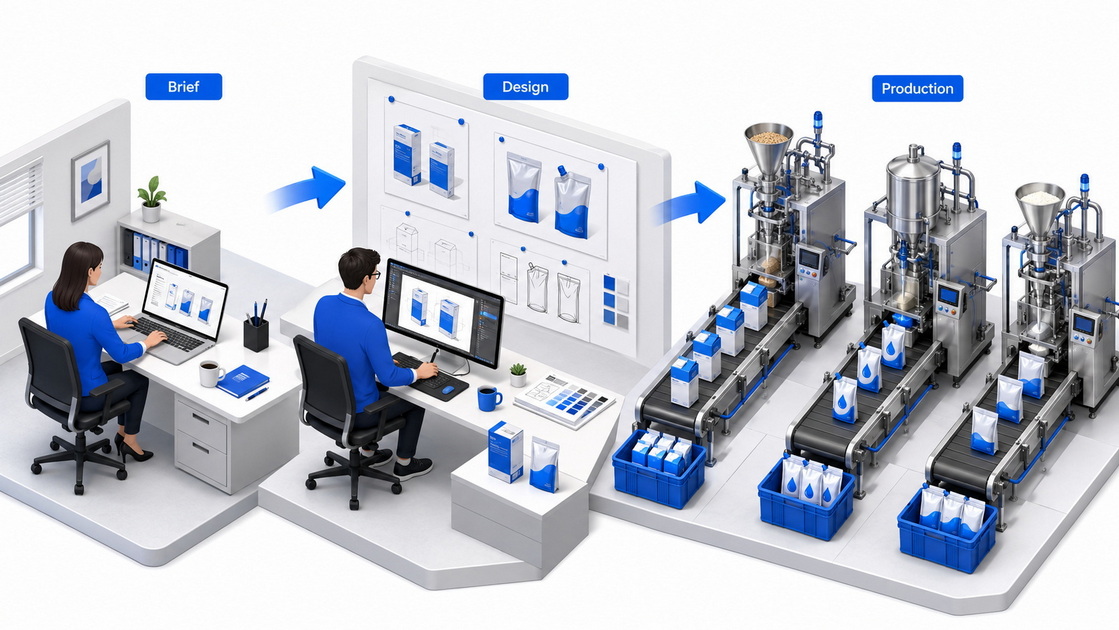
The global packaging solutions market is projected to grow from around 1.14 trillion USD in 2026 to about 1.59–2.00 trillion USD by 2034–2035, driven by e‑commerce, sustainability demands, and automation. [fortunebusinessinsights]
That means every packaging design brief is now a strategic investment, not a routine document. [towardspackaging]
Well‑designed packaging must simultaneously: [vistaprint]
- Protect products in transit and storage
- Communicate brand story at first glance
- Comply with regulations and retailer requirements
- Run efficiently on filling and sealing equipment
- Deliver a memorable unboxing experience consumers want to share
Trends like ultra‑clean industrial layouts, narrative typography, and tactile "imprinted" textures are shaping 2026 packaging design, and your brief is where you decide which of these trends genuinely serve your brand. [shopify]
Suggested visual: moodboard image illustrating 3–4 current packaging design trends (minimalism, heritage etch, narrative typography).
The best packaging design briefs start with context, not colors. [modpac]
Include in this section: [pakfactory]
- Project name and scope – New product launch, rebrand, line extension, or packaging optimization.
- Business background – How long you've operated, markets you serve, and key product lines.
- Channel focus – E‑commerce only, retail shelves, foodservice, or mixed channels.
- Primary objective – Boost shelf impact, reduce damage, cut material costs, or improve sustainability.
A concise story like "We are introducing a premium organic instant beverage in flexible sachets for export to North America and Europe" gives designers and engineers the right starting point. [sld]
Packaging is often your first "sales pitch" on the shelf, so your brief must spell out who you are and who you serve. [modpac]
Cover these points:
- Brand positioning – Value, premium, sustainable, industrial, or clinical. [sld]
- Brand story and values – Sustainability commitments, manufacturing expertise, or heritage. [pakfactory]
- Target segments – Demographics, purchasing motivations, and pain points. [modpac]
- Competitive landscape – Which competitors you want to be compared against and how to stand out. [confetti]
For HLun Pack's clients, it's especially important to mention whether your audience values recyclable paper packaging, high‑barrier flexible films, or tamper‑evident seals for granular and powder products. [winsea123]
Suggested visual: table or graphic comparing two or three target customer personas and how packaging should speak to each.
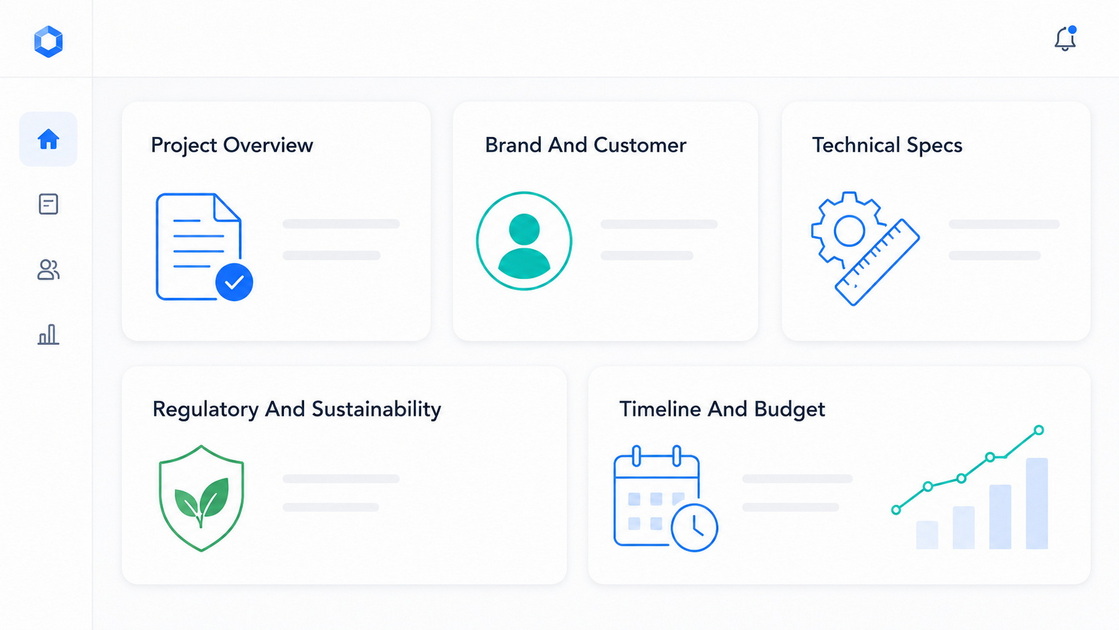
This is where brand promise meets mechanical reality. [sld]
Document clear, measurable requirements:
- Pack formats – Cartons, pouches, sachets, bottles, or composite structures. [modpac]
- Dimensions and tolerances – Length, width, height, volume, and acceptable variation. [pakfactory]
- Material preferences – Paperboard grades, film structures, and barrier properties. [fortunebusinessinsights]
- Line compatibility – Target filling speeds, sealing methods, and any existing equipment constraints. [confetti]
When your design brief is aligned with your packaging machinery partner's capabilities, you minimize stoppages, reduce waste, and shorten time‑to‑market. [towardspackaging]
Regulation and sustainability expectations are changing quickly, and your brief must keep pace. [vistaprint]
Specify:
- Mandatory information – Ingredients, nutritional facts, safety icons, recycling marks, and legal disclaimers. [sld]
- Regional variations – Different languages or regulatory symbols for export markets. [shopify]
- Sustainability goals – Recyclable materials, reduced plastic content, or lightweighting targets. [vistaprint]
By clarifying these constraints early, you avoid late‑stage redesigns that disrupt print plates, die‑cuts, or tooling for your packaging lines. [pakfactory]
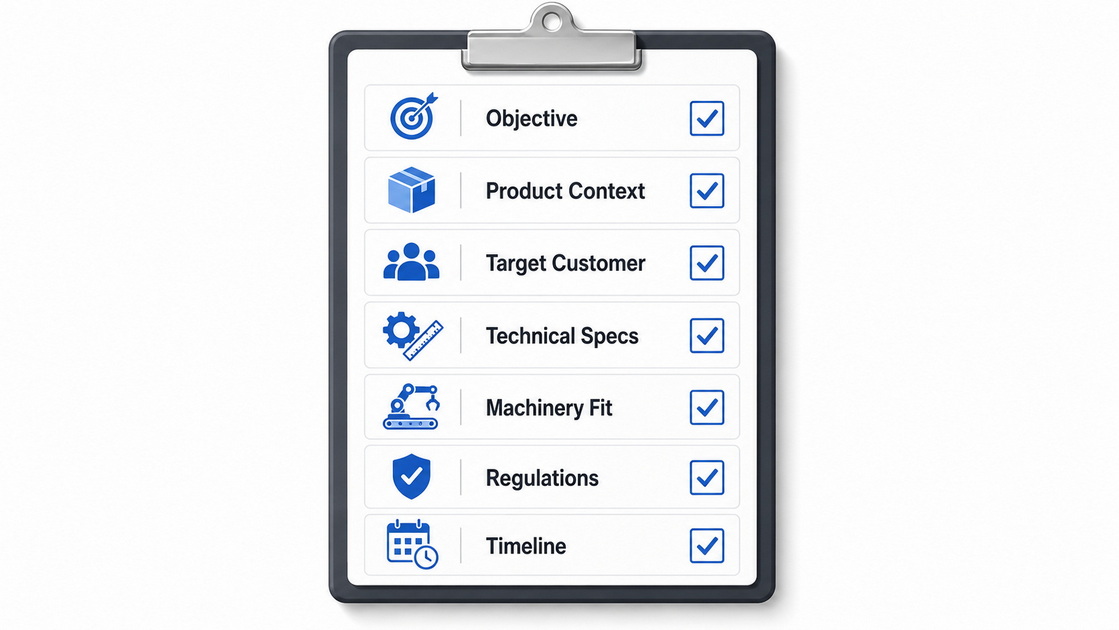
Below is a simple workflow you can adapt every time you write a packaging brief. [modpac]
1. Define the business objective – Revenue goal, margin improvement, or launch milestone.
2. Describe the product and use context – Storage conditions, handling, and customer interactions.
3. Clarify brand positioning and target customer – What should customers feel when they see and unbox the product.
4. List competitive benchmarks – 3–5 packages you like and 1–2 you want to avoid.
5. Set technical constraints and performance KPIs – Drop‑test standards, seal integrity, or shelf‑life targets.
6. Align with your packaging equipment – Target speeds, changeover limitations, and pack formats supported by current or planned machines.
7. Outline timelines, budget, and approval workflow – Who signs off at each stage and when.
8. Attach references and documentation – Existing dielines, CAD drawings, artwork, and regulatory guidelines.
| Section | What to Include |
|---|---|
| Project Overview | Project name, product type, markets, launch date |
| Brand & Target Customer | Brand story, value proposition, customer segments |
| Competitive & Trend Insights | Reference brands, do's and don'ts, visual benchmarks |
| Technical & Material Specs | Formats, dimensions, materials, machinability |
| Regulatory & Sustainability | Legal text, icons, eco claims, regional differences |
| Design Deliverables | File formats, dielines, mockups, 3D renders, print‑ready art |
| Timeline & Budget | Milestones, rounds of revisions, cost bands |
| Approval & Testing | Stakeholders, prototype tests, sign‑off criteria |
In many companies, packaging design is treated as a marketing task, while equipment decisions sit with engineering or operations. That disconnect often leads to beautiful designs that run poorly—or not at all—on the line. [winsea123]
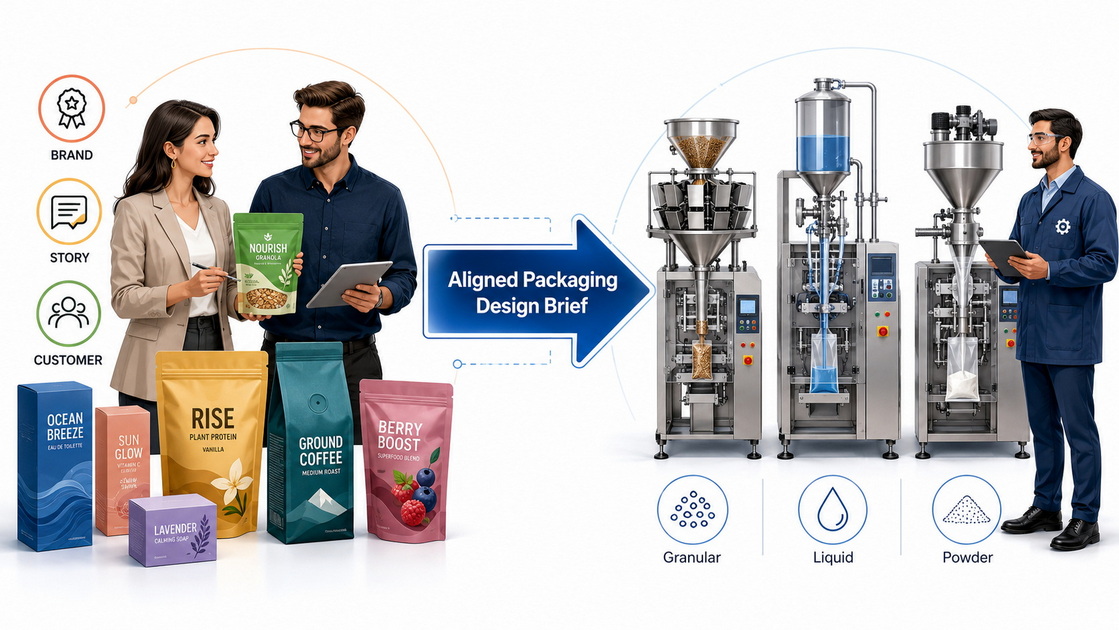
For brands using granular, liquid, and powder packaging equipment, your packaging design brief should address:
- Filling behaviour – Flowability, foaming, dust generation, or splash risk. [winsea123]
- Seal geometry – Minimum seal width, gusset requirements, and reseal features. [modpac]
- Material handling – Film stiffness, coefficient of friction, and tear properties. [confetti]
- Changeover strategy – How often formats change, and how quickly the line must adapt. [towardspackaging]
Documenting these points allows partners like HLun Pack to recommend compatible packaging materials and structures from day one, rather than retrofitting equipment around a finished design. [winsea123]
Add an appendix titled "Packaging Machinery & Line Integration" with: [confetti]
- Existing equipment models and key specs (speed, pack range, sealing type)
- Planned future equipment or automation upgrades
- Known issues with current packaging (jams, spillage, seal failures, readability of codes)
- Line OEE targets and maximum acceptable scrap rate
This small addition often unlocks significant savings in film usage, downtime, and maintenance. [towardspackaging]
Based on industry case studies and agency experiences, several recurring mistakes undermine otherwise solid briefs. [confetti]
- Vague objectives – "We want better packaging" is not actionable; specify what "better" means in numbers or behaviours. [sld]
- Ignoring logistics reality – Designs that look great in 3D renders but fail under palletization and long‑distance shipping. [fortunebusinessinsights]
- Underestimating lead times – Not factoring in dieline development, plate making, machine trials, and regulatory reviews. [confetti]
- Missing stakeholder alignment – Not involving sales, quality, and production leads to internal friction at sign‑off. [sld]
- No measurable success criteria – Without KPIs, you cannot evaluate whether the new packaging design worked. [adchitects]
Including a short "What We Learned" section when you update your packaging design brief over time helps your team avoid repeating the same errors across product lines. [adchitects]
Online buyers often meet your packaging first through a product photo, not a physical box, which changes how you should think about the brief. [shopify]
Consider adding:
- Thumbnail visibility requirements – Key information or colour blocking that remains legible at small sizes. [vistaprint]
- Social‑shareable unboxing – Interior prints, surprise messages, or QR codes linked to tutorials. [shopify]
- AR or digital layers – Optional QR/AR experiences for complex products or sustainability storytelling. [vistaprint]
At the same time, align with trends that genuinely support your brand: industrial minimalism for technical products, heritage etching for craft or premium lines, or narrative typography for story‑driven brands. [vistaprint]
As a packaging manufacturer and equipment provider, HLun Pack can contribute expert input at each stage of your packaging design brief. [winsea123]
For example, when you outline a new flexible pouch format for coffee, snacks, or nutraceutical powders, HLun Pack can:
- Recommend material structures compatible with your filling and sealing speeds. [towardspackaging]
- Validate seal designs and opening features through test runs on granular or powder lines. [winsea123]
- Advise on print registration and eye‑mark positioning for form‑fill‑seal equipment. [confetti]
This integrated approach ensures that your final packaging is not only visually compelling but also efficient, stable, and scalable in production. [towardspackaging]
A strong packaging design brief is the bridge between your brand vision and reliable, scalable packaging performance across paper, flexible, and specialized equipment‑ready formats. [pakfactory]
If you are planning a new product launch or upgrading your packaging for granular, liquid, or powder products, reach out to HLun Pack to co‑develop a brief that integrates design, material selection, and machinery compatibility from day one. [winsea123]
Our team can review your draft brief, suggest technical adjustments, and help you turn your concept into packaging that runs smoothly on the line and stands out in the market. [towardspackaging]
1. What is the main goal of a packaging design brief?
The main goal is to provide clear, structured guidance that aligns brand strategy, technical constraints, and business objectives so designers and manufacturers can create packaging that performs in the real world. [modpac]
2. How detailed should technical specifications be?
They should be specific enough to define dimensions, materials, tolerances, and equipment compatibility, but not so granular that they prevent designers from proposing better solutions. [pakfactory]
3. When should I involve my packaging machinery partner?
Ideally, involve them while writing the brief, especially if you use or plan to use granular, liquid, or powder packaging equipment, to avoid designs that are difficult or expensive to run. [towardspackaging]
4. How often should I update my packaging design brief?
Update it whenever regulations change, when you enter new markets, or after major product or channel shifts so it reflects current realities and lessons learned. [fortunebusinessinsights]
5. Can one brief cover multiple packaging formats?
Yes, but it is more effective to create a master brief with shared brand elements plus format‑specific annexes for cartons, flexible pouches, or specialty packs tied to different equipment lines. [sld]
1. Pakoro. "How To Write A Packaging Design Brief." (original article). [Link] [modpac]
2. MOD‑PAC. "How to Write a Packaging Design Brief." [Link] [modpac]
3. Pakfactory. "How to Write A Packaging Design Brief." [Link] [pakfactory]
4. SLD. "How To Write A Packaging Design Brief (With Free Template)." [Link] [sld]
5. VistaPrint. "10 Notable Packaging Trends For 2026." [Link] [vistaprint]
6. Fortune Business Insights. "Packaging Market Size, Share & Trends." [Link] [fortunebusinessinsights]
7. Towards Packaging. "Packaging Solutions Market Trends & Size 2026–2035." [Link] [towardspackaging]
8. Shopify. "Product Packaging Design Complete Guide (2026)." [Link] [shopify]
9. Adchitects. "How To Create a Design Brief in 2026?" [Link] [adchitects]
10. Confetti Design. "FMCG Packaging Brief: How to Write One That Actually Works." [Link] [confetti]


