


close
Choose Your Site
Global
Social Media
Views: 222 Author: HLun PACK Publish Time: 2026-05-20 Origin: Site


As someone who has spent years working with global brands on paper packaging and packaging machinery, I've watched a clear shift: sustainable packaging has moved from "nice-to-have" marketing claim to a hard business requirement. At HLun Pack, where we focus on paper packaging and integrated packaging equipment solutions, we see more buyers asking a simple question: "Is my laminated packaging truly eco-friendly, or just a green label?" [linkedin]
Biodegradable lamination is one of the most powerful levers brands can pull to make paper boxes, bags, and flexible formats more sustainable without sacrificing protection or shelf impact. Yet many teams still confuse buzzwords (biodegradable, compostable, recyclable) and struggle to choose the right material and process for their specific packaging line. This guide combines an industry-level overview with hands-on advice from a manufacturer and machinery partner's perspective, so you can decide when and how to adopt biodegradable lamination for paper packaging in 2026 and beyond. [hlunpack]
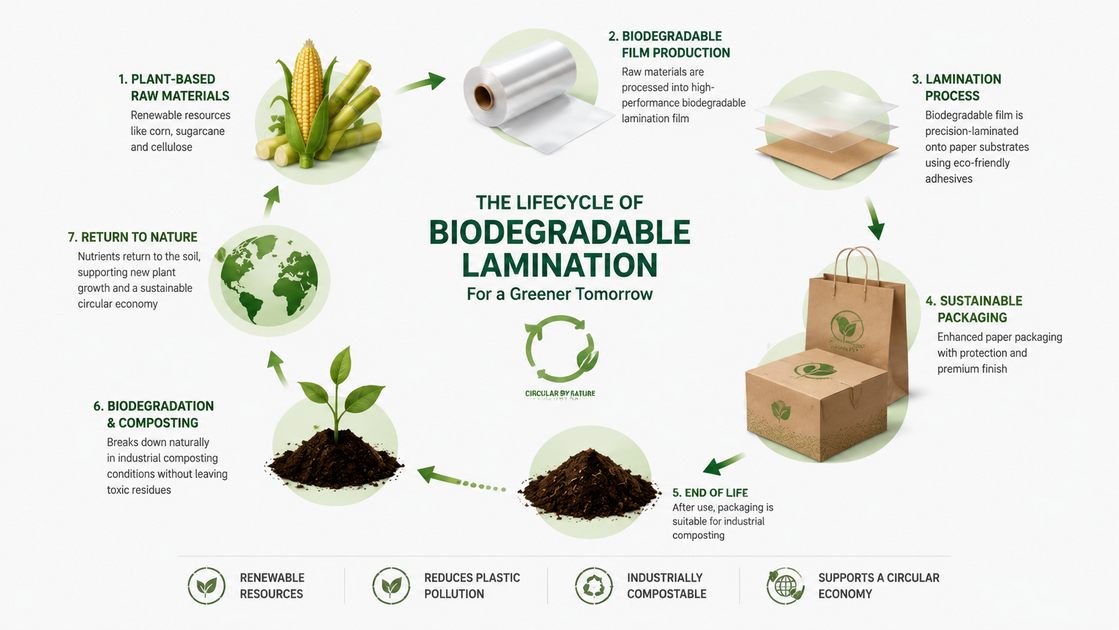
In packaging, lamination is the process of applying a thin film layer over printed paper or board to improve durability, aesthetics, and barrier properties. That film is typically plastic-based and bonded to substrates like folding cartons, rigid boxes, or printed sheets used for bags and displays. [hbfuller]
From a machinery standpoint, this usually involves roll-to-roll or sheet-fed laminating equipment that uses heat, pressure, and adhesive or extrusion techniques to join film and paper. Classic finishes include glossy lamination for high shine and color pop, and matte lamination for a smooth, premium feel often used in cosmetics and electronics packaging. [packmojo]
Biodegradable lamination refers to laminating films and coating systems designed to break down into water, biomass, and naturally occurring gases like carbon dioxide under defined conditions, instead of persisting as microplastics. Unlike conventional fossil-based films, these materials are engineered to be digested by microorganisms in industrial composting or, in some cases, controlled landfill environments. [goecopure]
However, "biodegradable" is not a single standard; different materials degrade at different rates and require different environments. To support credible sustainability claims, brands increasingly rely on validated tests and certifications (for example, BPI or TÜV for compostability) that prove biodegradation under real-world disposal scenarios. [naturepoly]
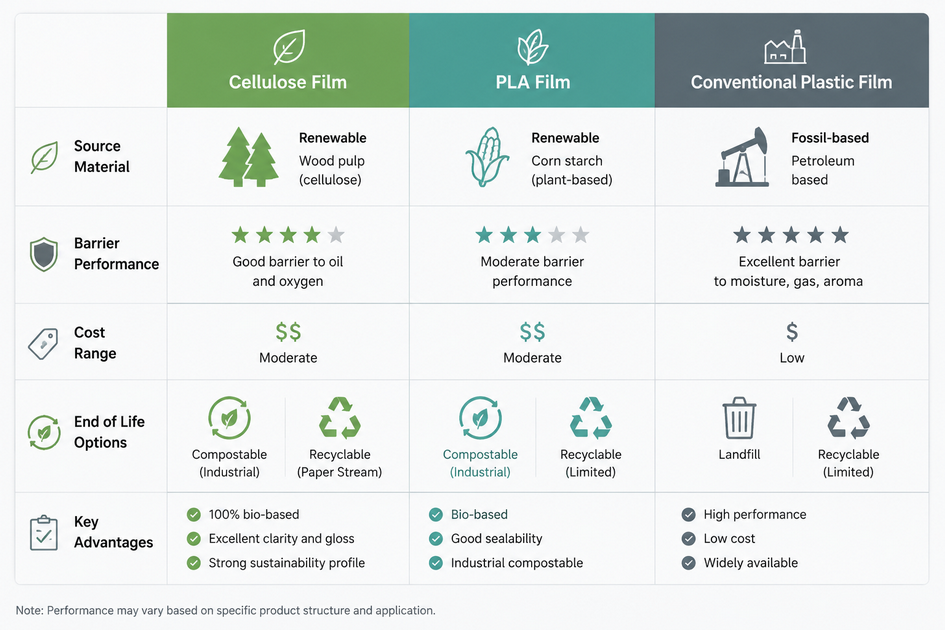
Cellulose films are derived from plant-based cellulose and are both biodegradable and recyclable in many paper streams when used and separated correctly. They offer good clarity and printability, making them suitable for premium cartons and windows in paper packaging. [packmojo]
- Derived from renewable cellulose feedstocks
- Often compatible with industrial composting, sometimes even home composting depending on formulation
- Typically provide decent oxygen barrier but may need additional treatment for high-moisture products [linkedin]
From a production perspective, cellulose films can often be processed on modern laminators with relatively minor adjustments to temperature and tension, which helps converters transition away from standard plastic films. [hbfuller]
PLA films are bio-based polyesters produced from sugarcane, corn starch, or other plant sugars, and are fully biodegradable and compostable under industrial conditions. They are widely used in food packaging, retail wraps, and paper-based products where clarity and heat-sealing are important. [lairdplastics]
- High transparency and gloss with similar handling to conventional films
- Verified compostability via international certifications such as BPI and TÜV, ensuring safe breakdown without toxic residues in industrial composting facilities [naturepoly]
- Degradation speed is sensitive to temperature, humidity, and microbial activity; PLA usually does not rapidly degrade in ambient conditions or home compost. [goecopure]
In our experience as a packaging equipment provider, PLA laminates generally run well on upgraded lamination and pouch-making lines, but sealing parameters and knife settings often need fine-tuning to avoid shrink, curl, or seal failure. [hlunpack]
Oxo-biodegradable films are conventional plastics (such as polyethylene or polypropylene) blended with additives that trigger fragmentation and further biodegradation when exposed to oxygen, heat, or UV. They were originally positioned as a lower-disruption alternative because they process similarly to standard films on laminators and bag-making machines. [lairdplastics]
However, regulators and NGOs have raised questions about whether these materials fully biodegrade or simply become microplastics, leading to increasing scrutiny and, in some markets, restrictions. For brands focused on robust ESG reporting, we usually see a shift toward clearly certified compostable solutions (cellulose or PLA) rather than oxo-biodegradable options. [ecoenclose]
Customer surveys repeatedly show that a large majority of consumers feel more satisfied when products use packaging made from sustainable materials, and this directly shapes brand perception and loyalty. At the same time, governments and retailers are tightening regulations on single-use plastics and demanding verifiable evidence that packaging materials can be recovered or safely degraded. [creativeretailpackaging]
For brands, this pressure is amplified by the rapid growth of the biodegradable plastics and laminations market, which is expanding at double-digit compound annual growth rates as companies invest in eco-friendly materials and technologies. Early adopters are already using this as a competitive advantage, positioning their packaging as both protective and genuinely low-impact, rather than simply "plastic-free looking." [towardspackaging]
From both a sustainability and operational standpoint, biodegradable lamination can deliver a meaningful set of advantages when implemented correctly.
- Reduced environmental footprint – Biodegradable and compostable laminations reduce long-term plastic pollution and can cut lifecycle greenhouse gas emissions compared with conventional films, especially when made from renewable feedstocks. [lam-on]
- Stronger brand perception – Aligning laminated packaging with credible sustainability claims reinforces your brand story and meets rising consumer expectations around eco-conscious choices. [packmojo.com.s3-website-ap-southeast-1.amazonaws]
- Regulatory risk mitigation – Moving toward certified biodegradable or compostable systems helps brands stay ahead of legislation that targets difficult-to-recycle plastic laminates. [creativeretailpackaging]
- Material efficiency – Modern biodegradable laminations and coating technologies increasingly use thinner layers and optimized barrier systems, reducing material consumption without compromising performance. [worldbiomarketinsights]
For paper packaging converters and co-packers, offering a robust biodegradable lamination option creates a new value-added service, which can justify a higher price point and foster longer-term relationships with sustainability-focused clients. [hlunpack]
Despite its promise, biodegradable lamination is not a plug-and-play replacement for all traditional plastic films. Based on industry research and client projects, several challenges frequently appear.
1. Surface durability and scuff resistance
Biodegradable films may offer slightly lower resistance to scratching and scuffing than some high-performance plastic laminates, which can affect highly saturated or dark artwork. [worldbiomarketinsights]
2. Degradation conditions and timelines
Many biodegradable materials require specific conditions—such as high temperature, controlled humidity, or active microbial environments—to break down at the rates advertised by suppliers. This means that biodegradation may be slow or incomplete in uncontrolled landfills or home compost. [goecopure]
3. Cost premiums
Certified biodegradable and compostable films often cost more than commodity plastics, which can be a barrier for cost-sensitive categories and high-volume SKUs. [towardspackaging]
4. Recycling complexity
Laminated structures are inherently more challenging to recycle than monomaterial paper or plastic, because separating the layers requires specialized processes. Even with biodegradable laminates, recyclability will depend on local infrastructure and sorting behavior. [ecoenclose]
5. Line compatibility and learning curve
Depending on your current machinery, you may need to adjust lamination temperatures, line speeds, and tension, or upgrade knives and sealing stations, to consistently run biodegradable films. [hbfuller]
As a packaging equipment supplier, our recommendation is always to approach the switch as a process optimization project, not just a material swap. Early lab tests, pilot runs, and close collaboration with film suppliers and machine manufacturers are critical.
The market for biodegradable paper lamination is entering a phase of accelerated growth, driven by both regulation and consumer demand for verifiable sustainability claims. Analysts project significant expansion for bio-based and biodegradable polymers through the 2026–2035 period, with some estimates suggesting the broader biodegradable plastics market could grow from under 20 billion USD in 2026 to over 100 billion USD by 2035. [linkedin]
Several trends stand out for brands and converters:
- Shift to certified compostability – Buyers increasingly insist on third-party certifications and ASTM-based testing rather than generic biodegradability claims, focusing on how materials behave in real disposal environments. [naturepoly]
- Growth of high-barrier compostable laminations – New compostable multi-layer structures, including metallized options, are entering commercial use, especially in pouches and flexible packaging that demand strong barrier performance. [lam-on]
- Integration with flexible packaging lines – Biodegradable laminations are being engineered to be compatible with existing pouch-making, VFFS, and HFFS machines, enabling smoother upgrades within existing packaging plants. [worldbiomarketinsights]
For paper-based packaging, these trends mean that laminated cartons and pouches can increasingly meet both barrier and sustainability requirements, rather than forcing a compromise between protection and environmental performance. [linkedin]
To move from concept to implementation, brands should use a structured decision framework when evaluating biodegradable lamination.
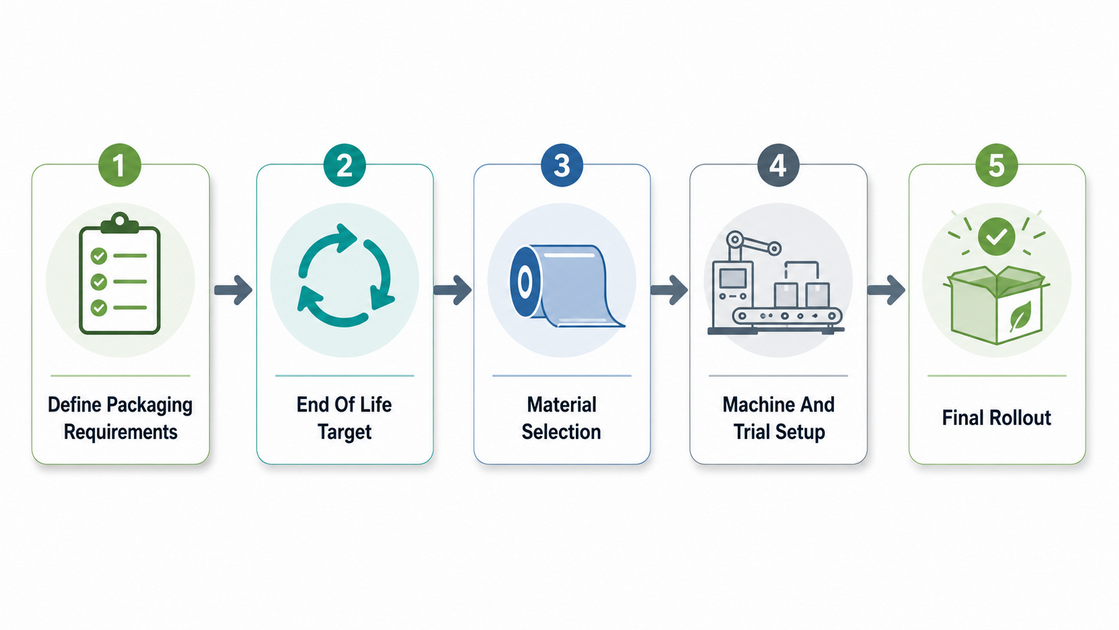
Start by clearly defining what your laminated packaging must do:
- Protect against moisture, oxygen, light, or grease
- Survive specific handling, stacking, or transport conditions
- Deliver a required shelf life in each target market
From an equipment perspective, also specify formats (flat cartons, rigid boxes, bags, pouches) and run speeds, which will influence material selection and machine settings. [hlunpack]
Decide what "sustainable" means for your brand and your customers:
- Recyclable in paper or plastic streams
- Industrially compostable with third-party certification
- Biodegradable in specific waste management scenarios
Align this with the waste infrastructure in your main markets and the expectations of key retail partners. Compliance and legal teams should validate any claims you plan to print on-pack. [creativeretailpackaging]
Based on your performance and end-of-life targets, shortlist film types (cellulose, PLA, compostable multilayers) and work with reputable suppliers who provide:
- Data sheets and barrier performance
- Test reports and certifications
- Processing guidelines for lamination and downstream converting [naturepoly]
A machinery partner can help assess whether your existing lines can handle each option or whether upgrades are needed. [hbfuller]
Before large-scale adoption, run:
- Lab tests for seal strength, scuff resistance, and print quality
- Line trials to evaluate speed, scrap rates, and operator learning curve
- Distribution simulations or transport tests for damage and shelf appearance
This data-driven approach reduces risk and supports a robust business case for transitioning to biodegradable lamination across SKUs.
As a paper packaging manufacturer and equipment provider, HLun Pack works with brands that need not only eco-friendly packaging but also reliable production and long-term supply. Many of our clients in food, daily chemical, consumer goods, and industrial sectors are shifting from conventional lamination toward biodegradable alternatives for both cartons and flexible formats. [hlunpack]
From our vantage point, successful projects share three patterns:
- They treat sustainability as a core design parameter, not a last-minute finishing choice
- They involve early collaboration between brand owners, material suppliers, and machinery engineers
- They balance sustainability goals with realistic cost, line efficiency, and quality criteria
By integrating biodegradable lamination know-how into both packaging design and machinery selection, we help clients reduce time-to-market for new sustainable lines and avoid costly trial-and-error on the production floor. [hlunpack]
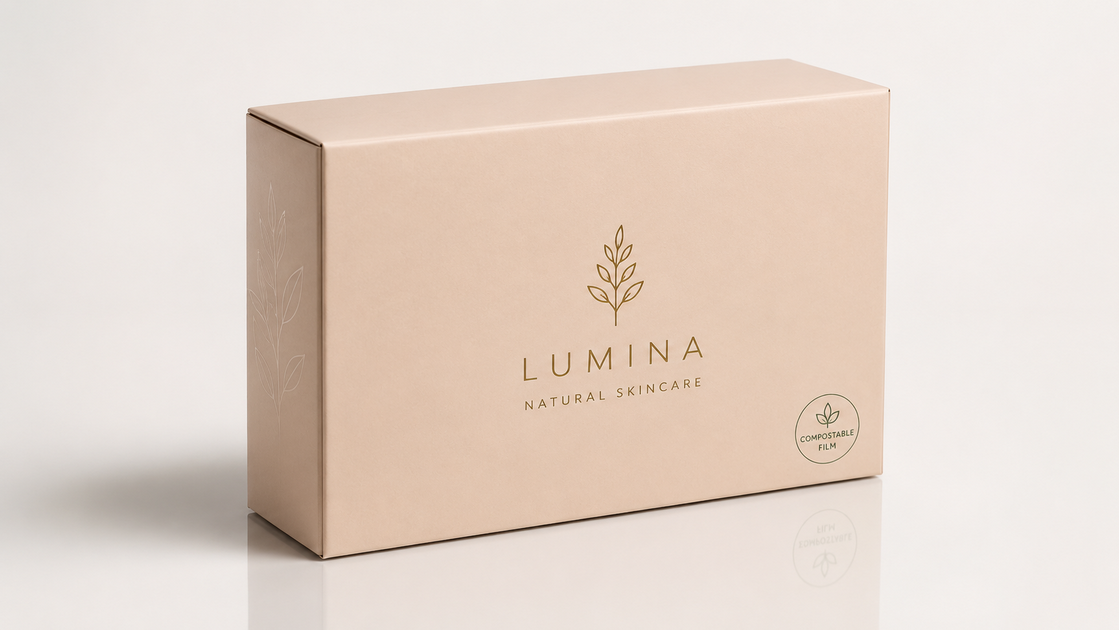
Imagine an emerging beauty brand that sells high-end skincare in rigid paper boxes. They want a premium tactile feel, durable edges, and a credible sustainability story.
- They could use a cellulose-based film with a matte finish for smooth touch and compostability in industrial facilities. [packmojo]
- To protect dark, saturated artwork, they would need to validate scuff resistance through lab and transit tests, adjusting film thickness if necessary. [worldbiomarketinsights]
- Working with a paper packaging specialist and lamination equipment provider allows them to optimise glue, pressure, and wrapping processes to keep edges clean and avoid cracking while still meeting sustainability objectives. [hlunpack]
This kind of end-to-end thinking—material, machinery, and market positioning—is what separates credible sustainable packaging from superficial claims.
| Aspect | Conventional Plastic Lamination | Biodegradable / Compostable Lamination |
|---|---|---|
| Primary materials | PET, BOPP, PE, PP, PVC (hbfuller) | Cellulose, PLA, certified compostable multilayers (packmojo) |
| Environmental impact | Long-lived plastics, potential microplastics (goecopure) | Designed to break down under defined conditions (goecopure) |
| End-of-life options | Limited recycling, often landfilled (packmojo) | Industrial composting or biodegradation where systems exist (goecopure) |
| Performance | Very strong, highly scuff-resistant (hbfuller) | Improving rapidly, may need careful spec selection (worldbiomarketinsights) |
| Cost | Generally lower, commodity pricing (towardspackaging) | Typically higher, but narrowing as volumes grow (linkedin) |
| Regulatory outlook | Increasing restrictions and taxes (goecopure) | Favored in many sustainability roadmaps (linkedin) |
If you are considering a transition to biodegradable lamination for your paper packaging, you can follow this straightforward path:
1. Audit your current portfolio
Identify SKUs where lamination is essential (for example, rigid boxes, high-gloss cartons, premium bags) and map their current materials and volumes. [packmojo]
2. Prioritize high-impact lines
Start with products that have strong brand visibility, higher margins, or clear sustainability commitments—these SKUs can better absorb material cost premiums. [creativeretailpackaging]
3. Engage your partners early
Talk to your paper packaging supplier, film vendors, and equipment partners about biodegradable options and any required machine adjustments. [hlunpack]
4. Pilot, measure, refine
Run focused trials, measure quality, line efficiency, and customer feedback, then refine specifications based on real data rather than assumptions. [goecopure]
5. Communicate clearly to consumers
Once you commit, ensure on-pack claims are accurate, backed by certifications, and framed in simple language that helps consumers understand how to dispose of your packaging responsibly. [packmojo.com.s3-website-ap-southeast-1.amazonaws]
If you are planning to upgrade your paper packaging to biodegradable lamination while keeping production efficient and scalable, consider working with a partner that understands both materials and machinery. HLun Pack can support you from structural design and material selection to lamination equipment configuration and mass production, so that sustainability becomes an integrated part of your packaging—not just a label on the box. [hlunpack]
Contact our team to discuss your current SKUs, sustainability targets, and packaging line setup, and we will help you map a practical, data-driven path toward biodegradable lamination that fits your brand, budget, and timeline. [hlunpack]
1. Is biodegradable lamination always better than standard plastic lamination?
Not always; it depends on your product's protection needs, local waste infrastructure, and the specific materials you choose. In some markets with strong recycling systems, well-designed recyclable monomaterials may perform as well or better than poorly implemented biodegradable solutions. [ecoenclose]
2. Can biodegradable laminated paper be recycled?
Recyclability of laminated paper depends on how easily the laminate can be separated from fibers and on the policies of local recycling facilities. In many cases, laminated structures are more likely to be composted or landfilled than recovered in standard paper streams, even when the laminate is biodegradable. [ecoenclose]
3. Do biodegradable films work on existing lamination machines?
Many cellulose and PLA-based films can run on existing laminators and downstream converting equipment with parameter adjustments, but performance should always be validated through trials. In some cases, knife systems, tension control, or sealing modules may need upgrades to guarantee consistent quality. [naturepoly]
4. How can I verify if a lamination material is genuinely compostable or biodegradable?
Ask for independent certifications and test reports (such as BPI, TÜV, or ASTM-based testing) that show how the material behaves under defined composting or landfill conditions. Relying only on supplier claims or generic "eco" labels is risky and may not satisfy regulators or informed consumers. [goecopure]
5. Will switching to biodegradable lamination significantly increase my packaging cost?
Biodegradable and certified compostable laminations typically cost more than commodity plastics today, but the price gap is narrowing as demand and capacity grow. Many brands offset the increase by limiting lamination to high-visibility SKUs and using the sustainability improvement as part of their value proposition. [towardspackaging]


