


close
Choose Your Site
Global
Social Media
Views: 222 Author: Amanda Publish Time: 2026-01-28 Origin: Site


Content Menu
● What Is a Display Box and Why It Matters in 2026
● 4 Foundational Tips for Designing Display Boxes
>> 1. Choose a Display Box Style That Fits Your Brand and Products
>> 2. Use Inserts and Internal Structures for Sophisticated Presentation
>> 3. Design Graphics That Communicate in One Glance
>> 4. Optimize Size and Layout for Retail and Logistics
● Types of Display Boxes and Where They Work Best
● 2026 Trends in Display Box Design You Should Know
● Step-by-Step Process to Create a Custom Display Box
>> Step 1 – Define Objectives and Product Details
>> Step 2 – Select Structure and Material
>> Step 3 – Plan Graphics and Messaging Hierarchy
>> Step 4 – Prototype, Test, and Refine
>> Step 5 – Plan Mass Production and Logistics
● Materials and Finishes for Cardboard Display Boxes
● How to Align Display Box Design with Brand Story
● Improving User Experience for Shoppers and Store Staff
● How HLun Pack Can Support Your Display Box Projects
● FAQs About Display Box Design
>> 1. What is the difference between a display box and regular packaging?
>> 2. Which materials are best for cardboard display boxes?
>> 3. How do I make sure my display box design is retailer-friendly?
>> 4. Can display boxes be sustainable and still look premium?
>> 5. When should I involve a packaging supplier like HLun Pack in the process?
Display boxes are no longer just “nice-to-have” packaging; they are mini billboards that grab attention at checkout counters, retail shelves, and pop-up events while driving impulse purchases and brand recall. When you strategically design your custom display boxes, you improve product visibility, reinforce your story, and create efficient, scalable packaging that works across different retail environments.

A display box (also called a cardboard display box or POS display) is a printed packaging structure that both holds products and presents them in a ready-to-sell way, usually on a counter or dedicated display area. Common examples include nutrition bar trays, cosmetic counter displays, and small floor units for seasonal promotions.
In 2026, display box design is especially important because:
- Retailers are pushing brands to take more responsibility for on-shelf visibility, not just shipping protection.
- Shoppers make many purchase decisions in a few seconds, so clear, simple displays often outperform cluttered layouts.
- Sustainable and recyclable cardboard displays help meet retailer and consumer expectations on environmental impact.
These four tips reflect and upgrade common practice in the market so the content is deeper, more actionable, and aligned with 2026 packaging trends.
When it comes to display box design, structure choice is your first strategic decision. The right style should match your product size, weight, and selling environment.
Common display box structures include:
- Counter display boxes for small items at checkout such as snacks, cosmetics, or travel-size products.
- Shelf-ready trays with perforated tops that convert into displays.
- Floor display units for high-volume or seasonal campaigns.
- Multi-layer or stepped displays that raise products to different heights.
To align style with brand and category, consider:
- Product type: bars, sachets, bottles, tubes, blister cards, or small boxes all stack differently.
- Merchandising position: will your box sit on a high shelf, eye-level, or checkout counter?
- Lifespan: short promotional campaigns can use lighter structures, while long-term programs need sturdy designs.
Example: Nutrition bars often use tear-away tray displays that show the product front and keep the box footprint compact on counters.
If you want a more premium or organized look, custom inserts and internal supports are extremely effective. Inserts help keep products in place, create orderly rows, and prevent damage when stock is low.
You can use:
- Cardboard dividers or partitions to separate multiple SKUs.
- Die-cut inserts that lock around bottles or vials.
- Raised platforms or steps that lift hero products closer to eye level.
Well-designed inserts also improve the unboxing and merchandising experience for staff, because they make refilling or repositioning products faster and more intuitive. This is especially important in high-traffic retail environments where displays must be replenished quickly and consistently.
Effective display box graphics tell shoppers what the product is, who it is for, and why it is worth buying within a second or two. In 2026, many brands are moving away from busy layouts toward simple structures with bold cut-outs and clear visuals.
Follow these principles:
- Prioritize one main message: product name or core benefit should be the most prominent element.
- Keep fonts legible at different viewing distances and under various lighting conditions.
- Use color blocking to guide the eye and separate product families.
- Place key claims such as “sugar-free,” “vegan,” or “new” on the top and front panels where they are most visible.
For display boxes, think 360-degree visibility: design the header card, sides, tray front, and back so the display still works when rotated or placed in different store locations.
Display boxes must work in two worlds: supply chain and store floor. A beautiful design that does not stack well, ship efficiently, or fit retailer planograms will quickly be rejected or underused.
Key sizing and layout tips:
- Base the footprint on retailer shelf dimensions and standard pallet patterns.
- Consider vertical stacking and eye-level placement when possible.
- Leave enough space for barcodes, legal information, and pricing labels.
- Test the structure under real conditions such as transport vibration, store handling, and partial stock levels.
Using cardboard display boxes with standardized base sizes but customizable headers is a practical way to balance brand creativity with operational efficiency.
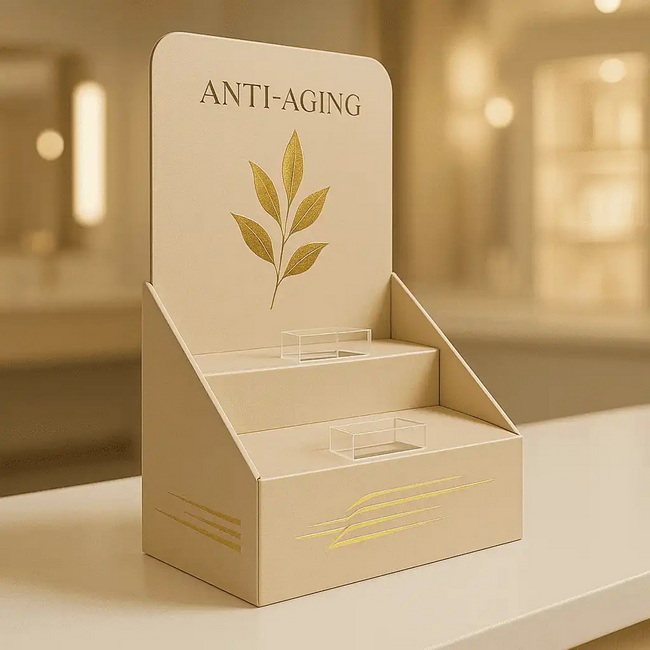
Understanding the main categories of display boxes helps you choose the most cost-effective solution for each product and channel.
Display box type | Best for | Key advantages | Considerations |
Counter display boxes | Impulse buys at checkout, small FMCG items | High visibility, small footprint, strong impulse sales | Need strong branding and compact structure to avoid clutter |
Floor display units | Promotions, seasonal campaigns, bulk packs | Large branding area, flexible placement, high capacity | Must be sturdy and easy to assemble in store |
Shelf-ready display trays | Supermarkets, club stores, wholesale formats | Fast shelf replenishment, standardized sizes | Graphics often simpler; must match retailer standards |
Beveled or angled display boxes | Premium or design-driven products | Eye-catching angles, better viewing of products | More complex die-cuts; check cost and production limits |
Wholesalers and large retailers often prefer standardized cardboard display boxes that can be customized with print for each brand; this allows efficient bulk ordering and flexible in-store use.
Display box design is evolving rapidly, influenced by sustainability, digital engagement, and changing shopper expectations.
Main 2026 trends include:
- Minimalist structures with bold, geometric visuals that reduce material usage but stand out through shape and strong color blocks.
- Integration of digital elements such as QR codes, hashtags, or AR triggers that connect physical displays with online content and campaigns.
- More frequent seasonal or limited-time displays, enabled by faster turnaround and flexible cardboard printing technologies.
- Greater emphasis on recyclability, clear disposal instructions, and reduced plastic components in POS displays.
Aligning your display box design with these trends signals that your brand is current and responsive to both retailer and consumer expectations.
Instead of jumping directly into artwork, follow a simple process to develop display box designs that are both creative and production-ready.
Clarify what you want the display to achieve, such as launch awareness, trial, upsell, or cross-selling. Collect detailed information including product dimensions, weight, primary sales channel, and any retailer constraints or guidelines.
Choose between counter, floor, or shelf-ready styles and decide whether you need single-use or reusable structures. For many applications, printed cardboard or corrugated cardboard offers a strong balance of cost, strength, and print flexibility.
Sketch your layout or work on a dieline template in your preferred design software. Establish a clear hierarchy that includes logo, product name, core benefit, supporting claims, and call-to-action. Keep text concise and test different versions at real-world viewing distances.
Produce white, unprinted structural samples to test fit, assembly, and stability. Then move to printed prototypes to confirm color performance, readability, and photography visibility under store lighting.
Work with your packaging partner to finalize quantities, packing methods, and flat-packed or pre-assembled delivery options. Align your schedule with promotional calendars and ensure replacement displays can be ordered easily for successful campaigns.
Choosing the right material and surface finish is critical to durability, print quality, and perceived value.
Popular materials and finishes include:
- Materials: solid board, corrugated cardboard, and specialty kraft or coated boards, each with different strength and print characteristics.
- Print methods: CMYK for full-color graphics and Pantone spot colors for strict brand colors at higher quantities.
- Coatings: matte or gloss varnish, lamination, and spot UV to highlight key design elements and protect surfaces.
If sustainability is a priority, choose recyclable cardboard and avoid mixed-material components that are difficult to separate.
The most effective display boxes do not just hold products; they tell a coherent brand story from structure to color palette.
To achieve this:
- Match structural personality with brand positioning, such as clean minimal structures for premium brands or playful shapes for youth-oriented products.
- Use consistent color schemes and typography across primary packaging, displays, and online assets.
- Incorporate elements of your brand narrative, including sustainability, innovation, or heritage, through concise copy and visual cues.
For example, a natural snack brand can use kraft-like textures, earthy colors, and clear recycling icons to emphasize environmental commitments.
Display box user experience is not only about the shopper; it also includes the people who assemble, move, and refill your displays.
Key UX guidelines:
- Keep assembly steps simple and intuitive, ideally without tools.
- Add clear fold lines, arrows, or short printed instructions hidden on internal flaps.
- Ensure products are easy to pick up and place back without damaging the structure.
- Design displays to remain stable and attractive even when stock is partly depleted.
A display box that is easy to handle will be prioritized by store teams, increasing your chances of consistent, attractive merchandising.
As a professional packaging materials manufacturer providing packaging machinery and integrated packaging solutions, HLun Pack can bridge the gap between creative design and scalable production.
Typical ways HLun Pack can help include:
- Advising on structural design and material selection for different retail channels such as counter, floor, and wholesale formats.
- Matching display box specifications with existing primary packaging, filling, or cartoning machinery to keep operations efficient.
- Providing integrated solutions that cover cardboard materials, printing, and compatible packaging equipment in one coordinated project.
If you already have design concepts or dielines, HLun Pack can review them from a production and logistics perspective before you commit to large-scale runs.
If you are planning your next display box campaign and want to reduce trial and error in both design and production, contact HLun Pack now for a tailored consultation. Share your product details, retail channels, and target budget, and our team will recommend display box structures, materials, and machinery-friendly solutions that fit your brand and support long-term growth.
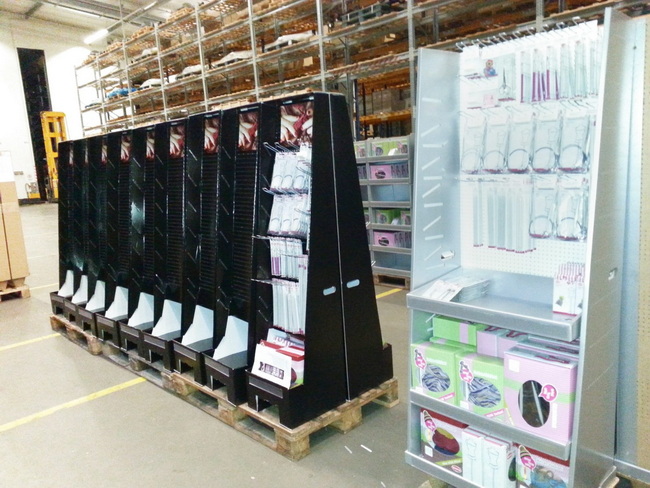
A regular box is mainly designed for protection and shipping, while a display box combines product protection with ready-to-sell presentation on counters, shelves, or floors. Display boxes usually have open fronts, tear-away panels, or headers that make products more visible and easier to pick.
Most brands use solid board or corrugated cardboard because they balance strength, print quality, and cost. The most suitable option depends on your product weight, display lifespan, and sustainability targets.
Start by understanding retailer shelf dimensions, pallet patterns, and any packaging guidelines they provide. Then design footprint, height, and graphics so they are easy to place, refill, and scan in real store conditions.
Yes, using recyclable cardboard, minimalist structures, and high-quality printing can create a premium look while staying environmentally responsible. You can also use spot finishes or bold geometric shapes instead of heavy plastic components to add perceived value.
It is best to involve your packaging partner early, once you have product dimensions, sales channels, and campaign objectives defined. This makes it easier to select optimal structures, materials, and machinery-compatible designs before you finalize artwork and invest in tooling.
1. https://packmojo.com/blog/4-tips-for-designing-display-boxes/
2. https://www.thecustomboxes.com/blog/guide-to-display-packaging/
3. https://packoi.com/blog/tips-for-display-boxes-design/
4. https://www.holidaypac.com/blog/cardboard-display-boxes-a-guide-for-wholesalers-and-large-retailers.html
5. https://garthwest.com/blog/level-up-your-promotional-cardboard-displays-in-2026/
6. https://creativeretailpackaging.com/packaging-insights/packaging-trends/
7. https://www.cefbox.com/customBox/displayBox/withBeveledSides
8. https://packmojo.com/blog/


