


close
Choose Your Site
Global
Social Media
Views: 214 Author: Hlunpack Publish Time: 2026-07-24 Origin: Hlunpack


Content Menu
● Barrier Engineering Strategy
>> 1. Does commercial retort sterilization determine shelf life?
>> 2. Why is oxygen barrier performance important?
>> 3. Is aluminum foil always required?
>> 4. Why are OTR and WVTR important?
Retort Packaging Engineering Series · Chapter 4
Engineering Considerations for Product Quality Preservation in Commercial Retort Packaging
Commercial retort sterilization provides one of the most effective methods of achieving food safety for shelf-stable products.
Once the retort cycle is completed, however, another stage of product protection begins.
From the moment a package leaves the production line, it is exposed to transportation, warehousing, retail display and varying environmental conditions before finally reaching the consumer.
Throughout this entire journey, packaging serves a different purpose.
Its role is no longer to support sterilization—it is to preserve product quality.
This raises an important engineering question.
If two products are designed for the same shelf life, why do they sometimes require completely different barrier structures?
The answer lies not in the retort process itself, but in what the package is expected to protect.
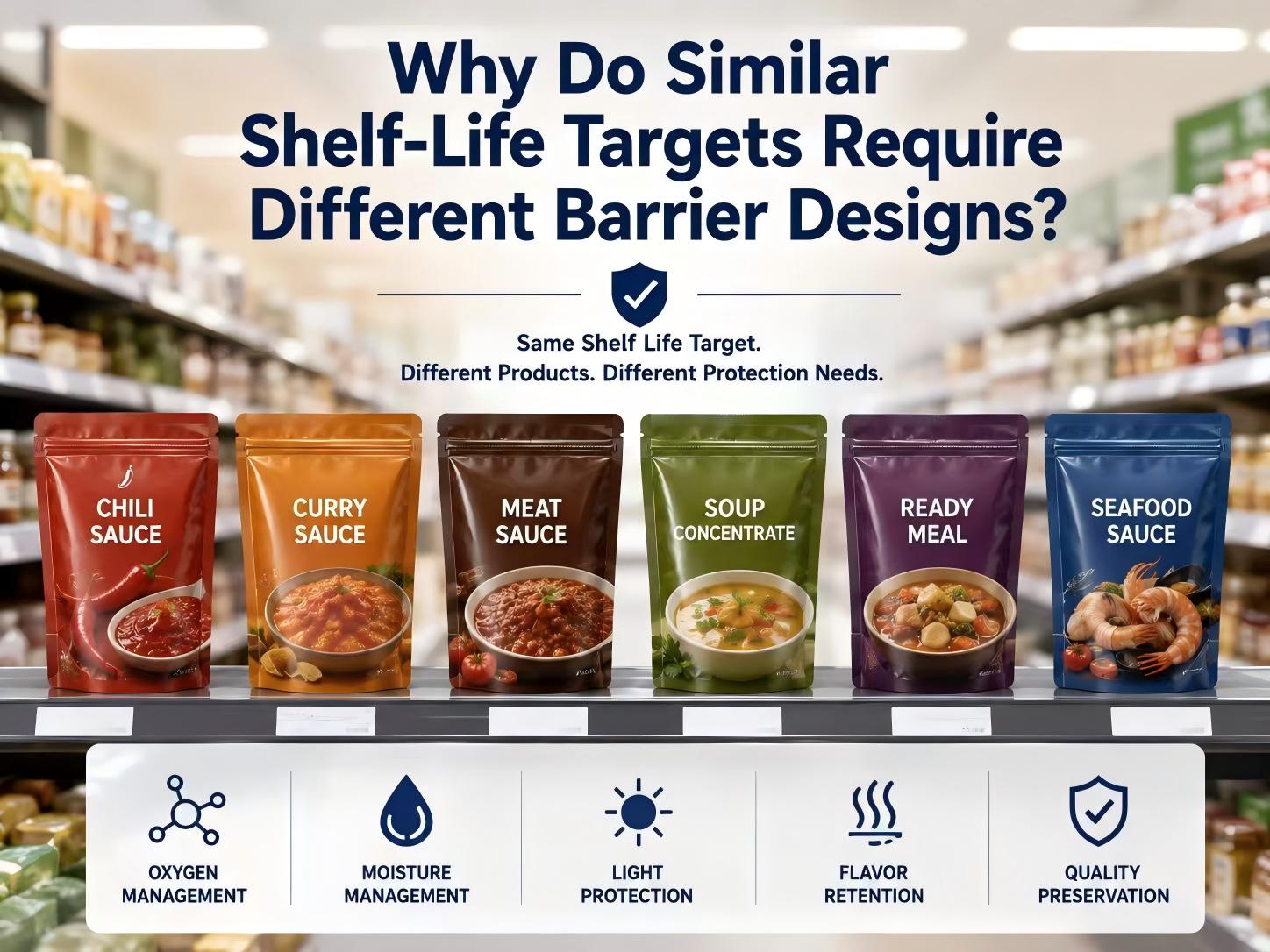
Across multiple retort packaging projects, one engineering observation appears consistently.
Products processed under identical 121°C commercial retort sterilization conditions and designed for the same twelve-month shelf life may still require different laminate structures.
The difference is rarely determined by the sterilization process.
Instead, it is determined by the product.
Some formulations require stronger protection against oxidation.
Others place greater importance on preserving volatile aroma compounds.
Certain products demand improved light protection to maintain color stability throughout storage.
This illustrates an important engineering principle.
Shelf life is measured in months.
Product quality is preserved every day.
Barrier design should therefore begin with understanding what the product needs to retain—not simply how long it should remain on the shelf.
Barrier performance is not about selecting the highest specification laminate.
It is about providing the right level of protection for the intended application.
Packaging engineers typically evaluate four key aspects.
Oxygen is one of the primary factors influencing long-term product quality.
For formulations containing vegetable oils, spices and natural seasonings, oxygen exposure may gradually affect:
* Flavor stability
* Aroma retention
* Color consistency
* Oxidation-sensitive ingredients
Barrier design should therefore consider how the product will perform throughout its commercial life rather than immediately after production.
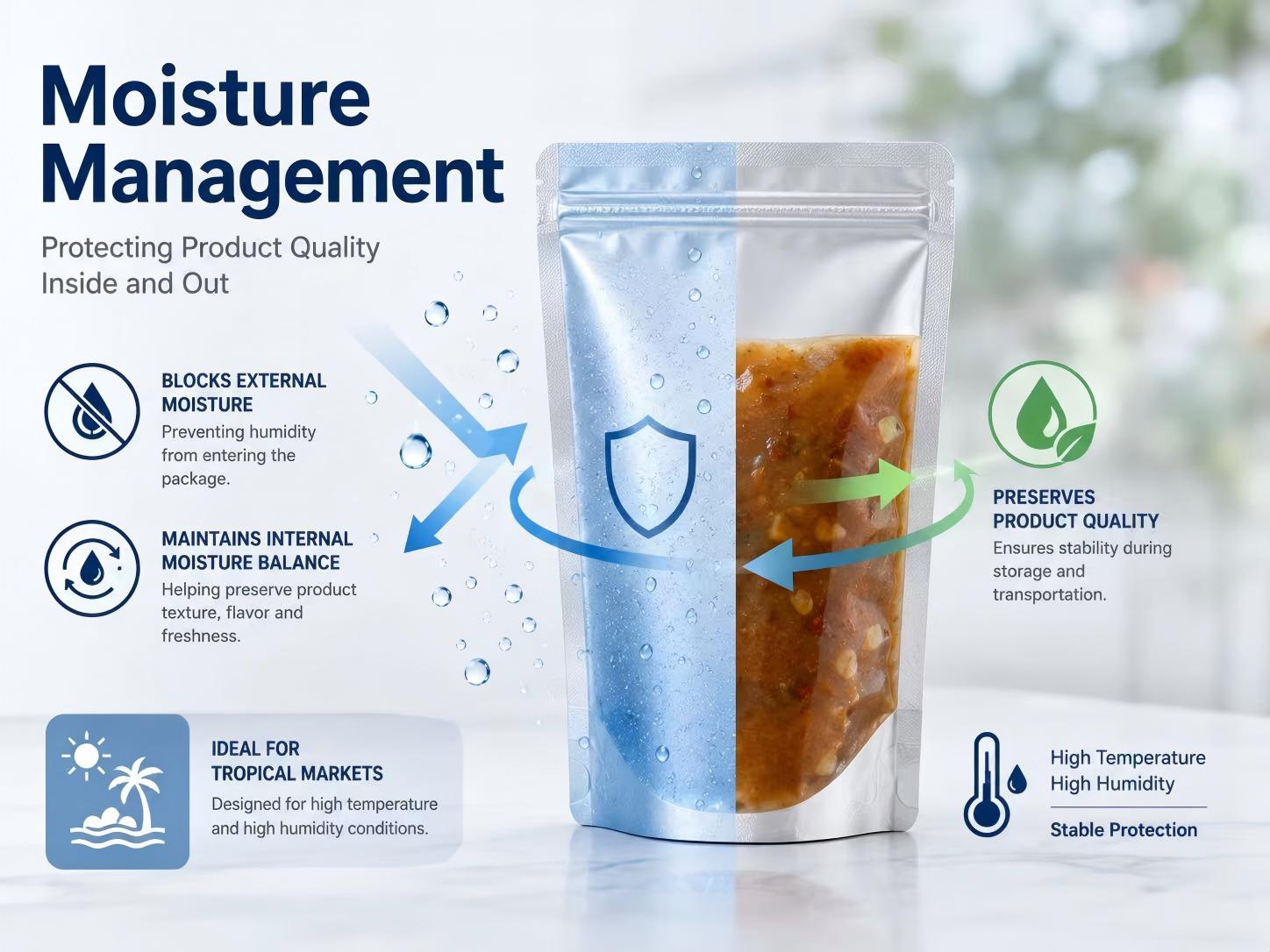
Moisture control involves more than preventing external humidity from entering the package.
The package must also help maintain the product’s internal moisture balance during storage and transportation.
This consideration becomes particularly important in tropical markets where high temperature and humidity are common.
Certain natural ingredients are sensitive to prolonged light exposure.
Where product stability depends on protecting color, flavor or nutritional components, light barrier performance becomes an important element of laminate design.
This explains why aluminum foil continues to be widely used in many high-barrier retort pouch applications.
For consumers, product quality is often judged within seconds of opening the package.
The original aroma, flavor and freshness create the first impression.
Barrier engineering therefore aims not only to protect food safety but also to preserve the sensory characteristics that define the product experience.
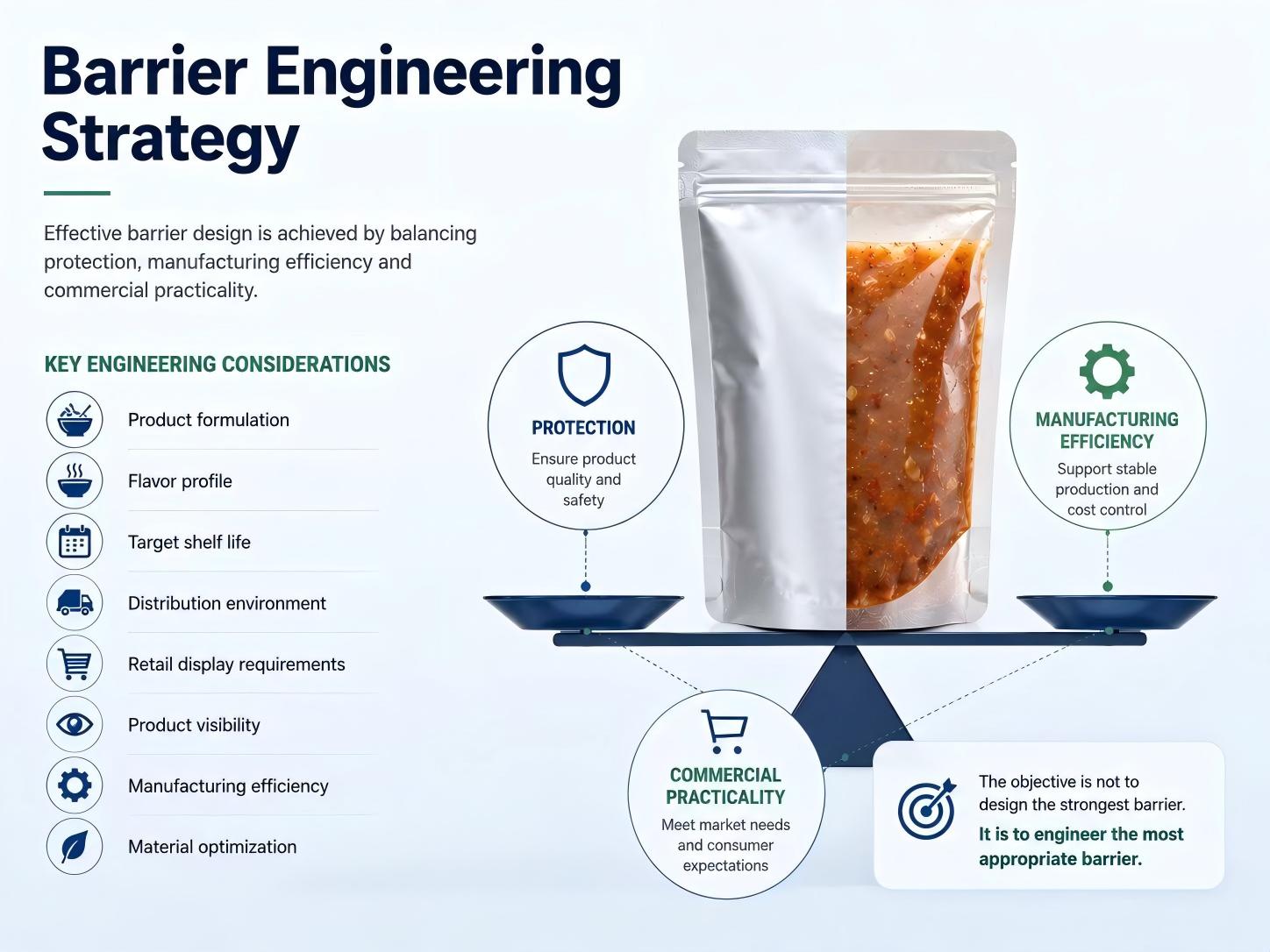
Effective barrier design is not achieved by maximizing every performance property.
Instead, it is developed by balancing protection, manufacturing efficiency and commercial practicality.
Typical engineering considerations include:
* Product formulation
* Flavor profile
* Target shelf life
* Distribution environment
* Retail display requirements
* Product visibility
* Manufacturing efficiency
* Material optimization
The objective is not to design the strongest barrier.
It is to engineer the most appropriate barrier.
Before commercial production begins, barrier performance is typically confirmed through engineering validation.
Common evaluations include:
* Oxygen Transmission Rate (OTR)
* Water Vapor Transmission Rate (WVTR)
* Commercial retort validation
* Heat-seal evaluation
* Vacuum leak testing
* Accelerated storage studies
* Shelf-life performance observation
Together, these evaluations verify whether the packaging system can consistently preserve product quality throughout its intended commercial life cycle.
Packaging does far more than survive commercial retort sterilization.
Its primary responsibility begins after sterilization has been completed.
An effective barrier system protects what consumers ultimately experience:
* Flavor
* Aroma
* Color
* Texture
* Overall product quality
Commercial retort sterilization delivers food safety.
Barrier engineering preserves product quality.
This chapter focuses on:
* High-barrier flexible packaging
* Shelf-life engineering
* Oxygen barrier performance
* Moisture barrier performance
* Flavor retention
* Commercial retort packaging
* Flexible packaging design
* Product quality preservation
This engineering approach is suitable for:
* Curry Sauce
* Chili Sauce
* Cooking Sauce
* Meat Sauce
* Soup Concentrate
* Hot Pot Base
* Ready Meal Products
* Seasoning Paste
* Other Commercial Retort Foods
Not entirely.
Commercial retort sterilization ensures food safety, while barrier performance helps maintain product quality throughout storage and distribution.
Oxygen can gradually influence flavor, aroma and color stability, particularly in products containing vegetable oils and natural spices.
No.
The appropriate barrier structure depends on formulation, shelf-life objectives, product visibility and distribution conditions.
OTR and WVTR provide measurable engineering data that help evaluate the package’s ability to resist oxygen and moisture transmission under defined test conditions.
Barrier design is only one part of shelf-life engineering.
In Chapter 5 – How to Extend Shelf Life Through Better Packaging Design, we’ll explore how material selection, package structure and sealing performance work together to help maintain product quality throughout storage and distribution.
HLunPACK specializes in flexible packaging, paper packaging and packaging machinery for the food, pharmaceutical and consumer goods industries.
By integrating material engineering, laminate design and manufacturing expertise, we develop packaging systems that balance product protection, manufacturing efficiency and long-term commercial performance.


