


close
Choose Your Site
Global
Social Media
Views: 269 Author: HLun PACK Publish Time: 2026-10-07 Origin: Site


Content Menu
● How this shortlist was selected
>> 1. HLun PACK — Overseas Flexible-Packaging and Equipment Partner
>> 2. XingKun — Overseas Printed-Packaging Partner
>> 3. Xianda — Overseas Gift-Box Specialist
>> 4. Maituohong Packaging — Overseas Paper-Packaging Specialist
>> 5. Bonito Packaging — Overseas Custom-Box Supplier
>> 6. POLIMAKS — Uzbekistan Printed Flexible Packaging
>> 7. SML — Uzbekistan Woven Polypropylene Bags
>> 8. Paket Makon Group — Uzbekistan Polyethylene Bags
>> 9. MEZON PLAST — Uzbekistan PP Sack Supplier
>> 10. DOVON — Uzbekistan Polyethylene Film Source
● Supplier fit, MOQ, capacity, and certification
● Validate the Bag, Not the Brochure
>> Match material and process to the job
● Run a sample-to-production approval sequence
● film direction and seal compatibility
● Check logistics and true landed cost
● FAQ
>> 1. How can I tell whether a supplier's ISO certificate has expired or been suspended?
>> 2. Does a food-contact certificate for raw PE resin make the finished printed bag compliant?
>> 3. How do I compare MOQs quoted in kilograms, pieces, and printed designs?
>> 4. What if a supplier prints the film but another factory makes the pouches?
>> 5. What proof should I request for a supplier's stated monthly capacity and delivery date?
>> References
A search for plastic packaging bags manufacturers in Uzbekistan can return very different businesses. Some convert printed flexible film into food pouches. Others make polyethylene shopping bags, polypropylene woven sacks, or rollstock that a buyer must convert elsewhere. A capable woven-sack factory is not automatically the right source for a high-barrier snack pouch, even when both products are described as "plastic bags."
Uzbekistan offers a credible local starting point for buyers supplying Central Asian food, agricultural, retail, and industrial markets. Its National Statistics Committee reported approximately 2,800 enterprises producing rubber and plastic products as of December 1, 2025. That is a broad industry figure—not a count of packaging-bag factories—but it indicates an established converting ecosystem. Supplier listings point particularly to activity in and around Tashkent, with additional polypropylene-bag producers in the Samarkand region. This is better understood as a network of converters and related producers than as one formally designated packaging cluster.
The commercial opportunity should not be confused with proof that every local converter is export-ready. Uzbekistan is double-landlocked, so an international shipment requires a more careful route and transit plan than its factory-to-border distance might suggest. Buyers should compare delivered cost, documentation, and schedule risk—not just the ex-works bag price.
Demand is also becoming more technically demanding. Mordor Intelligence estimated the global printed flexible packaging market at USD 124.51 billion in 2026, up from USD 117.84 billion in 2025. Its forecast is global and covers formats beyond plastic bags; it should not be presented as an Uzbekistan market-size estimate. The report identifies short runs, recyclable structures, and food-packaging requirements as important competitive pressures for converters.
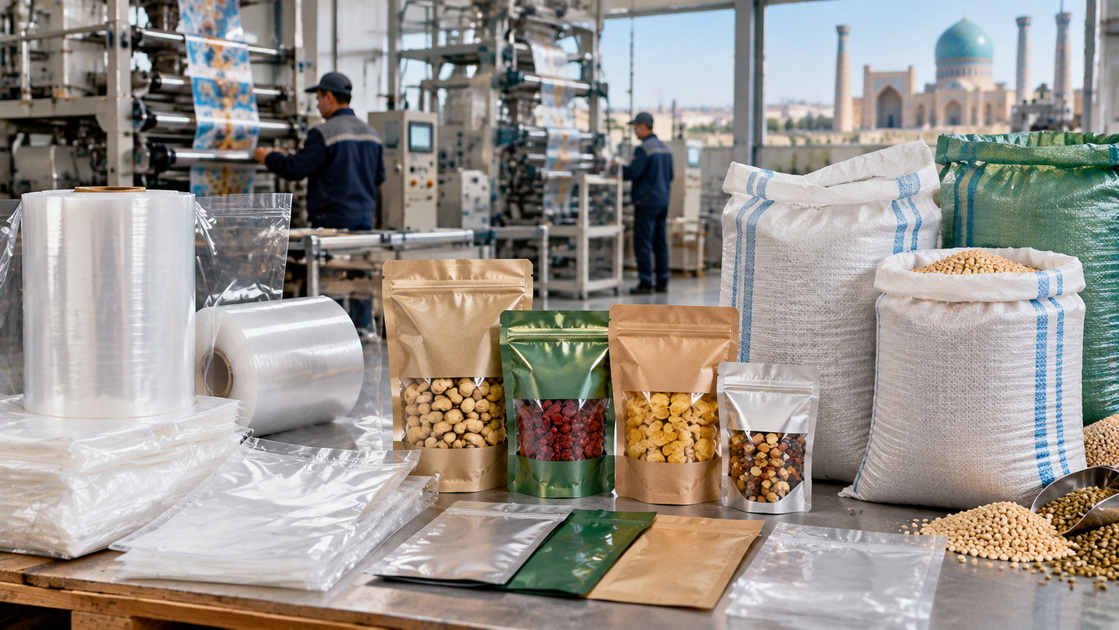
The most useful supplier list begins with an application, then tests whether the factory can repeatedly meet it. This article considered:
- Product fit: Evidence of producing the relevant format—laminated pouch, PE bag, woven PP sack, or compatible film—not simply "packaging" in general.
- Manufacturing control: Public information about printing, film conversion, bag-making, liners, sampling, or machinery integration.
- Quality assurance: Whether a buyer can reasonably request incoming-material records, in-process checks, finished-product tests, and lot traceability.
- Compliance evidence: Publicly stated standards or certificates, treated as claims until their holder, scope, site, and current status are verified.
- OEM support and responsiveness: Documented options for dimensions, print, structure, branding, or packaging-line coordination.
- Lead-time resilience: Whether the supplier can explain capacity, material availability, outsourced steps, and a realistic production schedule.
This is a document-based selection, not an on-site audit. No independent throughput audit or factory-by-factory quotation exercise was conducted for this article. An unpublished MOQ, capacity, export market, or certificate is marked "not publicly verified" rather than estimated.
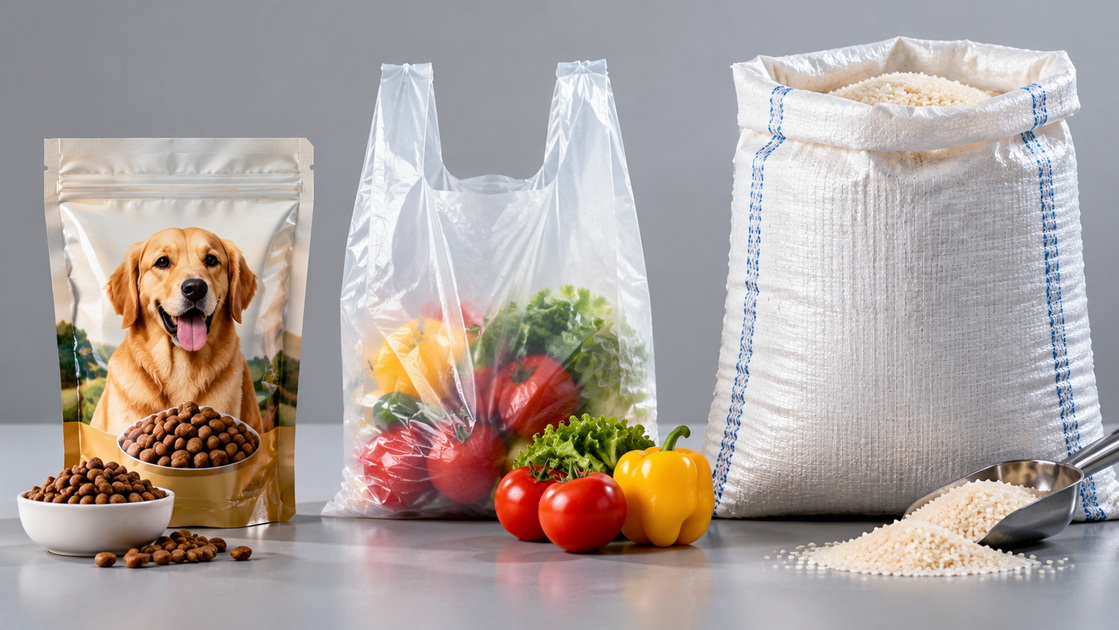
The list opens with five overseas packaging partners relevant to a broader Uzbekistan sourcing project, as requested, then moves to five Uzbekistan-based manufacturers. Only entries 6–10 are presented as Uzbekistan-based. The first four overseas companies differ substantially in product focus: a paper-box specialist should be considered for a carton or display requirement, not treated as a proven plastic-bag converter.
is based in Shantou, China, not Uzbekistan. Its published profile describes one packaging-materials factory and a separate factory for packaging machinery and integrated solutions. It lists roll films, stand-up pouches, gusseted pouches, spout pouches, and eight-side-seal bags, alongside filling and wrapping equipment. The company traces its packaging-printing activity to 1989, machinery development to 1998, and flexible-packaging expansion to 2012; these milestones should not be misread as the incorporation date of the current legal entity.
Where it fits: HLun PACK is relevant when a buyer needs a bag or film to work with a filling or wrapping line, or wants to develop a customized pouch while coordinating equipment specifications. Its materials-and-machinery model offers a practical way to discuss OEM dimensions, film presentation, sealing requirements, and machine trials in the same project. That can be useful to a small or midsize brand without implying that an unquoted project will necessarily be low-cost or low-MOQ.
Procurement check: Ask for a project-specific quotation, tooling and artwork terms, named production site, proposed film structure, machine-trial plan, and test reports. The profile describes overseas expansion but does not establish a verified country-by-country export list, current monthly bag capacity, universal MOQ, or a bag-specific ISO certificate.
focuses publicly on custom printed matter: display stands, packaging boxes, paper bags, labels, cards, and related products. Its website says it has operated in printing and packaging since 2004, serves customers across more than 30 countries and regions, and offers flexible OEM/ODM arrangements. It also claims BSCI, ISO 9001, and FSC credentials, which a purchaser should verify for the contracting entity and relevant site.
Where it fits: XingKun may suit a Uzbekistan-bound product launch that needs printed cartons, display packaging, or labels alongside its plastic bag. Its published range does not substantiate a recommendation as a primary manufacturer of plastic flexible pouches. If a quotation includes such pouches, establish who actually extrudes, prints, laminates, and converts them.
Procurement check: Its website describes short sampling and production times for its printed-packaging work, but those statements should not be transferred to an unlisted plastic-bag project. Request separate specifications and lead times for each packaging component.
primarily presents cosmetic, jewelry, gift, and other printed paper boxes and bags. Its homepage claims two factories in Dongguan and describes design and sampling services. It also contains conflicting establishment information—2006 in one section and 2014 in another—so a procurement record should mark the founding year unverified until the company confirms the legal entity and registration.
Where it fits: Xianda is a potential secondary-packaging partner if a buyer's product uses a flexible inner bag inside a retail box. It should not be described as an Uzbekistan-based plastic-bag manufacturer, and its public product emphasis does not establish industrial pouch capacity or food-contact film expertise.
Procurement check: Confirm which site produces the quoted product, which party supplies the inner bag, and whether a box sample and bag sample are approved against the same packed-product dimensions.
describes a Shenzhen factory making rigid boxes, folding cartons, corrugated packaging, paper shopping bags, inserts, and labels. It reports more than 15 years of experience, a 15,000 m² facility, more than 200 workers, and ISO 9001 and FSC certification. Those are supplier-published claims, not independently verified production or certification findings for this article.
Where it fits: This is a candidate for a carton, mailer, or presentation pack surrounding a plastic pouch, particularly when a project requires coordinated visual branding. Its published catalogue is paper-led; do not assume it manufactures the plastic primary pack.
Procurement check: If a buyer wants one quotation for both components, identify any subcontracted pouch operation and obtain separate quality documents for the food-contact bag and the paper outer pack.
publicly lists mailer, rigid, display, magnetic rigid, and drawer boxes. The material reviewed for this guide does not verify its establishment year, plastic-bag manufacturing capability, monthly capacity, MOQ, certifications, or principal export markets. A business-directory listing places Bonitopack in Dongguan, China, but the buyer should confirm the contracting entity and manufacturing address directly.
Where it fits: Consider Bonito for a customized outer box, not as a substantiated Uzbekistan plastic-packaging-bag factory. Its OEM scope for a specific box design should be established through drawings, a sample, and a written quotation rather than inferred from general marketing copy.
Procurement check: Ask whether any proposed plastic inner bag is made in-house or sourced from a separate converter, and require that converter's details before approving food-contact or barrier claims.
is a Tashkent-based converter describing flexible packaging and labels made with BOPP, PET, twist PET, and PE films. It says it has three gravure printing machines, supports design and prepress, and has operated in the Uzbekistan market for more than 20 years. Its site states that ISO 9001 and ISO 14001 audits were passed in 2016 and claims FSSC 22000 food-safety certification; a historical audit and a present-tense website claim are not substitutes for current certificate verification.
Where it fits: Printed rollstock and multilayer film for food and non-food products are the clearest public strengths. For an OEM pouch order, confirm whether POLIMAKS itself converts the printed laminate into the final bag, or supplies film for another converter. "More than 20 years" indicates an operating history, but the material reviewed does not establish a precise incorporation year or a verified list of export markets.
Procurement check: Request the laminate layer specification, gravure proof, print repeat, residual-solvent controls where applicable, seal-layer information, finished-bag responsibility, and current FSSC 22000 certificate number and scope.
describes woven PP bag production using Starlinger and Lohia equipment and fabric made in-house. Its listed options include standard and custom sizes, PE or BOPP lamination, cut-out handles, PE liners, and flexographic or rotogravure printing. The company states that its bags meet GOST 35522-2013 and TR CU 005/2011; those claims should be assessed against the specific bag, destination, and supporting documents.
Where it fits: Woven sacks for bulk foods, feed, agricultural products, chemicals, and building materials—not a substitute for thin retail carrier bags or small hermetic snack pouches. The disclosed custom sizing, liner, and printing options provide a clear starting scope for an OEM enquiry. The reviewed product page does not establish an incorporation year, principal export markets, monthly capacity, MOQ, or a currently verified ISO certificate.
Procurement check: Specify fabric weight, bag dimensions, seam construction, coating, liner resin and thickness, permitted load, and drop-test conditions. For food, obtain documentation for the actual food-contact liner rather than assuming that a compliant outer woven sack settles the question.
lists T-shirt and other PE bags, rolled bags, zip-lock bags, shrink wrap, and a product it calls a "BOPP bag." Its website offers dimension, colour, thickness, and logo options, and states a 100 kg minimum order in its FAQ. It presents itself as serving retailers, food businesses, construction companies, manufacturers, and clothing shops; that is a customer-sector description, not a verified geographic export-market list. Its site footer is dated 2024, but that alone does not establish the company's founding year.
Where it fits: Custom PE carrier and utility bags are the clearest match. Its stated 100 kg MOQ is useful for an initial enquiry, but buyers should confirm whether it applies to their exact size, colour, print, and resin grade.
Procurement check: The website's "BOPP bag" description also refers to polyethylene as the material. Resolve that inconsistency with a written construction specification and a physical sample before ordering. Request batch-specific documentation if the bag will directly contact food.
describes its own manufacture and sale of polypropylene bags. Its website says it has operated since 2008 and refers to product checks and certified products, without publicly establishing in the reviewed material the certificate types, numbers, or current status. Its contact details place it in Tashkent.
Where it fits: Standard PP sack procurement or a custom sack enquiry is more consistent with its public profile than a laminated consumer pouch. An OEM buyer should confirm available dimensions, printing, liners, and whether alterations are manufactured in-house. The reviewed pages do not substantiate a monthly capacity, published MOQ, or principal export markets.
Procurement check: Ask for the exact product standard, test report, allowable weight tolerance, and certificate copies matched to the legal entity. A website statement that "all products are certified" is too broad to place unqualified in a purchasing specification.
is listed in Tashkent as a producer and seller of polyethylene and PVC films. Local directories also place it in flexible packaging, polyethylene packaging, and food-packaging categories. A supplier profile describes PE film, shrink film, and other film products; the evidence reviewed is strongest for film capability, not for a particular finished pouch or printed-bag line.
Where it fits: DOVON is worth evaluating when the procurement need begins with PE film, shrink film, or a specified film-to-bag conversion project. Ask which bag formats it makes directly and which it sources or converts through partners. The reviewed sources do not substantiate a founding year, verified main export markets, bag-specific MOQ, monthly capacity, or active certification.
Procurement check: Separate the film specification from the finished-bag specification. Width, gauge, treatment, and shrink behaviour may be satisfactory on a roll while the downstream bag still fails on seam strength or dimensions.
"Not publicly verified" means this research found no dependable published figure or current certificate for the stated item. It does not mean the company has no capacity or certification. Throughput should be requested in comparable units—bags or tonnes per month, at the specified size and print complexity—rather than copied from a general company profile.
| Supplier | Base and strongest published fit | Public capacity for the specified plastic bag | Public MOQ | Certification or standards position |
|---|---|---|---|---|
| HLun PACK | China; flexible pouches, film, and packaging machinery | Not publicly verified | Quote by structure and format | Bag-specific certificate not verified in reviewed profile |
| XingKun | China; printed boxes, displays, labels | Plastic-bag capacity not established | Low-MOQ model claimed for its printed-packaging work; plastic-bag MOQ not established | BSCI, ISO 9001, FSC claimed; verify entity, site, and scope |
| Xianda | China; gift and retail boxes | Plastic-bag capacity not established | Not established for plastic bags | Relevant plastic-bag certificate not verified |
| Maituohong Packaging | China; paper boxes, cartons, bags, and inserts | Plastic-bag capacity not established | Quote-specific; no fixed figure established | ISO 9001 and FSC claimed for its packaging operation; verify scope |
| Bonito Packaging | China, per third-party listing; custom boxes | Plastic-bag capacity not established | Not publicly verified | Relevant plastic-bag certificate not verified |
| POLIMAKS | Uzbekistan; printed flexible film and labels | Not publicly verified | Not publicly verified | Website claims FSSC 22000 and describes ISO 9001/14001 audits in 2016; check current status |
| SML | Uzbekistan; woven PP sacks with optional liner/lamination | Not publicly verified | Not publicly verified | Product page claims GOST 35522-2013 and TR CU 005/2011 conformity; request product evidence |
| Paket Makon Group | Uzbekistan; PE retail and utility bags | Not publicly verified | Website states 100 kg; reconfirm by SKU | Relevant current certificate not verified |
| MEZON PLAST | Uzbekistan; PP sacks | Not publicly verified | Not publicly verified | “Certified products” claimed; certificate details not established |
| DOVON | Uzbekistan; PE and PVC film | Finished-bag capacity not established | Not publicly verified | Relevant current certificate not verified |
This table deliberately does not compare a box factory's headcount with a sack maker's bag output as though they were equivalent measures. For a purchasing decision, send the *same* product specification to relevant suppliers, then add their quoted MOQ, capacity, certification evidence, and delivered price to a like-for-like bid sheet.
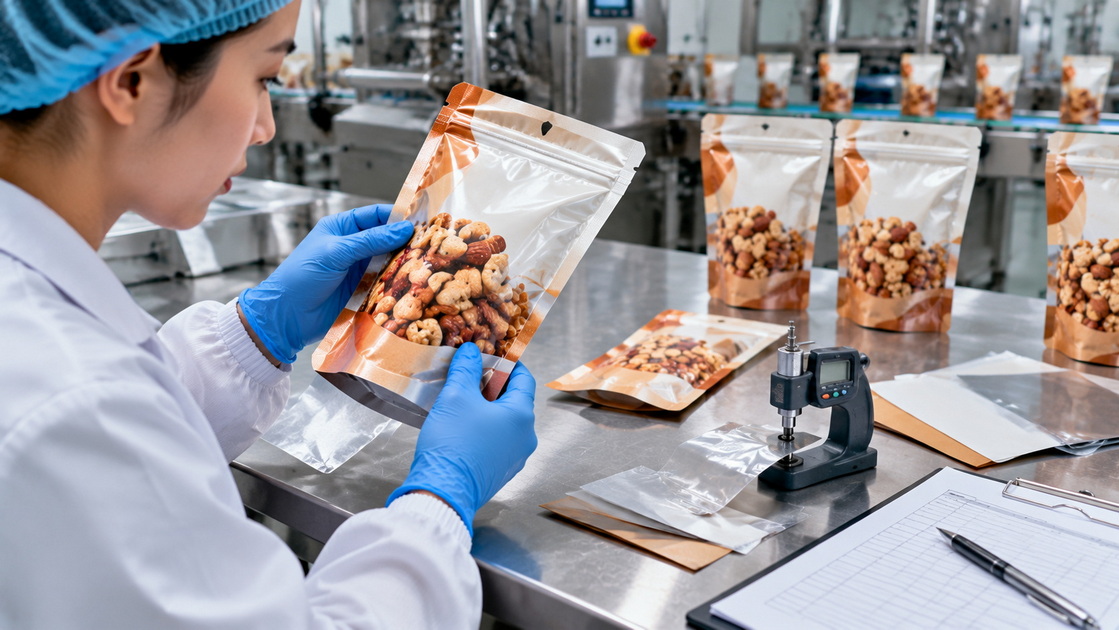
"Plastic packaging bag" is not a sufficient RFQ specification. State the filled product, fill weight, expected shelf life, storage conditions, target market, and packing machine before requesting a resin or pouch structure. A PE carrier bag, a laminated snack pouch, and a woven PP sack face different failure modes.
For a flexible food pouch, ask the converter to identify each layer and its function: the print substrate, barrier layer if needed, adhesive or tie layer, and food-contact sealant. Specify total thickness and layer tolerances, pouch dimensions, closure, seal width, and the tests that matter for the product. For a woven sack, specify fabric construction and mass, liner, seam, load, and drop performance instead. SML's published range illustrates why even within one PP-sack category a liner, lamination, and printing choice can materially change the finished product.
Do not use CE or RoHS as blanket proof that an ordinary plastic bag is safe for food. For bags intended to contact food in the EU, assess the applicable food-contact framework and request a declaration and supporting test evidence for the *actual finished construction and intended conditions of use*. Regulation (EU) No 10/2011 governs plastic food-contact materials, while Regulation (EU) 2025/351 amended it and includes a transition tied to September 16, 2026. Confirm the applicable position for the product's first placing on the market rather than relying on an old test report.
Management-system standards answer a different question. ISO 9001 can support confidence in process management; it is not, by itself, a migration test for a food pouch. A claim about a factory's food-safety system likewise must be checked for the right legal entity, manufacturing site, activity, and validity period.
1. Issue one controlled RFQ. Include a dimensioned drawing, filled-product information, target structure or required performance, artwork, forecast, order quantity, destination, and required documents.
2. Approve an engineering sample. Check dimensions, gusset or zipper operation, seal position, print registration, and fit on the intended filling line.
3. Approve a production-representative sample. Confirm whether it came from the proposed production materials and printing and sealing processes. A digital colour mock-up is not necessarily a valid reference for gravure colour, barrier, or seal strength.
4. Record measurable acceptance limits. Agree on thickness and dimensional tolerances, colour reference, seal and leak tests, defects, sampling plan, and what triggers rejection or rework.
5. Retain samples and records. Keep an approved "golden sample," a signed specification revision, test results, and traceable production-lot identifiers before releasing a repeat order.
The aim is not to make sampling elaborate for its own sake. It is to prevent a commercially attractive first sample from becoming the only definition of "same quality" in a later, much larger shipment.
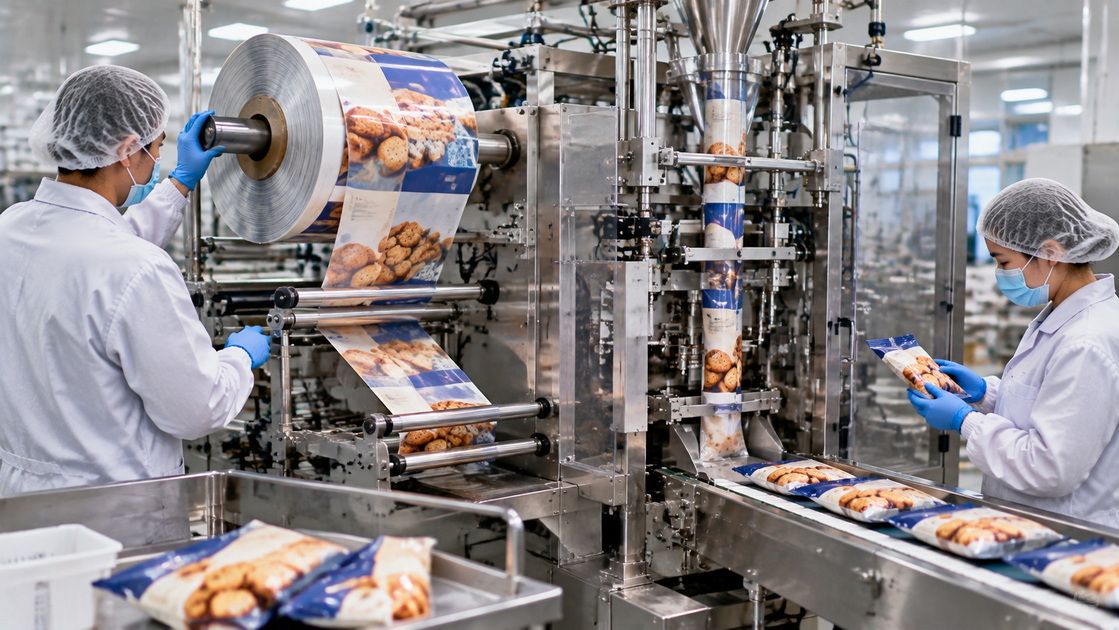
A bag can pass a hand-pull check and still fail consistently on a filling line. The overlooked variable is often how the film runs and seals on the buyer's actual equipment. A converter may change film orientation, winding direction, slip formulation, or the sealant layer while preserving the nominal thickness and artwork. The delivered roll may then track differently, print the wrong way relative to the cutter, or require a sealing window the buyer's machine cannot reliably hold.
To avoid this, write the unwind direction, print orientation, repeat length, roll core, maximum roll diameter, splice rules, and sealing-performance requirement into the approved specification. Run a trial at realistic operating speed with the actual product, then approve both the bag and its machine settings. This is especially important when buying rollstock from one supplier and using a different company's form-fill-seal equipment. HLun PACK's published combination of flexible packaging and machinery makes this a sensible subject to raise with its team, but the line trial—not a supplier's one-stop description—must establish compatibility.
A second material-substitution trap is hidden in a price revision. "Same thickness" does not guarantee the same layer composition, resin grade, or barrier. Require written approval before any change to the food-contact layer, recycled-content percentage, adhesive, ink, or laminate construction. If a supplier proposes a lower price, ask which specification or process changed and whether the old test evidence still applies.
For Uzbekistan-based supply, confirm the factory address, collection point, export-document responsibility, transit route, border-handling assumptions, and who bears a delay under the agreed Incoterm. Because Uzbekistan is double-landlocked, a domestic dispatch date should not be treated as an arrival commitment at a distant seaport or overseas warehouse.
For overseas alternatives, compare their quotation at an equivalent delivery point. Include tooling, plates or cylinders, sampling, testing, freight, customs charges, and the inventory cost of the stated MOQ. A cheap bag with an impractically large printed minimum or an untested fill-line performance is not necessarily a low-cost purchase.
A useful shortlist ends with a controlled trial, not a ranking. For a Uzbekistan-based order, begin with the local company whose actual bag format matches the application, then request capacity and compliance evidence against one written specification. For projects that also require custom pouches and machine integration, invite to quote the same brief as an overseas option; compare the approved sample, documented performance, delivered cost, and response quality before committing to volume.
Ask for the certificate number, full legal-entity name, site address, standard, scope, issuer, and expiry date. Search the company or certificate in and compare the displayed status, scope, and site with the factory that will make your order. An absent listing should prompt a check with the certification body rather than an automatic allegation of fraud: IAF's guidance notes that a certificate may not yet be present or may have restricted visibility. Recheck near shipment if certification is a contractual condition.
No single upstream document establishes compliance for every finished bag. Request a declaration and supporting evidence relevant to the complete material construction, intended food, contact time and temperature, and destination market. Changes in inks, adhesives, sealants, or recycled content may require reassessment. For EU food-contact plastics, start with Regulation (EU) No 10/2011 and its applicable amendments, including the 2025/351 transition provisions.
Convert each quotation to the number of *saleable bags per approved SKU*, then compare delivered cost at your forecast demand. Require the supplier to state whether its minimum applies per material structure, bag size, artwork, colour set, or total purchase order. Paket Makon's published 100 kg minimum, for example, is a lead for discussion—not evidence that every printed design can be ordered at that quantity.
Name both production sites in the purchase agreement. Establish who controls print approval, lamination, curing where applicable, conversion, final inspection, complaints, and traceability. Ask for a production-representative sample from the complete supply chain; a good printed roll does not demonstrate that the finished pouch will seal or hold its dimensions.
Ask for output for your specified bag and print complexity, available machine hours in the proposed production window, key material lead times, and which processes are subcontracted. Tie the promised date to artwork approval, material approval, production completion, inspection, and dispatch milestones. A factory-wide tonnage figure cannot reliably answer how many compliant pouches of *your* structure can ship in a given week.
1- [National Statistics Committee of Uzbekistan — industrial enterprises by activity]. Broad industry context, not bag-factory or export totals. [stat]
2- [Mordor Intelligence — Printed Flexible Packaging Market, 2026–2031]. Global market estimate; not an Uzbekistan forecast. [mordorintelligence]
3- [European Commission legal text — Regulation (EU) No 10/2011] and [amending Regulation (EU) 2025/351]. Check applicability to the precise food-contact material and placing-on-market date. [eur-lex.europa]
4- [IAF CertSearch — certificate verification]. For checking accredited certificate details and current status. [iafcertsearch]
5- [International Trade Administration — Uzbekistan market overview]. Context for transport-corridor planning. [trade]
6- [Golden Pages Uzbekistan — PP and PE sack producers]. A directory for discovering candidates, not independent proof of audit results or production capacity. [goldenpages]


