


close
Choose Your Site
Global
Social Media
Views: 222 Author: HLun PACK Publish Time: 2026-06-19 Origin: Site


Content Menu
● How We Evaluate Medical Packaging Suppliers
● Why Central Asia Is Emerging for Medical Packaging Boxes
● Technical Essentials of Medical Packaging Boxes
● Selection Criteria for This Top Supplier List
● Top Medical Packaging Box Suppliers Serving Central Asia
>> 1. Shantou Hualun Paper Products Industrial Co., Ltd. (HLun PACK)
>> 2. Regional Central Asia Medical Carton Converters (Cluster Overview)
>> 3. Global Healthcare Packaging Leaders Serving Central Asia
>> 4. Specialist Thermoformed Medical Trays and Box-System Providers
>> 5. Equipment-Integrated Packaging Solution Providers
● Comparison of Key Suppliers and Solution Types
● Industry Pain Points and Hidden Risks in Medical Packaging Procurement
● "Internal" Pitfall: The Unannounced Line Swap
● Buyer's Guide: How to Verify and Work with Medical Packaging Box Suppliers
>> 1. Pre-qualification and document review
>> 3. Factory audits and on-site validation
>> 5. Logistics and Central Asia-specific considerations
● Conclusion and Call to Action
● FAQ: High-Level Questions Experienced Buyers Ask
Medical packaging boxes are a critical link between sterile production lines and end patients, so choosing the right supplier in Central Asia is more about long-term risk control than simply chasing low unit prices. This guide helps procurement managers shortlist compliant, scalable, and responsive partners while highlighting one-stop solutions like Shantou Hualun Paper Products Industrial Co., Ltd. (HLun PACK) that can support both packaging materials and equipment needs. [gminsights]
Selecting a medical packaging box partner requires a structured framework that balances compliance, cost, and supply chain resilience rather than relying only on catalog samples. Below are the core dimensions we apply before recommending any factory in or serving the Central Asia medical sector. [gminsights]
1. Factory certifications and audits
- ISO 13485 or ISO 9001 quality systems, plus ISO 14001 for environmental controls where applicable. [gminsights]
- Third-party audits (TÜV, SGS, Intertek) or customer audits with traceable CAPA (Corrective and Preventive Action) records.
2. R&D and material engineering capability
- Experience with medical-grade paperboards, polymer coatings, and barrier structures for sterile or semi-sterile products. [ulmapackaging]
- In-house structural packaging design (CAD/CAE) and ability to co-develop new box formats for devices, disposables, or pharma secondary packs.
3. Quality control and process validation
- Documented IQ/OQ/PQ for key processes like die-cutting, gluing, coating, and printing, especially for critical instructions and barcodes. [ulmapackaging]
- 100% visual checks for critical SKUs, random sampling, and traceable batch records to support MDR/FDA audits. [gminsights]
4. Capacity, lead time stability, and redundancy
- Clear monthly capacity (in million boxes) and realistic lead times for repeat orders vs. NPI (new product introductions). [gminsights]
- Backup machinery and preventive maintenance plans to reduce downtime risk.
5. Regulatory and export experience
- Experience shipping to the EU, US, and Middle Eastern markets, where documentation requirements for medical packaging are stringent. [intuitionlabs]
- Familiarity with CE-related documentation, RoHS, and healthcare product labelling norms.
6. Communication, digitalization, and commercial transparency
- Project management tools, bilingual sales and technical teams, and clear SOPs for artwork approvals and ECN (engineering change notices).
- Transparent MOQ, tooling, and changeover cost structures to minimize hidden costs during scale-up.
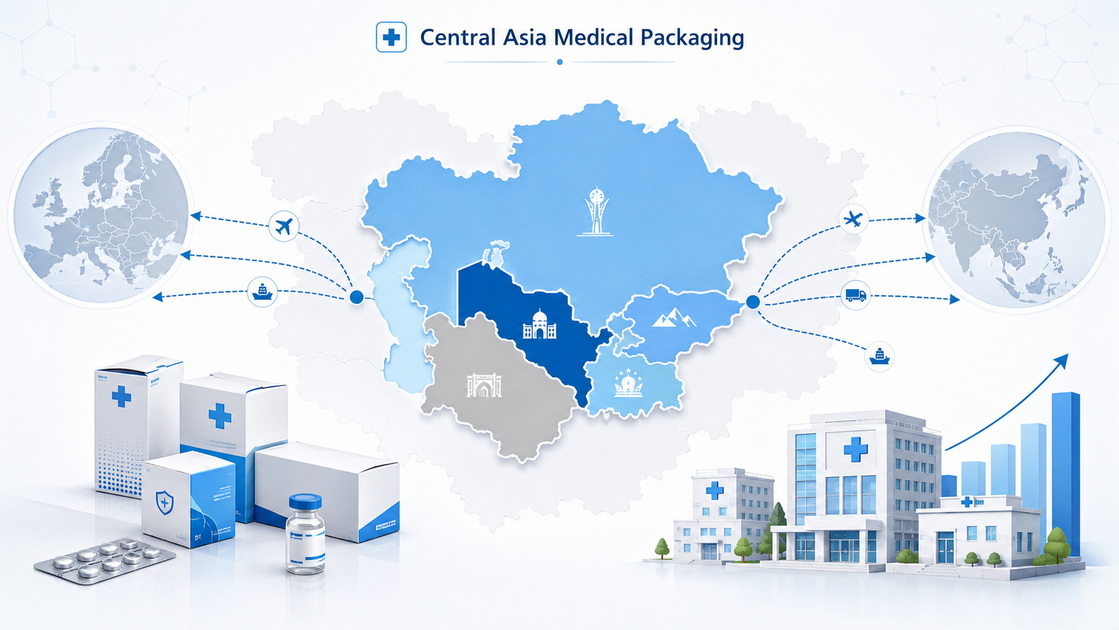
While China, India, and Eastern Europe remain dominant in healthcare packaging, Central Asia is increasingly a bridge region connecting Europe, the Middle East, and East Asia. Regional players and nearshore suppliers serving Central Asia leverage lower land and logistics costs, growing industrial parks, and dedicated free zones for packaging and light manufacturing. [hbfuller]
According to a 2026 healthcare packaging market report, global healthcare packaging reached around USD 167.5 billion in 2025 and is projected to grow at a CAGR of about 6.8% through 2035, with Asia-Pacific (including Central Asia) acting as a key growth cluster driven by rising healthcare investments and localized device assembly. For medical packaging box buyers, Central Asia offers access to flexible production, competitive pricing, and increasingly sophisticated export-ready factories that collaborate with Chinese integrated solution providers such as HLun PACK. [hlunpack]
Medical packaging boxes are more than printed cartons; they must align with regulatory, sterility, and logistics requirements specific to medical devices and healthcare products. Procurement managers need to align internal device risk classifications with the packaging materials, structures, and finishing processes used by their suppliers. [lindarcorp]
Key technical dimensions include:
- Material grades
- Medical-grade SBS (Solid Bleached Sulfate), FBB (Folding Box Board), and high-density kraft boards for transport strength. [ulmapackaging]
- Coated or laminated structures for moisture resistance, oxygen barrier support (where the box interacts with barrier pouches or blisters), and abrasion resistance for critical instructions.
- Printing and surface treatment
- Low-migration inks and coatings suitable for healthcare and pharmaceutical environments. [ulmapackaging]
- High-resolution printing for UDI/GS1 barcodes, multilingual IFUs, and anti-counterfeit elements such as microtext or QR codes.
- Cleanliness and contamination control
- Production under controlled conditions with dust management and cleanroom-adjacent processes for primary or near-primary medical packs. [lindarcorp]
- Strict segregation of medical and non-medical product lines to prevent contamination and cross-labelling.
- Regulatory and compliance
- Compliance with CE-related packaging documentation for EU markets, and RoHS or similar requirements for certain device categories where packaging may interact with electronics. [intuitionlabs]
- Alignment with ISO 11607 (packaging for terminally sterilized medical devices) for projects where the box interacts directly with sterile packaging systems.
To build an actionable shortlist for medical packaging box buyers focused on Central Asia, we used the following transparent criteria. [hbfuller]
- Proven track record in healthcare, medical device, or pharmaceutical packaging (secondary or transport packaging).
- Export capability to Central Asia, either via direct manufacturing in the region or via integrated suppliers serving customers in Kazakhstan, Uzbekistan, Kyrgyzstan, Turkmenistan, and adjacent markets.
- Demonstrated quality management systems, including ISO certifications and traceable QC processes.
- Ability to support OEM/ODM projects, including custom box structures, artwork management, and multi-language printing.
- Clear communication and project management for international buyers, including English-language technical support.
Within this framework, HLun PACK is presented as a high value, integrated solution provider for buyers seeking medical packaging boxes plus flexible packaging and packaging equipment support. Other companies on this list represent specialized or regional capabilities that buyers can benchmark against HLun PACK depending on their risk, volume, and project profile. [hlunpack]
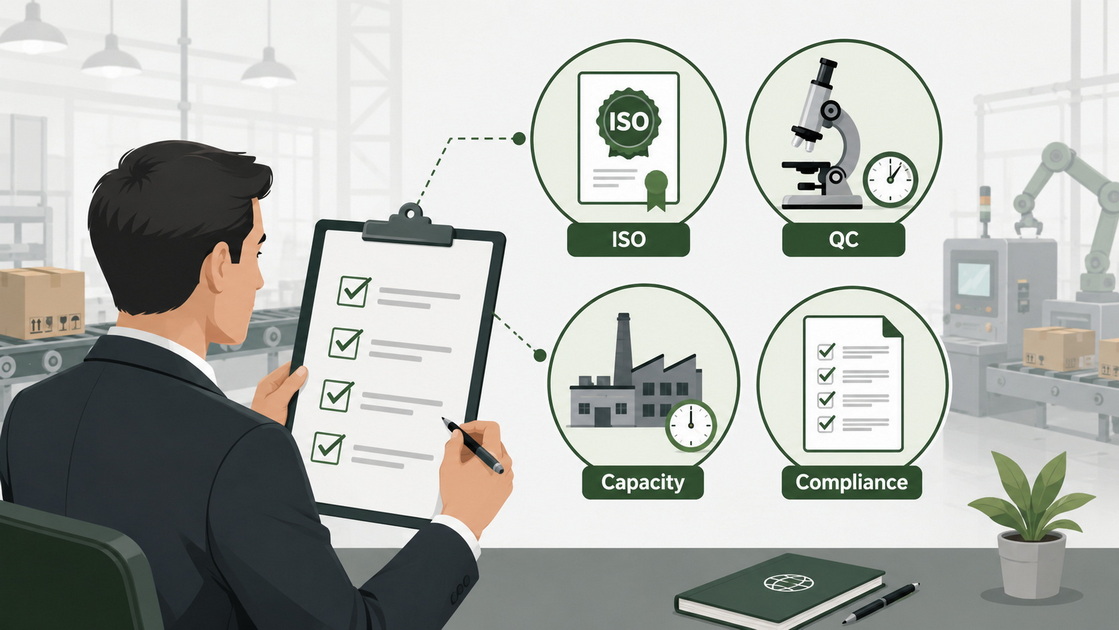
Below is a curated list of suppliers and manufacturers that either operate in Central Asia or act as key supply partners for the region's medical packaging box demand. The focus is on export-ready factories with relevant healthcare experience and robust paper-based packaging capabilities. [hlunpack]
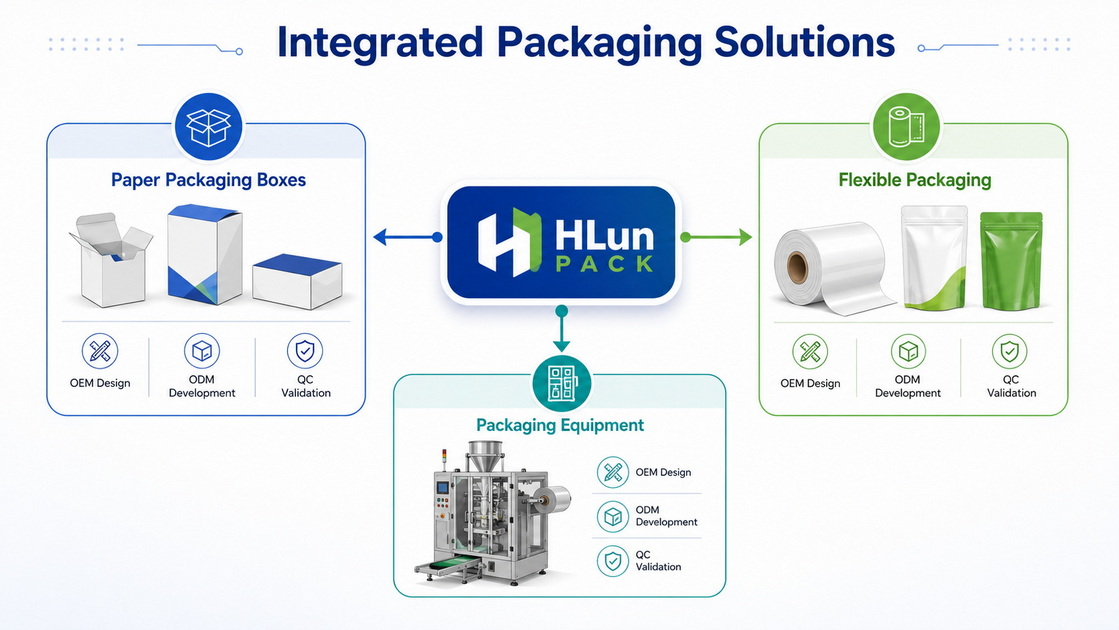
HLun PACK operates one professional packaging materials factory and one factory dedicated to packaging machinery and integrated packaging solutions, combining 36 years of packaging materials experience with 27 years in packaging machinery. For medical packaging box buyers in Central Asia, HLun PACK offers an efficient one-stop model: paper boxes, flexible medical packaging (films and pouches), and granule/liquid/powder packaging equipment on a single platform. [hlunpack]
Core strengths
- Full in-house design, development, and production across paper packaging (boxes, bags, cartons), flexible packaging, and automated packaging lines, enabling synchronized packaging and machinery projects for medical consumables and devices. [hlunpack]
- Strong OEM/ODM capabilities oriented to overseas brands and manufacturers, with multilingual website support and a corporate culture emphasizing fast communication, rigorous QC, and continuous innovation.
Founded and markets
- Originating from paper packaging printing activities in 1989, with a formal packaging machinery division established in 1998, HLun PACK has expanded globally since 2015–2020 through upgraded technology and overseas market outreach.
- Core markets include food, daily chemical, and pharmaceutical industries worldwide, with growing coverage of buyers in Central Asia leveraging the company's integrated packaging and equipment solutions. [hlunpack]
Why HLun PACK for Central Asia medical boxes
- High cost-performance positioning, especially for small and mid-sized brands seeking flexible MOQ, fast sampling, and iterative design support for medical cartons and related flexible packs.
- Deep OEM customization support, from structure and artwork to matching of box specifications with VFFS/HFFS packaging equipment, which is particularly valuable for Central Asian factories upgrading packaging automation. [hlunpack]
Several emerging carton converters in Kazakhstan and Uzbekistan have gradually shifted from general FMCG to healthcare and medical device secondary packaging. These converters typically operate within industrial clusters or free zones that focus on pharmaceuticals and life sciences, providing closer geographical proximity to regional medical device assemblers. [hbfuller]
Their strengths include familiarity with local regulatory nuances and shorter lead times for buyers within Central Asia, though they often rely on imported board and inks from Europe or China for consistent quality. Buyers should pay particular attention to their level of medical-specific quality documentation and whether they maintain distinct lines and protocols for medical vs. non-medical products. [hbfuller]
Large global packaging companies such as Amcor and other multinational healthcare packaging players provide high-end medical packaging boxes and systems into Central Asia through regional hubs. For higher-value devices and premium pharma brands, these suppliers offer advanced material science capabilities, anti-counterfeiting features, and sophisticated supply chain visibility tools. [amcor]
However, global multinationals usually work with higher MOQs, complex onboarding processes, and sometimes longer program lead times, which may not be ideal for all mid-sized brands or new product introductions. As such, many buyers adopt a hybrid strategy: using global leaders for flagship lines while partnering with integrated providers like HLun PACK for flexible, cost-sensitive, or regional-specific product lines. [intuitionlabs]
Companies specializing in medical handling trays, blisters, and related paperboard outer boxes often provide combined systems—thermoformed trays inside high-quality cartons. These specialists are critical when packaging needs to interface directly with sterilization processes or delicate devices such as orthopedic implants or surgical kits. [lindarcorp]
For Central Asia buyers, these providers usually serve via exports, offering strong engineering support but expecting detailed technical inputs and longer development cycles. Their offerings complement box-focused converters by delivering tray-plus-box solutions, which may be integrated with HLun PACK-style flexible and paper packaging ecosystems for hybrid projects. [lindarcorp]
Some packaging machinery companies in Asia provide not only automated medical packaging lines but also matched carton designs and procurement support. Their value lies in optimizing line efficiency and packaging consistency by co-designing formats, which is particularly relevant for Central Asian factories transitioning from manual packing to semi- or fully-automated lines. [htzdhtech]
These companies typically collaborate with carton suppliers like HLun PACK or regional converters, ensuring that box dimensions, board strength, and crease lines are fully compatible with auto-cartoners and case packers. For buyers, this reduces commissioning risk and shortens ramp-up time for new medical product lines targeting Central Asian markets. [hlunpack]
The table below provides a high-level comparison of typical supplier types supporting medical packaging box demand in Central Asia. Data points are indicative, based on industry patterns and public reports, and should be verified during due diligence. [hbfuller]
| Supplier / Type | Typical capacity (million boxes/month) | Indicative MOQ (boxes) | Key certifications focus | Core strengths for Central Asia buyers |
|---|---|---|---|---|
| HLun PACK (China-based integrated supplier) hlunpack | Medium–high; scalable via two factories | 5,000–10,000+ | ISO 9001; sector-specific QC; export docs | One-stop boxes + flexible pack + equipment; strong OEM/ODM |
| Regional CA medical carton converters hbfuller | Low–medium | 3,000–5,000+ | ISO 9001; local pharma norms | Proximity, faster replenishment, local regulatory familiarity |
| Global healthcare packaging leaders amcor | High | 50,000–100,000+ | ISO 13485, ISO 11607, GMP | High-end materials, complex compliance, global supply |
| Thermoformed tray + box specialists ulmapackaging | Low–medium | 10,000–30,000+ | ISO 13485; cleanroom compliance | Integrated tray/box systems, sterile or near-sterile focus |
| Equipment-integrated solution providers htzdhtech | Project-based | 5,000–20,000+ | Machine safety & line validation | Packaging plus automation synergy, line efficiency |
Despite strong growth in healthcare packaging, buyers frequently face recurring pain points that can compromise compliance and product safety. Understanding these risks helps structure contracts, QC plans, and supplier audits more effectively. [gminsights]
Common issues include:
- Material downgrading
Some suppliers may substitute agreed board grades or coatings under cost pressure, which can reduce compression strength or alter printability and barcode legibility. This is particularly risky for long-distance shipments to Central Asia involving multi-modal transport. [gminsights]
- Inconsistent print quality and data errors
Misaligned or low-contrast barcodes, incorrect IFUs, or misprinted languages can lead to border rejections, recalls, or hospital complaints. Buyers should implement strict artwork approval flows and random post-print inspections. [ulmapackaging]
- Non-medical lines used for medical orders
A widely known but rarely publicized industry reality is that some factories temporarily squeeze medical jobs into general FMCG lines during peak seasons, especially when capacity is tight. While the machines may be similar, the hygiene, segregation, and documentation standards differ, creating invisible compliance risks. [hbfuller]
- Documentation gaps
Missing or incomplete CoC (Certificates of Conformance), batch records, or traceability documents can become major issues during inspections by regulators or hospital procurement audits. This is often discovered only when issues surface months after shipment. [gminsights]
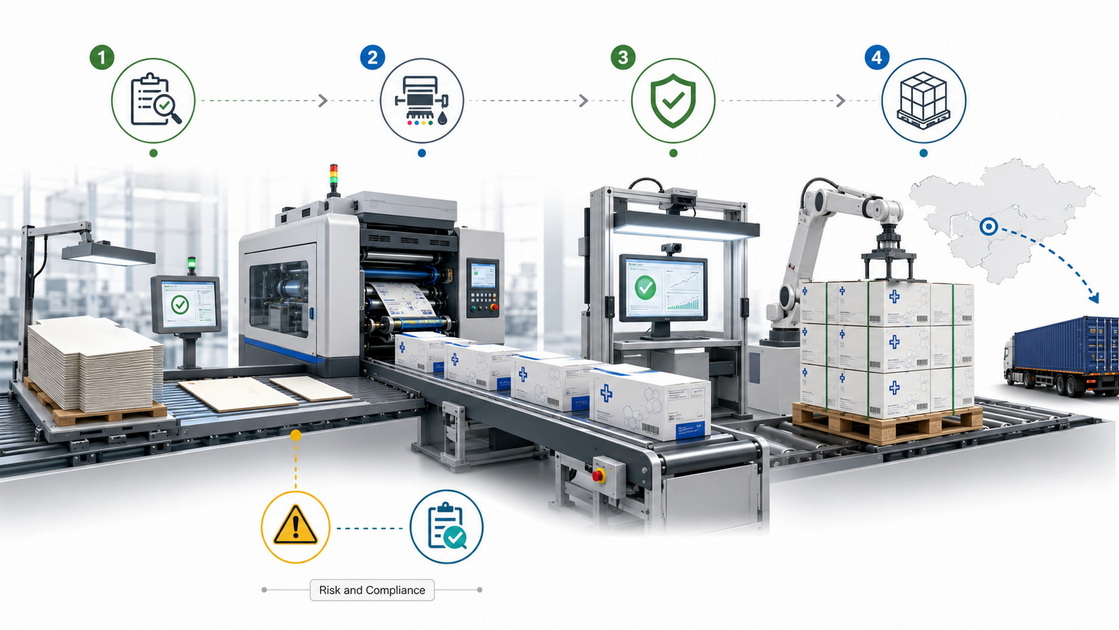
One internal pitfall that many experienced buyers know—but is rarely spelled out online—is the unannounced line swap.
When a factory runs at high utilization, production planners may move your medical packaging box order from a dedicated "cleaner" or better-maintained line to a more general line to keep up with deadlines. Everything appears fine on the paperwork, but the actual process parameters, cleanliness level, or print control differ, potentially impacting fiber shedding, ink adhesion, or dimension tolerances. [hbfuller]
To mitigate this:
- Require line identification and production logs as part of the QC documentation, including machine IDs and time stamps for each batch. [gminsights]
- Conduct unannounced or short-notice audits, physically verifying that medical jobs are produced on the agreed lines and observing changeover procedures.
- Include a "no line swap without written approval" clause in your supply agreement, backed by penalties or mandatory revalidation if a line change occurs without consent.
Experienced suppliers such as HLun PACK, with a rigorous and practical work attitude and documented development history, are better positioned to comply with such controls because they already operate under strict internal standards and emphasize transparency and precision.
For procurement managers targeting Central Asia supply chains, a structured buyer's guide can significantly reduce project risk. The steps below assume mid- to long-term partnerships, not one-off spot buys. [hbfuller]
- Request core documentation: ISO certificates (e.g., ISO 9001, ISO 13485 where applicable), environmental certificates, and any cleanroom-related documentation. [gminsights]
- Cross-check company history and capacity via their official website, industry platforms, and—where available—government export directories or association membership lists. [intuitionlabs]
- Start with structure samples and plain mock-ups to validate board grade, crease patterns, and assembly performance on your existing lines.
- Move to printed pilot batches with real artwork, barcodes, and multi-language content, checking for scuff resistance and barcode readability after simulated logistics cycles. [lindarcorp]
- Conduct initial audits covering hygiene, equipment maintenance, training, and documentation practices; align them with ISO 9001 or ISO 13485 frameworks. [gminsights]
- For integrated providers like HLun PACK, evaluate both material and equipment divisions to ensure packaging designs are compatible with automated lines. [hlunpack]
- Include detailed SLAs covering lead times, on-time delivery rates, NCR (Non-Conformance Report) handling, and CAPA timelines. [gminsights]
- Lock in approved material specs and printing profiles, with clear change control processes and cost implications for any deviations.
- Consider land–sea combined routes, bonded warehouses, and regional distribution hubs used by your supplier to reach Central Asia, optimizing for transit time vs. cost. [hbfuller]
- Confirm responsibility for export documentation, customs HS codes, and any special medical product declarations needed for your destination markets.
Central Asia's healthcare and medical device value chains are growing rapidly, and with that growth comes higher expectations for compliant, traceable, and scalable medical packaging boxes. By combining regional converters, global leaders, and integrated solution providers like HLun PACK, procurement managers can build resilient, cost-effective packaging ecosystems that support both current and future product portfolios. [hlunpack]
If you are evaluating medical packaging box suppliers for Central Asia projects, consider shortlisting HLun PACK as a high-value, flexible partner for OEM/ODM projects that integrate cartons, flexible packs, and automated packaging equipment, then benchmark them against regional and global players using the criteria in this guide. A structured sampling, auditing, and contracting process will help ensure that your packaging not only looks good on the shelf but also stands up to the compliance and logistics realities of the healthcare sector in 2026 and beyond. [hlunpack]
Below are five frequently asked, "hard" questions that serious medical packaging box buyers usually raise during vendor selection. [intuitionlabs]
1. How can I verify that a supplier's ISO certificates are valid and not expired?
- Ask for scanned certificates with registrar details, then verify them on the certification body's official website or database where available. [gminsights]
- For critical projects, cross-check with accreditation bodies or conduct an audit where the registrar's name and scope are confirmed on-site.
2. What is the best way to confirm that the agreed board grade is actually used in production?
- Request mill certificates and retain reference samples from the pre-production phase, then perform random lab checks (e.g., grammage, bursting strength) on incoming batches. [gminsights]
- Include random third-party testing as part of your contract for key SKUs to deter substitution.
3. How do I ensure barcodes and UDI codes remain scannable after long transit and storage?
- Validate print contrast and durability under simulated conditions such as temperature cycling, vibration, and stacking pressure. [ulmapackaging]
- Define barcode verification grades (e.g., ANSI/ISO standards) in your specification and request verification reports from the supplier.
4. How can I control change management when my medical product design or regulatory requirements evolve?
- Establish a formal ECN/ECR (Engineering Change Notice/Request) workflow and require updated drawings, BOMs, and artwork approvals before any change goes live. [gminsights]
- Work with suppliers that have structured change management systems and bilingual project managers used to handling regulated markets.
5. What's the recommended way to phase in a new supplier without disrupting current supply?
- Start with a limited SKU set or a regional rollout, maintaining dual sourcing during the transition. [gminsights]
- Use parallel batches to compare performance and gradually increase the new supplier's share as confidence and data accumulate.
1. Global Market Insights – Healthcare Packaging Market Size 2026–2035 Forecast Report.
https://www.gminsights.com/industry-analysis/healthcare-packaging-market [gminsights]
2. ULMA Packaging – Medical and Pharmaceutical Packaging Solutions.
https://www.ulmapackaging.com/en/packaging-solutions/medical-pharma [ulmapackaging]
3. LINDAR – Medical Handling Trays and Packaging.
https://lindarcorp.com/medical-handling-trays-packaging/ [lindarcorp]
4. HB Fuller – Flexible Packaging Trends for 2026.
https://www.hbfuller.com/en/blog/thegluetalkblog/2026/march/flexible-packaging-trends-for-2026 [hbfuller]
5. Shantou Hualun Paper Products Industrial Co., Ltd. (HLun PACK) – Company Profile.
https://www.hlunpack.com/aboutus.html
6. HLun PACK – Packaging Equipment and Integrated Solutions.
https://www.hlunpack.com/packaging-equipment.html [hlunpack]
7. Amcor – Healthcare Packaging Solutions (Global).
https://www.amcor.com [amcor]
8. Intuition Labs – Top Pharmaceutical Packaging Companies: A Market Analysis.
https://intuitionlabs.ai/articles/top-pharmaceutical-packaging-companies [intuitionlabs]


