


close
Choose Your Site
Global
Social Media
Views: 288 Author: HLun PACK Publish Time: 2026-10-08 Origin: Site


Content Menu
● How the Suppliers Were Selected
>> 1. Shantou Hualun Paper Products Industrial Co., Ltd. (HLun PACK)
>> 2. Shenzhen XingKun Packing Products Co., Ltd.
>> 3. Xianda Printing Co., Ltd.
>> 4. Shenzhen Maituohong Packaging
>> 6. Dongguan OK Packaging Manufacturing Co., Ltd.
>> 7. QIYU PACK
>> 8. TedPack
>> 9. DQ PACK / Guangdong Danqing Printing Co., Ltd.
>> 10. YLTPACK / Shenzhen Yongliantai New Material Technology Co., Ltd.
>> Specify the snack, not just the bag
>> Check the rules that actually apply
>> a sample that cannot be repeated
>> Verify the factory and shipment
● FAQ
>> 3. How can I detect material substitution when the mass-produced bag looks like the approved sample?
>> 4. Is a digitally printed low-MOQ sample a valid approval sample for a later gravure order?
>> 5. Can I describe a mono-material snack pouch as recyclable in every export market?
A snack stand up pouch has to do more than stand on a shelf. It must protect the snack against the conditions that cause quality loss, seal reliably on the buyer's filling line, survive distribution and present a consistent brand image. A pouch that looks excellent in a photograph can still fail because its barrier is too weak, its zipper is poorly positioned or its heat-seal layer does not suit the packing equipment.
China offers buyers a broad supplier base spanning flexible-film conversion, printing, pouch making, paper packaging and packaging machinery. Guangdong is particularly useful for a multi-component project: suppliers in Shantou, Chaozhou, Dongguan and Shenzhen can be considered for different parts of a packaging program. That geographic concentration is a sourcing advantage, not proof that any individual factory meets a buyer's specification. China's Customs administration reported USD 104.6 billion in exports under its broad "plastic products" category for 2025; that figure demonstrates export scale but must not be presented as snack-pouch exports.
The wider market also warrants attention. An August 2026 MarketsandMarkets report estimates China's flexible packaging market at USD 24.143 billion in 2025 and forecasts USD 28.470 billion by 2030, a 3.4% compound annual growth rate. These are estimates for all flexible packaging, not a measured market size for snack stand up pouches. The Flexible Packaging Association's 2025 industry report is another source for sector context, although its detailed report is not freely available.
This guide is written for procurement managers seeking a repeatable supplier qualification process, rather than a quick list of attractive websites. It includes eight suppliers with publicly visible stand-up-pouch or flexible-packaging offerings and two adjacent paper-packaging specialists that buyers may need for retail cartons or display packaging. Several company figures below are supplier-published claims; they are not independently audited by this article.
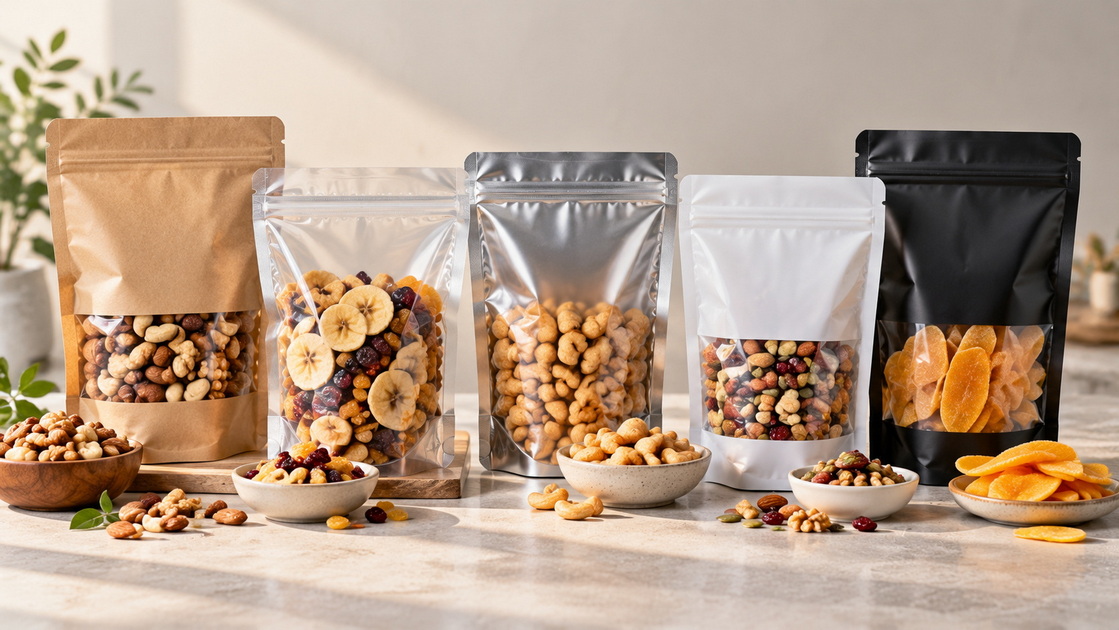
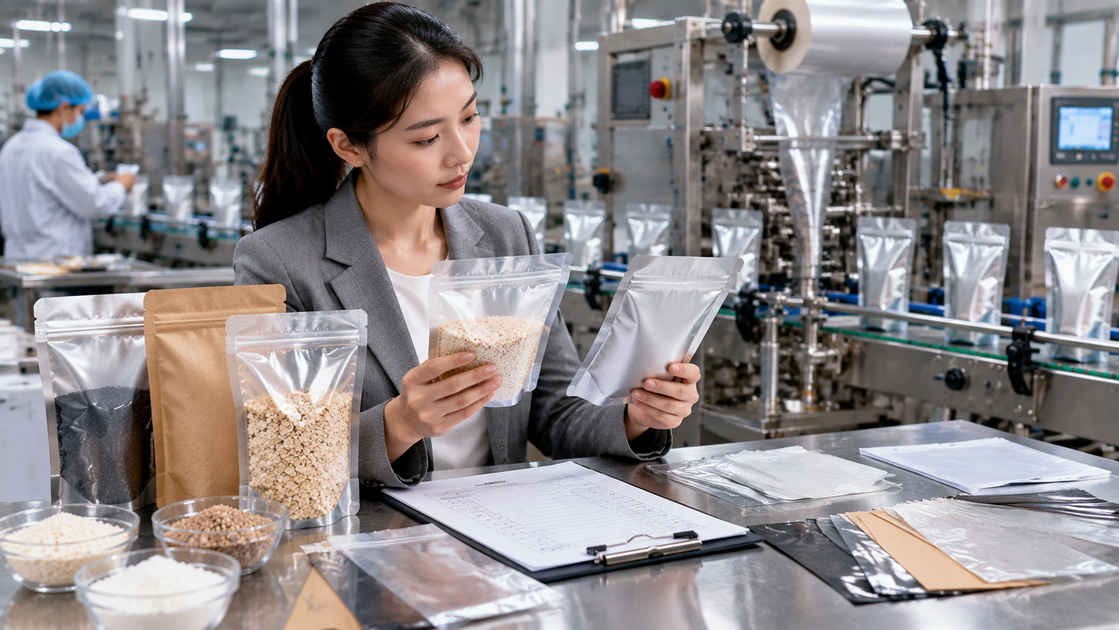
The title says "Top 10," but the entries are an editorial shortlist, not an independently verified ranking of China's ten largest snack-pouch factories. HLun PACK appears first because it is the company commissioning this guide; its placement should not be read as a claim of market leadership. The remaining entries are ordered to make the requested suppliers easy to evaluate, then to show additional pouch-focused alternatives.
The shortlist applies five practical screening questions:
- Product fit: Does the company publicly show stand-up pouches suitable for a snack-packaging inquiry, or is it principally a box supplier?
- Technical scope: Can a buyer discuss laminate structure, print method, zipper and gusset design, barrier requirements, and filling-line compatibility?
- Quality evidence: Are relevant management-system claims, testing capabilities or food-contact documentation described? A website claim alone does not verify a current certificate.
- Commercial fit: Are MOQ, reported output, samples or lead-time information available for an initial comparison?
- OEM/ODM support: Can the supplier help turn artwork and a product brief into a production-ready package, rather than merely quote an existing bag?
These criteria deliberately separate a primary food-contact pouch supplier from a secondary paper-packaging partner. A supplier that makes an excellent printed snack carton should not be described as a proven manufacturer of laminated food-contact pouches without evidence.
"Not publicly stated" means the cited pages did not establish a comparable figure. Published capacity can describe an entire plant or product range; it should never be treated as reserved capacity for a buyer's exact pouch.
| Supplier | Sourcing fit | Publicly reported capacity | Public MOQ information | Certification evidence to request | |
|---|---|---|---|---|---|
| 1 | HLun PACK | Flexible pouches plus packaging machinery | Not publicly stated | Not publicly stated | Current, site- and product-relevant certificates and food-contact reports; not established on the reviewed company page |
| 2 | XingKun | Secondary printed packaging and displays; not a confirmed pouch maker | Not stated as pouch output | Describes low-MOQ OEM/ODM; no pouch MOQ established | Website claims BSCI, ISO 9001 and FSC; verify scope and validity |
| 3 | Xianda Printing | Snack cartons or gift packaging; not a confirmed pouch maker | Website states over 10 production lines, without pouch output | Inquiry form includes quantity bands, not a binding MOQ | Request certificates relevant to the quoted paper product and any food-contact use |
| 4 | Maituohong Packaging | Paper cartons, inserts, labels and displays; not a confirmed pouch maker | Website states 200+ workers; no pouch output | Varies by product and customization | Website claims ISO 9001 and FSC; verify certificate and chain-of-custody scope |
| 5 | Bonito Packaging | Mixed-format custom packaging; investigate pouch-production route | Not publicly stated | Website says MOQ depends on business/project; no comparable pouch MOQ | Request factory identity and pouch-specific food-contact evidence |
| 6 | Dongguan OK Packaging | High-volume custom stand-up pouches | Claims over 50 million pouches/month | States 1,000 digital-printed or 10,000 gravure-printed pieces, subject to project | Website lists ISO 9001, BRC, GRS and food-contact claims; verify exact scope |
| 7 | QIYU PACK | Custom snack pouches and barrier laminates | Not publicly stated | States 10,000 custom-printed stand-up pouches; size may affect MOQ | Claims production in a BRC-accredited facility; request current certificate and reports |
| 8 | TedPack | Custom flexible packaging for export markets | About page states 1.5 million bags/day for the plant | Describes small MOQ, without a comparable snack-pouch figure | Claims ISO 9001:2015, BRC and BSCI; confirm the relevant site and scope |
| 9 | DQ PACK / Guangdong Danqing Printing | Flexible food packaging and stand-up pouches | No comparable verified pouch-output figure used here | Not publicly established in reviewed sources | Request current management-system and food-contact documents for the proposed structure. dqpack+1 |
| 10 | YLTPACK / Shenzhen Yongliantai | Custom flexible pouches for growing brands | Not publicly stated | Says it handles small to large batches; confirm per SKU | Claims ISO 22000, GRS and EU food-grade compliance; verify documents |
Best fit: A buyer who wants to develop the pouch *and* discuss the machinery or integrated line that will fill it.
HLun PACK says it operates one packaging-materials factory and a separate factory dedicated to packaging machinery and integrated solutions. Its product range includes roll film, stand-up pouches, gusseted pouches, spout pouches, vertical form-fill-seal equipment, horizontal flow wrappers and doypack machinery. Its published history traces the business to paper-packaging printing in 1989, a machinery division in 1998 and flexible-packaging expansion in 2012. These dates describe the company's stated development history; 2012 is the relevant milestone for its flexible-packaging offering, rather than an implied 1989 start date for pouch manufacturing.
For a small or mid-sized snack brand, the potential advantage is coordination. A purchaser can ask one team to review pouch dimensions, opening position, sealing area and machine handling before placing a volume order. That may reduce the common handoff problem in which the bag supplier says a pouch is within specification while the machine supplier says it cannot run consistently. HLun PACK's stated approach also emphasizes responsive communication and cross-team collaboration, making it a reasonable company to approach for iterative OEM development—not a substitute for measuring its response time in an actual RFQ.
Its OEM discussion should cover laminate options, dimensions, artwork, zipper placement and a physical line trial. Its machinery discussion should cover the buyer's existing equipment or the proposed integrated solution. This article could not establish HLun PACK's pouch MOQ, monthly pouch output, named export markets or current food-contact certification scope from the reviewed company page. Buyers should request those details in writing before judging value for money or delivery reliability. The website says it serves clients worldwide, but does not provide a market-by-market sales breakdown on that page.
Best fit: A printed carton, retail display or promotional component that accompanies a snack pouch—not, on current evidence, the primary food-contact bag.
XingKun says it has been in printing and packaging since 2004. Its published range centers on display stands, packaging boxes, cards, books, paper bags, stickers and labels. It describes OEM/ODM support, low minimum quantities and service to brands and distributors in more than 30 countries and regions. Those capabilities could be useful if a snack brand needs a countertop display or an outer box designed alongside its pouch artwork.
The distinction matters: the reviewed product information does not establish that XingKun manufactures laminated snack stand-up pouches. Its 3–5-day prototyping and 7–15-day production statements concern its published packaging offer and should not be copied into a pouch quotation. Its site makes BSCI, ISO 9001 and FSC claims; obtain current certificates and check which facility and products they cover before relying on them.
Best fit: Printed paper boxes for snack gifts, assortments or shelf-ready presentations.
Xianda's website describes a business established in 2006 and focused on printed boxes, paper bags and related products. It references two factories in Dongguan, sampling and a quality-testing lab, and says it serves sectors including food and beverage. A buyer could evaluate Xianda for a carton enclosing sealed snack pouches, or for a coordinated gift-pack format.
There is an identity detail worth checking before procurement approval: another section of the same website describes an establishment date of 2014 and a Shenzhen production base. Rather than silently selecting one version, ask Xianda for its registered business name, factory addresses, business licences and the entity that will appear on the purchase contract. Neither version of the reviewed site establishes laminated snack-pouch manufacturing, a pouch MOQ or pouch capacity.
Best fit: An outer carton, insert, label or point-of-purchase component for a pouch-led snack range.
Maituohong describes more than 15 years of custom paper-packaging experience, a Shenzhen factory of 15,000 square metres and over 200 workers. It publishes ranges covering folding cartons, rigid boxes, corrugated boxes, labels and display products, and says it works with North American and European customers. Its stated OEM workflow runs from design and prototype through production, inspection and delivery.
Its website claims ISO 9001 and FSC certification and describes incoming, in-process, final and outgoing quality checks. Those are useful questions for a paper-packaging RFQ, but FSC chain-of-custody documentation for paper does not establish that an unrelated plastic snack pouch is food-contact compliant. MOQ varies with the custom product, according to the company's own FAQ. The reviewed offer does not justify assigning Maituohong a snack-pouch capacity or presenting it as a direct substitute for a flexible-packaging converter.
Best fit: A mixed packaging inquiry in which a buyer needs to clarify who makes the flexible pouch and who makes the accompanying box.
Bonito's coffee-packaging page explicitly offers stand-up coffee pouches alongside rigid coffee boxes, and discusses resealable formats, high-barrier options, samples and customization. That demonstrates a pouch offer; it does not, by itself, establish that every step of film printing, lamination and pouch conversion takes place at a named Bonito-owned Chinese facility. Its broader public positioning also places substantial emphasis on custom boxes.
For a snack buyer, Bonito is worth asking about design coordination across formats. The critical qualification questions are: Which legal entity takes the order? Where will the snack pouch be printed, laminated and converted? Who holds the food-contact documentation for the proposed construction? Its about page identifies company leaders but does not give a dependable establishment year for this profile; other Bonito-published pages have used differing dates. Its stated focus reaches startups and established brands, but a verified geographic sales breakdown and pouch-specific output were not available in the reviewed material.
Best fit: A buyer seeking a higher-volume, pouch-focused sourcing conversation with a choice of print processes.
OK Packaging presents a detailed stand-up-pouch offer for foods including cookies, candy and other dry products. Its website says the company was established in 1996, has operations in China, Thailand and Vietnam, and can produce more than 50 million stand-up pouches per month. It also states project-dependent starting quantities of 1,000 pieces for digital printing and 10,000 for gravure printing. Those are supplier-reported figures, not capacity or MOQ commitments for the buyer's precise specification.
Its customization list includes material structures, pouch sizes, zippers, windows and other features. The site claims ISO 9001, BRC and GRS credentials, alongside statements about food-contact suitability. Before a large snack program, ask which facility will make the order, whether the cited output covers that facility, and whether a current food-contact test applies to the exact laminate, ink system and intended food-contact conditions. Avoid treating the phrase "FDA certified pouch" as a complete regulatory document.
Best fit: A conventional custom stand-up pouch project in which the buyer can meet a published gravure-style MOQ.
QIYU PACK says it has supplied flexible bags and films since 1997. Its stand-up-pouch page specifically names snack foods, nuts, dried fruit and confectionery among applications. Published options include barrier laminates, resealable zippers, clear windows, tear notches, multiple finishes and both gravure and digital printing. It states a minimum of 10,000 pieces for custom-printed stand-up pouches, with variation by bag size. Its marketing also addresses export buyers, although the reviewed page does not provide a reliable sales split by region.
QIYU describes printing, lamination and conversion steps and says its pouches are produced in a BRC-accredited facility. That makes it a useful candidate for technical sampling, but the buyer should request the certificate itself, confirm its site and scope, and obtain tests on the actual snack-pouch construction. Its material menu is broad; do not accept a generic "high barrier" description in place of agreed oxygen- and moisture-transmission targets.
Best fit: An export-focused flexible-packaging inquiry that requires structured discussions about production and quality control.
TedPack's about page says it was established in 2013 in Dongguan and serves mainly U.S. and European customers across food, beverage and other sectors. It reports a plant capacity of 1.5 million bags per day, 30 bag-making machines and an in-house quality-control lab. Those figures indicate the scale claimed for its plant; they are not a promise that a buyer's snack-pouch SKU can be produced at that rate.
The company claims ISO 9001:2015, BRC and BSCI credentials and describes small-MOQ support without giving one universal minimum for snack stand-up pouches. Ask for a quotation tied to the required width, height, gusset, zipper, laminate and annual volume. For a production decision, request a current certificate pack, line-trial samples and a written acceptance plan rather than relying on a plant-capacity headline.
Best fit: A buyer who wants an established flexible-packaging specialist to evaluate printed pouch structures and related films.
DQ PACK's published product scope covers stand-up pouches and composite packaging for snack foods, among other food and beverage uses. Its own company material describes manufacturing activity dating to 1991 and facilities in Guangdong; a separate supplier listing gives 1993 as the establishment year of the registered company. The defensible description is therefore "manufacturing roots stated as 1991; registered-company founding reported as 1993", pending confirmation from the legal entity. Its site describes international supply, while a company listing names Africa, Southeast Asia, the Middle East, the domestic market and North America among principal markets.
DQ PACK is relevant to a snack-pouch RFQ because the buyer can request custom dimensions, print specifications and a barrier structure from a pouch-oriented supplier. Public material reviewed here does not establish a comparable MOQ for the exact snack format or independently verified current certifications. Request those documents and confirm whether the quoted laminate and production site match the sample that passes testing.
Best fit: A custom-pouch inquiry from a growing brand that needs to discuss batch size and material options early.
YLTPACK says its Shenzhen factory began in 2005 and makes stand-up pouches and other specialty flexible bags. Its website describes in-house design, production for small and large batches, and a team of over 150 people. It presents food-packaging projects for overseas brands, but the reviewed company information does not quantify output or provide a comparable snack-pouch MOQ.
The company claims ISO 22000 certification, GRS certification and compliance with EU food-grade requirements. Treat each as a separate question: Does the certificate cover the actual production site? Is the offered film eligible for the intended food-contact use? If recycled content is proposed, what material and chain-of-custody documents support the claim? A buyer should also confirm whether the "small batch" route is digital print, stock film with a label, or fully customized printed laminate; those routes have different costs and appearance.
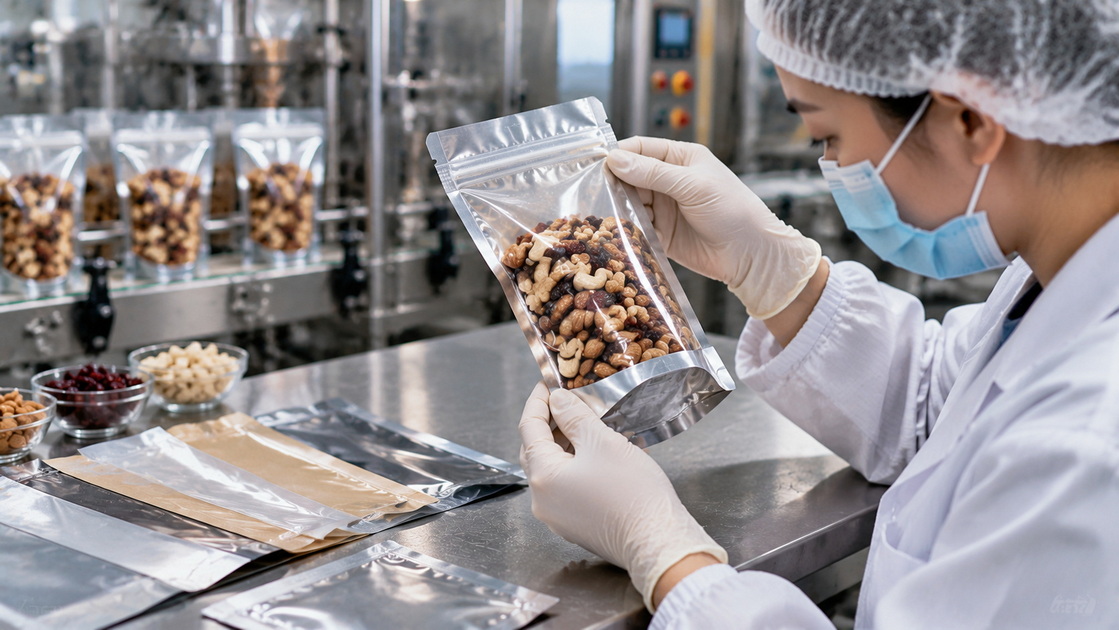
"Snack stand up pouch" is a format, not a performance specification. A dry cracker, an oil-rich nut mix and a confectionery assortment create different demands for moisture protection, oxygen control, puncture resistance and shelf life. Send every shortlisted supplier the same RFQ brief: snack composition, fill weight, desired shelf life, destination market, pouch dimensions, zipper and window requirements, print artwork, planned annual volume, and filling-machine details.
Ask the supplier to state the complete layer structure, the nominal thickness of each layer and the total thickness tolerance. Examples to discuss include PET/PE, PET/metallized PET/PE, foil-containing laminates or suitable mono-material PE designs. These are design options, not interchangeable grades. A clear window can change the effective barrier of an otherwise high-barrier pouch; a recyclable-design proposal still needs to pass the same shelf-life and machine trials. QIYU and OK Packaging both publicly offer multiple materials and features, which is a reason to request a precise construction—not a reason to accept an unspecified one.
Set measurable acceptance criteria before approving artwork. Depending on the product, these may include oxygen transmission rate (OTR), water-vapor transmission rate (WVTR), seal strength, zipper function, dimensions, print registration and a filled-pack leak test. State the test method and conditions in the purchase specification: an OTR or WVTR number without its test conditions is not an adequate comparison. ASTM publishes relevant methods, including D3985 for oxygen transmission through plastic film and F88/F88M for seal strength of flexible barrier materials.
For an EU-bound plastic food-contact pouch, evaluate the applicable requirements of Regulation (EU) No 10/2011 as amended, including the 2025/351 changes, alongside the broader food-contact framework. Request a declaration of compliance and supporting migration documentation relevant to the finished structure, intended food, contact time and temperature. The EU's Packaging and Packaging Waste Regulation, Regulation (EU) 2025/40, applies from 12 August 2026 and adds packaging-wide requirements; buyers should check which provisions apply to their specific product and placing-on-market date.
For a U.S.-bound pouch, request a material-by-material basis for food-contact authorization under the intended conditions of use. The FDA explains that food-contact substances may be authorized through applicable regulations, effective notifications or other specified routes, and that a food-contact notification is tied to its identified substance, supplier and use. A supplier's generic statement that a bag is "FDA certified" is not enough to establish suitability for a particular snack.
CE and RoHS should not be treated as default evidence that a flexible food-contact pouch is safe. Ask about them only when a relevant product or component falls within their scope—for example, evaluate machinery conformity separately from pouch food-contact compliance. Likewise, an FSC claim can matter for eligible paper components, but it does not certify the performance or food-contact safety of a plastic laminate.
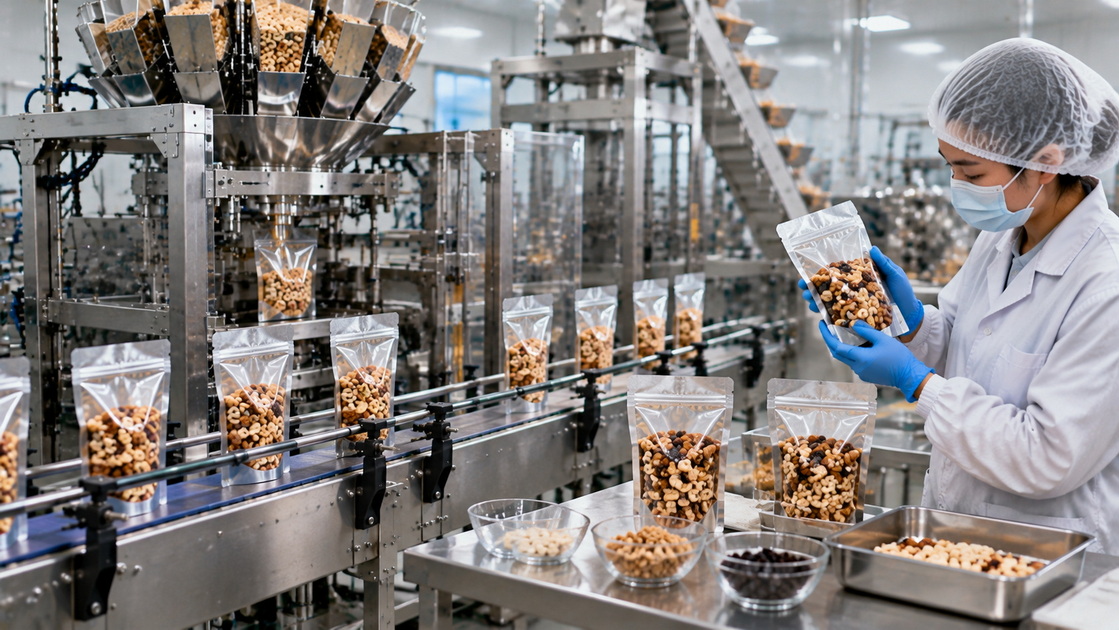
A costly procurement failure often occurs after a good-looking sample has been approved. The supplier may use one film construction or sealing layer for the sample, then substitute a cheaper or more available film for production while keeping the pouch's visible appearance and nominal total thickness similar. Another variation is to approve a carefully hand-made sample that has not been tested at the buyer's actual filling speed. These are risks to control through the purchase process, not allegations about any supplier on this list.
The practical safeguard is a golden-sample-to-batch trace:
1. Approve a production-representative sample, not only a digital proof or an unprinted mock-up. Record its layer-by-layer construction, thicknesses, zipper type, dieline and print reference.
2. Test filled samples with the real snack and on the intended machine. Agree on trial conditions, observations and pass/fail criteria before the run.
3. Write the approved bill of materials and performance limits into the purchase order. Require written buyer approval for any resin, film, adhesive, ink, zipper or layer-thickness change.
4. Ask for batch-linked incoming-material records and finished-pouch test results. Retain sealed samples from the approved trial and each production batch for comparison.
5. Inspect a random pre-shipment sample against the specification—not merely against the supplier's latest demonstration sample.
This approach also addresses a less visible line problem: a zipper that appears well positioned on an empty pouch may interfere with the buyer's sealing jaws or reduce usable fill height. That is why machine-fit approval belongs alongside barrier and appearance approval.
Begin with the legal seller's name, business licence, manufacturing address and bank beneficiary. Match those details to the quotation, contract and certificate pack. A live walkthrough should show the operations relevant to the pouch being quoted—printing, lamination, curing where relevant, slitting, conversion and inspection—and identify any subcontracted step. For a consequential order, arrange an independent site audit or pre-shipment inspection.
Ask for three sample stages: a plain structural sample to check capacity and fit; a printed, production-intent sample to check materials, appearance and seals; and a filled line-trial sample to check running performance. Agree in advance who pays for tooling, cylinders, express shipment and repeat sampling. The approved sample should be referenced by revision number in both the specification and the order.
Finally, define the shipping basis and responsibility for export documents, outer-carton protection, palletization, loading and inspection timing. Confirm lead time from artwork and material approval, rather than from the first inquiry. If the project combines pouches from one factory with cartons from another, assign responsibility for color matching, packing configuration and the final delivery schedule.
The right Chinese supplier depends on the job. HLun PACK is a relevant first conversation when pouch design and packaging machinery must work together; OK Packaging, QIYU PACK, TedPack, DQ PACK and YLTPACK offer clearer publicly visible routes to a pouch-focused RFQ. XingKun, Xianda and Maituohong are better evaluated for complementary paper components, while Bonito warrants a closer check of its pouch-production arrangement. No published shortlist replaces a documented sample, compliance review and factory qualification.
If you are planning a snack packaging project, with your snack type, pouch size, target market, forecast volume and filling-equipment details. Request a proposed construction, a production-intent sample plan, a machine-compatibility review and written answers on MOQ, capacity and compliance evidence before comparing quotations.
Request the complete certificate, including certificate number, legal entity, address, scope, issuing body and validity details. Check its current status through the relevant accreditation or certification body; ISO points buyers to IAF CertSearch or direct confirmation with those bodies. A valid ISO 9001 certificate for a paper-box facility should not be assumed to cover pouch conversion at another address. ISO itself does not issue the certificate.
Do not assume it covers your order. Match the report and declaration of compliance to the proposed food-contact layer, complete construction, intended food category, contact conditions and applicable regulatory version. If the printing, adhesive or laminate is changed, ask the supplier and qualified test laboratory whether new supporting evidence is needed. EU plastic food-contact rules and their 2025 amendments place importance on documented composition, compliance information and supporting tests.
Make the approved bill of materials, individual layer specifications and test limits contractual. Keep a sealed golden sample, require change approval, and compare batch-linked material records and independently selected production samples against it. Appearance and total thickness alone may not tell you whether a barrier or sealant layer has changed.
It can help approve dimensions, layout and the broad design, but it should not automatically approve final color, laminate behavior, seal performance or repeatability. Request a production-intent gravure sample—or an agreed first-production approval stage—before releasing a large order. Suppliers on this list publicly distinguish digital and gravure routes or quote different minimums for them.
No. First verify the structure and its food-protection performance; then evaluate collection, sorting, recycling infrastructure and claim rules in each destination market. The EU's Regulation (EU) 2025/40 establishes a staged framework for packaging recyclability, with important future criteria, so a supplier's "recyclable" label alone is not adequate substantiation.
1- [MarketsandMarkets, *China Flexible Packaging Market (2025–2030)*] — August 2026 market estimate and forecast; covers flexible packaging broadly. [marketsandmarkets]
2- [Flexible Packaging Association, *State of the U.S. Flexible Packaging Industry*] — industry-report description and access information. [flexpack]
3- [General Administration of Customs of China, 2025 major exports] — broad plastic-products export data, not a snack-pouch total. [english.customs.gov]
4- [European Commission Regulation (EU) 2025/351] and [the consolidated food-contact plastics rules] — EU plastic food-contact requirements. [eur-lex.europa]
5- [EU Regulation 2025/40 on packaging and packaging waste] — packaging requirements and application timetable. [eur-lex.europa]
6- [U.S. FDA, food-contact substance regulation] — U.S. authorization context. [fda]
7- [ISO, how to verify a certification] and [ASTM packaging standards] — certificate-checking and test-method context. [store.astm]
8- Supplier-published information: [HLun PACK], [XingKun], [Xianda], [Maituohong], [Bonito], [OK Packaging], [QIYU PACK], [TedPack], [DQ PACK] and [YLTPACK]. Company specifications and credentials remain subject to buyer verification. [hlunpack]


