


close
Choose Your Site
Global
Social Media
Views: 266 Author: HLun PACK Publish Time: 2026-07-27 Origin: Site


Content Menu
● Design Factors That Change The Result
● FAQs
>> 1. Which looks more premium: stand up pouch or quad seal bag?
>> 2. Which is better for heavier products?
>> 3. Which is more versatile across categories?
>> 4. Which format is better for e-commerce?
>> 5. Can both formats support resealable features?
Stand up pouch vs quad seal bag is not just a format comparison; it is a shelf-strategy decision. For most brands, the better choice depends on whether you want a friendlier, more flexible silhouette or a more premium, structured shelf block.
In flexible packaging, shelf appeal is about more than standing upright. It is about visibility, perceived quality, brand storytelling, and how quickly a shopper can understand your product on a crowded shelf or a digital thumbnail.
For HLun Pack's audience, this comparison matters because the right pouch format can improve retail performance, reduce shipping inefficiencies, and support faster market entry for export-focused brands. Flexible packaging also continues to grow as brands prioritize lightweight formats, stronger shelf presence, and better retail communication.

A stand up pouch uses a bottom gusset that expands when filled, allowing the pack to stand upright on its own. This format is popular because it feels approachable, easy to handle, and familiar across food, beauty, supplement, and household categories.
A quad seal bag uses four vertical seals and side gussets to create a more rigid, box-like look. It is often chosen when a brand wants stronger panel definition, a premium visual, and better stability for heavier fills.
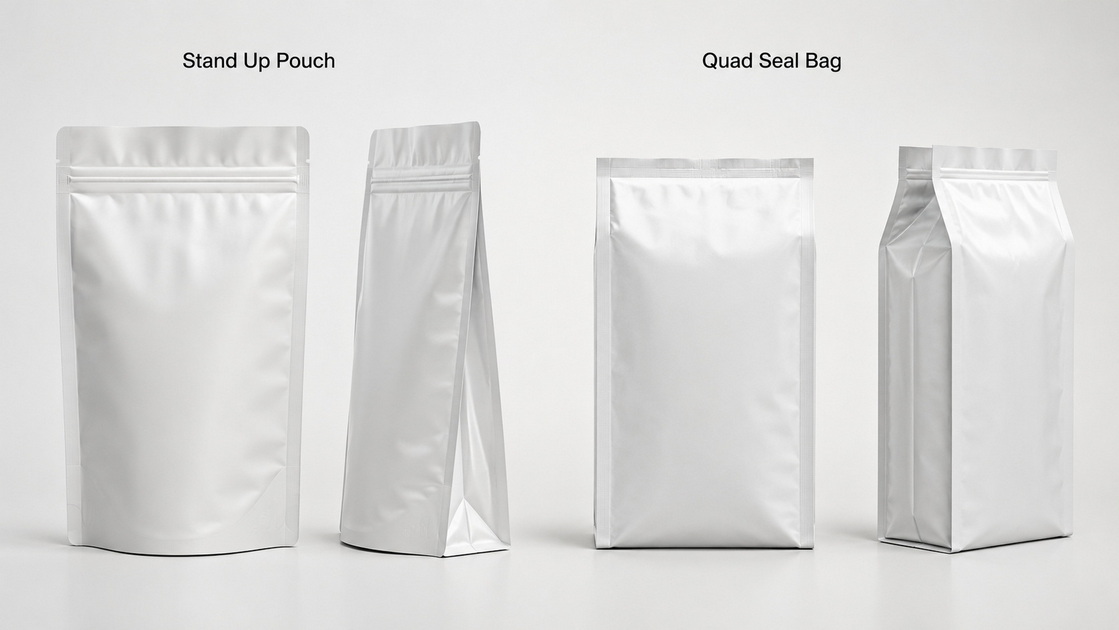
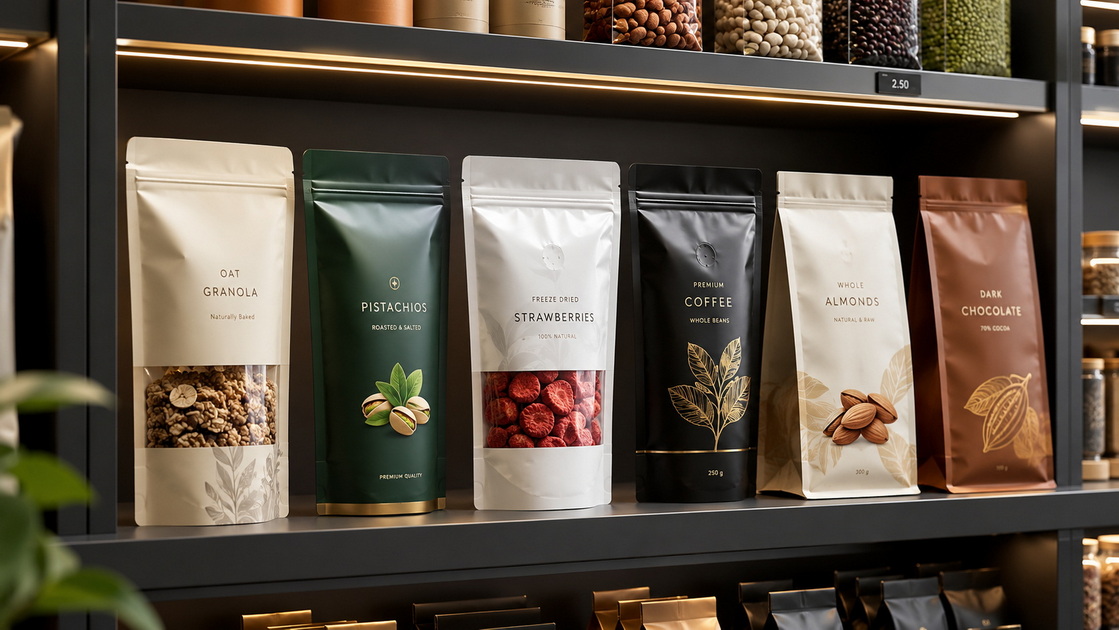
If the question is pure shelf appeal, the quad seal bag usually has the edge. Its straight edges, flat faces, and box-like stance create a stronger "anchor" on shelf, which helps the pack look organized, premium, and more substantial.
The stand up pouch still performs very well, especially in fast-moving retail categories where shoppers value convenience, freshness, and easy opening. Its softer shape can feel more consumer-friendly and modern, but it usually looks less architecturally premium than a quad seal format.
| Factor | Stand Up Pouch | Quad Seal Bag |
|---|---|---|
| Shelf posture | Upright, flexible stance reddotpackaging+1 | Upright, more structured stance epacflexibles+1 |
| Premium feel | Good | Stronger epacflexibles+1 |
| Panel definition | Moderate | Better for branding |
| Stability | Good for many products | Better for heavier or bulkier fills biopacktech+1 |
| Shopper friendliness | High | High, but more formal reddotpackaging+1 |
- The product needs a more accessible, everyday consumer feel.
- The pack must support resealability, portability, or lighter retail positioning.
- The brand wants broad category flexibility, especially for snacks, coffee, beauty, or supplements.
- The brand wants a premium, high-end retail impression.
- The product is heavier, denser, or needs stronger structural integrity.
- Shelf impact, panel clarity, and a box-like presence matter more than a softer pouch feel.
2026 packaging trends show that brands now need packaging to work across both shelf and screen. Strong front-panel readability, premium finishes, easy-open features, resealability, and digital-ready design are becoming baseline expectations rather than extras.
That means shelf appeal is no longer only about looking good in a supermarket aisle. It also includes how the package looks in e-commerce thumbnails, social media content, and online product pages, where shape clarity and branding speed matter a great deal.
Even the better format can underperform if the design is weak. Shelf appeal improves when brands combine the right pouch structure with the right visual system: bold typography, high-contrast colors, premium finishes, and clear product claims.
Use these design levers:
- Matte or matte-gloss contrast for premium perception.
- Clear product hierarchy on the front panel.
- A consistent color code across SKUs.
- Resealable closures where repeat use matters.
From a manufacturing and supply-chain perspective, the stand up pouch often gives brands a more accessible entry point, while the quad seal bag may justify a higher cost when the brand position is premium or the product is heavier. A packaging decision should always match product weight, sales channel, fill-line compatibility, and target retail experience.
For export-oriented manufacturers, this is especially important because structure affects not only shelf appeal but also shipping efficiency, palletization, and how reliably the package holds its shape in transit. The right pouch can support both branding and logistics when the specification is chosen correctly.

As a packaging strategist, I would summarize the choice this way: choose a stand up pouch when flexibility, familiarity, and cost control matter most; choose a quad seal bag when premium shelf presence and structural authority are the priority.
For many brands, the best answer is not universal. It depends on whether your product is competing on accessibility or on presence.
1. Define the fill weight and product density.
2. Decide where the product will sell most often: retail, wholesale, or e-commerce.
3. Check whether the product needs resealability, a valve, or extra barrier protection.
4. Review how much shelf real estate your artwork needs.
5. Request physical samples and test them beside competitor packs.
If your goal is stronger shelf presence and premium positioning, request a quad seal bag sample set first. If your goal is broader flexibility and a more approachable retail feel, start with a stand up pouch sample set and test it in your target channel.
A quad seal bag usually looks more premium because its structure is more rigid and its panels read more cleanly on shelf.
A quad seal bag is often better for heavier or bulkier products because of its reinforced structure and improved stability.
A stand up pouch is generally more versatile for everyday consumer products, especially in food, beauty, and supplement packaging.
Both can work, but the stand up pouch is often more e-commerce friendly because it is lighter and easier to ship efficiently.
Yes. Both formats can be designed with resealable closures, and that feature is increasingly important for convenience and shelf life.
1. [Red Dot Packaging — What Is a Stand Up Pouch, and When Should You Use One?] [reddotpackaging]
2. [Printpack — 2026 Packaging Trends: Navigating Change Across Shelf and Digital] [reddotpackaging]
3. [ePac Flexibles — Quad Seal Pouches: What They Are & Top Benefits] [toptopmfg]
4. [YLT Packing — Quad Seal Bag vs Stand Up Pouch] [yltpacking]
5. [Flexible Pouches — What Are the 3 Different Gusset Styles in a Stand-Up Pouch?] [flexiblepouches]
6. [Lacerta — The Science of Shelf Appeal: How To Create Packaging] [lacerta]
7. [The Insight Partners — Flexible Packaging Market Size and Trends] [theinsightpartners]


