


close
Choose Your Site
Global
Social Media
Views: 222 Author: HLun PACK Publish Time: 2026-05-16 Origin: Site


Shipping a cake is part baking skill and part packaging science. Cakes are fragile, temperature‑sensitive, and easily damaged by impact and vibration, which means that the way you pack and protect them matters as much as the recipe itself. When you apply the same logic professional food manufacturers use—correct cake choice, cooling, insulation, and the right paper packaging—you can move from "fingers crossed" to a repeatable, reliable shipping process. [webstaurantstore]
For context, this guide builds on widely accepted cake‑shipping practices (like chilling, dense cake selection, insulation, and double‑boxing) and extends them with packaging‑equipment insights and paper packaging solutions typically used by leading bakeries and food brands. [refinepackaging]
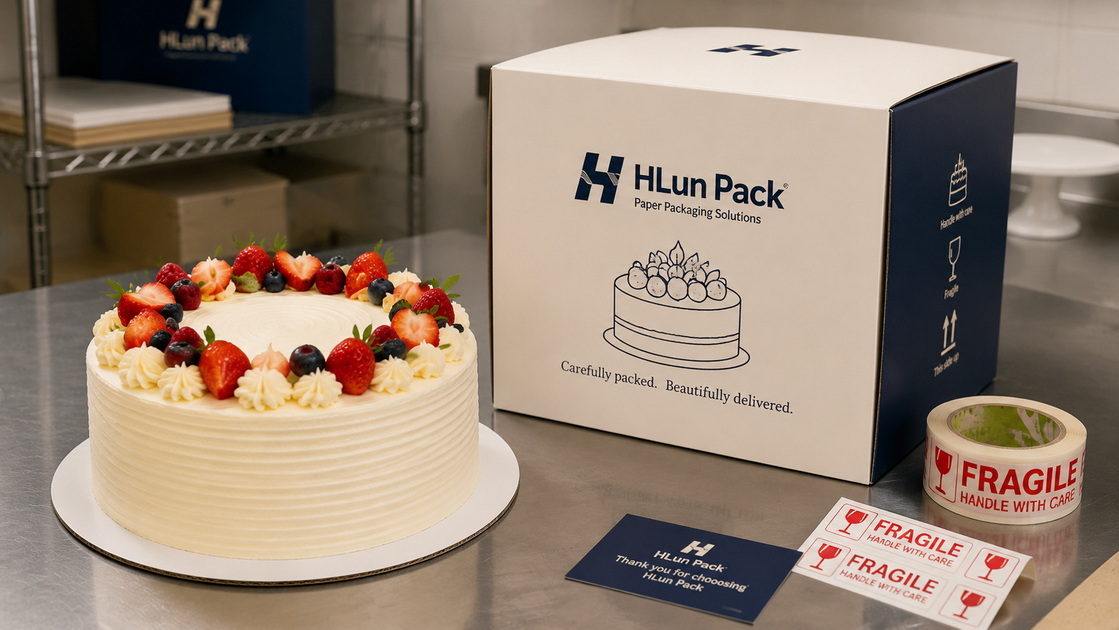
Before we dive into the details, here's the big picture of how to ship a cake safely.
| Factor | Why It Matters | Pro Tip |
|---|---|---|
| Cake type | Dense cakes resist shock and stay moist longer | Choose pound, carrot, banana, or Bundt cakes for shipping. webstaurantstore |
| Cooling & freezing | Cold cakes are structurally stronger and safer to handle | Fully cool, then chill or freeze before packaging. webstaurantstore |
| Primary cake box | Directly protects frosting and structure | Use a snug, food‑grade paper cake box with a solid base. |
| Outer shipping box | Absorbs impact and stacking pressure | Double‑box using a corrugated shipper with void fill. webstaurantstore |
| Insulation & coolant | Controls temperature in transit | Use liners plus gel packs or dry ice where allowed. webstaurantstore |
| Carrier & timing | Limits time out of refrigeration | Prefer overnight or 1–2 day services with tracking. webstaurantstore |
If you remember nothing else, remember this: cool, dense cake + snug inner cake box + cushioned outer corrugated box + fast shipping is the winning formula.
Not every cake wants to travel. Some are "display only" cakes that barely survive the walk from the kitchen to the dining table, let alone a courier belt. [webstaurantstore]
These styles consistently perform well in transit when packed correctly:
- Pound cake – Naturally dense and sturdy; one of the most reliable options to ship. [webstaurantstore]
- Chocolate cake with rich solids – Higher cocoa and fat content gives more structure and resilience. [webstaurantstore]
- Carrot cake – Tight crumb, excellent moisture retention; pair with a stable cream cheese frosting. [webstaurantstore]
- Banana bread / banana cake loaf – Dense, moist, and can tolerate a bit more time at ambient conditions. [webstaurantstore]
- Bundt cake – The ring shape and thickness add structural stability when properly wrapped. [webstaurantstore]
Some combinations are high‑risk unless you're doing same‑day local delivery with temperature control:
- Fresh whipped‑cream‑topped cakes – Whipped cream deflates quickly and offers almost no structural support. [webstaurantstore]
- Cakes loaded with fresh fruit on top – Juices seep into frosting and layers, creating soggy and unstable structures. [webstaurantstore]
- Multi‑tier cakes without internal supports – Without dowels, tiers may slide or collapse under minimal shock. [webstaurantstore]
- Mousse, custard, or soft cream fillings – These demand strict cold chains and are better sent via refrigerated logistics. [legacycakerystudios]
From an engineering perspective, you are not just choosing a dessert—you're choosing a load‑bearing structure. Dense crumb = less internal movement when the box is jolted.
Once you've baked the right kind of cake, how you cool and stage it is the next critical step.
- Cool fully at room temperature first – Never put a warm cake straight into a sealed box or fridge; residual heat creates condensation that leads to soggy texture and microbiological risk. [webstaurantstore]
- Chill in the refrigerator – Once completely cool, move the cake into the fridge to firm up the crumb and frosting. This helps decorations resist minor bumps. [webstaurantstore]
- Freeze for longer journeys – For shipping beyond a few hours, freeze the cake for several hours or overnight so it starts transit in an ultra‑stable state. [legacycakerystudios]
For any cake higher than a simple single layer, treat it like a small building:
- Insert dowels or food‑safe supports to prevent leaning and internal shear. [webstaurantstore]
- Use a rigid cake board that's at least 2–3 cm larger than the cake diameter so the edges are protected. [webstaurantstore]
- For multi‑layer cakes, consider separating tiers and shipping them individually, then assembling on site if the event is critical (e.g., weddings).
This is where our industry experience in paper packaging and automated equipment really makes a difference. The goal is to create a layered protection system: cake → inner cake box → cushioning → outer shipping carton → pallet or vehicle. [webstaurantstore]
Use a food‑grade paper cake box or folding carton that closely fits the cake plus its board.
Key guidelines:
- Snug fit – Too much free space allows sliding; too tight damages borders and decorations. [webstaurantstore]
- Reinforced bottom – Use a double‑wall base or place a rigid cake board under the cake to avoid flexing. [webstaurantstore]
- Lid height – Ensure the lid clears the tallest decoration without pressing on it.
For professional bakeries and brands, we often recommend custom cake boxes sized to your standard SKUs, which can be automatically erected, loaded, and sealed using packaging equipment for higher throughput and consistent quality.
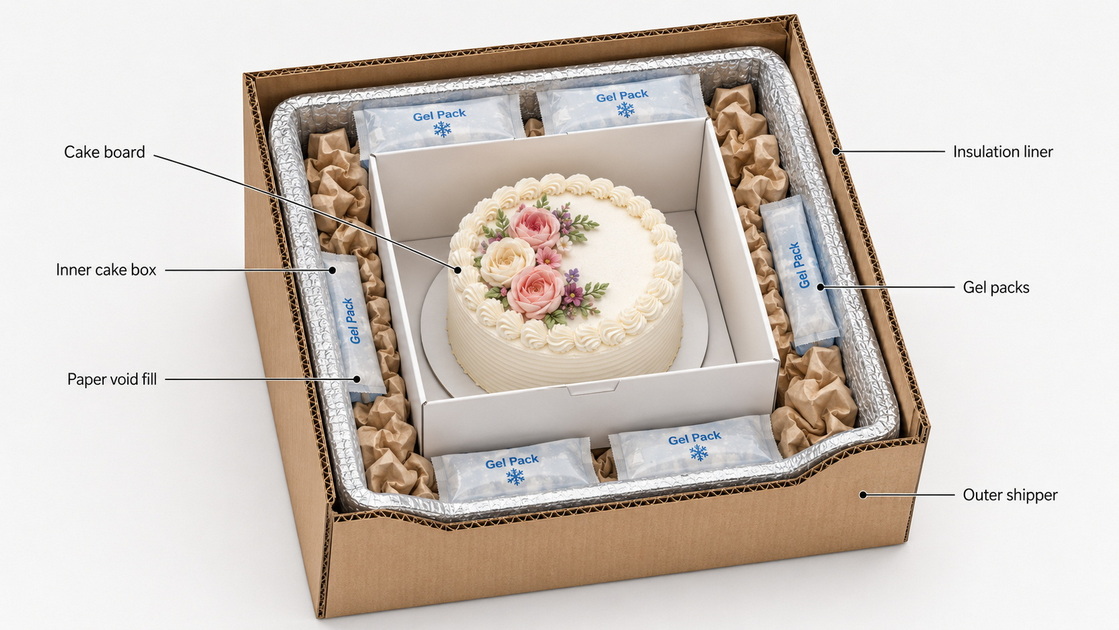
Before closing the inner box:
- Wrap the cake (or each layer) with plastic wrap to lock in moisture and reduce air exposure. [webstaurantstore]
- Use a cake collar around the sides to protect tall frosting, chocolate shards, or drip decorations from rubbing against box walls. [webstaurantstore]
- For frozen cakes, add a layer of aluminum foil over the plastic wrap for extra insulation. [webstaurantstore]
This creates a micro‑environment around the cake, limiting condensation on delicate surfaces.
Your outer box should be a corrugated shipping carton, ideally double‑walled for heavier cakes or longer distances. [refinepackaging]
Best practices:
- Choose a carton that leaves 3–7 cm of clearance on all sides of the inner cake box for cushioning. [webstaurantstore]
- Fill voids with paper‑based void fill, bubble wrap, or molded pulp inserts to prevent movement. [webstaurantstore]
- For temperature‑sensitive shipments, line the carton with thermal bubble wrap or foam liners. [legacycakerystudios]
In industrial settings, we use case sealers and carton sealing machines to apply consistent tape tension and closure pressure, which reduces the risk of cartons popping open in transit. For growing bakeries, this is often a logical evolution from manual taping.
The biggest fear when learning how to ship a cake is that it will arrive melted or stale. Temperature management is your insurance policy.
Depending on your climate and shipping distance, consider:
- Thermal bubble wrap or metallized film liners – Reflect ambient heat away from the cake. [webstaurantstore]
- Foam liners or insulated panels – Offer more stable temperature retention over 24–48 hours. [legacycakerystudios]
- Insulated foam containers placed inside a corrugated shipper – Commonly used for more critical cold‑chain shipments. [refinepackaging]
Paper‑based insulation solutions are emerging quickly; if sustainability is a brand priority, work with a packaging partner who can specify recyclable or compostable insulation materials.
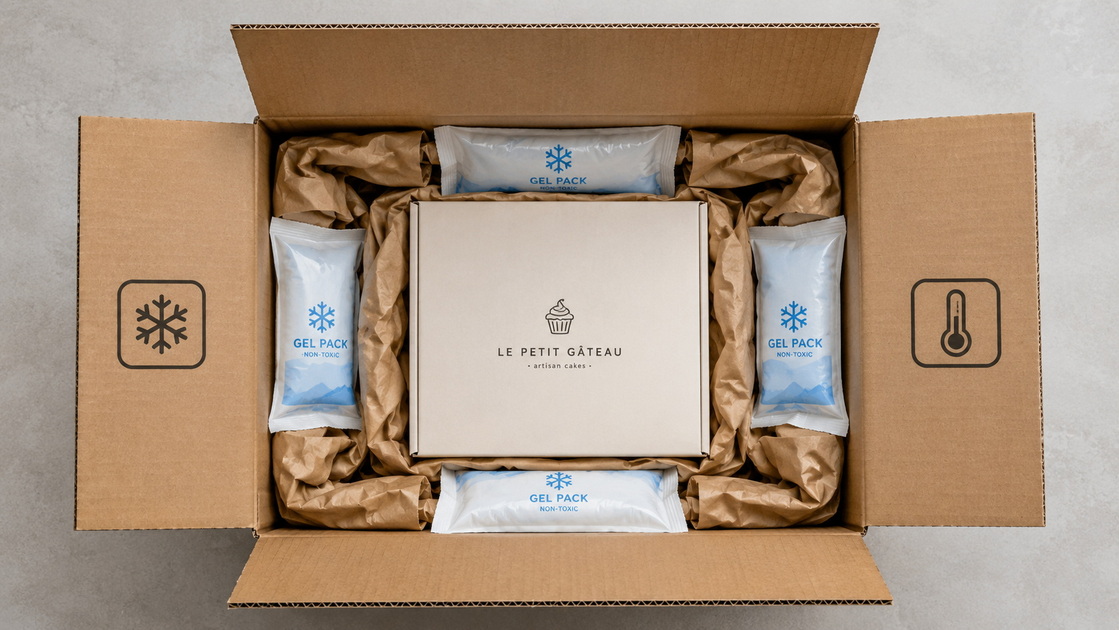
- Gel packs
- Safer and easier for most shippers.
- Ideal for 1–2 day transit where 0–10°C is acceptable. [legacycakerystudios]
- Dry ice
- Keeps cakes frozen for longer, but is regulated as a hazardous material.
- Requires special vented packaging and labeling, and carriers have explicit rules you must follow. [refinepackaging]
As a rule of thumb, home bakers and small shops are better off with gel packs and fast shipping, while larger brands may integrate dry ice into a documented cold‑chain SOP.
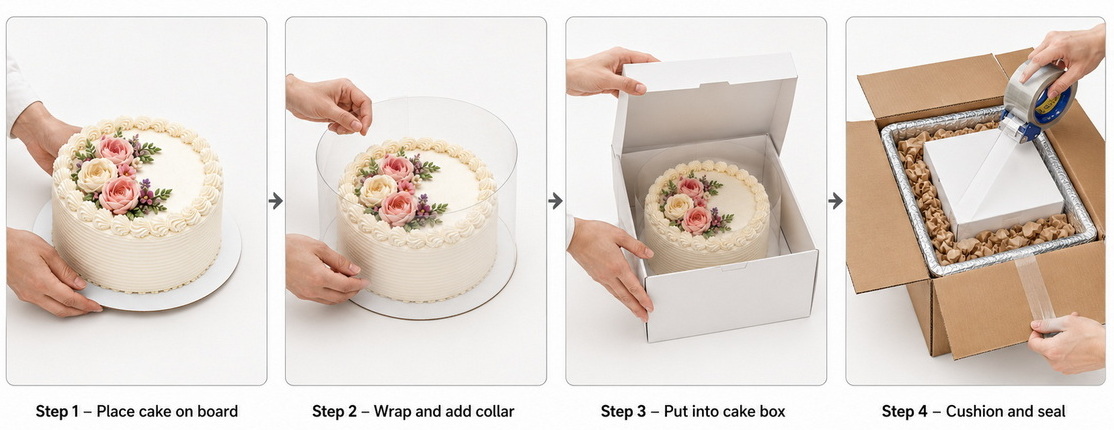
The final packaging step determines whether everything you did up to this point actually pays off.
1. Prepare the inner cake box
- Place the cake on a rigid board and set it in the cake box.
- Use a cake collar and wrap as needed.
2. Seal the cake box
- Close the lid securely.
- Apply branded or tamper‑evident tape if desired.
3. Center in the outer carton
- Place the cake box in the middle of the shipping carton.
- Add cushioning on all sides, top, and bottom.
4. Add insulation and coolant
- Insert gel packs or dry ice packs (properly wrapped) around but not directly on delicate decorations. [legacycakerystudios]
5. Seal and label
- Tape all seams using strong packing tape, ideally in an H‑pattern.
- Add "Perishable", "Fragile", and "This Side Up" labels on multiple panels. [refinepackaging]
6. Shake test
- Gently shake the box; you should feel minimal movement. If you hear sliding, open and add more void fill. [webstaurantstore]
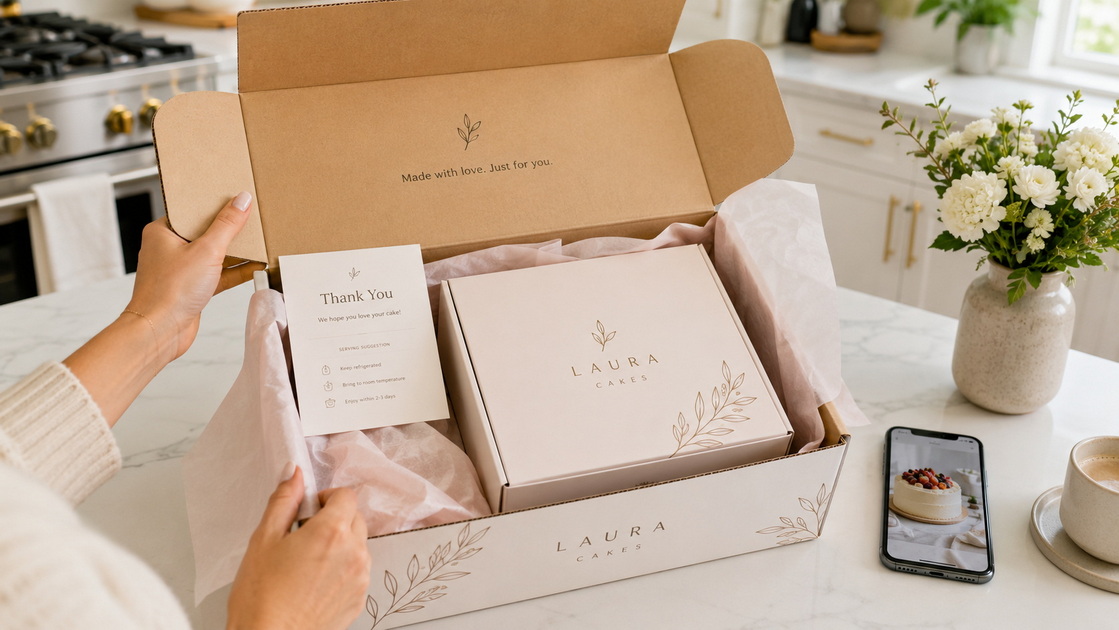
Beyond protection, paper packaging is a powerful branding surface:
- Use custom‑printed cake boxes with your logo and story to turn every delivery into a mini billboard. [ecwid]
- Add a thank‑you card, reheating/serving instructions, or a QR code linking to a video of how the cake was made.
- Consider a consistent unboxing layout (top layer info card, branded tissue, cake reveal) so customers are excited to share the experience on social media. [webstaurantstore]
This is where paper packaging and thoughtful structural design transform a simple shipment into a repeatable brand moment.
Even the best packaging can't completely compensate for slow or unreliable shipping.
Major carriers in many markets offer overnight or 1–3 day services suitable for cake shipping, often with specific guidelines for perishables. Typical recommendations include: [refinepackaging]
- Prefer overnight or 1–2 day services to minimize time out of refrigeration. [legacycakerystudios]
- Use services that include tracking numbers so you and your customer can monitor the shipment. [webstaurantstore]
- Avoid dispatch on Fridays, weekends, and right before holidays, to reduce the risk of cakes sitting in warehouses longer than planned. [refinepackaging]
Shipping cake is not cheap because you're paying for weight, bulk, cooling, and speed. To optimize: [refinepackaging]
- Use right‑sized outer cartons to avoid dimensional weight penalties.
- Standardize cake sizes so you can buy packaging in volumes and design more efficient packing lines.
- Consider flat‑rate options where available if your cakes are relatively heavy but compact. [refinepackaging]
From an equipment standpoint, as order volumes grow, integrating carton erectors, sealers, and print‑and‑apply labelers can lower per‑shipment labor cost and improve consistency.
Summer heat and winter cold are often the "silent killers" of cake quality in transit.
- Start with a fully chilled or frozen cake.
- Use insulated liners plus multiple gel packs to keep temperatures down for 24–48 hours. [legacycakerystudios]
- Choose night departures or earlier delivery windows to avoid the hottest parts of the day when possible.
- Protect delicate decorations and moist crumb from freezer burn or cracked surfaces by wrapping thoroughly. [webstaurantstore]
- Use insulation to buffer against sub‑zero ambient temperatures that may excessively freeze the cake.
- Communicate clearly with customers so they know how long to defrost before serving.
For international or multi‑day shipments, advanced shippers may move to temperature‑controlled logistics and validated packaging designs, similar to those used by frozen meal brands. [refinepackaging]
In industrial packaging, we never rely on "luck"; we design processes. You can borrow that mindset at any scale.
Document a simple SOP your team can follow every time:
- Standard cake SKUs and dimensions
- Matching cake box sizes and corrugated shipper SKUs
- Exact number and placement of gel packs or insulation by cake type and season
- Standard labels and instructions
Once you treat each cake like a product on a packaging line, you can train staff easily, reduce errors, and create consistent customer outcomes.
As order volume grows, consider integrating:
- Semi‑automatic case erectors and sealers for your corrugated shipper line.
- Weighing and check systems to confirm cartons are correctly packed (cake + coolant + inserts).
- Print‑and‑apply systems for shipping labels and branding.
These investments are exactly how modern bakeries and food brands scale from occasional shipments to robust national delivery networks while protecting product quality.
You now have a complete, field‑tested framework for how to ship a cake that blends baker know‑how with professional paper packaging and equipment practices. If you want to go beyond one‑off shipments and build a scalable, reliable cake‑shipping operation, consider partnering with a packaging equipment and paper packaging specialist who can help you standardize box sizes, select protective materials, and automate critical steps like case forming, sealing, and labeling. [refinepackaging]
Whether you are a home baker ready to ship your first birthday cake or a growing bakery brand expanding nationwide, the right combination of cake recipe, paper packaging, and smart equipment will help every cake arrive looking as good as it tastes.
Chill or freeze the cake completely, wrap it well, and use insulated paper packaging with gel packs. Choose an overnight or 1–2 day service and avoid shipping during extreme heat when possible. [legacycakerystudios]
Yes. Buttercream is one of the most stable frostings for shipping when properly chilled. Freeze the frosted cake, wrap it tightly, and ship it in a well‑insulated box with coolant for best results. [legacycakerystudios]
It can be safe if you follow carrier regulations. Dry ice must be placed in vented packaging, labeled correctly, and used within weight limits specified by the courier. If you are unsure, gel packs plus fast shipping are easier for most small businesses. [refinepackaging]
Round cakes and Bundt cakes tend to distribute stress more evenly in transit, especially when they are dense and supported by a solid board and snug paper cake box. Tall, narrow shapes are more prone to tipping unless well supported internally. [webstaurantstore]
Many dense cakes can be baked 1–2 days before shipping, then chilled or frozen and shipped for 1–2 days in transit, reaching the customer within a 3–4 day window while still maintaining quality if properly packaged. Always test with your specific recipe first. [refinepackaging]
1. Refine Packaging – "How to Ship a Cake: Tips for Safe and Cost‑Effective Delivery" (accessed 2026). [webstaurantstore]
2. Pakoro – "How to Ship a Cake Safely" (original article content, accessed 2026). [webstaurantstore]
3. WebstaurantStore – "How to Ship Baked Goods & Cakes" (best practices for packaging and shaking test). [webstaurantstore]
4. Legacy Cakery Studios – "How to Ship a Cake: A Guide to Shipping Cake Jars" (coolant placement and labeling tips). [legacycakerystudios]
5. Major carrier guidance on perishable and dry ice shipments, summarized from publicly available service documentation referenced in industry articles (UPS, FedEx, USPS). [legacycakerystudios]


