


close
Choose Your Site
Global
Social Media
Views: 222 Author: Amanda Publish Time: 2026-02-18 Origin: Site


Content Menu
● What Is Custom Tin Box Packaging?
● Why Choose Tin Box Packaging? Pros, Cons, and Strategic Fit
>> Advantages of Tin Packaging
>> Disadvantages and Trade-offs
● Is Tin Box Packaging Right for Your Product?
● Popular Tin Box Shapes and When to Use Them
>> Rectangular and Square Tin Boxes
>> Round and Oval Tin Containers
>> Custom-Shaped Tin Canisters
● Key Tin Styles, Lids, and Functional Accessories
>> Preservation and Safety Features
● Types of Tin Materials Used in Packaging
>> Tinplate and Tin-Plated Steel
>> Frosted Iron
● Surface Finishes and Printing Techniques for Tin Boxes
● How Custom Tin Boxes Are Manufactured: Step-by-Step
>> Step 1: Define Requirements and Choose Tinplate Sheet
>> Step 2: Printing and Coating
>> Step 3: Cutting, Forming, and Assembly
>> Step 4: Quality Control and Packing
● Best Product Categories for Tin Box Packaging
● Sustainability and Recyclability of Tin Packaging in 2026
● How to Design a Successful Custom Tin Box (Step-by-Step)
● Latest Market Insights: Why Tin Packaging Is Growing
● Example: How a Premium Food Brand Uses Custom Tin Boxes
● Custom Tin Box Packaging vs Other Packaging Options
● Get Started with Your Custom Tin Box Project
● Take the Next Step with HLun Pack
● Frequently Asked Questions About Custom Tin Box Packaging
>> 1. Are tin boxes safe for food packaging?
>> 2. How sustainable are tin boxes compared with plastic?
>> 3. What is the typical lead time for custom tin orders?
>> 4. Can I produce small runs of custom tin packaging?
>> 5. Which industries benefit the most from tin packaging?
If you want premium, protective, and sustainable packaging that elevates your brand, custom tin box packaging is one of the most powerful options available in 2026.

Custom tin box packaging refers to metal containers engineered around your product's dimensions, branding, and performance needs, often using tinplate or tin-plated steel as the base material. These boxes support advanced finishes, specialty coatings, and structural features that go far beyond standard cans or generic metal containers.
Key characteristics of custom tin boxes:
- High durability for transport, storage, and retail handling.
- Strong barrier protection against light, oxygen, and moisture for sensitive products.
- Rich visual customizability (printing, embossing, windows, custom shapes).
- Reusability and recyclability, supporting long-term sustainability goals.
Tin packaging offers a powerful blend of premium branding, robust protection, and sustainability, but it is not perfect for every product.
- Durability and product protection
Tinplate and tin-plated steel provide high mechanical strength, protecting your products from dents, crushing, and impact during shipping and retail display.
- Extended shelf life
Metal containers act as an excellent barrier to light, oxygen, and moisture, which helps maintain freshness and flavor for foods, teas, coffee, and confectionery.
- Premium brand perception
Tin boxes deliver a luxury look and feel that immediately elevates perceived value, especially when combined with embossing, metallic foils, or custom shapes.
- Reusability and circularity
Consumers often keep and reuse tin boxes long after purchase, while tinplate is fully recyclable and supports circular economy models.
- Design versatility
Tins can be engineered in rectangular, round, oval, or fully custom shapes with a wide range of closures and internal structures.
- Higher upfront cost
Tooling for custom molds and premium finishes makes tin more expensive than standard folding cartons or basic plastics.
- Heavier than some alternatives
Although relatively light, metal is still heavier than many plastic or paper options, which can increase shipping costs for high-volume or air freight shipments.
- Risk of rust or corrosion
Without proper internal coatings or linings, metal containers can corrode, particularly with acidic or moisture-rich contents.
Tin packaging is ideal when you want premium positioning, strong protection, and a reusable container that continues to promote your brand over time.
Ask yourself:
1. Do you need strong barrier protection against light, oxygen, and moisture?
2. Is premium shelf presence crucial for your sales strategy?
3. Will your customers appreciate a collectible or reusable container?
4. Can your price point absorb slightly higher packaging costs?
If you answered “yes” to most of these questions, tin containers are a strategic fit for your next packaging project.
Choosing the right shape directly influences cost, packing efficiency, and shelf impact.
Rectangular and square tins are the standard choice for many brands because they maximize packing density and stackability. They are excellent for biscuits, tea, coffee, apparel accessories, and multi-unit gift sets where efficient storage and shipping matter.
Round and oval tins signal elegance and are especially well-suited for confectionery, candles, cosmetics, and premium limited editions. While they are less space-efficient in corrugated shippers, they deliver a strong visual impact on shelf and in unboxing.
Custom shapes, such as books, hearts, cylinders, or suitcase-style tins, turn the packaging into a collectible object. These are ideal for seasonal promotions, licensed collaborations, and high-end brand storytelling.
Tin packaging can be engineered with specific closures and interior components to match your product's use case and regulatory requirements.
- Slipcovers
Simple, curled-edge lids that slide over the body, with optional clear windows to showcase the contents. Ideal for balms, cosmetics, or dry products that do not require a threaded seal.
- Slide-top tins
Lids that open by sliding across the top, commonly used for mints, small confectionery, or compact promotional items.
- Hinged lids
Lids permanently attached on one side, creating a “treasure box” experience that is popular for teas, tobacco, cannabis, and gift collections.
- Screw-top tins
Threaded closures offering a more secure, leak-resistant seal, ideal for ointments, balms, and cosmetic creams.
- Foam inserts for shock absorption and premium product presentation.
- Plastic or PET trays to hold multiple items, commonly used in gift sets or sampler kits.
- Cushion pads for food safety and gentle product contact.
- Metal compartments or dividers to organize multiple SKUs or flavors in one tin.
- Food-grade coatings and lacquers to protect both product and metal from interaction.
- PVC sealing tape or shrink bands for tamper evidence.
- Tamper-resistant locks or clasps for higher security applications like nutraceuticals or regulated products.
Tin boxes are rarely made from pure tin; they typically use composite metal structures optimized for strength, print quality, and corrosion resistance.
Tinplate consists of a thin steel or iron core coated with tin, combining strength with corrosion resistance. It offers a smooth printable surface for high-quality graphics and is widely used for food, cosmetics, and premium gift packaging.
Frosted iron provides a matte, slightly textured surface that visually distinguishes your packaging from glossy competitors. It is especially suitable for brands seeking a subdued, elegant finish for high-end collections.
Pure tin is less common due to cost and reduced mechanical strength, but it delivers exceptional corrosion resistance and is non-toxic, making it suitable for small-batch, limited-edition, or collectible releases.
Your choice of printing and finishing transforms a metal box into a powerful branding tool with tactile and visual depth.
- Lithography (offset printing)
The go-to technique for high-volume food, beverage, and promotional tins, offering detailed images and consistent color at scale.
- Screen printing
Ideal for bold spot colors, simple graphics, and limited editions; ink is pushed through a mesh screen for rich, solid coverage.
- Digital printing
Best for short runs, personalization, or frequent design changes, relying on digital files instead of plates for faster turnaround.
- Embossing and debossing
Raising or recessing selected artwork elements gives a tactile 3D effect that signals luxury and strengthens brand recall.
- UV printing
Uses UV-curable inks for fast drying and high durability, particularly effective for detailed artwork and vibrant colors.
- Hot stamping and foils
Metallic foils applied with heat create striking gold, silver, or holographic accents perfect for logos and key design elements.
- Flexographic and pad printing
Useful for large volumes or irregular surfaces, especially when you need consistent simple graphics or small logos on shaped tins.
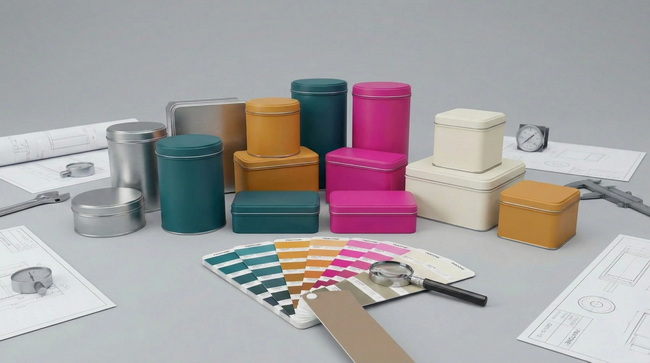
Understanding the manufacturing process helps you brief your supplier more effectively and manage lead times and quality expectations.
You begin by confirming product dimensions, regulatory constraints for categories like food or cosmetics, and branding goals, then selecting an appropriate material thickness and grade. Thicker gauges offer more rigidity and premium feel, while thinner gauges support lightweighting and cost efficiency.
Your artwork is separated, plated, and printed onto flat tinplate sheets using lithography, screen, or digital printing depending on volume and complexity. Protective varnishes and specialized coatings are then applied to meet food-contact or corrosion-resistance requirements.
Printed sheets are cut into blanks, stamped, and formed into bodies, lids, and bases using high-precision tooling. Components are joined through mechanical interlocking, seaming, or welding to ensure structural integrity and leak prevention.
Final tins undergo visual inspection, dimensional checks, and sometimes leak and coating tests to ensure each unit meets specification. Finished tins are then packed with protective materials into export cartons to avoid scratching during transport.
Tin containers are especially effective in segments where presentation, protection, and reusability drive purchase decisions.
- Food and beverage
Cookies, chocolates, tea, coffee, mints, and specialty snacks benefit from long shelf life and a collectible container.
- Cosmetics and personal care
Lip balms, solid perfumes, balms, and gift sets leverage tin's premium look and portability.
- Gifts, seasonal, and promotional items
Limited editions, holiday assortments, and brand collaborations often rely on custom shapes and high-end finishes to drive impulse purchases.
- Specialty and emerging categories
Categories such as cannabis, nutraceuticals, and accessories increasingly use tin for a combination of protection, compliance, and distinctive presentation.
In 2026, sustainability is no longer optional, and metal packaging, especially tinplate, plays a major role in circular packaging systems.
- High recyclability and circularity
Tinplate packaging is fully recyclable and can be reprocessed repeatedly without significant loss of quality. Recycling reduces reliance on virgin materials and supports closed-loop packaging strategies.
- Lower carbon footprint compared with some plastics
When high recycling rates are achieved, metal packaging can outperform many multi-layer plastic structures from an end-of-life perspective.
- Regulatory and consumer alignment
Global consumer and retailer pressure continues to favor packaging that is clearly recyclable and perceived as environmentally responsible.
For brands, choosing metal tins with clear recycling instructions and durable construction provides both environmental benefits and marketing differentiation.
Use this practical framework to go from idea to production-ready custom tin packaging.
- Define your objectives and constraints
Clarify your primary goal: premium gifting, shelf standout, e-commerce protection, or sustainability messaging. Identify regulatory requirements and your budget range.
- Select shape and dimensions
Start from your product size and desired pack quantity, then pick a shape that balances presence and shipping efficiency. Create a snug fit to minimize internal padding, reduce damage, and avoid wasted materials.
- Choose material and thickness
Work with your manufacturer to select suitable tinplate thickness to balance stiffness, cost, and weight. For heavier or large-format tins, a slightly thicker gauge will prevent panel deformation.
- Define lid type and opening experience
Decide whether customers should experience a reveal (hinged box), twist (screw-cap), or slide, based on your category and brand personality.
- Plan graphics, finishes, and tactile elements
Integrate your logo, product information, and regulatory details, then specify finishes such as embossing, matte or gloss varnish, UV spots, or hot foil accents.
- Engineer interior structures
Add foam, trays, or compartments to stabilize contents, create storytelling layers, and support cross-selling through sets, samples, or refills.
- Prototype, test, and refine
Request pre-production samples to validate color, fit, opening force, and durability under realistic shipping conditions. Use feedback from key customers or internal teams to make final adjustments.
Recent industry insights highlight that tin and tinplate packaging are benefiting from multiple converging trends.
- Shift to sustainable, recyclable materials
Brands seeking to decrease plastic use are turning to metal packaging for its recyclability and strong barrier characteristics.
- Demand for premium and gift-ready formats
The rise of e-commerce, subscription boxes, and seasonal gifting has increased demand for packaging that doubles as a keepsake or display item.
- Lightweighting and performance optimization
New tinplate grades allow reduced material usage while maintaining strength and line performance, aligning with cost and carbon reduction targets.
These trends suggest that well-designed tin packaging is not only visually striking but also strategically aligned with long-term brand and regulatory priorities.
Consider a premium tea brand launching a new gifting line. The team selects tall rectangular tins with hinged lids, internal dividers for multiple tea sachets, and embossed logos with matte varnish for a sophisticated look. The tins are made from food-grade tinplate with an internal lacquer, and are promoted as reusable storage containers, reinforcing the brand's sustainability story.
This approach justifies a higher retail price, creates a memorable unboxing experience, and keeps the brand visible in consumers' homes long after the tea is finished.
The table below summarizes where custom tins outperform, and where other materials may be more suitable.
Factor | Custom Tin Box Packaging | Folding Carton Packaging | Plastic Containers |
Durability | High impact resistance and structural strength. | Moderate, can crush under heavy load. | Generally good but varies by resin type. |
Barrier performance | Excellent barrier to light, oxygen, and moisture. | Limited barrier, often needs liners or films. | Good for moisture; gas and light barrier vary. |
Brand perception | Premium, collectible, and giftable. | Flexible; can look premium with enhanced finishes. | Often perceived as everyday or mass-market. |
Reusability | High; tins are frequently reused for storage. | Low; cartons are usually discarded. | Moderate; some containers are reused, many discarded. |
Recyclability | Fully recyclable tinplate supporting circular economy. | Widely recyclable paperboard where facilities exist. | Plastic recycling rates remain relatively low in many markets. |
Unit cost | Higher, especially with custom molds and premium finishes. | Low to moderate. | Moderate; tooling costs can be significant for custom shapes. |
Shipping weight | Moderate; heavier than paper, lighter than glass. | Very light. | Light to moderate. |
If you are ready to develop high-performance custom tin packaging, partnering with a specialized packaging manufacturer and an integrated machinery provider will radically simplify your journey. A full-service partner can support structural design, material selection, production tooling, and even automation of filling and packing lines.
For your next project, HLun Pack can help you:
- Evaluate whether tin packaging is the right choice for your products.
- Co-develop structural and graphic designs optimized for both branding and manufacturing efficiency.
- Integrate custom tin boxes with compatible packaging machinery and end-of-line solutions.
If you want your products to stand out with premium, durable, and sustainable tin box packaging, now is the right time to act. Our team at HLun Pack specializes in packaging materials, packaging machinery, and integrated packaging solutions, helping you move from concept to mass production with confidence and efficiency.
Contact us today to discuss your project, request a customized proposal, or schedule a consultation with our packaging experts, and start transforming your product line with tailor-made tin box packaging solutions.
Contact us to get more information!
Yes, when produced with certified food-grade coatings and lacquers, tin boxes are widely used for cookies, tea, coffee, and confectionery. Always confirm that your supplier follows relevant food-contact regulations in your target markets.
Tinplate packaging is fully recyclable and can be reprocessed multiple times, while many plastics are harder to recycle and often achieve lower actual recycling rates. When combined with long-term reusability, tins can form a strong foundation for your sustainability strategy.
Lead times vary by project complexity, order quantity, and tooling requirements. Repeat orders using existing molds are usually faster, while new designs with custom shapes, finishes, and inserts require more time for engineering and sampling.
Yes, advances in digital printing and the use of standard tooling make low- to mid-volume runs increasingly accessible. However, you should expect a higher unit cost than for large-scale production, so careful planning of SKUs and artwork is important.
Food, beverages, confectionery, cosmetics, personal care, gifts, and promotional products are among the biggest users of custom tin packaging. These sectors gain from the combination of premium appearance, strong product protection, and the ability to create collectible containers.
1. https://pakfactory.com/blog/learn/custom-tin-box-packaging-master-guide/
2. https://www.tmtinbox.com/how-to-make-custom-tin-box-for-your-product/
3. https://www.allstatecan.com/press/quick-guide-custom-tins-creating-packaging-sets-your-brand-apart
4. https://tinmood.com/how-to-customize-your-own-tin-box-packaging-a-step-by-step-guide/
5. https://pakoro.com/blog/tin-box-packaging/
6. https://finance.yahoo.com/news/trends-tinplate-packaging-market-2025-161600139.html
7. https://www.nikitacontainers.in/blog/exploring-the-benefits-of-tin-packaging-recyclability-and-carbon-footprint/
8. https://www.swagify.com/blog/ultimate-guide-to-custom-tin-containers/
9. https://www.fortunebusinessinsights.com/tinplate-packaging-market-109390
10. https://www.packaging-gateway.com/features/2025-in-review-packaging-wins/
11. https://www.packagingdigest.com/sustainability/package-recycling-stats-by-the-numbers
12. https://www.packagingworldinsights.com/news/custom-tin-box-packaging-a-smart-choice-for-your-brand-identity/
13. https://www.mckinsey.com/industries/packaging-and-paper/our-insights/sustainable-packaging-2025-inside-the-minds-of-global-consumers


