


close
Choose Your Site
Global
Social Media
Views: 277 Author: HLun PACK Publish Time: 2026-07-09 Origin: Site


Content Menu
● Why Carton Packaging Still Dominates
>> Sustainability and Brand Perception
>> Retail Visibility and Shelf Impact
● How Carton Packaging Is Manufactured Today
>> Modern Paperboard Conversion Process
>> Integration with Packaging Equipment
● Key Paperboard Grades for Cartons
>> Solid Bleached Sulfate (SBS)
>> Solid Unbleached Sulfate (SUS) and Kraft
● Printing, Coating and Finishing Options
>> Coatings and Functional Layers
>> Premium Finishing Techniques
● Design Elements That Drive Performance
>> Structural Design Considerations
>> Branding, Information Hierarchy and UX
● Carton Packaging Across Industries
>> Cosmetics and Personal Care
● Carton Packaging vs. Flexible and Other Solutions
● Emerging Trends in Carton Packaging (2025–2030)
>> Sustainability and Plastic Replacement
>> Digitalization and Short‑Run Customization
● Practical Steps to Choose the Right Carton Packaging
>> 1: Define Product and Channel Requirements
>> 2: Select Board Grade and Structure
>> 3: Finalize Print, Coating and Finishes
● How HLun Pack Supports Carton Packaging Projects
Carton packaging (paperboard folding cartons) remains one of the most strategic, versatile and sustainable packaging formats for modern brands—and its role is expanding as companies look for integrated solutions across paper, flexible films and automated packaging equipment. As a packaging manufacturer at HLun Pack, working daily with paper packaging, flexible packaging and granular/liquid/powder packaging equipment, I see first-hand how well-designed carton packaging becomes the central hub of an efficient, eco-conscious packaging system. [gushwork]
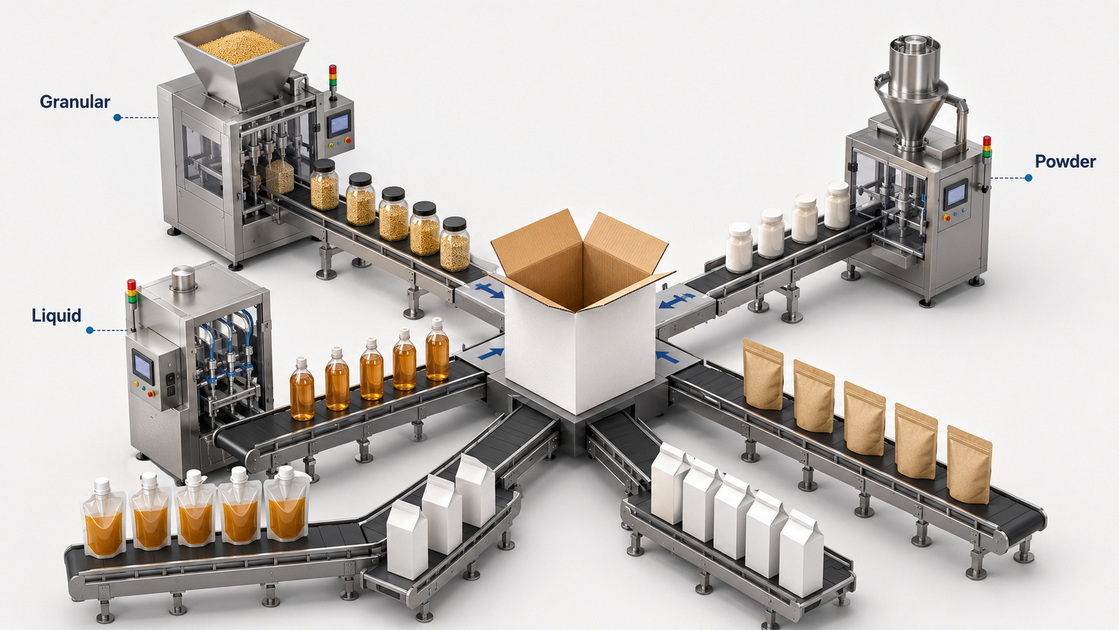
Carton packaging typically refers to paperboard folding cartons—pre-glued, pre-creased boxes delivered flat and erected during filling or packing. These structures are engineered from paper-based substrates to protect products, communicate brand identity and comply with regulatory requirements across industries such as food, cosmetics, pharmaceuticals and consumer goods. [athenaswc]
From a manufacturing perspective, carton packaging sits at the intersection of materials science, print technology and packaging machinery: the board grade, coating, print method and structural design must work seamlessly with form‑fill‑seal systems, cartoners and end‑of‑line automation. For HLun Pack, this integration is critical because many of our customers run cartons alongside pouches, bags and bottles on the same production lines, using granular, liquid or powder packaging equipment. [fonzy]
Folding cartons have remained popular because they combine sustainability, visual impact and cost‑efficiency in a single format. [gushwork]
- Most paperboard grades contain a significant percentage of recycled fiber and are widely recyclable in established waste streams. [athenaswc]
- The natural look of kraft and unbleached board strongly supports brands with eco-conscious positioning, especially in food, cosmetics and wellness. [gushwork]
- Certifications (FSC, PEFC) and low‑migration inks can be highlighted on the carton to reinforce trust with both consumers and B2B buyers. [fonzy]
As an equipment and packaging supplier, we see procurement teams increasingly framing carton specifications around material sustainability KPIs (recycled content, recyclability, CO₂ footprint), not just price per unit. This shift means cartons often win over rigid plastics and mixed-material packs when brands reassess their portfolio for environmental targets. [athenaswc]
Cartons are uniquely "retail friendly": their flat panels provide generous space for artwork, regulatory text and storytelling, while their rigid geometry stacks and ships efficiently. [gushwork]
Key advantages for brand owners include:
- Large printable area for logos, claims and usage instructions.
- Consistent shapes that line up cleanly on shelves and in displays.
- Support for premium finishes (embossing, foil, spot UV) that increase perceived value. [gushwork]
For high‑volume brands, we regularly design cartons that work across brick‑and‑mortar retail, e‑commerce and subscription boxes, maintaining visual consistency while optimizing for different shipping and unboxing requirements. [scubemarketing]
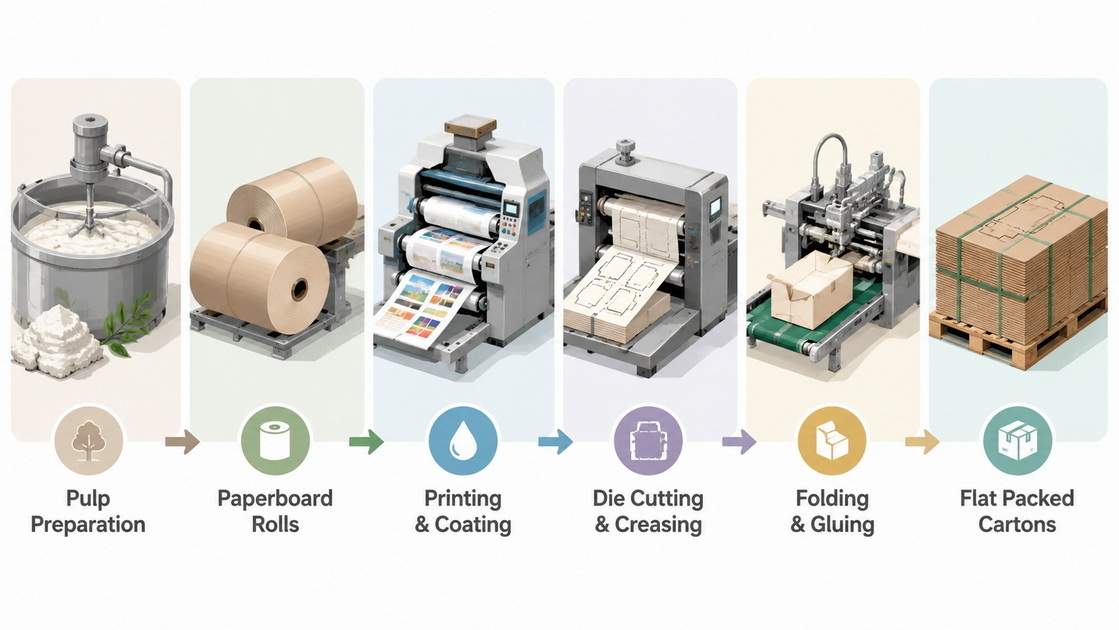
Although early cartons were assembled by hand with strings and tacks, modern folding carton production is a highly automated workflow combining pulp processing, sheet preparation, printing, die‑cutting and gluing. [gushwork]
The typical process:
1. Recycled and virgin fibers are pulped, formed into paperboard and finished to the specified caliper and surface properties. [gushwork]
2. Converters prepare dielines that define the cut, crease and glue panels, and overlay brand artwork on large sheets. [gushwork]
3. Sheets run through printing (offset or digital), coatings and specialty finishes. [gushwork]
4. Die‑cutting and scoring machines create flat carton blanks, which are then folded and glued into pre‑assembled structures delivered flat. [gushwork]
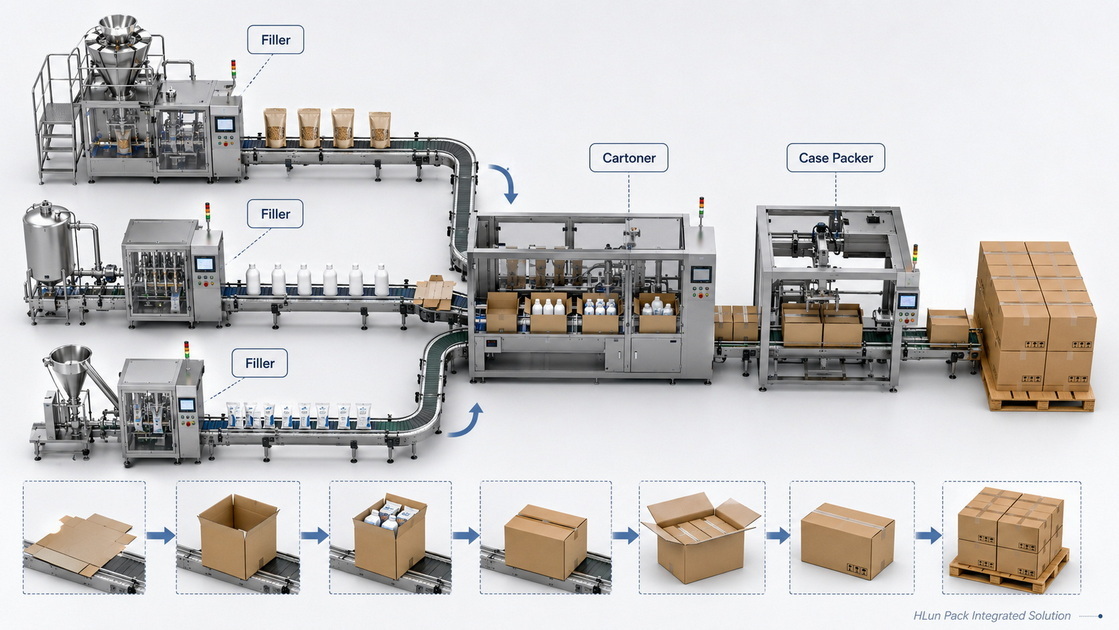
From an engineer's vantage point at HLun Pack, the crucial step is ensuring that the creased pattern and glue flaps match downstream automation: cartoners, case packers, and upstream granular or liquid fillers must handle these blanks at speed without jams or misalignments. [fonzy]
Because HLun Pack provides granular, liquid and powder packaging equipment, we place special emphasis on how cartons interact with upstream and downstream machinery. [fonzy]
Common integration points:
- Granular products (e.g., dry food, agricultural inputs) often move from vertical form‑fill‑seal (VFFS) pouches into secondary cartons for retail or multipacks.
- Liquid products are filled into bottles or bags, then packed into cartons or corrugated cases that align with automated case erectors and palletizers. [fonzy]
- Powder products (nutrition, chemicals, food ingredients) frequently rely on cartons with inner bags or liners to control dust and ensure barrier performance. [fonzy]
Designing cartons without considering equipment constraints typically leads to line inefficiencies. In our projects, we routinely adjust carton dimensions, closure styles and board grades so they run reliably on existing machinery without expensive retooling. [fonzy]
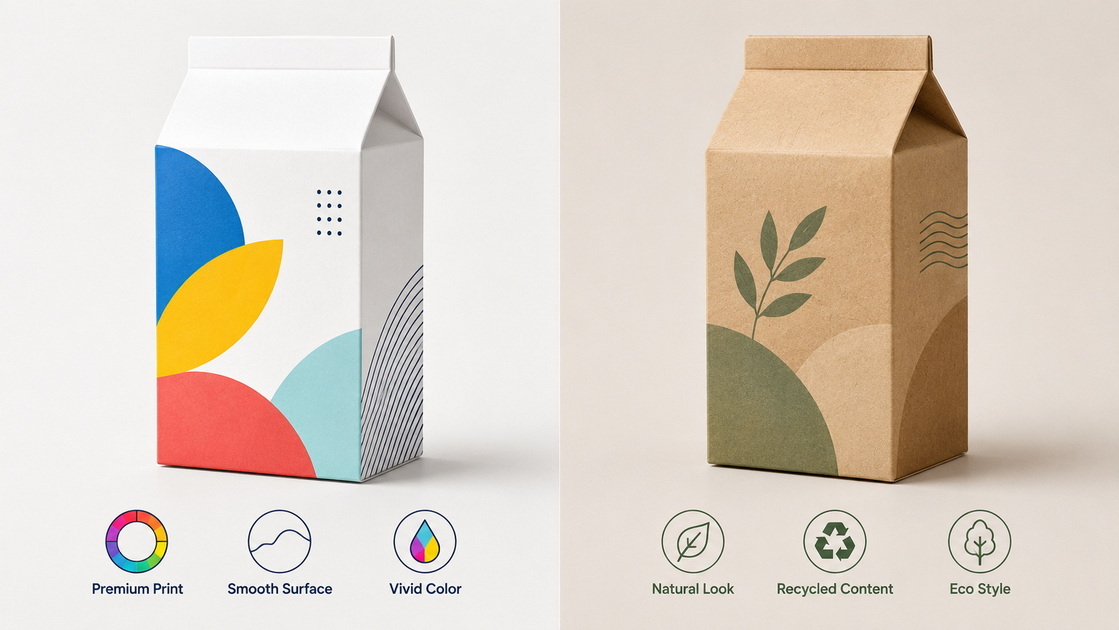
Solid Bleached Sulfate (SBS) is a premium, white paperboard made from a blend of recycled and virgin wood fibers that have been chemically processed and bleached. [gushwork]
Characteristics:
- Brilliant white surface, often clay‑coated, ideal for high‑fidelity color reproduction.
- Excellent tear resistance and surface smoothness, supporting fine typography and intricate designs. [gushwork]
- Preferred for cosmetics, pharmaceuticals and high‑end food packaging where visual precision and cleanliness are critical. [athenaswc]
When clients ask us for "luxury‑grade" cartons, SBS is often the default recommendation because it partners well with embossing, foil stamping and soft‑touch coatings without compromising structural integrity. [gushwork]
Solid Unbleached Sulfate (SUS) and kraft grades provide a brown, natural appearance that visually signals sustainability. [athenaswc]
Key points:
- No bleaching stage, lower chemical load and a more rustic look. [gushwork]
- Ideal for brands that want consumers to immediately associate the pack with ecological responsibility. [athenaswc]
- Colors print more muted, so design teams often use strong contrast, bold typography and carefully calibrated inks. [gushwork]
From our experience, SUS cartons perform particularly well for organic food, wellness products and eco‑conscious cosmetics, where the packaging itself becomes part of the brand story. However, we always advise prototyping print on SUS early in the design process to avoid legibility issues on shelf. [athenaswc]
Paperboard's versatility supports both offset and digital printing. [gushwork]
- Offset printing: Recommended for long runs and intricate designs requiring sharp lines and accurate color matching via Pantone or other systems. [gushwork]
- Digital printing: Better suited for short runs, personalization, or simpler graphics where rapid changeovers matter more than ultra‑fine detail. [gushwork]
In B2B projects, we often prototype with digital printing to iterate artwork and dielines quickly, then transition to offset once final specifications are locked. [fonzy]
Coatings can dramatically influence both appearance and performance:
- Aqueous coatings offer an environmentally friendly way to add gloss or matte protection and can be used inside food packaging without adding harmful chemicals. [gushwork]
- Wax or grease‑resistant coatings are common for food service cartons to prevent leakage and staining. [gushwork]
- Barrier coatings (for moisture, oxygen, grease) are increasingly used to reduce or eliminate plastic liners while maintaining shelf life. [athenaswc]
For customers handling liquids or powders, we pay close attention to migration, barrier and seal integrity, ensuring that the carton system supports product safety across the entire distribution chain. [athenaswc]
To differentiate in crowded categories, brand teams rely on specialty finishes that cartons handle very well. [gushwork]
Popular options include:
- Embossing / debossing to highlight logos or certifications with tactile emphasis. [gushwork]
- Foil stamping to signal luxury, especially in cosmetics, spirits and gift packaging. [gushwork]
- Spot UV coating to create contrast between glossy highlights and a matte background, guiding attention to key visual elements. [gushwork]
From an expert UX standpoint, these finishes should be used strategically: too many effects can overwhelm the eye, whereas a single, well‑placed foil logo or spot UV detail can elevate the perception of quality without inflating cost excessively. [theocharis]
Effective carton design balances marketing goals with engineering realities. [fonzy]
Critical structural elements:
- Board caliper and strength relative to product weight and fragility.
- Closure type (tuck‑end, snap‑lock, crash‑lock, gable top) matched to filling and closing equipment. [fonzy]
- Window patching or cut‑outs for product visibility, secured with reinforced edges to prevent tearing. [gushwork]
At HLun Pack, we frequently re‑engineer cartons to:
- Improve line speed and reduce stoppages on automatic cartoners.
- Align carton dimensions with primary packs from granular or liquid filling lines.
- Optimize for pallet patterns and transport efficiency. [fonzy]
From a user experience angle, the front, sides and back panels of a carton must guide both consumer and B2B buyers through key information without cognitive overload. [scubemarketing]
Best practices:
- Use bold, clear brand marks and a single dominant visual on the front panel.
- Reserve side panels for regulatory text, ingredients and usage instructions.
- Leverage icons for quick comprehension (recyclable, certifications, dosage). [scubemarketing]
On multi‑language or highly regulated packs (pharmaceuticals, chemicals), we often recommend structured typography grids and consistent icon sets to maintain readability and avoid confusion across markets. [athenaswc]
Paperboard cartons now appear in almost every major packaging vertical, though each segment has specific requirements. [athenaswc]
In pharmaceutical applications, cartons serve as secondary packaging that protects primary containers (blister packs, bottles, vials) and consolidates regulatory information. [athenaswc]
Key factors:
- Child‑resistance and tamper‑evidence features.
- Precise dimensional tolerances to align with high‑speed automated folding and packing lines. [gushwork]
- Clear labeling for dosage, batch, expiry and serialization codes. [athenaswc]
One documented case involved high volumes of folding cartons designed to integrate seamlessly into an existing automated folding process for medication shipments, with engineering teams adjusting carton design to meet required packing speed and reliability. [gushwork]
Cosmetics rely heavily on cartons as brand carriers—the outer box often communicates luxury, clean ingredients and lifestyle positioning more than the inner container. [gushwork]
Common strategies:
- SBS board plus premium finishes (foil, embossing, matte coating).
- Compact structures that minimize material usage while maintaining impact.
- Window patching to showcase product color or texture. [gushwork]
We frequently advise cosmetics brands to align carton design with digital imagery used in e‑commerce, so the unboxing experience matches online expectations and reduces return risk. [scubemarketing]
From cereal boxes to ready‑meal sleeves, cartons deliver both functional protection and branding real estate. [gushwork]
Important considerations:
- Food safety and low‑migration inks/coatings.
- Integration with vertical or horizontal cartoners tied to granular or liquid filling equipment. [fonzy]
- Easy‑open features balanced with shelf‑life and tamper resistance. [athenaswc]
For powder products (baking mixes, nutritional supplements) we often pair inner film bags with outer cartons, designing both to feed smoothly through filling, sealing and cartoning equipment while minimizing headspace and transportation volume. [fonzy]
Modern packaging strategies rarely choose cartons in isolation; instead, brands adopt portfolio approaches where paperboard, flexible films and rigid containers each play a role. [fonzy]
A simplified comparison:
| Packaging Type | Main Strengths | Typical Uses |
|---|---|---|
| Carton (paperboard) | Print real estate, sustainability, structure, retail visibility. gushwork | Secondary packaging, branded retail packs, e‑commerce sleeves. gushwork |
| Flexible packaging | High barrier, lightweight, film efficiency, material reduction. athenaswc | Granular foods, liquids in pouches, single‑serve portions. athenaswc |
| Rigid plastic/metal | High mechanical protection, long shelf life, reclosure. athenaswc | Beverages, aerosols, industrial chemicals. athenaswc |
From HLun Pack's perspective, the best results come when we engineer the system holistically: choosing when cartons should carry the branding load and when flexible packaging or rigid containers should focus on barrier and protection, all tied together with properly selected packaging equipment. [fonzy]
Industry data indicates the global packaging market is projected to reach around USD 1.7 trillion by 2034, driven in part by regulatory pressure and consumer demand for more sustainable solutions. Within this context, carton packaging plays a pivotal role in replacing or reducing plastics where barrier and mechanical performance allow. [athenaswc]
Key trends we see among HLun Pack customers:
- Increased use of fiber‑based barrier cartons to reduce plastic trays and sleeves. [athenaswc]
- Portfolio audits that explicitly measure the ratio of fiber vs. plastic, pushing more SKUs into carton‑dominant configurations. [athenaswc]
- Stronger demand for recycled content documentation and lifecycle assessments when selecting board suppliers. [athenaswc]
As brands fragment into micro‑lines and limited editions, short‑run, digitally printed cartons have become mainstream. [gushwork]
Implications:
- Faster artwork iteration, localized language versions and seasonal campaigns.
- Need for equipment flexibility to handle frequent carton size and artwork changes.
- Expansion of on‑demand secondary packaging tied to digital print workflows. [fonzy]
HLun Pack increasingly configures lines where carton magazines, coders and inspection systems can adapt quickly to frequent SKU changes without sacrificing OEE (overall equipment effectiveness). [fonzy]
For procurement managers, packaging engineers or founders evaluating carton options, a structured approach helps avoid costly missteps. [scubemarketing]
- Product type: granular, liquid, powder, solid.
- Channel mix: retail, e‑commerce, food service, industrial.
- Regulatory constraints: food safety, pharmaceuticals, hazardous materials. [athenaswc]
- Decide between SBS, SUS/kraft or specialized grades based on brand and performance. [athenaswc]
- Choose closure style and dimensions compatible with existing filling and cartoning equipment. [fonzy]
- Prototype structural designs to test stackability and resistance to compression or impact. [gushwork]
- Align artwork with brand guidelines and legibility requirements.
- Select coatings and finishes that balance sustainability, cost and shelf impact. [athenaswc]
- Validate color output on actual board stock, especially for brown kraft or SUS. [gushwork]
- Run line trials on granular, liquid or powder packaging equipment and automatic cartoners. [fonzy]
- Monitor filling accuracy, carton erection, closure integrity and case packing performance.
- Capture data on downtime, reject rates and operator interventions to refine design. [fonzy]
As a manufacturer specializing in paper packaging, flexible packaging and multi‑material packaging equipment, HLun Pack is positioned to support brands and manufacturers at every stage of carton deployment. [fonzy]
Our typical support includes:
- Material and structure consulting to match board grades with equipment capabilities.
- Custom engineering for granular, liquid and powder lines that feed into carton packing stages. [fonzy]
- Pilot runs and iterative optimization to balance sustainability, speed and cost.
Whether you are launching a new product line or retrofitting existing equipment, we help you build a cohesive packaging system where cartons, pouches, bags and bottles work together efficiently and responsibly.
If you're considering upgrading your carton packaging or integrating it with new granular, liquid or powder packaging equipment, contact HLun Pack's engineering team to discuss a tailored packaging solution for your plant.
1. Are carton packages suitable for liquids?
Cartons are primarily used as secondary packaging for liquids (bottles, pouches), but fiber‑based barrier cartons are increasingly used as primary packaging for specific liquid products when barrier requirements are met and filling equipment is properly configured. [athenaswc]
2. How do I choose between SBS and kraft board?
Select SBS when you need high‑precision printing, vibrant colors and a premium, clean look; choose SUS/kraft when your priority is signaling sustainability and natural aesthetics, recognizing that printed colors will appear more muted. [athenaswc]
3. Can cartons replace plastic entirely?
In many cases cartons can reduce or replace plastic, especially for dry products and certain chilled items, but full replacement depends on barrier, mechanical and regulatory requirements; hybrid solutions combining cartons with minimal plastic layers remain common. [athenaswc]
4. What is the typical lead time for new carton designs?
Lead time varies by region and supplier, but for industrial projects we often see 6–12 weeks from final artwork/dieline approval to first production runs, including tooling, print proofs and equipment trials. [scubemarketing]
5. How do cartons impact my overall packaging line efficiency?
Well‑engineered cartons that match your equipment's tolerances can increase line efficiency by improving stackability, case packing and palletization; poorly matched designs often cause jams, misfeeds and downtime, so early collaboration between packaging designers and equipment engineers is essential. [scubemarketing]
1. PakFactory. "What is Paperboard Packaging?" (accessed 2026). https://pakfactory.com/blog/what-is-carton-packaging/ [gushwork]
2. Athena SWC. "SEO for Packaging Manufacturers: Why Industry-Specific Expertise Drives Results." (2025). https://www.athenaswc.com/resources/blog/seo-for-packaging-manufacturers-why-industry-specific-expertise-drives-results/ [athenaswc]
3. Fonzy.ai. "SEO Playbook for Packaging Manufacturers." (accessed 2026). https://www.fonzy.ai/playbooks/seo/specialized-b2b/packaging-manufacturers [fonzy]
4. Scube Marketing. "SEO for Packaging Companies: How to Rank for B2B Buyer Searches." (accessed 2026). https://www.scubemarketing.com/blog/seo-for-packaging-companies [scubemarketing]
5. Gushwork.ai. "How SEO Helps Packaging Manufacturers Generate More Leads." (2026). https://www.gushwork.ai/blog/seo-packaging-manufacturers [gushwork]
6. QuickCreator.io. "SEO for Packaging Manufacturers: 2025 Best Practices." (2025). https://quickcreator.io/blog/seo-for-packaging-manufacturers-2025-best-practices/ [quickcreator]
7. LinkedIn. "Writing a Good Technical Article Requires Four Things." (2025). https://www.linkedin.com/pulse/writing-good-technical-article-requires-four-things-yuzheng-sun-34x0c [linkedin]


