


close
Choose Your Site
Global
Social Media
Views: 290 Author: HLun PACK Publish Time: 2026-09-08 Origin: Site


Content Menu
● What Is a Packaging Print Proof?
● Digital Proof vs. Press Proof: The Core Difference
● What Is a Digital Proof for Paper Packaging?
>> Limitations of Digital Proofs
● What Is a Press Proof or Wet Proof?
>> Limitations of Press Proofs
● Digital Proof vs. Press Proof: Which One Should You Choose?
● A Practical Proofing Workflow for Custom Paper Packaging
>> 1: Confirm the Production Specification
>> 2: Preflight the Artwork File
>> 3: Approve a Soft Proof for Content
>> 4: Review a Physical Digital Proof
>> 5: Request a Press Proof When the Risk Justifies It
>> 6: Approve a Final Production Sample
● Proofing Is a Risk-Control Decision
● Common Mistakes When Approving Packaging Proofs
● Work With HLun Pack on a Controlled Packaging Proofing Process
>> 1. Is a digital proof accurate enough for custom paper packaging?
>> 2. What is the difference between a contract proof and a regular digital proof?
>> 3. When should I request a press proof for packaging?
>> 4. Can a digital proof show foil stamping, embossing, or spot UV?
>> 5. Why does the final printed box look different from the screen?
>> 6. Can a press proof guarantee that every production box will look identical?
>> 7. What should I provide to a packaging supplier before proofing?
For custom paper packaging, a proof is not just a preview—it is a production-control tool. Choosing between a digital proof and a press proof can determine whether your cartons, rigid boxes, corrugated mailers, paper bags, or retail displays arrive with the expected color, text clarity, finishing alignment, and brand consistency.
At HLun Pack, we work with brands that need more than an attractive PDF on a screen. They need packaging that performs correctly on the production line, reflects the approved artwork, protects the product, and presents a consistent brand image in retail, e-commerce, and export markets. This guide explains the practical difference between digital proofs and press proofs, when each option is appropriate, and how to reduce costly packaging-printing risks before mass production.

A packaging print proof is a controlled representation of your final printed packaging. It allows the customer, designer, packaging supplier, prepress team, and production team to review important details before full manufacturing begins.
Depending on the proofing method, a proof may help evaluate:
- CMYK color appearance
- Pantone or spot-color approximation
- Artwork placement
- Barcode position and readability
- Typography, spelling, and legal copy
- Image resolution and sharpness
- Die-line alignment
- Foil stamping, embossing, debossing, spot UV, and varnish positions
- Folding direction and panel sequence
- Potential prepress issues, including overprint and trapping behavior
- The relationship between ink, substrate, coating, and final packaging finish
For paper packaging projects, proofing is especially important because the finished appearance is influenced by more than the artwork file. Paperboard grade, corrugated flute, surface coating, white point, ink density, lamination, varnish, and finishing processes can all affect the final result.
A beautiful artwork file can still create a disappointing box if the production conditions are not clearly reviewed and approved.
- A digital proof is produced through a calibrated digital proofing system or digital printer to simulate the intended print result.
- A press proof, often called a wet proof, is produced using the actual printing process, press conditions, inks, plates, and often the intended packaging substrate.
A digital proof is usually faster and more economical. A press proof is generally closer to real production conditions, especially when color accuracy, paper texture, specialty ink, or finishing interaction is critical.
| Comparison Area | Digital Proof | Press Proof / Wet Proof |
|---|---|---|
| Production method | Calibrated digital printer or proofing device | Actual press, plates, inks, and production setup |
| Typical turnaround | Fast; often available within hours or one working day | Slower; requires press scheduling and setup |
| Cost | Lower for early-stage review | Higher because of make-ready and press time |
| Best for | Artwork approval, layout checking, standard CMYK review | Critical brand colors, premium packaging, complex print jobs |
| Paper simulation | Uses proofing media, which may differ from final board | Can use the intended paperboard or packaging substrate |
| Pantone accuracy | Can be limited, especially for fluorescent, metallic, or out-of-gamut colors | Generally more reliable when actual spot inks are used |
| Finishing evaluation | Usually simulated only | Better for assessing actual print interaction; finishing may still require a separate sample |
| Detecting overprint/trapping issues | Limited unless combined with professional preflight checks | More likely to reveal production behavior under actual press conditions |
| Best project stage | Prepress approval | Final high-risk color or production approval |
The right choice is not about selecting the "better" proof every time. It is about selecting the proof that matches the commercial risk, color sensitivity, packaging complexity, and budget of the project.
A digital proof is a printed color reference created from the approved packaging artwork file. It is commonly generated with high-end inkjet or toner-based proofing equipment combined with color-management software.
In a professional workflow, the proofing system is calibrated to simulate a target printing condition. For example, it may simulate a specific offset-printing profile, coated-board condition, or other defined print standard.
Digital proofs are widely used for folding cartons, cosmetic boxes, product sleeves, paper bags, labels, inserts, and standard retail packaging because they are efficient, accessible, and suitable for reviewing most visual artwork elements.
A digital proof is usually the best starting point for most packaging projects because it supports fast communication between the brand and the packaging supplier.
Key advantages include:
- Fast approval cycle: Digital proofs can often be generated quickly after artwork finalization.
- Lower upfront cost: They avoid the full make-ready cost of running a press solely for proofing.
- Easy revision process: Designers can correct copy, colors, die lines, and panel layouts before production.
- Useful for remote approval: A physical proof can be shipped, while a soft PDF proof can support earlier artwork checks.
- Effective for CMYK packaging: Digital proofing is suitable for many standard four-color carton and paper-packaging jobs.
- Supports contract-proof workflows: When properly calibrated, measured, and documented, a digital proof can serve as a color reference for production.
A certified digital contract proof may include a control strip, such as a UGRA/Fogra MediaWedge, and a measurement report. These tools help verify whether the proof meets a specified print condition and tolerance. ISO 12647-7 sets requirements for proof prints used as references in contractual workflows between printers and digital-data providers.
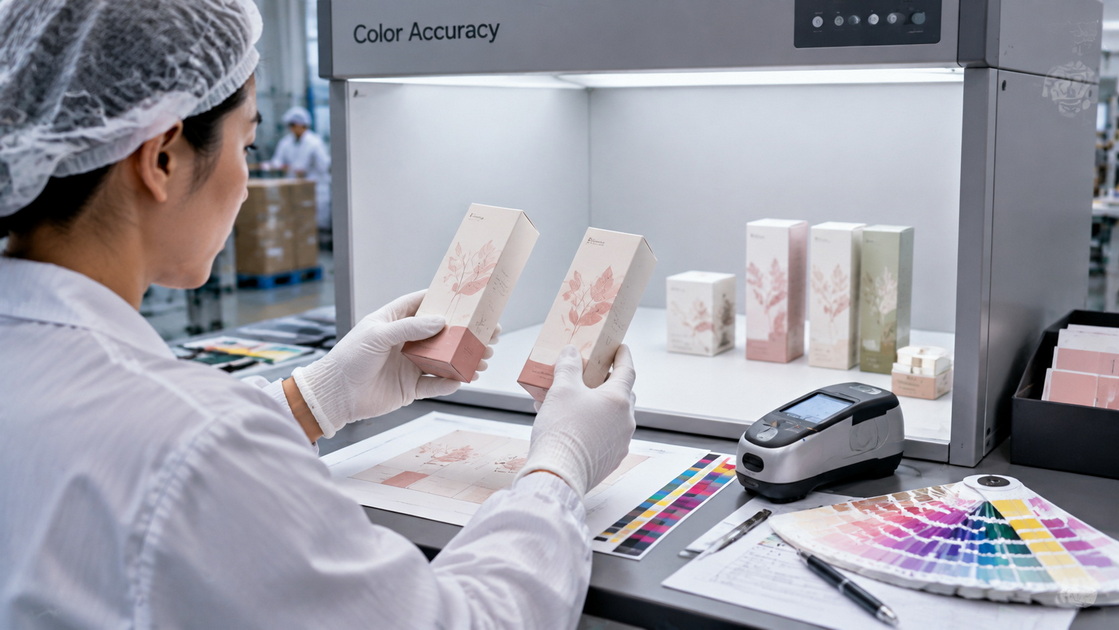
Digital proofs are highly useful, but they should not be treated as a perfect replacement for actual packaging production.
The most important limitation is that a digital proof typically does not use the exact same ink, press, paperboard, coating, or finishing process as the final packaging.
For example, a digital proof may look different from a final box produced on:
- Uncoated kraft paper
- Natural white or ivory paperboard
- Metallized board
- Black paperboard
- Textured specialty paper
- Corrugated board
- Recycled paperboard with visible fibers
- Board with matte lamination, gloss lamination, soft-touch film, or aqueous coating
Digital proofing may also be less reliable for:
- Metallic inks
- Fluorescent Pantone colors
- White ink on colored substrates
- Very bright spot colors
- Dense black builds
- Duotones and specialty black-and-white images
- Fine reverse type
- Ultra-thin lines
- Precise foil-stamping registration
- Complex overprint effects
For this reason, a digital proof should be evaluated as a controlled color target, not as an automatic guarantee that every material and finishing effect will look identical in mass production.
A press proof, also known as a wet proof, is produced on a printing press using actual press conditions. Depending on the project, it may use the intended printing plates, inks, substrate, screen settings, and production workflow.
Because it more closely represents the real manufacturing environment, a press proof is often selected for packaging where color and visual impact are commercially critical.
Typical examples include:
- Premium cosmetics packaging
- Luxury rigid gift boxes
- Fragrance boxes
- High-end electronics packaging
- Collector packaging
- Art reproductions
- Brand-sensitive food and beverage cartons
- Packaging with specific Pantone colors
- Products sold through retail channels with strict brand standards
The strongest reason to use a press proof is simple: it gives stakeholders a more realistic view of how the packaging may look when produced.
A press proof can help evaluate:
- Ink behavior on the actual or similar packaging substrate
- Solid ink density and color intensity
- Pantone spot-color performance
- Dot gain and tonal transitions
- Fine-detail reproduction
- Overprint behavior
- Trapping performance
- Registration quality
- Black builds and neutral gray balance
- Interaction between printed graphics and board texture
- Potential press-related production issues
Trapping is particularly important in multi-color packaging printing. It creates a small overlap between adjacent colors to reduce visible white gaps caused by press misregistration. Adobe explains that trapping compensates for possible registration variation by allowing adjoining colors to overlap slightly.
A press proof may therefore reveal risks that are not obvious in a standard digital proof, especially on designs with fine type, narrow color boundaries, dark backgrounds, high-contrast graphics, or multiple spot colors.
Although press proofs offer significant value, they are not the right choice for every packaging project.
Their disadvantages include:
- Higher cost: Press time, plate preparation, setup, waste sheets, and operator time increase cost.
- Longer lead time: The printer must schedule a press setup and may need to interrupt or coordinate around production.
- Possible press variability: Dirt, hickeys, registration variation, and other press-related imperfections can occur.
- Not always necessary: A low-risk, standard CMYK mailer box may not justify a dedicated wet proof.
- Finishing may still require separate approval: A press proof does not automatically confirm foil, embossing depth, texture, lamination feel, or die-cut precision unless those processes are also sampled.
For many projects, the most efficient approach is not "digital proof or press proof." It is a staged process: soft proof → digital proof → structural sample → press proof when needed → pre-production sample.
The appropriate proofing method depends on the project's risk level. At HLun Pack, we recommend making the decision based on the product category, color sensitivity, packaging structure, material, and consequences of an incorrect result.
| Packaging Scenario | Recommended Proof Method | Why It Matters |
|---|---|---|
| Standard CMYK folding carton | Digital proof | Efficient for checking text, graphics, panel layout, and general color direction |
| E-commerce mailer box | Digital proof plus structural sample | Color is important, but fit, strength, and unboxing experience also matter |
| Corrugated shipping box | Digital proof plus printed board sample | Corrugated surface and flexographic printing can change visual appearance |
| Premium cosmetic box | Digital proof plus press proof | Brand colors, gradients, foil, and fine details often require closer validation |
| Luxury rigid box | Digital proof, material swatch, and pre-production sample | Paper wrap, lamination, board construction, and finishing must be reviewed together |
| Packaging with Pantone colors | Press proof or approved Pantone drawdown | Spot-color accuracy can be critical to brand consistency |
| Food or pharmaceutical carton | Digital proof plus compliance-focused artwork check | Regulatory copy, barcode placement, and version control are essential |
| High-volume international packaging order | Certified digital proof and approval protocol | Clear approval records reduce disputes across time zones and production teams |
The best results come from a structured approval workflow rather than relying on one proof alone.
Before proofing begins, document the final packaging specification.
Include:
- Box style and dimensions
- Die line version
- Paperboard type and GSM
- Corrugated flute type, if applicable
- Print process
- CMYK and Pantone colors
- Coating or lamination
- Foil, embossing, debossing, spot UV, or texture requirements
- Barcode requirements
- Quantity and production tolerance
- Target delivery market
This step matters because a proof cannot accurately represent a production condition that has not been defined.
Before creating any physical proof, the artwork should be checked for technical production readiness.
A professional preflight review should include:
- Bleed and trim settings
- Font embedding or outlining
- Image resolution
- CMYK versus RGB conversion
- Spot-color naming
- Overprint settings
- Knockout behavior
- Rich black construction
- Minimum line thickness
- Minimum type size
- Barcode quiet zones
- Die-line separation
- Varnish, foil, and embossing layers
- Linked-image and transparency issues
Adobe's print-production tools allow users to preview overprint behavior and select a simulation profile intended to match the output device. This can help identify artwork behavior before files move to production.
A soft proof is normally a PDF or screen preview. It should be used mainly for content review, not final color approval.
Review:
- Product names
- Claims and legal copy
- Ingredient lists
- Translations
- Barcode numbers
- Country-of-origin text
- Logo placement
- Panel sequence
- QR codes
- Regulatory symbols
A soft proof is fast, but screens vary significantly in brightness, calibration, ambient light, and color settings. Never treat an uncalibrated laptop screen as the final authority for packaging color.
A physical digital proof allows the team to inspect content and color under controlled conditions.
For the most useful review:
1. View the proof under neutral, consistent lighting.
2. Compare it with approved brand-color references.
3. Confirm the intended substrate and print profile.
4. Check gradients, skin tones, shadows, neutral grays, and dark areas.
5. Mark changes clearly and consolidate feedback into one approval file.
6. Confirm whether the proof is for layout review, color guidance, or contractual color approval.
If color is high-risk, request a verified proof with a measurement strip and report rather than relying solely on a visually pleasing printout. Fogra notes that certified contract-proof creation evaluates criteria including substrate characteristics, MediaWedge color accuracy, gray balance, uniformity, tone-value reproduction, image register, and resolving power.
A press proof is worth the investment when a color error, material mismatch, or finishing problem could create expensive consequences.
Consider requesting one when:
- Your brand has mandatory Pantone standards.
- The box is premium or luxury-positioned.
- The design includes highly visible gradients.
- Dark backgrounds or neutral grays must remain consistent.
- The project uses metallic, fluorescent, or specialty inks.
- You are switching printers, substrates, or countries of manufacture.
- The packaging will be used in a large retail launch.
- The production quantity is high enough that a reprint would be costly.
- Your stakeholders need confidence before approving mass production.
For complex packaging, the final safeguard should be a complete pre-production sample.
This sample should combine:
- Final printed artwork
- Actual board or paper stock
- Final die cutting
- Folding and gluing
- Lamination or varnish
- Foil stamping
- Embossing or debossing
- Inserts, trays, or other components
- Assembly quality
A press proof can verify print performance, but only a finished packaging sample can verify the complete customer experience.
Experienced packaging buyers do not treat proofing as an optional administrative step. They treat it as a way to control the cost of uncertainty.
A digital proof is usually sufficient when the project has standard CMYK artwork, manageable visual risk, and a well-established packaging specification. A press proof becomes more valuable when the cost of getting the color wrong is greater than the cost of proofing.
For example, imagine a skincare brand launching 100,000 premium folding cartons with a signature pale green color. If that color prints too yellow, too gray, or too dark, the brand may face retail inconsistency, rejected inventory, delayed launch dates, and reprint costs. In that situation, the added investment in a press proof or verified contract proof is small compared with the potential cost of a packaging failure.
The right question is not, "Which proof is cheaper?"
The right question is, "What level of proofing protects this project from the most expensive mistake?"
Avoid these common approval errors:
- Approving color from an uncalibrated screen.
- Reviewing a proof under warm office lighting.
- Assuming a digital proof exactly matches kraft, corrugated, or textured paperboard.
- Approving only the front panel and ignoring side panels, bottom panels, and folding sequence.
- Forgetting to check barcode readability after resizing artwork.
- Failing to identify overprint settings or knockout issues.
- Approving a PDF without confirming the final substrate and finish.
- Treating Pantone names as enough without confirming the intended ink standard.
- Sending multiple conflicting rounds of feedback from different stakeholders.
- Starting mass production without a documented final approval record.
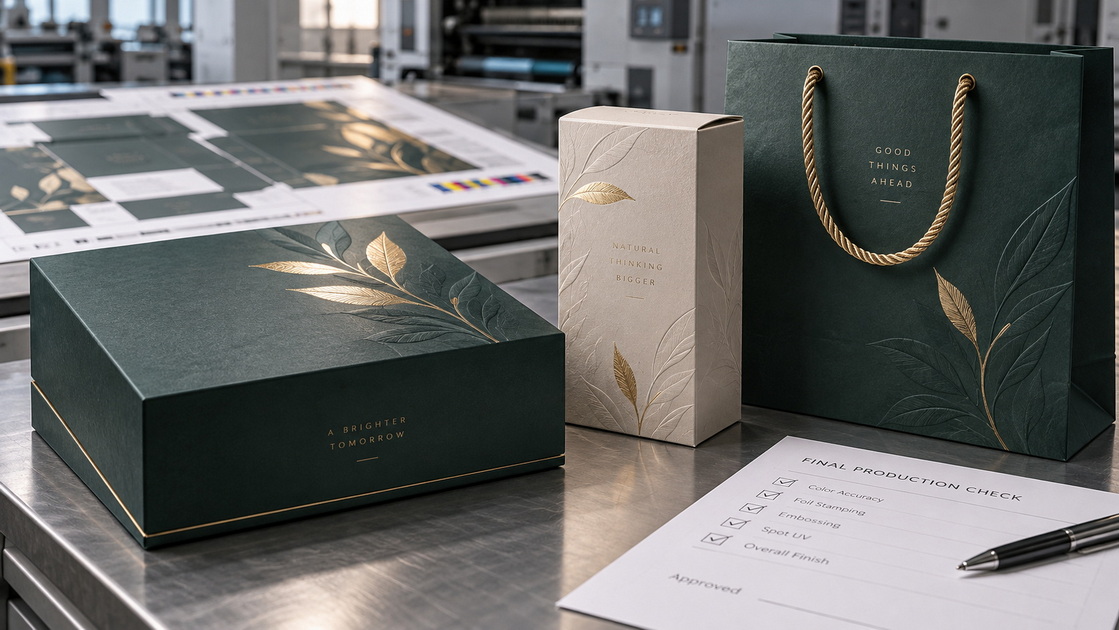
HLun Pack supports brands with packaging machinery, paper-packaging solutions, and production-oriented packaging consultation. Whether you are developing folding cartons, rigid gift boxes, corrugated mailers, paper bags, or integrated packaging systems, proofing should be built into the production plan—not added after problems appear.
We can help you evaluate the right combination of:
- Digital color proofing
- Artwork preflight review
- Packaging structure sampling
- Material and surface-finish selection
- Press-proof planning for critical projects
- Pre-production sample approval
- Packaging equipment and end-to-end packaging solutions
Contact HLun Pack today to discuss your paper packaging project, share your artwork and specifications, and build a proofing workflow that protects your brand before full-scale production begins.
A digital proof is accurate enough for many standard CMYK packaging projects when it is properly calibrated and used with a defined print condition. However, it may not fully replicate the final look on textured, recycled, kraft, corrugated, metallic, or specialty packaging materials.
A regular digital proof may be used for visual review, layout approval, or color guidance. A contract proof is a controlled reference intended to define an agreed production target. Under ISO 12647-7 workflows, proof prints may be verified against specified conditions and tolerances.
Request a press proof when your packaging has strict brand-color requirements, Pantone colors, luxury positioning, complex gradients, unusual materials, large production volumes, or high reprint risk. It is especially valuable when the final appearance cannot be confidently predicted from a digital proof alone.
Usually, no. A digital proof may visually indicate where these finishes will appear, but it cannot accurately reproduce the tactile, reflective, raised, recessed, or gloss effects of foil stamping, embossing, debossing, and spot UV. Request a finishing sample or complete pre-production sample for approval.
Screens use emitted RGB light, while printed packaging uses reflected light and usually CMYK or spot inks. Differences in monitor calibration, paperboard color, coating, ink behavior, lighting conditions, and finishing can all affect perceived color.
No printing process is completely variation-free. A press proof establishes a controlled reference, but production still operates within agreed tolerances. The best practice is to define color expectations, substrate specifications, acceptable variation, inspection standards, and approval procedures before mass production.
Provide the final dieline, print-ready artwork, Pantone references if applicable, desired paper or board specification, finishing requirements, quantity, target market, barcode files, regulatory copy, and approved brand-color standards. The more complete the specification, the more reliable the proofing process will be.
1. Shanghai DE Printed Box. "[Digital Proofs vs Press Proofs]." Accessed September 2026.
Original article reviewed for the distinction between digital proofs and wet/press proofs, including common advantages and limitations. [deprintedbox]
2. International Organization for Standardization. "[ISO 12647-7:2016—Graphic Technology: Process Control for the Production of Halftone Colour Separations, Proof and Production Prints]."
Source for requirements relating to proof prints used as references in contractual printing workflows. [cdn.standards.iteh]
3. Fogra Research Institute for Media Technologies. "[Contract Proof Creation (CPC)]."
Source for ISO 12647-7-oriented proofing criteria, including substrate characteristics, MediaWedge accuracy, gray balance, uniformity, tone reproduction, and resolving power. [fogra]
4. Adobe. "[Trapping Color in Acrobat Pro]."
Source for the role of trapping in compensating for potential press misregistration. [helpx.adobe]
5. Adobe. "[How to Use Overprinting in Illustrator]."
Source for explanations of overprint, knockout behavior, and trapping between adjoining printed colors. [helpx.adobe]
6. Adobe. "[Preview Overprint in Acrobat Pro]."
Source for PDF output-preview and overprint-simulation workflow guidance. [helpx.adobe]
7. X-Rite. "[Create Fogra Media Wedge Verification Report with MT5]."
Source for MediaWedge verification and ISO-reference proofing conditions. [xrite]


