


close
Choose Your Site
Global
Social Media
Views: 256 Author: HLun PACK Publish Time: 2026-07-04 Origin: Site


Content Menu
● What Is Void Fill in Modern Packaging?
● Why Void Fill Matters More Than Ever
>> Protection, Brand, and Sustainability in One Decision
● Core Types of Void Fill and When to Use Them
>> Cardboard Inserts and Partitions
>> Bio Foam and Packing Peanuts
>> Air Pillows and Bubble Wrap
● Data‑Driven Void Fill Strategy (Expert Insights)
>> Market and ESG Signals You Can't Ignore
● Practical Selection Framework for Void Fill
● Integrating Void Fill with HLun Pack Solutions
>> From Carton Design to Automated Filling
● How to Decide "Which Filler Should I Use?"
● Actionable CTA: Design Your Void Fill Strategy with HLun Pack
● Frequently Asked Questions (FAQ)
Void fillers are no longer "just stuffing" in a box—they are a strategic lever for product protection, brand experience, sustainability, and packaging efficiency across paper, flexible, and automated packaging lines. In this guide, I'll share a seasoned packaging strategist's perspective and show how void fill choices connect directly to HLun Pack's integrated paper packaging and packaging equipment solutions. [intelmarketresearch]
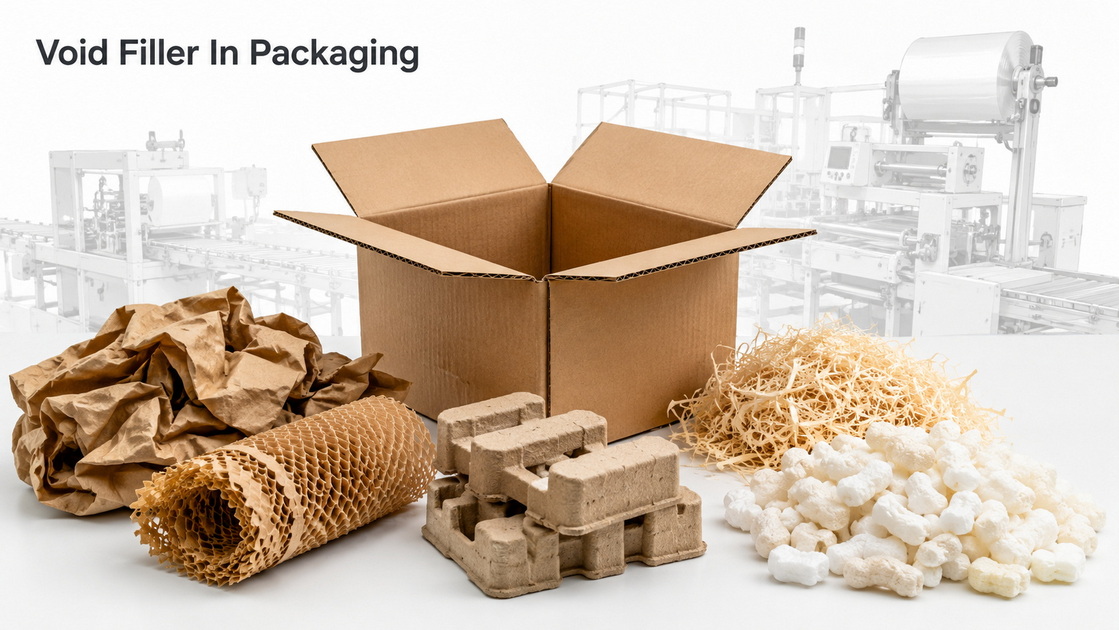
Void fill (also called package stuffing, shipping padding, or filler) refers to any material placed inside a shipping container to fill empty spaces, prevent product movement, and absorb shock during handling and transit. [intelmarketresearch]
Beyond protection, void fill now plays a key role in:
- Brand perception and unboxing experience, especially in e‑commerce.
- Sustainability performance, including recyclability and plastic reduction.
- Cost and efficiency, from DIM-weight optimization to automated dispensing.
As a packaging strategist, I treat void fill as part of a holistic system that includes paper packaging, flexible packaging, and the right equipment (granular, liquid, powder) to deliver safe, efficient, and sustainable shipments at scale. [hlunpack]
From a practical standpoint, the first job of void fill is simple: keep products from shifting and breaking. Heavy or sharp-edged items can easily puncture cartons when the box interior is not properly stabilized, which translates directly into product loss, returns, and brand damage. [uhaul]
At the same time, the rise of e‑commerce means the shipping box is often the only physical brand touchpoint, so filler must reinforce your brand rather than look like an afterthought. Consumers increasingly expect curbside-recyclable, low‑waste packaging, making traditional plastic void fillers a risk for perceived "over-packaging" and "box guilt." [packmile]
From an industry perspective, global void fill and protective packaging markets are seeing steady growth, driven by e‑commerce volumes and ESG commitments. Brands that align void fill strategies with sustainability, automation, and branding are outperforming competitors in both customer satisfaction and cost control. [marketreportanalytics]
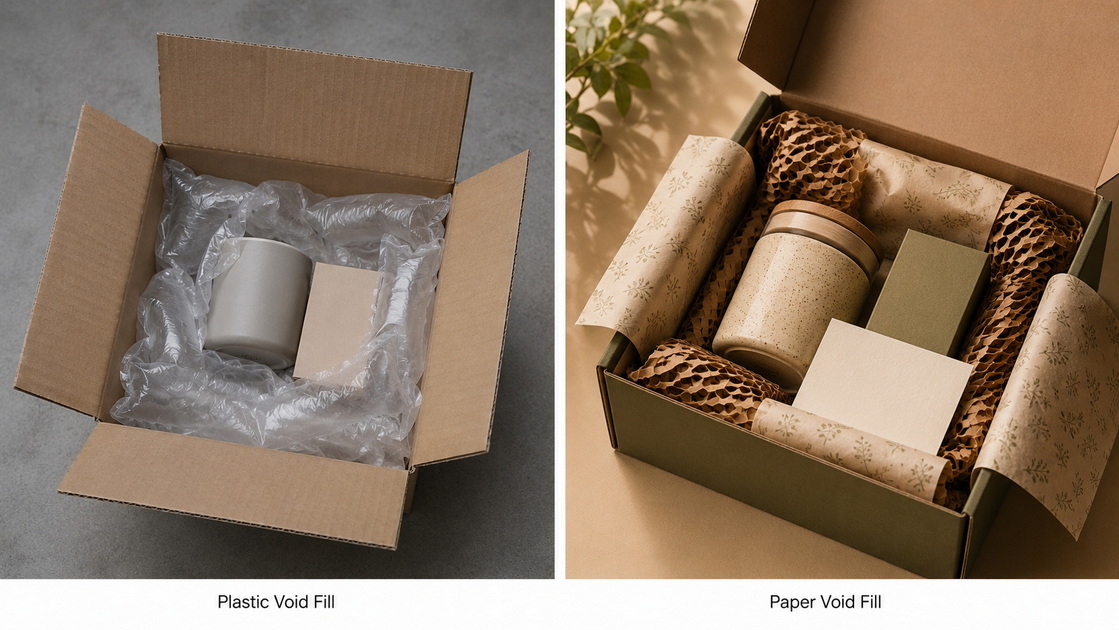
Paper-based void fills are often the best starting point for brands looking to balance protection, sustainability, and aesthetics.
Key options include:
- Packing paper (kraft): Thin paper folded or scrunched around products to provide cushioning and a clean, minimal look. [intelmarketresearch]
- Custom tissue paper: Branded, lightweight wrap for clothing, shoes, and non-fragile items where appearance matters more than impact resistance. [intelmarketresearch]
- Honeycomb paper: Biodegradable, recyclable, and surprisingly protective for fragile items like glass, thanks to its expanded honeycomb structure. [packmile]
Why I recommend paper fillers for many brands:
- They are typically curbside recyclable and support ESG targets. [blog.itape]
- They add visual and tactile appeal to the unboxing experience.
- They work well with paper packaging systems—cartons, paper bags, and boxes—creating a consistent, mono-material packaging that simplifies recycling. [hlunpack]
For HLun Pack, paper fillers can be integrated with custom paper boxes, paper bags, and cartons, enabling clients to design fully paper-based packaging ecosystems from outer carton to inner filler. [hlunpack]
Cardboard-based solutions are ideal when product separation and presentation are critical.
Common options:
- Cardboard partition dividers: Create individual cells to keep bottles, jars, and cosmetics from hitting each other in transit. [intelmarketresearch]
- Internal inserts: Die-cut cardboard structures that both secure and "stage" products inside the box for a premium reveal. [intelmarketresearch]
From a practitioner's view:
- Use partitions for multi-unit shipments of similar items—e.g., beverages, skincare sets, or jarred food—where impact between units is a primary risk. [intelmarketresearch]
- Use internal inserts for luxury or gift products, where unboxing and precise product positioning justify higher packaging investment. [intelmarketresearch]
Cardboard solutions are particularly powerful when combined with rigid paper boxes and folding cartons, both of which are part of HLun Pack's core paper packaging offer. [hlunpack]
Wood excelsior—shaved, curly wood—is a more niche but high-impact tactile and sensory void fill.
Advantages:
- Strong protection and cushioning, suitable for heavier or irregular items.
- A distinct, rustic visual and olfactory experience, adding scent and texture to the unboxing. [intelmarketresearch]
Considerations:
- Scent can transfer to soft products like textiles, making it better suited for non-porous items such as glassware, ceramics, and specialty foods. [intelmarketresearch]
- It fits well with artisan, rustic, or heritage brand positioning, but may feel off-brand for minimalistic or tech-focused shipments.
As a strategy expert, I usually position wood excelsior for high-margin, story-driven products where the packaging is part of the brand narrative—craft food, boutique cosmetics, or heritage gift collections.
Packing peanuts (bio foam) provide extremely flexible filling for complex, irregular shapes. [intelmarketresearch]
Historically, polystyrene peanuts have been a sustainability problem, but plant-based biodegradable variants have emerged that break down more safely in composting environments. [mobilityforesights]
Use cases:
- Mixed-shape product loads where precise inserts are impractical.
- Lower-volume shippers that need a universal filler rather than SKU-specific solutions.
Trade-offs:
- Limited branding and poor unboxing aesthetics compared to paper fillers or inserts. [intelmarketresearch]
- Risk of negative customer perception if synthetic plastics are used.
In my consulting work, I only recommend biodegradable bio foam in exception cases, and generally pair it with clear sustainability messaging on the packaging or in the box to prevent confusion.
Air pillows and bubble wrap remain common because they are cheap, fast, and effective. They cushion products well and are easy to dispense manually or via simple equipment. [uhaul]
However:
- Most variants are single‑use plastics, raising sustainability concerns and disposal issues. [blog.itape]
- They offer no visual customization, making them less suitable for premium unboxing experiences. [blog.itape]
From an equipment perspective, air pillows and bubble wrap can be integrated into automated or semi‑automated lines, but brands increasingly replace them with paper-based or recyclable solutions to align with ESG targets and consumer expectations. [packmile]
Recent market analyses show that protective packaging and void fill are growing steadily, with CAGRs typically in the mid-single to high-single digits driven by e‑commerce, omnichannel fulfillment, and sustainability mandates. ESG pressure is pushing brands toward recyclable paper fillers, biodegradable foams, and optimized box sizing that reduce the need for excessive void fill. [futuremarketinsights]
As a strategist, I recommend brands track at least three indicators when designing void fill policies:
1. Damage rate and return rate per product category.
2. Packaging material mix, specifically the ratio of paper to plastic void fill.
3. Customer sentiment in reviews related to packaging (mentions of "wasteful," "eco‑friendly," or "beautiful" packaging).
By linking these data points to packaging choices, you can quantify the ROI of switching to more efficient and sustainable void fillers.
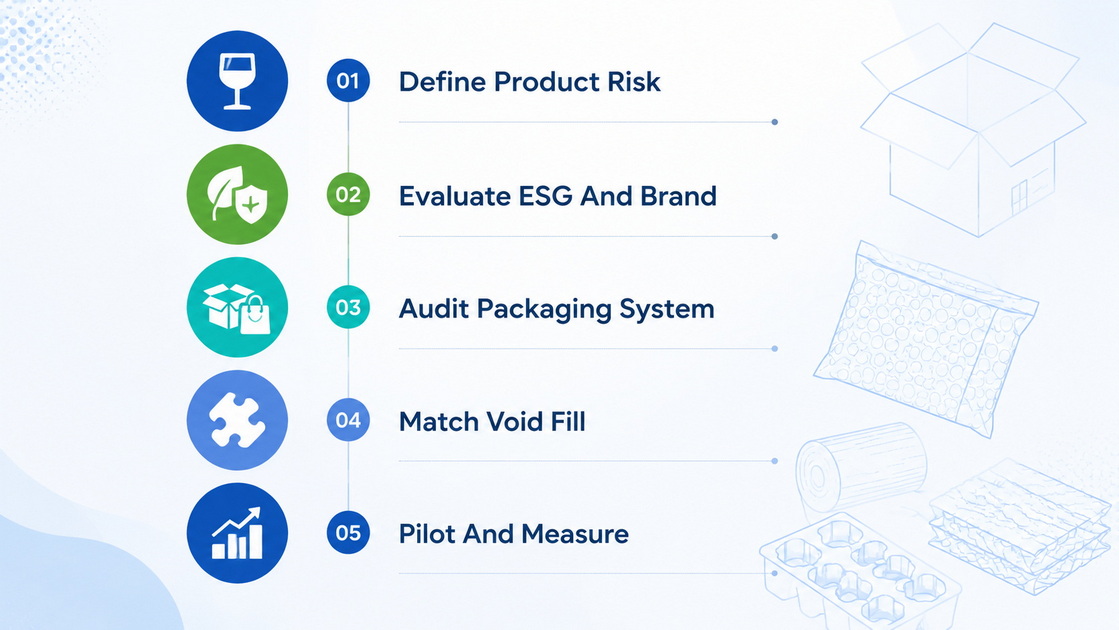
Here is a concise, operator-tested framework I use with packaging teams:
1. Define product risk profile
- Fragility, weight, edge sharpness, and surface susceptibility to scratches.
2. Confirm brand and ESG priorities
- Is curbside recyclability mandatory? Is a premium unboxing necessary?
3. Audit current packaging system
- Paper vs. flexible packaging, existing cartons, bags, films, and equipment capabilities. [hlunpack]
4. Match void fill family to context
- Paper/honeycomb for sustainable and branded experiences;
- Cardboard inserts/partitions for multi-unit and luxury sets;
- Specialty fillers (excelsior, bio foam) for unique use cases.
5. Pilot and measure
- Run controlled shipments to measure damage, packing speed, material usage, and customer feedback before full rollout.
This sequence helps avoid ad‑hoc filler decisions and ensures void fill aligns with structural packaging and machinery from day one.
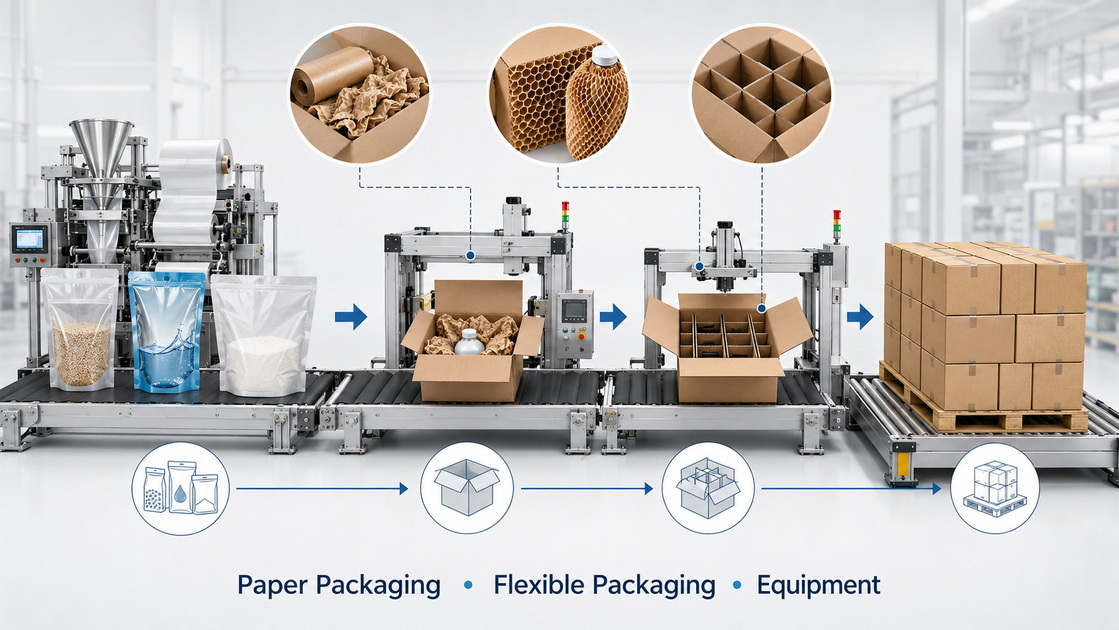
HLun Pack operates both packaging materials factories and packaging machinery manufacturing, covering paper packaging, flexible packaging, and equipment for granules, liquids, and powders. This dual capability allows brands to design coherent systems where void fill is not an afterthought, but a planned component. [hlunpack]
Typical integration paths include:
- Paper Packaging + Paper Void Fill
- Custom paper boxes, corrugated cartons, and paper bags paired with honeycomb paper or kraft packing paper for a fully recyclable system. [hlunpack]
- Flexible Packaging + Minimal Void Fill
- Stand‑up pouches, roll films, and gusseted bags designed to fit product dimensions closely, reducing the internal void space that needs filling. [hlunpack]
- Packaging Equipment + Optimized Void Fill Usage
- VFFS/HFFS wrappers and filling machines configured to minimize unnecessary box size while integrating simple void fill steps, especially for granular, liquid, and powder packaging lines. [hlunpack]
Because HLun Pack offers complete packaging solutions, their engineering teams can help adjust box dimensions, inner structures, and equipment settings to reduce void fill waste while maintaining protection.
There is no single universally "right" void fill; the best choice depends on your product, brand, and operational constraints. However, you can use the following simplified decision table as a starting point: [intelmarketresearch]
| Scenario | Recommended void fill | Key reason |
|---|---|---|
| Fragile glass items | Honeycomb paper, cardboard inserts intelmarketresearch | High protection and recyclability |
| Luxury gift sets | Custom tissue + internal inserts intelmarketresearch | Premium unboxing and product staging |
| Heavy jars/bottles in bulk | Cardboard partitions intelmarketresearch | Separation and structural support |
| Mixed, irregular items | Biodegradable packing peanuts intelmarketresearch | Flexible filling; shape agnostic |
| Apparel and soft goods | Kraft packing paper or tissue intelmarketresearch | Light protection and elevated appearance |
| Rustic/heritage branding | Wood excelsior intelmarketresearch | Sensory experience and storytelling |
| Budget-conscious, entry-level e‑commerce | Recycled kraft paper or simple air pillows intelmarketresearch | Cost-effective protection |
For most brands aiming to improve both UX and sustainability, my default recommendation is to start with paper‑based void fill and targeted inserts, then reserve plastic or bio foam for edge cases where paper cannot meet performance requirements.
If you are reconsidering your void fill approach—whether to cut damage rates, improve sustainability, or elevate the unboxing experience—the most efficient path is to evaluate packaging materials and equipment together. [hlunpack]
Next step:
- Contact HLun Pack's packaging engineers to review your current box sizes, fillers, and product mix.
- Request a customized packaging and void fill solution that combines paper packaging, flexible packaging, and appropriate granular, liquid, or powder equipment for your line. [hlunpack]
By taking a system-level view, you can move void fill from a cost center to a strategic asset in your packaging, logistics, and brand experience.
Q1: What is the primary purpose of void fill in packaging?
A1: Void fill prevents product movement, absorbs shocks, and protects items from damage during transport by filling empty spaces inside the package. [uhaul]
Q2: Are paper void fillers strong enough for fragile items?
A2: Yes. Honeycomb paper and properly scrunched kraft packing paper can provide excellent cushioning for fragile items, especially when combined with well-designed cartons or inserts. [packmile]
Q3: How can void fill choices support sustainability goals?
A3: Choosing recyclable paper fillers, biodegradable bio foam, and right‑sized cartons reduces plastic usage, simplifies recycling, and aligns packaging with ESG commitments. [blog.itape]
Q4: When should I use cardboard partitions instead of loose fillers?
A4: Use partitions for shipments with multiple identical units (like bottles or jars) where preventing product‑to‑product impact is more important than filling residual empty space. [intelmarketresearch]
Q5: How does HLun Pack help optimize void fill usage?
A5: HLun Pack provides paper packaging, flexible packaging, and packaging equipment, allowing brands to adjust box dimensions, inner structures, and machinery settings to reduce excess void space and use the most suitable fillers. [hlunpack]
1. PakFactory. "Cardboard Fillers / What is a Void Filler?" (Original article on void fill types and uses).
https://pakfactory.com/blog/void-filler-in-packaging/
2. HLun Pack – Company Introduction and Product Overview (Paper packaging, flexible packaging, packaging equipment, and solutions).
https://www.hlunpack.com/aboutus.html
3. HLun Pack – Products (Paper boxes, paper bags, cartons, flexible packaging, packaging equipment).
https://www.hlunpack.com/products.html
4. HLun Pack – Packaging Equipment Solutions (VFFS, HFFS, filling machines and integrated lines).
https://www.hlunpack.com/packaging-equipment.html
5. Intel Market Research – Void Fill Packaging Market Outlook 2026–2034 (Market size, CAGR, sustainability trends).
https://www.intelmarketresearch.com/void-fill-packaging-market-45909
6. MarketReportAnalytics – Protective Packaging and Void Fillers Growth Forecast (Drivers and regional insights).
https://www.marketreportanalytics.com/reports/protective-packaging-and-void-fillers-361490
7. Packmile – Eco-Friendly Void Fillers and Packing Tape Strategies.
https://www.packmile.com/insights/eco-friendly-void-fillers-and-packing-tape-strategies/
8. U-Haul – Void Fill Packaging Methods: A Complete Guide.
https://www.uhaul.com/Tips/Packing/Void-Fill-Packaging-Methods-A-Complete-Guide-28023/
9. IPG – 2026 Packaging Trends Report (Curbside recyclability, unboxing, and automation).
https://blog.itape.com/blog/2026-packaging-trends-report
10. Mobility Foresights – Plastics Gap Packaging Filler Market.
https://mobilityforesights.com/product/plastics-gap-packaging-filler-market
11. Future Market Insights – Packaging Void-Fill Reduction Software Market.
https://www.futuremarketinsights.com/reports/packaging-void-fill-reduction-software-market


