


close
Choose Your Site
Global
Social Media
Views: 222 Author: Amanda Publish Time: 2026-01-30 Origin: Site


Content Menu
● Kraft vs Test Liners: Paper Types Explained
>> Kraft liner
>> Test liner
● Understanding GSM and Board Grade Codes
● Wall Types: Single, Double, and Triple Wall
>> Single wall
>> Double wall
>> Triple wall
● Flute Types and Their Typical Uses
>> Flute combinations in double wall
● Practical Applications of Each Flute
>> A flute
>> B flute
>> C flute
>> E flute
>> F flute
● Cardboard Packaging Types: From Primary to Tertiary Use
● Cardboard Grades vs Product Requirements
● How to Read and Use Board Specifications in Real Projects
● Sustainability and Recyclability of Cardboard Packaging
● Real-World Application Scenarios From HLun Pack
>> Scenario 1: High-speed snack packing line
>> Scenario 2: Export shipping for glass bottles
>> Scenario 3: Multi-SKU e-commerce warehouse
● Step-by-Step Method to Choose the Right Cardboard
>> 2. Clarify branding and print requirements
>> 3. Check machinery and process constraints
>> 4. Select flute and wall type
>> 5. Optimize GSM and liner mix
>> 6. Validate with testing and pilot runs
● Partner With HLun Pack for Integrated Cardboard and Machinery Solutions
>> 1. What is the difference between corrugated cardboard and carton board?
>> 2. Which flute is best for e-commerce packaging?
>> 3. How do I balance cost and performance when choosing a board grade?
>> 4. Are high-recycled-content boxes weaker than virgin fiber boxes?
>> 5. How does packaging machinery influence cardboard selection?
As a professional packaging materials manufacturer and machinery provider, HLun Pack helps brands choose the right cardboard structure, flute, and liner combination to balance cost, strength, and print performance in real production lines. This guide explains the main types of cardboard used in packaging, how to read board grades like 125K/B/125T, and how to select the best option for your product and packing process.

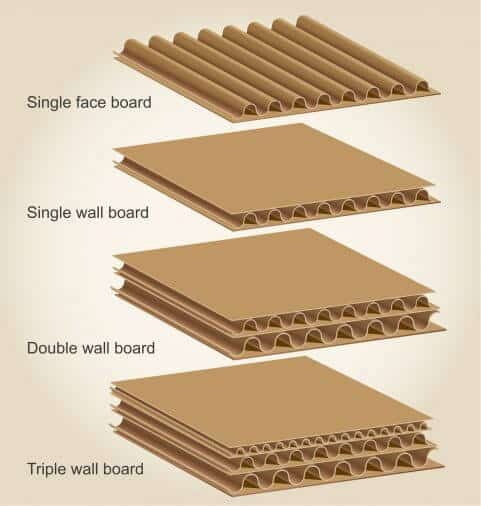
Cardboard used in packaging usually refers to corrugated board, which is a sandwich structure of flat liners and a fluted (wavy) medium glued together. Two main liner types dominate: kraft (virgin fibers) and test (recycled fibers).
The structure is generally outer liner plus fluting plus inner liner, with one or more fluted layers depending on the wall type. Cardboard performance depends on three core parameters: paper type, GSM (grammage), and flute profile, which together determine stacking strength, crush resistance, and print quality.
Kraft liner is made primarily from virgin softwood fibers, which provide high strength and a smooth surface. It is excellent for external liners on printed boxes and is widely used where brand image and structural safety are both critical.
Strong fibers help the material withstand converting, die-cutting, and automated packing. This makes kraft liner a preferred choice for premium retail packaging and performance-critical applications.
Test liner uses recycled fibers, which are more damaged and shorter than virgin fibers, reducing strength and printability. It is a cost-effective choice for inner liners or non-visible surfaces.
Test liner is suitable for secondary or tertiary packaging where appearance is less important. It is often combined with kraft on the outside to balance cost and performance.
Both kraft and test liners are frequently produced as two-layer laminates: a base for strength and a higher-quality top for print and appearance. This lamination allows optimization of cost, stiffness, and visual quality within the same sheet.
By combining different layers, packaging engineers can fine-tune board behavior for specific machines, box styles, and logistics conditions.
Paper thickness and weight are typically expressed in GSM (grams per square meter). Higher GSM generally means heavier and stronger liners.
Board codes such as 135K/B/135T describe liner weights, paper type, and flute profile. The first number and letter indicate the outer liner GSM and type (for example, 200K means 200 gsm kraft), the middle letter indicates flute type (A, B, C, E, F), and the last number and letter specify the inner liner GSM and type (such as 200T for 200 gsm test).
For example, a 200K/B/200T board means:
- Outer: 200 gsm kraft liner.
- Flute: B-flute medium.
- Inner: 200 gsm test liner.
This combination is commonly used for standard single-wall boxes with a balance of strength and economics.
Single-wall corrugated board consists of one fluted layer between two liners. It is typical for e-commerce mailers, folding cartons, and many retail boxes.
Common single-wall grades include structures such as 125K/B/125T or 125K/C/125T. These combinations provide sufficient strength for light to medium-weight products with competitive cost.
Double-wall board adds a second fluted medium and third liner, significantly improving stacking and puncture resistance. Its structure is liner – flute – liner – flute – liner.
Popular flute combinations for double wall include BC, EB, and AC. These boards are ideal for heavy products, bulk packs, and long-distance shipping where cartons face high compression and handling stress.
Triple-wall corrugated uses three fluted layers and four liners, providing performance approaching that of wooden crates. It is suitable for industrial loads, chemicals, and export crates.
Triple-wall solutions are often used in automated warehouse and palletized logistics environments where long-term stacking and vibration resistance are necessary.
Flutes are the wavy layer that creates the board's thickness and cushioning. Their profile determines compression strength, cushioning, and print surface.
- A flute: about 5 mm thick, high cushioning, good for delicate or bulky items.
- B flute: about 3 mm, good crush and puncture resistance, widely used in mailers and inner packaging.
- C flute: around 4 mm, often used for general shipping cartons with strong stacking performance.
- E flute: about 1–1.5 mm, a fine micro-flute with a smooth print surface and good crush resistance, ideal for printed retail packs.
- F and G flutes: very fine profiles used where premium print and compact thickness are essential, such as luxury or food packaging.
Popular double-wall combinations include:
- BC flute (approximately 7 mm): B + C, often used for heavy-duty shipping cartons.
- EB flute (about 4–5 mm): E + B, offering a printable surface plus structural strength, ideal for branded shipping boxes.
- AC flute (approximately 8 mm): A + C, for maximum cushioning and compression in large industrial packs.
These combinations help packaging designers balance cushioning, stacking performance, and board thickness for automated handling and optimized pallet loading.
A flute provides excellent cushioning for fragile items, larger products, or goods that need strong impact absorption. It is widely used when protection against shocks is more critical than compact storage.
B flute delivers high puncture resistance and good printing performance. It is suitable for inner partitions, trays, and smaller mailers, and often chosen for standard e-commerce boxes.
C flute is frequently the default choice for shipping boxes. It offers a good balance of compression and cushioning, making it versatile for many consumer and industrial products.
E flute is a micro-flute used for retail-ready packaging, cosmetics, and electronics sleeves. It combines compact thickness with fine printing, enabling premium graphics and branding.
F flute is an ultra-fine flute profile used in small consumer goods and food clamshells. It offers stiffness with reduced fiber usage and supports high-quality printing in a slim format.
Packaging engineers typically think in terms of primary, secondary, and tertiary packaging.
- Primary packaging has direct product contact, often printed, and requires strong branding and shelf impact.
- Secondary packaging groups primary packs and focuses on transport efficiency and moderate strength.
- Tertiary packaging is used for palletized loads and transit, focusing on logistics safety and unit load stability.
Common matches between levels and board types include:
- Primary: E or F flute, kraft outer for premium print, often single wall.
- Secondary: B or C flute single wall, or EB double wall for heavier units.
- Tertiary: BC or AC double wall, or triple wall for export and industrial loads.
This layered view helps ensure that each level of packaging delivers the right mix of appearance, functionality, and cost.
Product type | Recommended board | Key flute |
Lightweight cosmetics | 250–350 gsm E-flute | E |
Standard e-commerce apparel | 125K/B/125T single wall | B |
Household appliances | 200K/BC/200T double wall | BC |
Glass bottles in transit | C or BC flute board | C or BC |
Export industrial equipment | Triple-wall C/BC/AC | BC/AC combinations |
This table can serve as a quick reference when matching product characteristics with appropriate board structures in project planning or specification documents.
When you see a specification like 125K/E/125T, it indicates that:
- The outer surface is kraft, suitable for high-impact branding and clear printing.
- The E flute provides a thin profile that runs smoothly on automatic case erectors and labellers.
- The inner test liner helps control cost while maintaining structural integrity.
In contrast, a 200K/BC/200T grade signals:
- Heavier liners for higher stacking loads.
- Double-wall BC flute suitable for palletized shipments and long-distance transport.
- More robust performance on automated pallet packing and stretch-wrapping lines.
Reading board specifications in this way makes it easier to compare options and justify choices to purchasing teams, logistics managers, and brand owners.
Modern buyers and regulators expect sustainable packaging that reduces environmental impact without compromising protection. Cardboard has several natural advantages.
Using test liners increases recycled fiber content but needs careful design to avoid performance failures. Corrugated cardboard is widely recyclable in most global markets, making it more attractive than many mixed-material packs.
Right-weighting, or optimizing flute type and GSM, allows brands to lower material usage while maintaining required compression strength. Packaging engineers often rely on performance tests such as burst, edge crush, and compression, along with real-world drop and transport trials, to validate the final specification.
As a manufacturer operating both packaging material and machinery factories, HLun Pack designs solutions that ensure cardboard structure, box style, and packaging line work together seamlessly.
Challenge: Thin-film bags need fast case packing into shelf-ready cartons without tearing or misalignment.
Solution: E- or B-flute boxes with optimized crease profiles to run smoothly on horizontal flow wrappers and case packers, using kraft outer for strong brand print and reliable barcode readability.
Challenge: Minimize breakage and pallet damage during long-distance and multi-modal transport.
Solution: BC double-wall outer boxes combined with B-flute inner partitions, engineered to match filler speed, pallet dimensions, and stacking height.
Challenge: Many box sizes, mixed order weights, and automated label application across multiple channels.
Solution: Standardize to a small set of B- and C-flute grades, with kraft outer liners for high barcode readability and robust conveyability, while using testing data to right-size GSM for each size group.
These cases show why board selection should be integrated with machinery settings and logistic workflows, not decided in isolation.
Use this practical framework when defining packaging specifications for a new product line.
Clarify product fragility, weight per unit, pallet height, and shipping distance. Consider vibration, stacking time, and handling frequency.
Decide whether you need full-color retail printing or minimal branding. Identify shelf channels versus online-only distribution, then choose kraft or white kraft outer liners accordingly.
Review compatibility with your VFFS or HFFS machines, cartoners, or case packers. Confirm required speed, changeover frequency, and tolerance for board thickness and stiffness.
Use E or F flute for premium print and small packs. Choose B or C flute for standard shipping and BC, EB, AC, or triple wall for heavy or export goods.
Start from a proven reference board such as 125K/B/125T, then adjust GSM based on test results and cost targets. Combine kraft outer with test inner to balance performance and cost.
Run samples on real lines to check for jams, damage, and stacking collapse. Fine-tune crease depth, slot design, and inner fitments as needed before full-scale rollout.
If you want to optimize your cardboard grades, reduce damage rates, or align packaging materials with your production equipment, HLun Pack can support you with an integrated approach. Our team covers structural design, board selection, box style engineering, and complete packaging machinery lines, including weighing, filling, wrapping, and cartoning.
We can help you test and validate new specifications, adjust them to your logistics and branding needs, and implement them on site with stable, efficient performance. Contact HLun Pack today to discuss your current packaging challenges, request free structural proposals, or schedule a line audit to identify clear improvement opportunities.
Corrugated cardboard uses a fluted medium between liners for strength, while carton board (solid board) is a single, thicker paperboard layer mainly used for folding cartons and sleeves. Corrugated structures are better for transport and stacking, while carton board is more common in lightweight retail packaging.
B and C flutes are widely used for standard e-commerce shipping because they balance crush resistance, cushioning, and cost. When brands need both strong protection and high-quality printing on relatively compact boxes, E or EB flute combinations are excellent options.
A common approach is to use a kraft outer liner for print and strength, combine it with a test inner liner, and then adjust GSM and flute type according to edge crush and compression test results. Running pilot shipments and monitoring damage rates will help you find the best cost-to-performance ratio.
Recycled fibers are typically shorter and less strong than virgin fibers, but proper design can compensate for this. By using higher GSM, double-wall structures, or optimized flutes, you can meet most logistics requirements while increasing recycled content and reducing environmental impact.
Packaging machines such as VFFS, HFFS, cartoners, and case packers have requirements for board thickness, crease quality, and box geometry. If the board is too stiff or too weak, it can cause jams, poor forming, or misaligned closures, so flute type and GSM must be compatible with line speed and forming accuracy.
1. https://www.gwp.co.uk/guides/corrugated-board-grades-explained/
2. https://www.jardincorrugated.co.uk/news/2025/04/07/corrugated-board-grades-explained/
3. https://thepackagingworld.com/all/corrugated-board/
4. https://pakfactory.com/blog/learn/corrugated-box-101/
5. https://www.webstaurantstore.com/blog/1138/types-and-sizes-of-corrugated-boxes.html
6. https://www.hlunpack.com
7. https://www.hlunpack.com/fillling-machine.html
8. https://www.altosor-communication.com/en/blog/google-eeat/
9. https://www.allpack.uk.com/blog/understanding-your-cartons-the-fundamentals-of-corrugated-packaging
10. https://sandlandpackaging.co.uk/the-ultimate-cardboard-packaging-guide/
11. https://www.dauxin.com/blog/corrugated-board-flutes-grades-and-types/
12. https://searchengineland.com/guide/google-e-e-a-t-for-seo


