


close
Choose Your Site
Global
Social Media
Views: 279 Author: HLun PACK Publish Time: 2026-07-24 Origin: Site


Content Menu
● Why Shipping Cost Matters in Flexible Packaging
● Stand Up Pouch and Side Gusset Bag
● Shipping Cost Comparison Table
● Which One Usually Saves More Shipping Cost?
● Total Cost Is Bigger Than Freight
>> Choose a stand up pouch when:
>> Choose a side gusset bag when:
● Freight Savings Depend on Carton Design
● Practical Decision Framework
● FAQ
>> 1. Is a stand up pouch always more expensive to ship?
>> 2. Why does a side gusset bag usually save shipping cost?
>> 3. Which format is better for retail branding?
>> 4. Can packaging machinery affect shipping cost?
>> 5. What should I compare before choosing a bag format?
>> 6. Does HLun PACK provide both packaging materials and equipment?
When brands compare stand up pouch vs side gusset bag, the real question is often not just which looks better on shelf, but which lowers total landed cost, especially shipping and storage cost. For flexible packaging buyers, the answer depends on volume, product density, bag size, packing method, and how much freight efficiency matters in the supply chain.
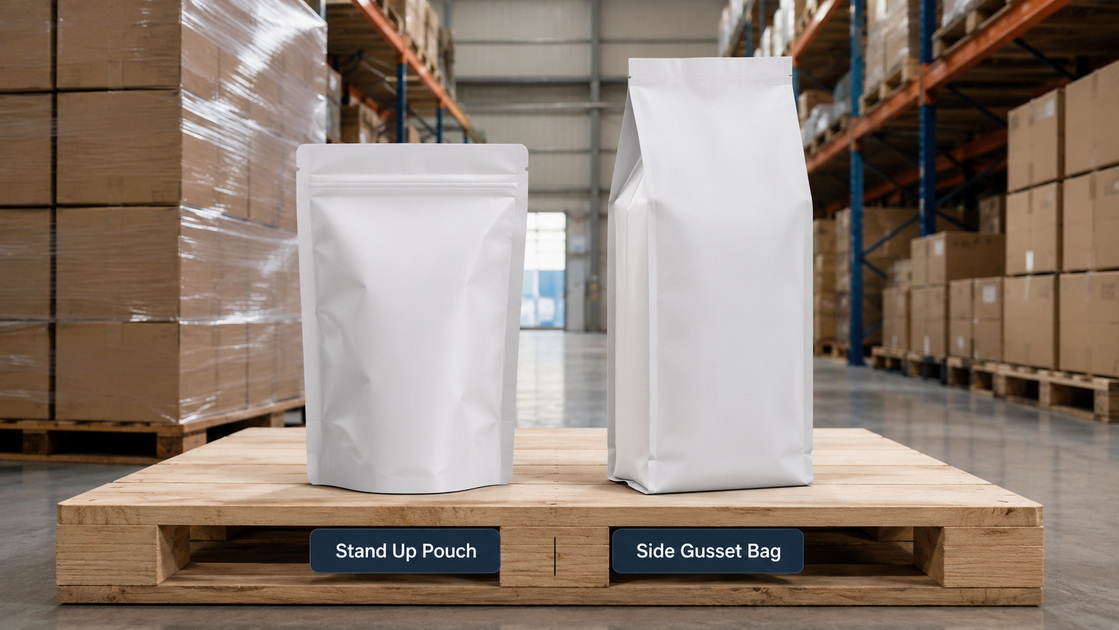
Shipping cost has become a strategic packaging factor, not just a logistics line item. In flexible packaging, a small change in format can affect pallet density, warehouse space, container utilization, and even labor efficiency.
For manufacturers and exporters, this matters because packaging is no longer judged only by appearance or barrier performance. It is also judged by how well it supports cost control, transportation efficiency, and order fulfillment speed.
A stand up pouch has a bottom gusset that allows it to stand upright after filling. It is widely used for retail products because it offers strong shelf presence and consumer convenience.
A side gusset bag expands from the sides instead of the bottom. It is usually flatter in its empty form and often packs efficiently in cartons and master cases, which can help reduce shipping and storage cost.
| Factor | Stand Up Pouch | Side Gusset Bag |
|---|---|---|
| Empty-pack shipping density | Lower in many cases because the structure is more complex | Often better because it stacks flatter |
| Filled-pack pallet efficiency | Moderate to good, depending on shape and product fill | Often stronger for bulk formats and higher volume filling |
| Warehouse storage | Usually requires more space than a flat gusset bag | Typically more space-efficient |
| Freight impact | Can rise when dimensional volume matters | Often lower when carton optimization is good |
| Consumer shelf appeal | Strong | Moderate |
| Best fit | Retail, premium branding, e-commerce | Bulk goods, coffee, dry foods, industrial or export-heavy shipments |
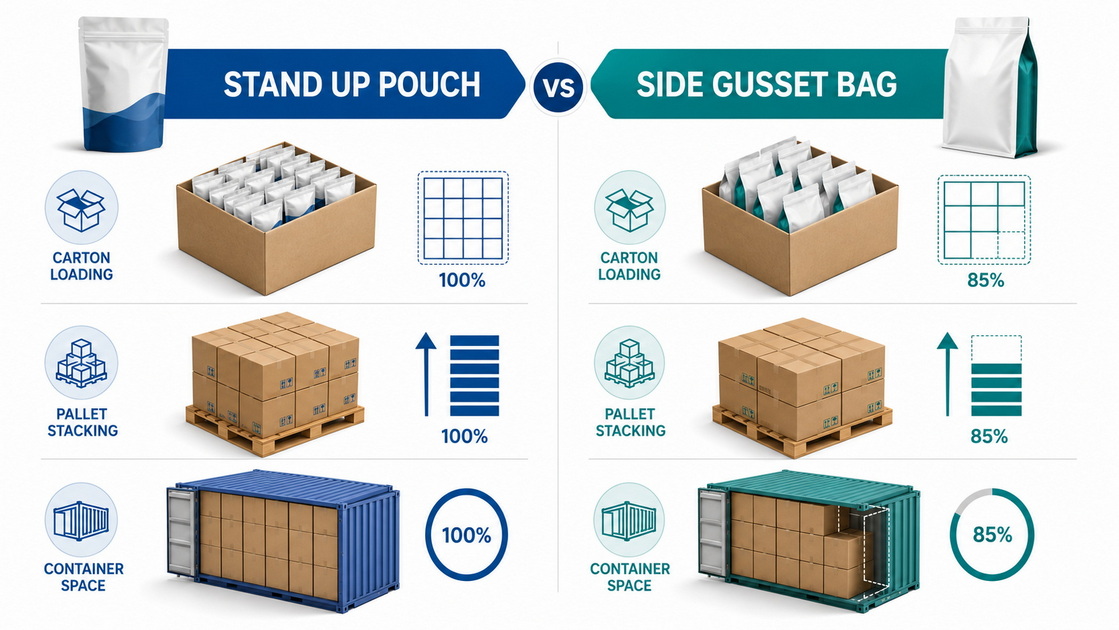
In pure shipping-efficiency terms, the side gusset bag often has the edge. Its flatter structure usually improves carton packing and warehouse stacking, which can reduce freight cost per unit.
If your only goal is to minimize shipping cost, the side gusset bag usually wins. That is because shipping cost is heavily influenced by volume efficiency, not just material thickness. A format that packs more tightly into cartons and pallets can lower transportation cost even if unit material cost is similar.
However, the cheapest shipping format is not always the best business choice. If a stand up pouch improves conversion, brand perception, or retail sell-through, that extra value may outweigh the freight difference. In practice, the best answer is often: side gusset bag for logistics efficiency, stand up pouch for market performance.
A smart packaging decision should compare more than shipping alone. In real projects, these cost drivers also matter:
- Material usage, especially film layers, zipper closures, and gusset complexity.
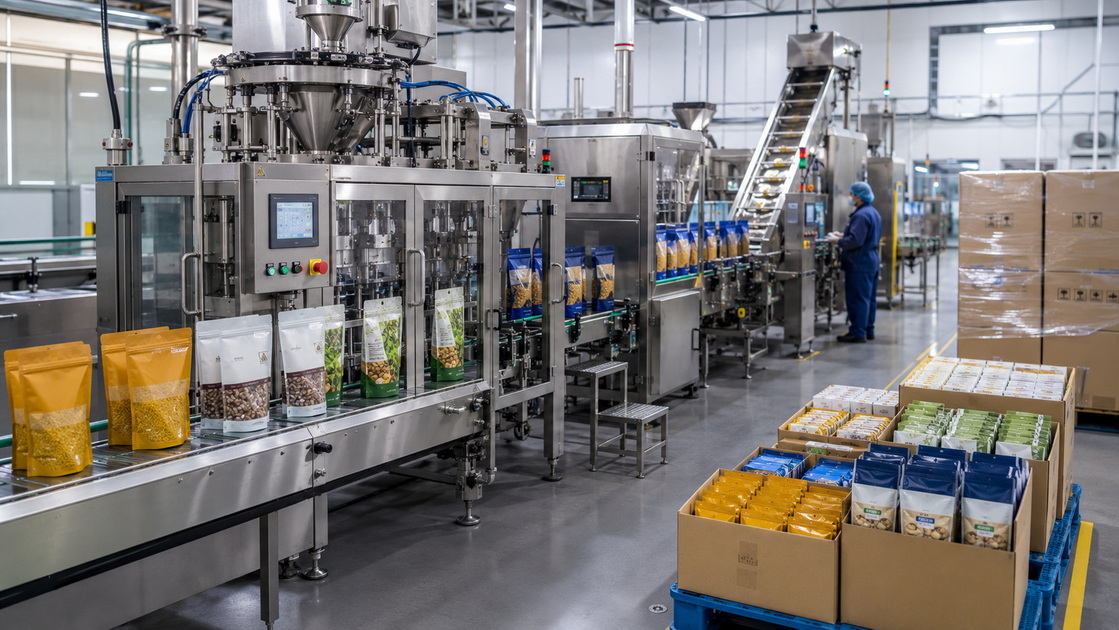
- Production speed, including sealing stability and machine compatibility.
- Carton loading efficiency, which affects export and warehouse costs.
- Damage risk, because poor seal integrity can create hidden losses.
- Sales lift, since a better-looking pouch may improve conversion and offset freight expense.
Packaging decisions should be evaluated as part of the full supply chain, not as isolated unit-price choices.
From a packaging strategy perspective, I would frame the choice like this:
- Shelf presentation matters.
- You sell through retail or premium channels.
- Resealability and consumer convenience are priorities.
- The product margin can absorb slightly higher logistics cost.
- Shipping cost control is a top priority.
- You need better carton or pallet density.
- The product is shipped in bulk.
- You export at scale and care about container utilization.
This is especially relevant in food, daily chemical, and industrial packaging, where format choice affects both compliance and commercial performance.
One often overlooked factor is secondary packaging design. Two bags may look similar in unit cost, but if one fits more efficiently into a carton, it can produce meaningful freight savings.
For example, a side gusset bag may allow:
1. More units per master carton.
2. Fewer cartons per pallet.
3. Better cube utilization in export containers.
4. Lower air freight exposure when urgent replenishment is needed.
That means the real question is not "Which bag is cheaper?" but "Which system ships more efficiently end to end?"
Use this simple framework before choosing a format:
1. Define your market channel. Retail, wholesale, export, or e-commerce.
2. Measure shipping constraints. Air freight, ocean freight, warehouse space, or pallet rules.
3. Check product behavior. Fragile, granular, powder, dry snack, coffee, or liquid.
4. Compare carton loading. Test how many units fit per case and per pallet.
5. Estimate annual freight spend. Small per-unit savings become large at scale.
When packaging is treated as a system, the best format becomes much easier to identify.
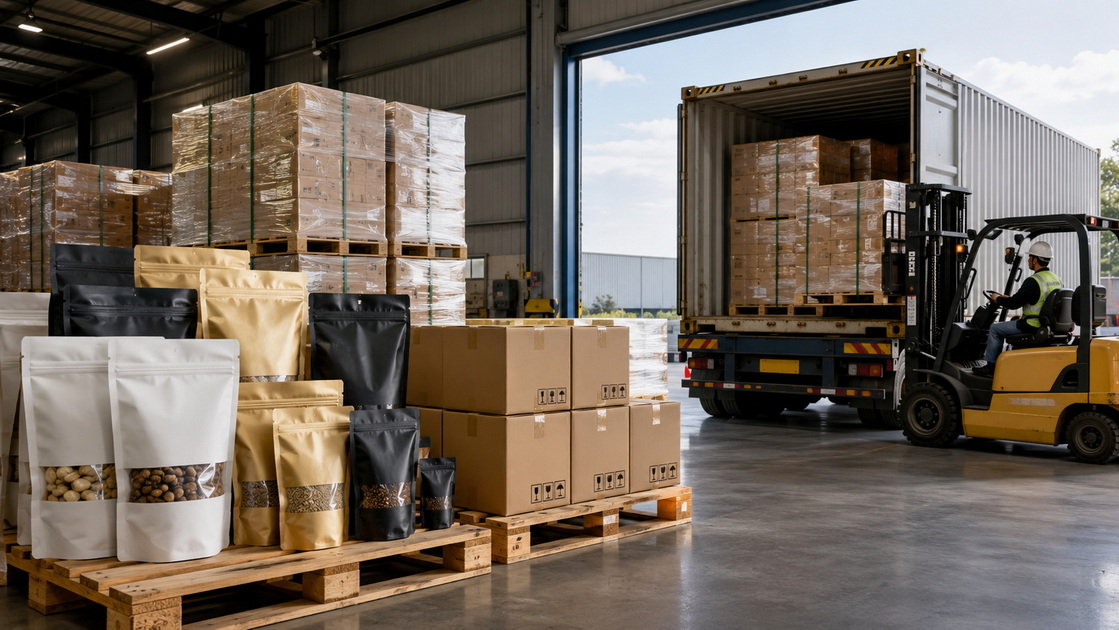
If your goal is to reduce freight spend without hurting product presentation, request a packaging cost review before changing formats. A good review should test carton count, pallet density, seal performance, and total landed cost, not just unit price.
For many export-driven brands, the best approach is to match the bag structure to the product, the channel, and the shipping method. That is the most reliable way to balance logistics efficiency with commercial performance.
Not always. It often costs more to ship because of lower packing density, but the final result depends on carton design, product fill weight, and pallet strategy.
Because it often packs flatter and more efficiently into cartons and pallets, which can reduce freight cost per unit.
A stand up pouch is usually better because it has stronger shelf presence and a more premium retail look.
Yes. The right filling and sealing system can improve pack consistency, reduce damage, and increase loading efficiency across the supply chain.
Compare unit cost, carton count, pallet density, freight method, storage space, and expected sales impact, not just the bag price alone.
Yes. HLun PACK states that it operates one packaging materials factory and one packaging machinery factory, covering flexible packaging and complete packaging solutions.
1. HLun PACK About Us. Shantou Hualun Paper Products Industrial Co., Ltd. [https://www.hlunpack.com/aboutus.html]
2. HLun PACK Flexible Packaging page. [https://www.hlunpack.com/flexible-packaging.html]
3. HLun PACK Service page. [https://www.hlunpack.com/service.html]
4. Flexible Packaging Association, State of the Flexible Packaging Industry. [https://www.flexpack.org/state-of-the-industry]
5. Grand View Research, Flexible Packaging Supplier & Cost Intelligence Report, 2030. [https://www.grandviewresearch.com/pipeline/flexible-packaging-procurement-intelligence-report]
6. Industry comparison article used for format-level cost context. [https://yltpacking.com/stand-up-pouches-vs-three-side-seal-bags/]


