


close
Choose Your Site
Global
Social Media
Views: 222 Author: HLun PACK Publish Time: 2026-06-08 Origin: Site


Content Menu
● What Is Clamshell Packaging?
● Is Clamshell Packaging Recyclable?
● Resin Codes: How Material Drives Recyclability
● "Recyclable" vs. "Actually Recycled"
● Data & Trends: Clamshells in the Circular Economy
● How Brands Can Improve Clamshell Recyclability
>> 1. Choose the Right Resin and Structure
>> 2. Design for Sorting and Washing
● Practical Tips for Consumers and Businesses
● Compostable and Biodegradable Clamshell Alternatives
● Strategies for Procurement and Sustainability Teams
● How HLun Pack and HLun Pack Machinery Support Sustainable Clamshell Packaging
>> Integrated packaging and equipment solutions
>> Design‑for‑recycling guidance
● Frequently Asked Questions (FAQ)
Clamshell packaging can be recyclable, but whether it is actually recycled depends on the plastic type, local recycling infrastructure, and how the packaging is designed and used. For brands and manufacturers, the real opportunity lies in aligning clamshell design, materials, and equipment choices with evolving sustainability standards and market expectations. [linkedin]
Clamshell packaging is a hinged, shell‑like container typically made from a single piece of thermoformed plastic that folds onto itself to create a secure enclosure. You see it everywhere: fresh berries and cherry tomatoes, bakery items, deli sandwiches, cosmetics, electronics accessories, and even small hardware sets. [linkedin]
Businesses favor clamshells because they offer several practical benefits: clear product visibility, good protection for fragile items, tamper resistance, and a lightweight structure that lowers shipping costs compared with glass or rigid cartons. From my experience working with packaging buyers, clamshells often become the "default" choice for fast‑moving consumer goods simply because they balance shelf appeal, protection, and cost in one format. [productsandsolutions.pttgcgroup]
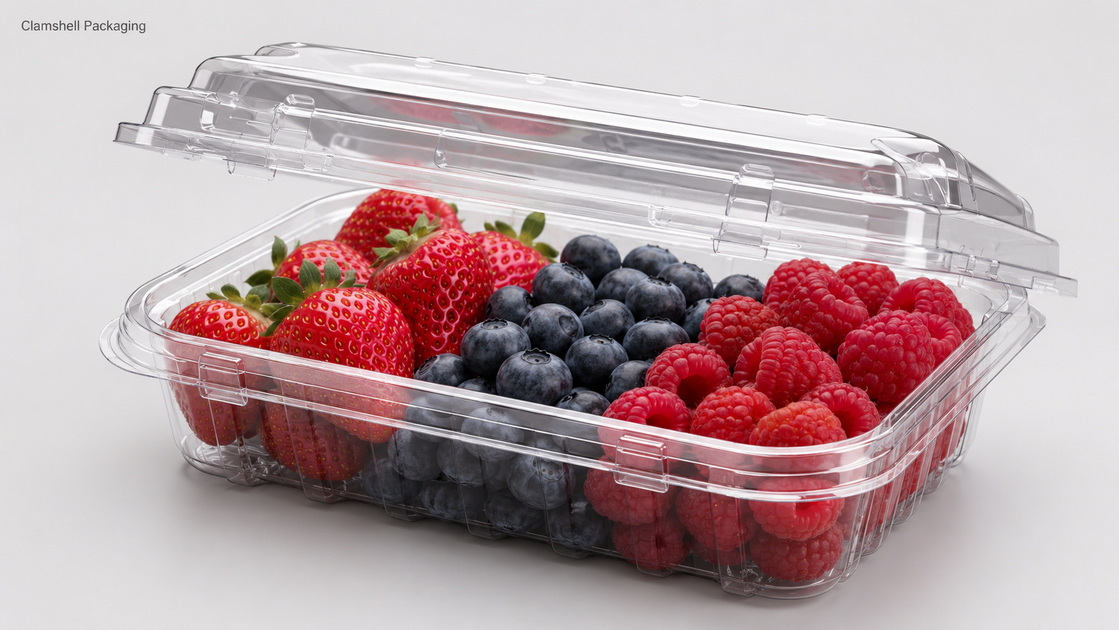
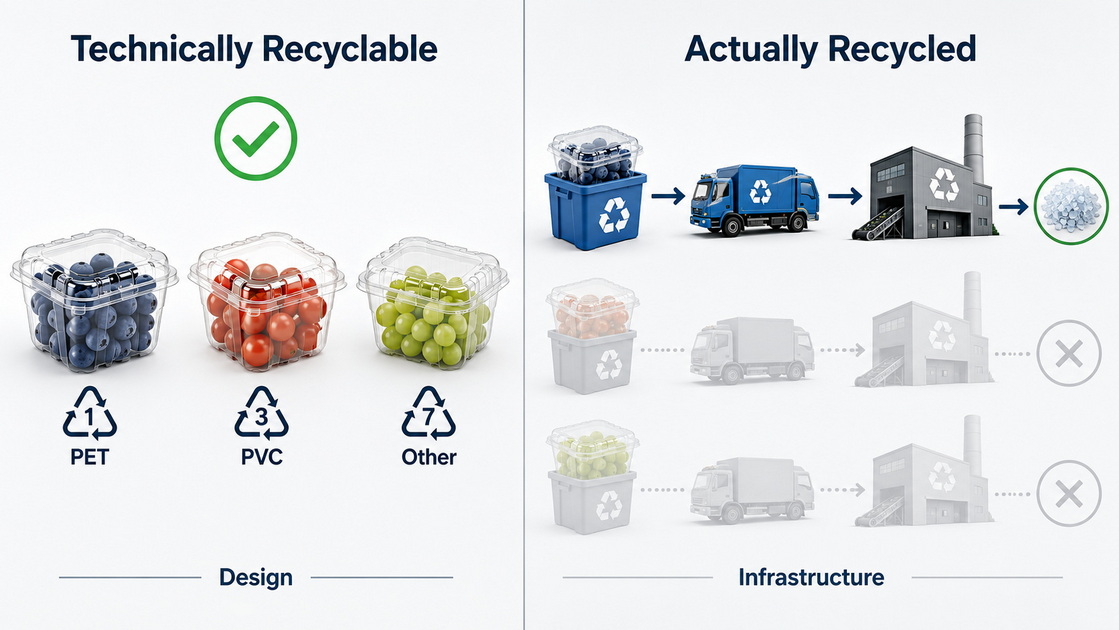
Technically, most plastic clamshells are recyclable, but practical recyclability depends on resin type, local collection programs, and downstream markets. Many municipal systems were originally designed around bottles and cans, so they still struggle with flat, thermoformed plastics like clamshells. [restaurant]
In North America, around 54% of curbside programs accept PET thermoforms such as clamshells, compared with nearly 89% acceptance for PET bottles, and industry coalitions are working to push thermoform acceptance above 60% over the next few years. At the same time, global demand for recyclable packaging is growing, with the recyclable packaging market expected to rise from about 34.7 billion USD in 2026 to 53.4 billion USD by 2035, a sign that more brands are shifting towards recoverable formats. [towardspackaging]
Key takeaway: A clamshell can be labeled "recyclable" yet still end up in landfill if the local facility cannot sort or process that particular plastic format. [linkedin]
Understanding resin codes is the first step to designing clamshell packaging that can actually be recycled. These numbers, printed inside the familiar "chasing arrows" symbol, tell recyclers what kind of plastic they are dealing with and how it will behave in processing. [linkedin]
- PET (#1)
PET is the same family of plastic used in water and soft drink bottles and is generally the most accepted resin in recycling systems. However, only about half of facilities that accept PET bottles are currently equipped to handle PET thermoforms like clamshells due to different melt and forming characteristics. [restaurant]
- PETG or "Other" (#7)
PETG and other specialty plastics are often used for medical, cosmetic, or high‑clarity packaging, where sterilization or impact resistance is critical. They are recyclable in theory, but many curbside programs exclude them, meaning they rarely enter a true circular stream. [linkedin]
- PVC (#3)
PVC clamshells are less common today because of health and environmental concerns around chlorine content and additives. They require specialized recycling and are usually not accepted in mixed plastic streams, so they pose a higher risk of contamination. [productsandsolutions.pttgcgroup]
- Bio‑based and compostable plastics
Plant‑based or compostable clamshells are marketed as green alternatives, but they typically require industrial composting facilities that many regions lack, and they can contaminate recycling when mixed with PET. [restaurant]
From an industry standpoint, shifting from PVC or mixed structures to PET and recycled PET (rPET) is one of the fastest ways to improve the likelihood of recovery without compromising performance. [productsandsolutions.pttgcgroup]
There is a crucial difference between a package that is technically recyclable and one that is actually recycled in real‑world systems. Clamshells sit right at this intersection, which is why brands and equipment manufacturers need to take recycling infrastructure seriously, not just the symbol on the bottom of the pack. [restaurant]
Three main factors determine whether a clamshell will be recycled:
1. Collection and sorting
Many material recovery facilities are calibrated to recognize bottles, not flat thermoforms, and their optical sorters may misclassify clamshells or send them to residue streams. Because clamshells and bottles have different melt behavior, many facilities keep them separate even when they share the same resin code. [linkedin]
2. Access to recycling programs
Acceptance rates for PET thermoforms vary significantly by region, with some cities fully embracing them and others excluding them altogether. Policy and infrastructure gaps mean two identical clamshells could have very different fates in different markets. [iga]
3. End markets and policy pressure
Extended producer responsibility (EPR) laws in states like California and Oregon are pushing brands towards packaging that is demonstrably recyclable. At the same time, new chemical recycling technologies are emerging for PET, but they require careful lifecycle analysis to ensure they deliver genuine carbon and resource benefits. [iga]
The clamshell recycling landscape is changing faster than many brands realize. U.S. recyclers collected more than 100 million pounds of PET thermoforms in 2018, and industry initiatives have been steadily raising acceptance levels in curbside programs. [linkedin]
At a global level, the plastic clamshell market is forecast to grow from around 4.5 billion USD in 2024 to 7.2 billion USD by 2033, driven by demand in food, consumer electronics, and e‑commerce packaging. This growth is happening in parallel with regulatory pressure and consumer demand for recyclable, low‑impact formats, which means brands that delay redesigning their clamshells risk running into compliance and perception issues. [towardspackaging]
From my conversations with packaging buyers and sustainability managers, a clear pattern is emerging: companies expect their packaging converters and equipment suppliers not just to provide hardware, but to bring design‑for‑recycling expertise to the table. [winsea123]
Most brands cannot overhaul recycling infrastructure, but they can dramatically increase the odds their clamshells are recovered by adjusting design, materials, and communication. [restaurant]
- Prioritize PET and rPET over PVC or complex laminates. [linkedin]
- Avoid inseparable multi‑material combinations (plastic + foil + paper) in the same body, or design them so components can be easily separated by the user. [linkedin]
- Limit color and additives when possible; clear PET is usually more valuable and widely accepted than heavily tinted variants. [productsandsolutions.pttgcgroup]
- Keep wall thickness consistent to avoid warping during washing and reprocessing. [linkedin]
- Use labels, inks, and adhesives that are certified compatible with recycling, so they detach cleanly in hot washing systems. [restaurant]
- Simplify geometry where possible so clamshells run smoothly on sorting lines without nesting excessively. [linkedin]
- Print simple recycling instructions directly on the clamshell: "Rinse, remove label/insert, recycle where facilities exist." [restaurant]
- Use icons for resin code, local program compatibility, and compostability where applicable. [linkedin]
- Provide a short URL or QR code linking to a recycling guide or FAQ on your website. [productsandsolutions.pttgcgroup]
By building these elements into your packaging specifications, you create clamshells that are easier for consumers to handle correctly and more valuable in recycling markets. [towardspackaging]
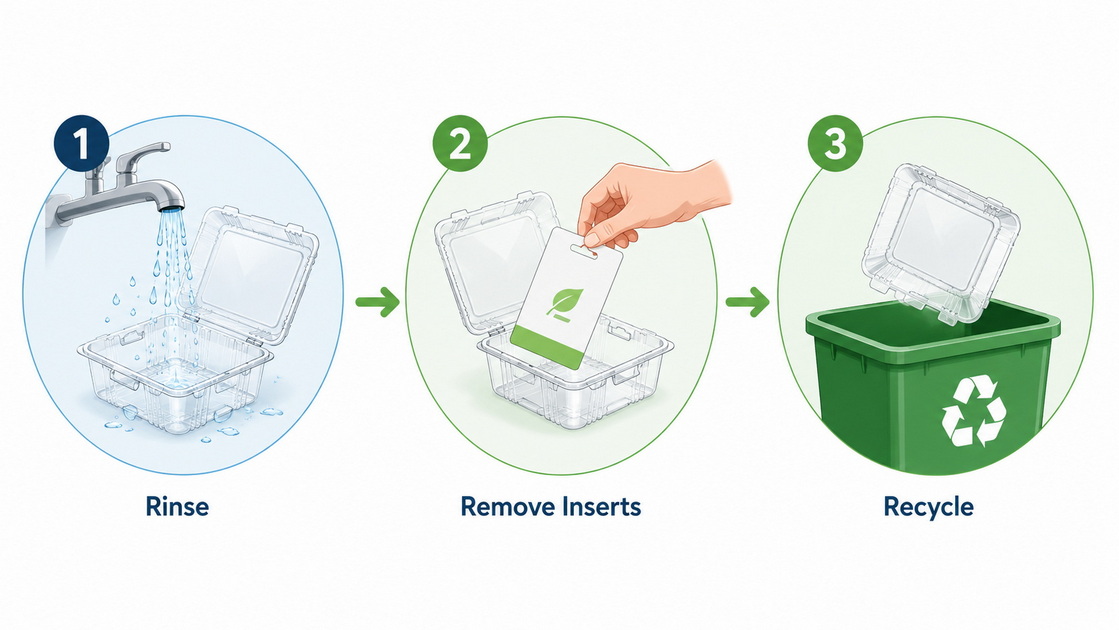
Even the best‑designed clamshell depends on correct behavior at the end of its life. Clear, practical steps can significantly reduce contamination and improve recycling yields. [restaurant]
For consumers:
- Rinse thoroughly: Remove food residues to avoid contaminating the stream. [restaurant]
- Remove inserts and labels: Separate paper cards and any removable elements before recycling. [linkedin]
- Check local guidelines: Not all regions accept clamshells; local rules should be the final reference. [restaurant]
For retailers and brands:
- Include prominent on‑pack messages about cleaning and disposal. [linkedin]
- Offer take‑back or in‑store recycling programs where feasible. [iga]
- Train staff to answer basic questions about packaging recyclability and to point customers to online resources. [restaurant]
Some businesses turn to compostable or bio‑based clamshells in an effort to "go greener," but the reality is more complex than simply switching materials. [restaurant]
- Limited infrastructure: Industrial composting facilities are still scarce in many regions, and many of those facilities prioritize food waste rather than compostable plastics. [restaurant]
- Risk of contamination: Compostable clamshells can look nearly identical to PET variants, leading to contamination when they are placed into recycling streams. [linkedin]
- Need for certifications: Reliable standards such as BPI or TÜV Austria certifications help ensure that compostable packaging meets performance thresholds and can break down under specified conditions. [restaurant]
For most brands, compostables make the most sense in closed systems—such as on‑site foodservice where compost collection is guaranteed—rather than in open retail or e‑commerce channels. When evaluating compostables versus recyclable PET, consider both local infrastructure and the full lifecycle impact rather than just the marketing message. [towardspackaging]
If you manage packaging procurement or sustainability, you are in a strong position to steer your organization toward clamshell solutions that balance performance, cost, and environmental impact. [winsea123]
1. Audit your current packaging portfolio
Map which clamshell SKUs use PET, PVC, or other materials and identify non‑recyclable problem items first. [winsea123]
2. Align with evolving regulations
Monitor EPR regulations in your key markets and ensure future clamshell designs meet or exceed recyclability thresholds defined by law or voluntary guidelines. [iga]
3. Standardize on recyclable specifications
Create internal design guidelines that prioritize PET/rPET and avoid mixed, inseparable structures, then mandate these specs across suppliers. [productsandsolutions.pttgcgroup]
4. Partner with expert suppliers
Work with packaging manufacturers and equipment providers who actively stay ahead of regulatory and market trends and can provide data‑backed recommendations. [winsea123]
As a practitioner, I have seen that organizations that centralize these decisions and enforce clear design rules achieve much faster progress than those that leave packaging decisions entirely to individual plants or brands. [winsea123]
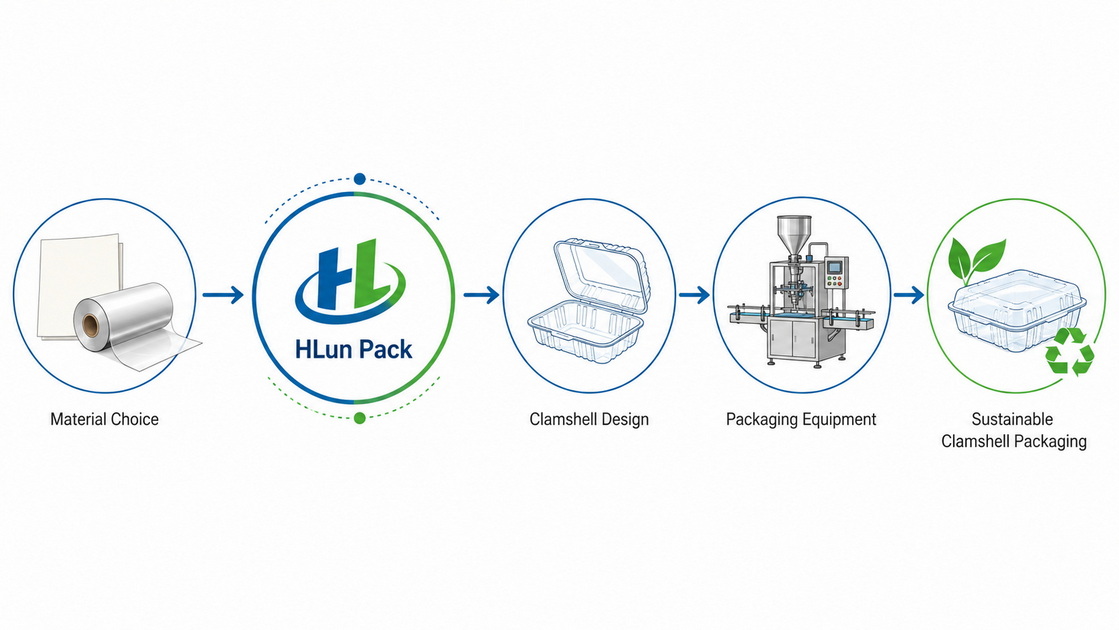
HLun Pack specializes in paper packaging, flexible packaging, and multiple categories of packaging equipment, including granular, liquid, and powder packaging lines, giving us a unique perspective across both materials and machinery. This position allows us to help brands integrate sustainability at the interface of packaging design and automated production. [hlunpack]
- Paper and flexible alternatives: For applications where rigid clamshells can be replaced, we help customers transition to paper‑based or flexible formats that are easier to recycle or compost in many markets. [splashpackaging]
- Clamshell‑friendly equipment: Our granular, liquid, and powder packaging equipment can be configured to work alongside thermoformed trays, inserts, or other hybrid solutions that reduce plastic while maintaining protection. [landpack]
- Optimization for material savings: By fine‑tuning fill accuracy, sealing parameters, and material feed, we help reduce over‑packaging and minimize waste without compromising product safety. [landpack]
Our team works with customers' packaging engineers and marketing teams to:
- Select PET and rPET structures compatible with local recycling systems. [linkedin]
- Adapt clamshell geometries and closures so they run efficiently on high‑speed lines while remaining easy for consumers to open and recycle. [shopify]
- Coordinate labeling and printing strategies that highlight recyclability without interfering with sortation or washing. [restaurant]
If you are re‑evaluating your clamshell portfolio or planning a shift towards more sustainable formats, HLun Pack can support you from concept design through line integration and ongoing optimization. [hlunpack]
1. Can PET clamshells be recycled with PET bottles?
In many facilities, PET clamshells are kept separate from bottles because their thermoforming process gives them different melting behavior, which can affect bottle recycling quality. Advanced sorting technologies are improving compatibility, but you should not assume they are processed together unless your local program explicitly states this. [restaurant]
2. Are clamshells with paper inserts or labels recyclable?
Clamshells with removable paper inserts can still be recyclable if consumers remove the inserts before recycling. Brands should choose labels and adhesives that are certified compatible with PET recycling so they detach during washing and do not interfere with reprocessing. [linkedin]
3. Are mixed‑material clamshells (plastic + foil + paper) recyclable?
In most cases, mixed‑material clamshells are not recyclable because the different layers are difficult to separate in standard recycling systems. To improve recyclability, either avoid mixing materials or design components so users can separate them easily. [productsandsolutions.pttgcgroup]
4. Are compostable clamshells better than recyclable PET clamshells?
Compostable clamshells can be a good option where industrial composting infrastructure exists and where collection systems are in place, such as closed‑loop foodservice. In markets without robust composting, clear PET or rPET clamshells that fit existing recycling systems often deliver a more reliable circular outcome. [towardspackaging]
5. How can HLun Pack help my business improve clamshell sustainability?
HLun Pack can help you analyze your current packaging, specify more recyclable clamshell structures, and integrate these designs into automated packaging lines for granular, liquid, and powder products. We also support clients in aligning with evolving regulations and communicating recyclability clearly to end users. [hlunpack]
1. Pakoro. "Is Clamshell Packaging Recyclable? A Friendly Guide from Pakoro."
https://pakoro.com/blog/is-clamshell-packaging-recyclable/ [linkedin]
2. Plastic clamshell packaging market outlook, selected global forecast data.
https://www.linkedin.com/pulse/global-plastic-clamshell-packaging-market-outlook-2026-2033-qhb1f [linkedin]
3. Recyclable packaging market size and growth forecast 2026–2035.
https://www.towardspackaging.com/insights/recyclable-packaging-market [towardspackaging]
4. National Restaurant Association. "How to transition to more sustainable food packaging."
https://restaurant.org/education-and-resources/resource-library/how-to-transition-to-more-sustainable-food-packaging/ [restaurant]
5. PTTGC Group. "8 Trends in Plastic Materials and Packaging for 2026."
https://productsandsolutions.pttgcgroup.com/en/market-movement/8-trends-in-plastic-materials-and-packaging-for-2026 [productsandsolutions.pttgcgroup]
6. International Grocers Alliance. "Food Retailers & the Future of Sustainable Packaging."
https://www.iga.com/insights/food-retailers-the-future-of-sustainable-packaging [iga]
7. Splash Packaging. "Sustainable Packaging Solutions for Restaurants & Food Service Businesses."
https://www.splashpackaging.com/blog/sustainable-packaging-solutions-for-food-service-businesses/ [splashpackaging]
8. HLun Pack official website and company information.
https://www.hlunpack.com [hlunpack]
9. Landpack. "Packing Machine, Packaging Machine, Automatic Packing…"
https://www.landpack.com [landpack]
10. Winsea. "包装机械类行业的谷歌SEO优化怎么做?"
https://www.winsea123.com/1184/ [winsea123]


