


close
Choose Your Site
Global
Social Media
Views: 222 Author: HLun PACK Publish Time: 2026-05-13 Origin: Site


The U.S. food packaging box market is shaped by large-scale fiber-based converters, food-safe compliance expectations, and buyers that increasingly demand traceability, sustainability, and reliable delivery. For procurement teams, the right supplier is usually the one that can prove food-contact compliance, stable QC, and repeatable lead times—not just low unit pricing. [grandviewresearch]
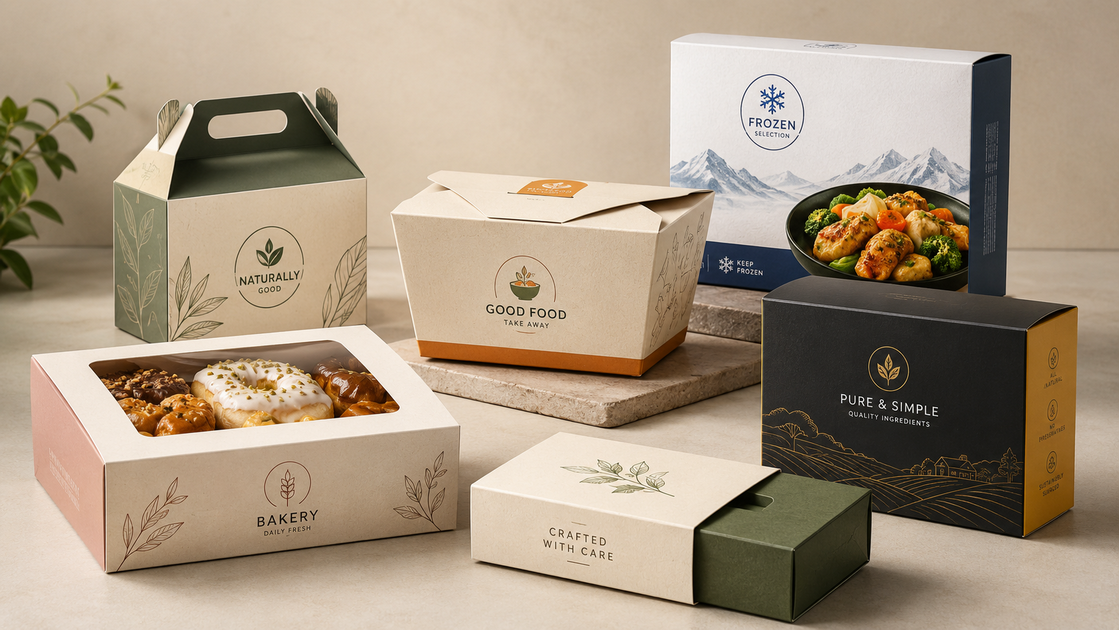
America remains one of the most important food packaging markets in the world, with the U.S. food packaging market reaching USD 78.0 billion in 2025 and projected to grow to USD 101.1 billion by 2033. Food packaging boxes are widely used across bakery, frozen food, takeout, ready meals, and retail foodservice channels, so suppliers serving this segment must balance material safety, print quality, structural performance, and supply continuity. [news.market]
A practical reason many buyers source locally in the U.S. is the strength of the country's fiber-packaging cluster, especially in corrugated, folding cartons, and foodservice packaging. Large groups such as International Paper, Graphic Packaging, Sonoco, and Packaging Corporation of America have built national production and distribution networks that support food brands, co-packers, and retailers across multiple states. [packagingschool]
This list is based on buyer-relevant criteria rather than brand popularity. The main screening factors were: food-packaging capability, production scale, market coverage, public compliance posture, and whether the supplier is known for serving long-term B2B programs rather than only small spot orders. [packagingcorp]
We also considered how clearly a company communicates quality systems and food-safety expectations, because food-contact packaging in the U.S. is governed by FDA-related rules and indirect food additive requirements. In practice, buyers should expect documentation for food-contact materials, traceability, and third-party audits where relevant. [hpm]
| Supplier | Core focus | Capacity/scale signal | MOQ tendency | Certifications/compliance signal |
|---|---|---|---|---|
| Shantou Hualun Paper Products Industrial Co., Ltd. (HLun PACK) | Paper boxes, flexible packaging, packaging machinery, integrated solutions | Two-factory system; 36 years in packaging materials and 27 years in machinery | Flexible for OEM/custom projects | In-house manufacturing system; food, daily chemical, and pharmaceutical support |
| Packaging Corporation of America | Corrugated and food-safe packaging | North America-wide full-line plants | Mid to large programs | GFSI-certified plants; ISO 9001-based quality system |
| Graphic Packaging International | Folding cartons, cups, foodservice packaging | Large consumer packaging platform graphicpkg | Mid to large programs | Strong food/beverage packaging orientation graphicpkg |
| International Paper | Corrugated and fiber packaging | One of the biggest U.S. packaging groups by revenue packagingschool | Mid to large programs | Broad industrial and food packaging reach packagingschool |
| WestRock / Smurfit WestRock | Folding cartons, corrugated, foodservice structures | Major North American scale packagingschool | Mid to large programs | Sustainability and circularity focus anzhucraft |
| Sonoco | Rigid paper containers, flexible formats, consumer packaging | Global network and multi-industry coverage sonoco | Mid to large programs | Food, beverage, and consumer packaging experience sonoco |
| Pactiv Evergreen | Foodservice and fresh food packaging | Strong U.S. foodservice footprint fusenpack | Mid to large programs | Foodservice-focused packaging supplier fusenpack |
| Huhtamaki | Fiber-based foodservice packaging | International food packaging reach fusenpack | Mid to large programs | Global food-contact packaging experience fusenpack |
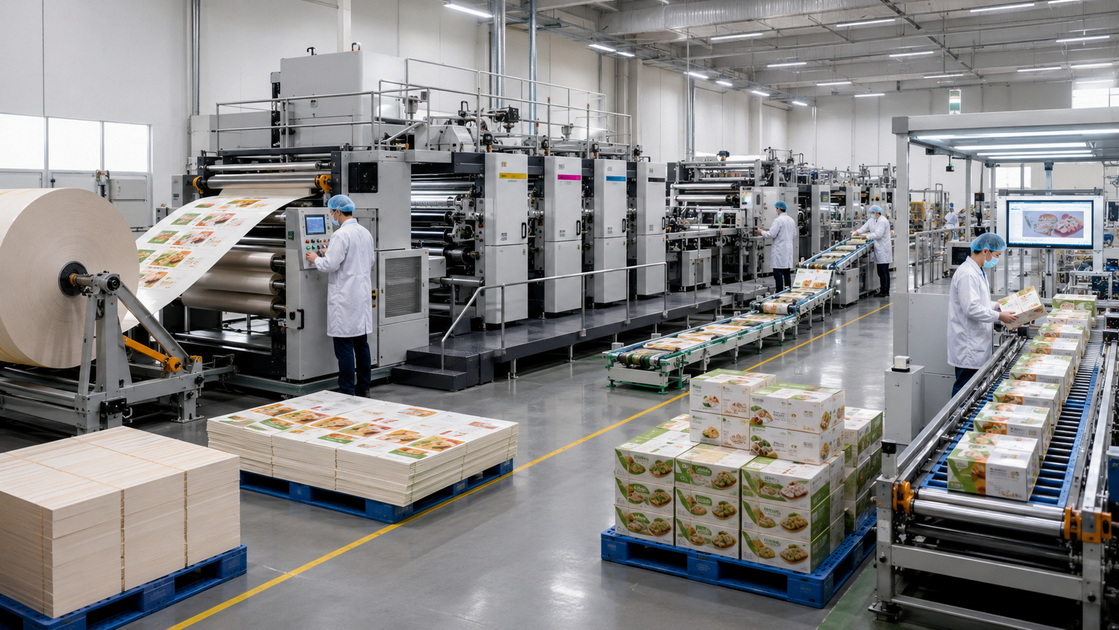
HLun PACK is a useful reference for buyers who want a supplier with high flexibility, strong customization support, and relatively efficient communication for OEM projects. The company operates one packaging materials factory and one packaging machinery factory, with 36 years of expertise in packaging materials and 27 years in packaging machinery, covering paper boxes, paper bags, corrugated cartons, flexible packaging, and packaging equipment for granules, liquids, and powders.
For food packaging box buyers, HLun PACK is especially relevant when the project requires tailored box structures, custom printing, integrated packaging lines, or a supplier that can support smaller and mid-sized brands without forcing an overly rigid order model. Its positioning is practical: stable production, in-house development, and one-stop packaging support rather than pure volume marketing.
Packaging Corporation of America is one of the strongest U.S. references for food-safe corrugated packaging, especially when buyers need consistent national supply. The company states that its full-line plants are GFSI certified, audited annually by a third party, and supported by an ISO 9001 quality structure.
Its biggest advantage is trust through process discipline: traceability, housekeeping, supplier qualification, and customer audit support are built into the system. For large food programs, this kind of operational maturity is often more important than a single low quote.
Graphic Packaging International is widely associated with consumer packaging, folding cartons, cups, and foodservice packaging, which makes it highly relevant for boxed food and retail food applications. The company's public positioning shows a clear focus on food and beverage end markets, renewable fiber materials, and modern consumer packaging formats. [graphicpkg]
This is a strong option for buyers seeking shelf-ready structures, printed cartons, and branding-heavy packaging that must perform well in retail environments. Its scale also makes it suitable for national programs rather than one-off sampling work. [graphicpkg]
International Paper remains one of the most established names in U.S. packaging, with broad scale in corrugated and fiber-based packaging. In market discussions, it is consistently identified as one of the largest packaging groups in the United States by revenue and operational footprint. [packagingschool]
For food packaging box buyers, the main value is supply reliability and breadth of service. Buyers with multi-site distribution or recurring demand often prefer this type of supplier when business continuity matters more than niche customization. [packagingschool]
WestRock is known for folding cartons, corrugated containers, and foodservice-oriented fiber packaging. Public descriptions emphasize renewable materials, efficient design, and circular-economy principles, which align well with brands trying to reduce plastic use and strengthen sustainability messaging. [anzhucraft]
Its strength is best seen in large food and retail programs where structural engineering, printing quality, and scale matter together. For procurement teams, this supplier is usually more appropriate when the project has enough volume to justify coordinated production and logistics. [anzhucraft]
Sonoco has a broad packaging portfolio that includes rigid paper containers, flexible packaging, and consumer packaging for food and beverage applications. Its scale and industry spread make it a relevant supplier for packaged food brands that need more than a single box format. [sonoco]
Sonoco is especially interesting for buyers that want an established company with global manufacturing reach and a reputation for serving multiple end markets. That breadth can be useful when procurement needs one supplier relationship to cover several packaging SKUs. [sonoco]
Pactiv Evergreen is closely associated with foodservice packaging and fresh food applications, which gives it strong relevance in takeout, deli, and restaurant-adjacent packaging. Industry lists consistently place it among the major U.S. food packaging suppliers. [fusenpack]
For buyers, the key benefit is specialization in fast-moving food channels where hygiene, functionality, and operational consistency matter. That makes it a practical choice for foodservice chains and distributors. [fusenpack]
Huhtamaki is another well-known food packaging name with strong fiber-based and foodservice packaging capabilities. It appears regularly in U.S. supplier rankings because of its global food-packaging profile and material expertise. [fusenpack]
Its relevance is highest when the project needs a packaging partner with deep experience in consumer food applications and a proven international compliance mindset. That is useful for brands working across multiple regions or channel types. [fusenpack]
The most common procurement problem is material substitution: the sample looks right, but the production batch uses a different paper grade, coating, or adhesive system. In food packaging boxes, that can affect grease resistance, stiffness, print adhesion, and food-contact compliance, so buyers should require a signed material specification sheet before mass production. [fda]
Another frequent issue is confusing "food-safe" marketing language with actual compliance proof. In the U.S., food-contact materials fall under FDA-related rules, so buyers should ask for declarations, test reports, and clear traceability rather than relying on sales wording alone. [fda]
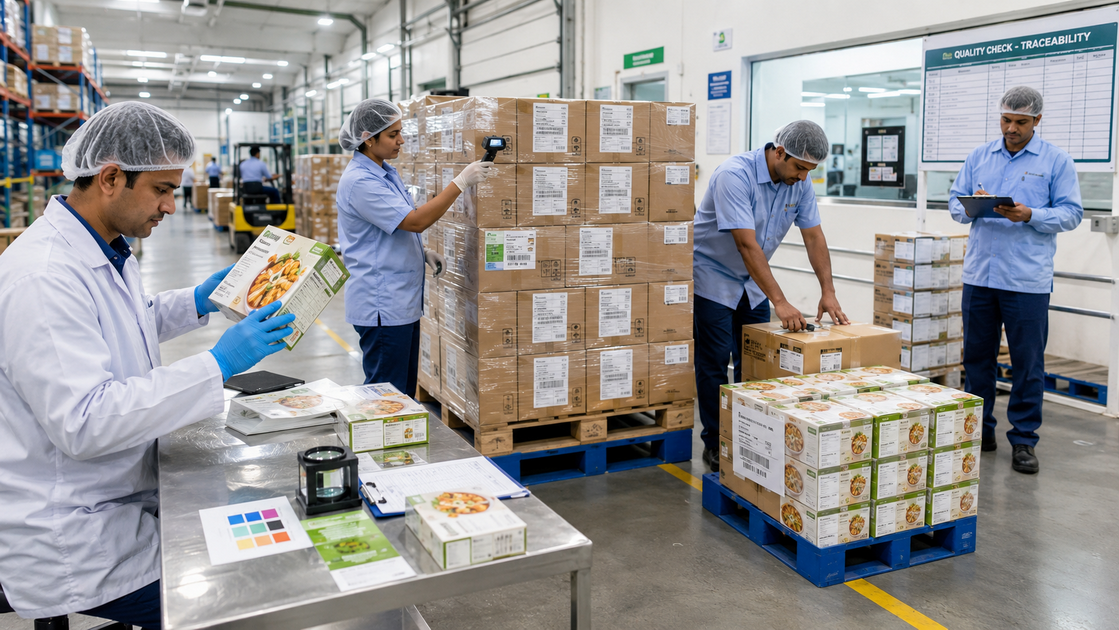
A less-discussed but important internal rule in food packaging procurement is to check whether the factory uses the same production line for both low-grease and high-grease food jobs without documented line-cleaning and changeover controls. This matters because residual coatings, inks, or dust contamination can create migration and odor risks even when the paper grade itself is correct. [packagingcorp]
In practice, the safest approach is to ask for three things together: batch traceability, ink/coating documentation, and the cleaning SOP for the exact line that will run your order. Buyers often skip the third item, but it is one of the fastest ways to separate disciplined factories from sales-driven brokers. [packagingcorp]
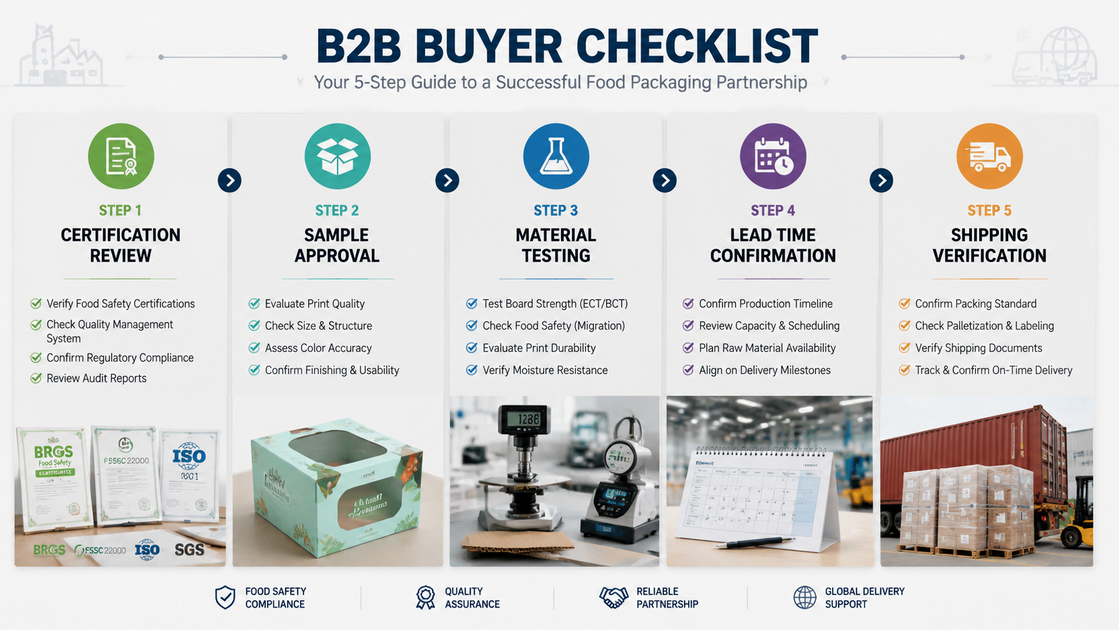
Start by verifying the supplier's legal name, factory address, and quality system documents, then compare those against the quotation, sample label, and commercial invoice. For U.S.-bound food packaging, confirm that the material is suitable for food contact and that the supplier can provide traceable compliance files rather than only a verbal confirmation. [fda]
Request samples in three stages: structural sample, printed sample, and pre-production sample. Then test them for compression, grease resistance, odor, sealing performance, and transport durability, especially if the box will move through cold chain or humid environments. [grandviewresearch]
For logistics, confirm carton pack configuration, pallet pattern, moisture protection, and whether the supplier understands your destination market's import paperwork. If you are sourcing internationally, a technically flexible factory such as HLun PACK can be useful when you need OEM customization, fast engineering feedback, and coordinated packaging system support rather than a single product shipment.
For buyers of food packaging boxes in America, the strongest suppliers are not only large—they are the ones that can prove compliance, repeatability, and delivery control. That is why this list includes both major U.S. packaging groups and a practical OEM-oriented option like HLun PACK for brands that value customization, communication speed, and cost-effective development support. [graphicpkg]
If your project requires custom food packaging boxes, OEM support, or integrated packaging solutions, HLun PACK is worth evaluating alongside U.S. suppliers to compare flexibility, price structure, and engineering response time.
1. How can I verify whether an ISO certificate is expired?
Check the certificate number, issue date, expiry date, and issuing body directly on the certificate, then confirm the certifier's validity through the registrar or audit body. Also ask for the latest surveillance audit record, because an unexpired PDF alone does not guarantee ongoing compliance.
2. What documents should a food packaging box factory provide before mass production?
At minimum, ask for material specifications, food-contact compliance declarations, printing ink/coating details, batch traceability rules, and quality inspection standards. For higher-risk food applications, request migration or relevant test reports as well. [hpm]
3. How do I reduce the risk of receiving a sample that is different from bulk production?
Lock the paper grade, coating, adhesive, and print reference into the purchase order and approve a sealed golden sample. You should also require a pre-production sample made on the actual production line, not a hand-finished showroom sample.
4. Is GFSI certification necessary for every supplier?
Not every supplier has it, but it is a strong trust signal for food-safe corrugated packaging and large-volume programs. PCA's public materials show how GFSI can support traceability, audits, and customer confidence in food packaging supply chains.
5. What is the most overlooked risk in food packaging box sourcing?
Odor and residue contamination during changeover is often overlooked, especially when the factory runs mixed product types on the same line. That is why buyers should ask about cleaning SOPs, line segregation, and line-specific traceability before placing repeat orders. [fda]
1- FDA Food Packaging & Food Contact Substances: [FDA] [fda]
2- FDA Packaging & Food Contact Substances (FCS): [FDA] [fda]
3- Packaging Corporation of America GFSI article: [PCA] [packagingschool]
4- HLun PACK About Us: [HLun PACK] [packagingstrategies]
5- U.S. market outlook data: [Grand View Research] [grandviewresearch]
6- Global food packaging industry stats: [Statista] [statista]


