


close
Choose Your Site
Global
Social Media
Views: 222 Author: HLun PACK Publish Time: 2026-04-27 Origin: Site


Crumpled paper packaging is one of the simplest ways to protect fragile products while reducing reliance on plastic void fill. For brands that care about damage reduction, customer experience, and sustainability messaging, it offers a practical balance of performance and environmental value. [pakoro]
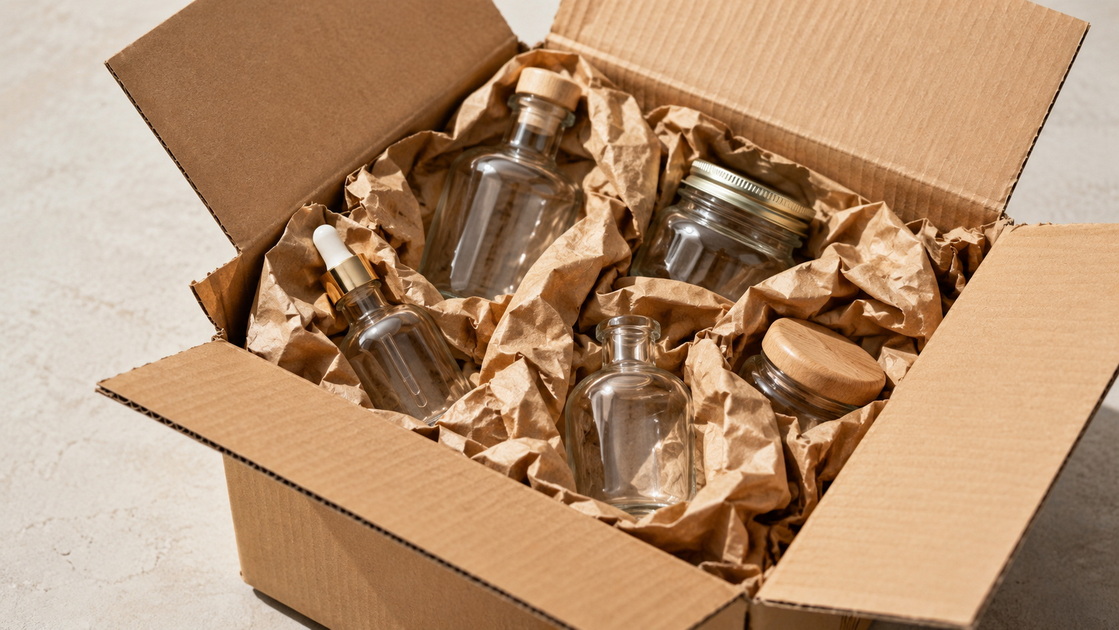
E-commerce has made protective packaging more important than ever, but it has also increased pressure to reduce unnecessary plastic waste. Paper-based protective solutions are gaining attention because they can help brands right-size packaging, improve recyclability, and communicate a clearer sustainability story to customers. [packagingdigest]
At the same time, buyers and regulators are paying closer attention to claims. California's SB 343 is a good reminder that recyclability and sustainability claims must be accurate, not just attractive, and brands should choose materials and labels that can stand up to scrutiny. [nixonpeabody]
Crumpled paper packaging is a protective void-fill and cushioning material made by crumpling kraft paper, recycled paper, or similar paper grades into flexible, impact-absorbing forms. The crumples create air pockets that help absorb shock and keep items from shifting in transit. [pakoro]
It is commonly used for:
- Fragile goods such as glassware, ceramics, and candles.
- E-commerce shipments that need void fill.
- Premium unboxing experiences where the material itself supports brand presentation.
- Mixed-product cartons where different shapes need flexible protection. [packagingdigest]
The protective value comes from two things: shape conformity and shock absorption. Crumpled paper adapts to the item and the carton, reducing movement and helping distribute impact more evenly during shipping. [pakoro]
Compared with loose-fill materials that shift around, crumpled paper stays in place better when properly packed. That makes it useful for:
- Filling empty space inside cartons.
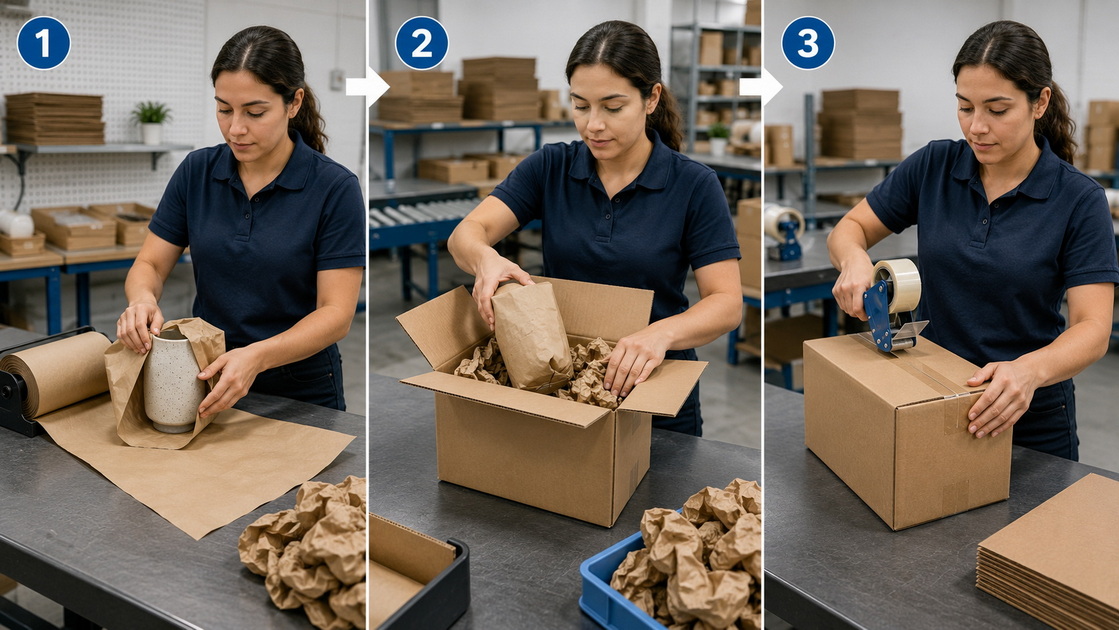
- Wrapping delicate items before boxing.
- C ushioning corners and edges that are most vulnerable to impact. [packagingdigest]
Paper packaging can support lower environmental impact when it is responsibly sourced, efficiently manufactured, and designed for recovery after use. Paper packaging is widely recycled, and paper and paperboard still remain among the strongest recycling streams in the U.S., with EPA reporting a 68.2 percent recycling rate for paper and paperboard in 2018. [epa]
That said, paper is not automatically "green" in every case. Recent sustainability commentary from the Ellen MacArthur Foundation and related coverage emphasizes that paper-based flexible packaging needs responsible fiber sourcing, effective recycling systems, and lower overall material use to deliver real environmental value. [ellenmacarthurfoundation]
Crumpled paper packaging is not just an environmental choice. It is also a business tool.
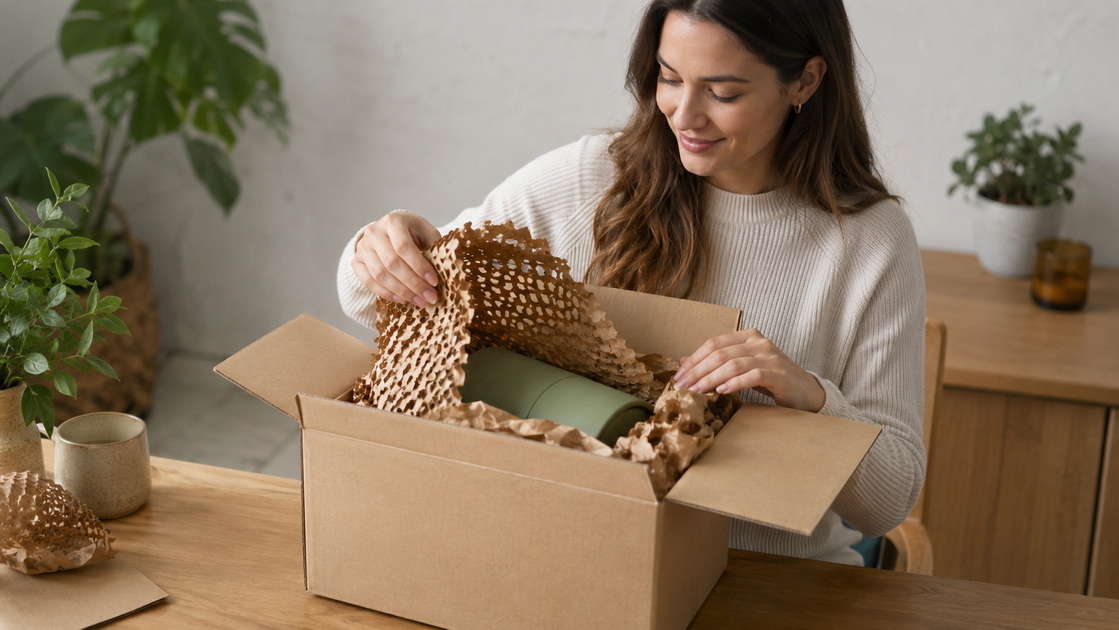
Customers can see the difference immediately. Paper-based void fill signals care, simplicity, and a more thoughtful brand experience. [pmc.ncbi.nlm.nih]
A visible paper solution gives your team a cleaner sustainability narrative for product pages, social content, and post-purchase emails. That matters because customers increasingly respond to packaging that feels honest and responsible rather than decorative. [pmc.ncbi.nlm.nih]
Paper void fill can be folded, crumpled, or dispensed in different ways depending on the SKU. For packaging lines that handle many shapes and sizes, that flexibility can reduce packaging complexity and improve day-to-day workflow. [pakoro]
| Product Type | Why It Works | Best Practice |
|---|---|---|
| Glassware | Conforms tightly and cushions impact | Wrap first, then add void fill (pakoro) |
| Ceramics | Protects corners and edges | Use layered cushioning (pakoro) |
| Candles | Prevents shifting in transit | Combine wrap + top-fill (pakoro) |
| Cosmetics | Improves presentation and protection | Use branded kraft paper for unboxing (packagingdigest) |
| Small electronics | Fills space without static-heavy foam | Add perimeter cushioning and firm carton fit (packagingdigest) |
Good protective packaging is not just about material choice. It is about packing method.
1. Start with the base layer.
Add a loose layer of crumpled paper at the bottom of the box to absorb vertical impact.
2. Wrap the product first.
For fragile items, wrap before boxing so the object has a first layer of protection.
3. Fill all voids.
Add paper around the sides and top until the carton feels firm and does not rattle.
4. Test the package.
Shake the carton gently. If the item moves, add more support.
5. Standardize the process.
Create packing rules by product size so workers use the same amount of paper every time. [pakoro]
The strongest packaging strategies today are not based on material hype. They are based on performance, right-sizing, recyclability, and responsible sourcing. Packaging research continues to favor systems that reduce unnecessary material use while still meeting product protection needs. [sciencedirect]
Industry reporting also shows growing interest in paper-based protective structures beyond simple crumpled void fill, including origami-inspired and folded fiber designs that improve both visual appeal and performance. That suggests paper packaging is moving from a basic substitute to a design-led protective platform. [packagingdigest]
For a packaging and packaging equipment manufacturer like HLun Pack, this topic is a strong fit for product education and lead generation. It naturally connects paper packaging materials, flexible packaging awareness, and machine-based solutions such as paper crumpling systems and integrated packing workflows.
A strong service angle would be:
- Paper crumpling machines for high-volume operations.
- Integrated packaging lines for mixed-SKU shipping.
- Custom packaging consultation for fragile products.
- Sustainable void-fill solutions for export-oriented brands.
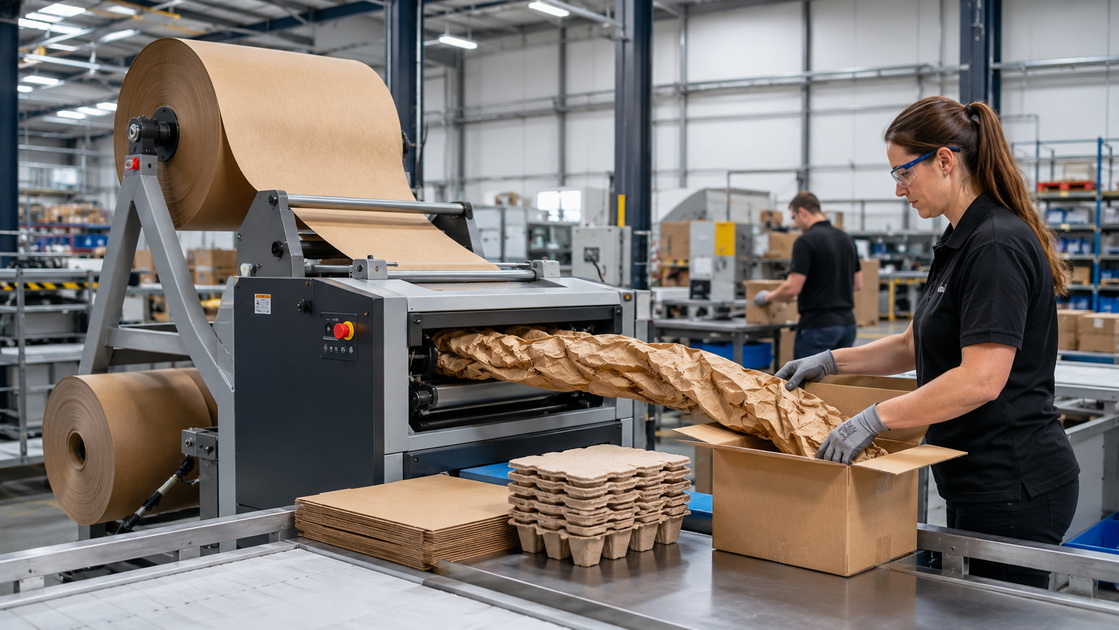
If your brand ships fragile products and wants to reduce plastic filler, crumpled paper packaging is a practical next step. For the best results, pair the material with the right machine, the right pack-out method, and a clear sustainability message that customers can trust.
Yes, in most cases it is recyclable as paper packaging, provided it is not heavily contaminated with food, grease, or incompatible materials. [epa]
It is often better for brands that want a recyclable, paper-based solution and a stronger sustainability story, but the best choice depends on product fragility, shipping conditions, and cost targets. [ellenmacarthurfoundation]
Yes. When used correctly, it can protect fragile goods by filling voids, reducing movement, and absorbing impact. [pakoro]
No. Sustainability depends on fiber sourcing, manufacturing impacts, recyclability, and whether the design avoids unnecessary material use. [canopyplanet]
Glassware, ceramics, candles, cosmetics, and many e-commerce items benefit most because they need adaptable cushioning and void fill. [packagingdigest]
Yes. It creates a natural, eco-conscious unboxing experience and can reinforce a premium, responsible brand identity. [pmc.ncbi.nlm.nih]
1. Pakoro. "How Crumpled Paper Packaging Protects Products & the Planet?" https://pakoro.com/blog/how-crumpled-paper-packaging-protects-products-the-planet/ [pakoro]
2. Packaging Digest. "Origami-Inspired Paper-Based Protective Packaging offers a Sustainable Alternative to Fossil-Based Materials." https://www.packagingdigest.com/packaging-design/origami-inspired-paper-based-protective-packaging-offers-a-sustainable-alternative-to-fossil-based-materials [pakoro]
3. PMC. "Sustainable Paper-Based Packaging: A Consumer's Perspective." https://pmc.ncbi.nlm.nih.gov/articles/PMC8151435/ [pmc.ncbi.nlm.nih]
4. Ellen MacArthur Foundation. "Paper as one part of the solution to flexible packaging pollution." https://www.ellenmacarthurfoundation.org/paper-as-a-solution-to-flexible-packaging-pollution [ellenmacarthurfoundation]
5. U.S. EPA. "Paper and Paperboard: Material-Specific Data." https://www.epa.gov/facts-and-figures-about-materials-waste-and-recycling/paper-and-paperboard-material-specific-data [epa]
6. CalRecycle. "SB 343: Accurate Recycling Labels." https://calrecycle.ca.gov/wcs/recyclinglabels/ [calrecycle.ca]
7. Nixon Peabody. "California's SB 343 restricts common recyclability claims on products and packaging." https://www.nixonpeabody.com/insights/alerts/2026/04/06/californias-sb-343-restricts-common-recyclability-claims-on-products-and-packaging [nixonpeabody]
8. ScienceDirect. "Selecting sustainable packaging materials and strategies: A holistic ..." https://www.sciencedirect.com/science/article/pii/S0959652624035820 [sciencedirect]
9. Two Sides. "Paper Packaging Helps Minimise Environmental Impacts." https://twosides.info/paper-packaging-helps-minimise-environmental-impacts/ [twosides]
10. Packaging Dive. "Businesses prepping for California EPR and recyclability laws amid ..." https://www.packagingdive.com/news/preparing-for-california-sb-343/815639/ [packagingdive]


