


close
Choose Your Site
Global
Social Media
Views: 222 Author: Amanda Publish Time: 2026-01-20 Origin: Site


Content Menu
● What Is Paperboard and Why It Matters
● Overview of the 4 Popular Paperboard Grades
>> Quick Comparison of Paperboard Grades
● CCNB / CRB: Cost‑Efficient Recycled Paperboard
>> Key Properties and Benefits
● SBS: Premium Solid Bleached Sulfate Paperboard
● FBB: Folding Box Board for Lightweight Stiffness
● SUS & CUK: Strong Natural Kraft Paperboard
>> Strength and Sustainability Profile
● How to Choose the Right Paperboard Grade (Practical Checklist)
● Market Trends in Paperboard Packaging (2025–2030)
● Real‑World Use Cases by Industry
● How to Work with Your Packaging Supplier
● Partner with HLun Pack for Optimized Paperboard and Packaging Solutions
● FAQs About Paperboard Grades for Packaging
>> 1. What is the difference between paperboard and cardboard?
>> 2. Which paperboard grade is best for food packaging?
>> 3. Is recycled CCNB as strong as virgin board?
>> 4. Can paperboard replace plastic packaging completely?
>> 5. How do I compare costs between SBS, FBB, CCNB, and CUK?
Choosing the right paperboard grade is now a strategic decision that affects your brand image, packaging performance, sustainability profile, and total cost. This enhanced guide explains the four most popular paperboard grades for packaging—CCNB, SBS, FBB, and SUS/CUK—and shows how to select the best option for your products.

Paperboard is a thick, stiff paper-based material used to make folding cartons, sleeves, tube wraps, and many other retail and e‑commerce packaging formats. Compared with plastic, modern paperboard can deliver strong shelf impact, reliable protection, and improved recyclability in many applications.
Key reasons brands upgrade to paperboard packaging:
- Better printability and on‑shelf branding.
- Easier recyclability in established paper recovery streams.
- Alignment with retailer and regulatory pressure for more sustainable packaging.
From an industry perspective, the global paper and paperboard packaging market is projected to grow strongly through 2030, driven largely by food, beverage, healthcare, and personal care applications.
Most consumer brands that use folding cartons or sleeves rely on four mainstream paperboard grades: CCNB, SBS, FBB, and SUS/CUK. Each grade offers a different balance of appearance, strength, cost, and sustainability.
Paperboard grade | Core material & structure | Typical look | Main strengths | Common uses |
CCNB (CRB, WLC) | Mainly recycled fiber, coated liner on one side | Grey or brown back, white coated front | Low cost, good for lightweight products, good print on front | Cereal boxes, dry food, toys, secondary packaging |
SBS (Solid Bleached Sulfate) | Virgin bleached chemical pulp, usually coated 1–2 sides | Bright white, very smooth | Premium appearance, excellent printability, food-contact suitability | Cosmetics, pharmaceuticals, premium food, tobacco |
FBB (Folding Box Board) | Multi-ply with mechanical pulp core and chemical pulp outer layers | Slightly creamy or yellowish inside, smooth outside | High stiffness at lower basis weight, good printability, cost-efficient | Health & beauty, pharmaceuticals, confectionery, frozen foods |
SUS/CUK (Natural Kraft & Coated Unbleached Kraft) | Unbleached kraft pulp, often clay or polymer coated | Natural brown or kraft look | High strength, good for heavy or demanding applications, eco-look | Beverage carriers, frozen foods, multi-packs, industrial retail packs |
This table can be used in your product decision meetings or with your packaging supplier to quickly narrow down suitable materials.
CCNB (Clay Coated News Back), also known as CRB (Coated Recycled Board) or WLC (White Lined Chipboard), is a recycled paperboard made predominantly from recovered fiber with a white coated top surface. The back is usually grey or brown, reflecting the recycled content.
- High recycled content, often approaching 100% recovered fiber, supporting circular economy goals.
- Good print surface on the coated side for branding, images, and barcodes.
- Competitive pricing compared with virgin grades, making CCNB ideal for cost‑sensitive projects.
However, CCNB generally has lower strength and moisture resistance than SBS or CUK, and is not usually recommended for high‑moisture or heavy‑duty applications.
- Cereal boxes, snack cartons, and dry food packaging (often with inner bags for direct food contact).
- Toys, household products, and hardware accessories.
- Secondary packaging where the inner primary pack protects the product.
SBS paperboard is made from virgin bleached chemical pulp and is typically clay coated on one side (C1S) or two sides (C2S) for superior print quality. It offers a bright white appearance, very smooth surface, and excellent consistency.
- Premium appearance with high brightness and excellent surface smoothness for luxury branding.
- Outstanding offset, flexo, and digital print performance, enabling detailed graphics and special effects.
- Widely approved for direct food contact and often used in chilled or frozen food applications.
SBS typically costs more than recycled grades, reflecting its virgin fiber content and premium performance characteristics.
- High‑end cosmetics and skincare cartons that demand a bright, flawless surface.
- Pharmaceuticals, nutraceuticals, and medical devices where print clarity and cleanliness are critical.
- Premium confectionery, frozen desserts, and specialty foods.
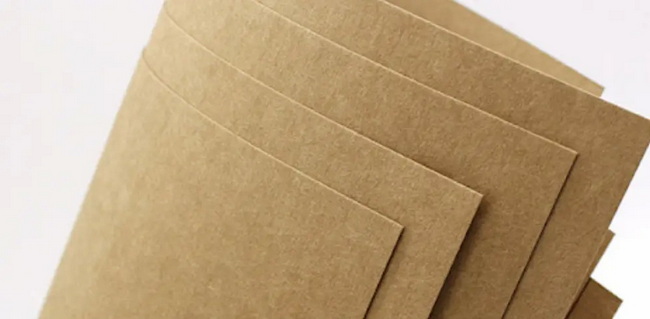
Folding Box Board (FBB) is a multi‑layer paperboard combining a central mechanical pulp layer with outer layers of chemical pulp. This structure delivers a strong stiffness‑to‑weight ratio and a good printing surface.
- High stiffness at lower basis weights, allowing material savings and lighter cartons.
- Very good printability thanks to the bleached chemical pulp outer layer and optional pigment coating.
- Widely used in Europe and Asia for branded consumer packaging across many categories.
Compared with SBS, FBB may have slightly lower strength and a more creamy tone, especially on the inside, but can offer significant cost benefits and sustainability advantages.
- Health and beauty packaging, such as creams, serums, and personal care products.
- Frozen and chilled foods, confectionery, and cigarettes.
- Graphical uses such as covers, postcards, and premium inserts.
SUS (Solid Unbleached Sulfate) and CUK (Coated Unbleached Kraft) are kraft‑based paperboard grades made from unbleached chemical pulp, often with mineral or synthetic coatings. They combine high strength with a natural brown appearance.
- High compression and tear strength, making them ideal for heavy or multi‑pack products like beverages.
- Natural kraft look that instantly communicates robustness and eco‑friendliness on the shelf.
- Coatings improve printability and moisture resistance for cold chain or wet environments.
These boards are commonly chosen when packaging must survive demanding logistics, refrigeration, or high stacking loads.
- Beverage carriers for cans and bottles, especially in beer and soft drinks.
- Frozen and refrigerated foods requiring strong, moisture‑resistant packaging.
- Retail industrial or DIY products where a rugged look is part of the value proposition.
Many buyers struggle to match board types to their products, especially when balancing cost, performance, and sustainability. The following step‑by‑step checklist can be used with your packaging supplier or internal team.
1. Define your product's risk profile
- Is it fragile, heavy, sharp, or moisture‑sensitive?
- High‑risk items often require SBS or SUS/CUK, while low‑risk, lightweight items can use CCNB or FBB.
2. Clarify food‑contact and regulatory needs
- Direct food contact normally favors SBS or specific food‑grade FBB.
- For non‑food or secondary packs, CCNB often meets requirements at lower cost.
3. Set your brand positioning and visual goals
- Luxury, high‑gloss finishes point to SBS or high‑end FBB.
- Natural, eco‑centric branding aligns well with SUS/CUK or recycled CCNB.
4. Assess sustainability targets
- If you prioritize recycled content, CCNB is a strong candidate.
- If you prioritize recyclability and fiber traceability, certified SBS or FBB may be better.
5. Optimize for total cost, not just material price
- Lighter but stiffer FBB can reduce transportation and material usage.
- Stronger SUS/CUK can reduce damage and returns in beverage or heavy‑duty supply chains.
Understanding where the market is heading helps you future‑proof your packaging choices. Recent research indicates strong structural growth in paper and paperboard packaging, driven by sustainability and regulatory change.
Key market and technology trends:
- Continued shift from rigid plastics to paperboard for food, beverage, and personal care.
- Rapid development of advanced barrier coatings that improve grease, oil, and moisture resistance without compromising recyclability.
- Increasing retailer and brand owner requirements for certified fiber, traceability, and validated recyclability claims.
For applications like aseptic beverage packaging, specialized paperboard grades with high stiffness, dimensional stability, and lamination compatibility are becoming essential, reinforcing the need to work with experienced suppliers.
Different industries have converged on certain paperboard grades that balance performance, cost, and branding for their specific products.
1- Food & Beverage
- Dry foods and snacks frequently rely on CCNB combined with internal bags.
- Premium confectionery and frozen desserts often adopt SBS or FBB for superior printing and structural integrity.
2- Cosmetics & Personal Care
- High‑end skincare and makeup use SBS for a bright, flawless look.
- Mass‑market personal care and healthcare products increasingly use FBB to optimize stiffness and cost.
3- Beverage Carriers & Heavy Multi‑packs
- Beer and soft drink carriers are dominated by SUS/CUK for high wet strength and handle performance.
- Some brands combine kraft‑look SUS with strong graphics to emphasize natural ingredients or craft positioning.
These industry patterns provide a practical starting point when evaluating new packaging or refreshing an existing line.
To get the best results from any paperboard grade, collaboration with a knowledgeable packaging partner is essential. Clear technical communication reduces trial‑and‑error, speeds up development, and minimizes costly changes later.
When you brief your supplier, always share:
- Product type, weight, and any special risks (sharp edges, oils, moisture, etc.).
- Target markets and regulatory frameworks (for example, EU food contact, FDA, or key retailer standards).
- Brand priorities: appearance, sustainability claims, cost targets, and shelf‑life requirements.
A strong technical partner will help you match board grade, caliper, and coating to your unique combination of constraints and goals.
Selecting the optimal paperboard grade is not just a material decision; it is a strategic investment in your brand, product protection, and sustainability roadmap. As a professional packaging materials manufacturer, HLun Pack combines paperboard expertise, packaging machinery, and integrated packaging solutions to help you move from concept to mass production with confidence.
If you are evaluating CCNB, SBS, FBB, or SUS/CUK for a new project—or need to redesign existing packaging for better performance and cost—contact HLun Pack for a tailored recommendation, material sampling, and production‑ready support. Share your product details and performance requirements, and our engineering and packaging teams will design a complete solution that fits your production line, your budget, and your sustainability targets.
In packaging, paperboard usually refers to a higher‑quality, more precisely specified material used for folding cartons, while “cardboard” is a generic term that can refer to many paper‑based substrates. Paperboard grades such as SBS, FBB, and CUK have defined pulping methods, coatings, and performance properties, whereas generic cardboard does not specify these details.
For direct food contact, SBS and certain FBB grades are widely used because they are produced from virgin fiber and designed to meet stringent food‑contact regulations. For dry foods in bags or pouches, CCNB can be used as an outer carton because the inner pack provides the functional barrier.
CCNB delivers good performance for light to medium‑duty applications but typically has lower strength and moisture resistance than virgin grades like SBS or CUK. For heavy, high‑value, or moisture‑exposed products, SUS/CUK or higher‑caliper SBS/FBB often provides better protection.
Paperboard can replace certain rigid plastics and laminates, especially in folding cartons, sleeves, and some barrier‑coated applications, but it cannot replace all plastic formats. Complex liquid, high‑barrier, or flexible packaging often still requires plastic, foil, or multi‑layer structures, though paperboard‑based hybrids are expanding quickly.
The best approach is to compare total system costs, including material price, basis weight, shipping, and damage or return rates. FBB's stiffness can allow down‑gauging, while CUK's strength can reduce product damage, which may offset higher price per ton compared with CCNB.
1. https://pakoro.com/blog/4-popular-types-of-paperboard-grades-for-packaging/
2. https://pakfactory.com/blog/4-popular-types-of-paperboard-grade-for-box-printing/
3. https://paperbox.org/4-types-of-paperboard/
4. https://www.silveredgepackaging.com/4-types-of-paperboard-grades-to-create-product-packaging/
5. https://www.yunfaipack.com/resources/4-popular-types-of-paper-grade-for-packaging.html
6. https://www.resourcewise.com/blog/forest-products-blog/fbb-vs-sbs-what-will-demand-look-like-in-the-next-5-years-1
7. https://finance.yahoo.com/news/451-8-bn-paper-paperboard-103900152.html
8. https://www.prnewswire.com/news-releases/paper-and-paperboard-packaging-market-worth-451-8-billion-by-2030
9. https://www.independentinc.com/packaging/paperboard/
10. https://rittersprinting.com/a-breakdown-of-carton-packaging-materials/


