


close
Choose Your Site
Global
Social Media
Views: 222 Author: Amanda Publish Time: 2026-01-30 Origin: Site


Content Menu
● What Are the Main Types of Packaging?
● Primary Packaging: Definition, Role and Examples
>> Common Forms of Primary Packaging
>> Strategic Considerations for Primary Packaging
● Secondary Packaging: Grouping and Protecting Products
>> What Is Secondary Packaging?
>> Forms of Secondary Packaging
>> Secondary Packaging for E-commerce and Retail
● Tertiary Packaging: Pallets, Containers and Large-Scale Logistics
>> What Is Tertiary Packaging?
>> Forms of Tertiary Packaging
● Why the Difference Between Primary, Secondary and Tertiary Packaging Matters
● Optimising Your Packaging System to Reduce Empty Space
● Standardising Packaging Across the Supply Chain
● Key Factors That Determine Packaging Choices
● Point of Sale and Customer Receiving Experience
● Product Characteristics and Risk Assessment
● Sustainability and Regulatory Pressures
● Storage and Fulfilment: Designing for Real-World Handling
● Practical Comparison of Primary, Secondary and Tertiary Packaging
● Partner with HLun Pack for Integrated Packaging Solutions
● FAQs About Types of Packaging
>> 1. Do all products need primary, secondary and tertiary packaging?
>> 2. Is a retail display box primary or secondary packaging?
>> 3. How does e-commerce change secondary packaging design?
>> 4. What is the role of pallets in tertiary packaging?
>> 5. How can standardising packaging reduce costs?
Choosing the right types of packaging at each stage of your supply chain is one of the fastest ways to reduce damage, cut logistics costs, and improve customer experience. This guide explains primary, secondary and tertiary packaging in clear, practical terms and shows how brands can use them strategically to optimise operations.

In modern supply chains, packaging is usually divided into three functional layers.
- Primary packaging: Direct contact with the product, focused on protection, usability and branding.
- Secondary packaging: Groups multiple primary units for handling, storage and sale.
- Tertiary packaging: Bundles secondary packaging for large-scale transport and warehousing.
A well-designed system coordinates all three layers so that space, cost and protection are optimised from production to final delivery.
Primary packaging is the packaging that is in direct contact with the usable or consumable product. It is sometimes called sales packaging or consumption packaging because it protects the product and presents it to the end user.
The core roles of primary packaging include:
- Protecting the product from contamination, damage or spoilage.
- Communicating instructions, regulations, expiry dates and shelf life.
- Positioning the product safely and hygienically during storage and use.
- Carrying branding elements such as logos, colours and claims.
Primary packaging varies widely by industry.
- For FMCG products: jars, bottles, cans, pouches and foil bags.
- For electronics and white goods: cardboard boxes or protective plastic bags around devices.
- For cosmetics and nutraceuticals: glass tinctures, tubes, airless pumps and blister packs.
One brand may even use multiple layers of primary packaging for the same SKU. For example, CBD oil can be bottled in a glass tincture and then packed in a printed carton that is still considered part of the primary layer for retail display.
To design effective primary packaging, brands should focus on:
- Product safety: barrier properties, sealing integrity, child resistance if needed.
- Regulatory compliance: labelling, ingredient declarations, disposal and recycling instructions.
- User experience: easy opening, pouring, dosing, resealing and storage.
- On-shelf impact: visual differentiation while remaining consistent with brand identity.
Choosing the wrong material at this level can undermine both shelf appeal and product quality.
Secondary packaging, also called grouped packaging, combines multiple primary packaged units into a single unit load. Its primary objective is to make it easier to handle, stack and transport products through the supply chain.
Key roles include:
- Grouping primary packages to leverage economies of scale.
- Facilitating warehousing by enabling neat stacking and stable storage.
- Supporting transport over short and long distances while adding extra protection.
- Enabling identification of contents through labels, barcodes or graphics.
Typical secondary packaging formats include:
- Large shipping boxes containing multiple retail units.
- E-commerce mailer boxes and mailing bags used for direct-to-consumer shipping.
- Plastic crates used for fresh produce and reusable pooling systems.
A classic example is smartphone distribution: each phone is packed in its branded retail box, and multiple boxes are then placed into a larger cardboard carton that serves as secondary packaging for transport to distributors.
For retail brands, secondary packaging often prioritises visual performance on shelf as well as easy replenishment and merchandising.
For e-commerce and D2C brands, secondary packaging must deliver a balance of:
- Security: protection against drops, compression and moisture during courier handling.
- Aesthetics: printed mailer boxes that support the unboxing experience.
- Clarity: clear display of delivery and return information on the outer pack.
In many D2C scenarios, the shipping box acts as both secondary and quasi-primary packaging, especially when individual retail packaging is minimal.
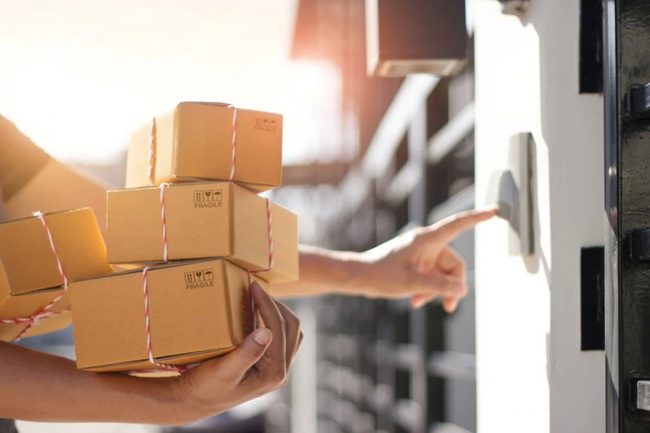
Tertiary packaging consolidates multiple secondary packages into a larger unit that can be moved efficiently with machinery such as forklifts and pallet jacks. Functionally, it does to secondary packaging what secondary does to primary: it enables mass handling and transport at scale.
The main roles of tertiary packaging are:
- Maximising transport efficiency by stabilising loads and minimising unused space.
- Protecting products and packaging from environmental factors during extended storage.
- Enabling mechanised handling across warehouses, ports and distribution centres.
Common tertiary packaging elements include:
- Wooden pallets and plastic pallets.
- Shipping containers for intermodal transport.
- Stretch wrap, corner boards and pallet hoods used to stabilise stacked secondary packs.
Well-engineered tertiary packaging supports higher stacking heights and safer handling while reducing damage risk along the supply chain.
Understanding the three levels of packaging is essential to designing an efficient, cost-effective packaging system.
- Primary packaging protects and presents the product, heavily influencing perceived quality and brand image.
- Secondary packaging adds protection during last-mile transit and simplifies warehousing and distribution.
- Tertiary packaging leverages economies of scale, reducing freight and handling costs.
Poor alignment between these layers leads to wasted space, higher costs and avoidable damage. A simple example is using a glass bottle for a garment: technically possible but a terrible fit for both protection and logistics.
Your packaging also communicates what you value, whether that is sustainability, premium quality, or low cost, so visual consistency and coherency across all three layers is critical.
Studies of shipping utilisation show that a significant share of container volume is often left unused, which has both financial and environmental consequences for e-commerce businesses. This highlights how much value can be unlocked through better structural packaging design at all levels.
Optimisation opportunities include:
- Designing primary packs that nest or stack efficiently.
- Engineering secondary cartons to fit standard pallet footprints with minimal void space.
- Using tertiary packaging that works with global container standards to reduce air gaps.
When these layers are designed together rather than in isolation, brands significantly reduce wasted space, material usage and carbon footprint.
Working within global standardised packaging measurements helps ensure that no space is wasted from production through to distribution.
Benefits of standardisation include:
- More predictable stacking patterns across warehouses and vehicles.
- Simplified procurement and inventory of packaging SKUs.
- Easier integration with automated handling and fulfilment systems.
Packaging engineers can collaborate with logistics teams to design formats that optimise space and protection simultaneously, using secure and environmentally friendly materials.
Not every product requires all three packaging layers, and some will use hybrid solutions. The right approach depends on the specifics of your business and supply chain.
Major decision factors include:
- Point of sale and receiving point: retail shelf, courier delivery, or industrial use.
- Product characteristics: state, weight, fragility, hazard level, value, and perishability.
- Sustainability targets: material reduction, recyclability and reuse strategies.
- Storage and fulfilment processes: stacking height limits, warehouse environment and handling methods.
By analysing these areas, brands can decide which layers are essential and where packaging can be responsibly reduced without increasing damage or returns.
The final destination of your product has a direct impact on packaging design.
For brick-and-mortar retail:
- Primary and secondary packaging must perform strongly on the shelf, attracting attention and explaining key benefits.
- Legal and regulatory information, including disposal and nutritional details where relevant, must be visible and compliant.
- Visual appeal often outweighs extreme robustness, as handling distances are shorter.
For e-commerce and D2C models:
- Couriers handle packages through multiple touchpoints, so security and aesthetics are equally important.
- Secondary packaging must keep the contents safe from dispatch to delivery and display clear shipping and return information.
- Once delivered, the same box becomes the foundation of the unboxing experience, influencing customer satisfaction and reviews.
Answering a few simple questions can guide both primary and secondary packaging design.
- Is the product a solid, liquid or gas?
- What is its overall weight and fragility?
- How hazardous is it if damaged, for example, chemical, biological or sharp?
- How expensive is it to replace if lost or broken?
- Is the product perishable, and what shelf life is required?
These answers form the foundation of your packaging requirements and make it easier to define the right materials, dimensions and protections across all three layers.
Sustainable packaging is now a baseline expectation for brands of every size.
- Traditional plastic boxes and films can be cost-effective but create disposal challenges for consumers and regulators.
- Increasing regulation of single-use plastic packaging is pushing brands toward recyclable, reusable and reduced material solutions.
- Brands are expected to design packaging that supports reduce, reuse and recycle principles while still delivering adequate protection.
Aligning primary, secondary and tertiary packaging with these expectations helps reduce environmental impact and supports long-term regulatory compliance.
Warehouses and fulfilment centres impose practical constraints that packaging must respect.
Critical questions include:
- How high can your boxes be stacked before the lowest is damaged?
- Are there any height, weight or footprint restrictions in storage and transport?
- Will goods be stored on shelves for extended periods, or shipped quickly?
Secondary and tertiary packaging must be optimised for the entire journey, from the completion of primary packaging to the final delivery point. This ensures that packaging is both easy to transport at scale and robust enough for real-world storage conditions.
Packaging level | Direct contact with product | Main purpose |
Primary | Yes | Protection, usability, branding |
Secondary | No, groups primary units | Grouping, stacking, short and medium-distance transport |
Tertiary | No | Large-scale handling, transport, storage |
If you want to turn your packaging into a true performance driver for your business, you need more than a single box or machine. You need a partner that understands materials, equipment and logistics as one complete system. HLun Pack specialises in professional packaging materials, advanced packaging machinery and integrated packaging solutions tailored to your products, channels and sustainability goals. Contact our team today to optimise your primary, secondary and tertiary packaging, reduce total costs, and build a safer, more efficient supply chain end to end.
No. Some products are shipped with only primary and tertiary packaging, or rely on reusable secondary systems. The right mix depends on product risk, sales channel and logistics model. Low-risk, durable products may safely skip one layer, while fragile or high-value items often require all three.
It can be either, depending on design and use. A printed carton directly surrounding a single consumer unit is often treated as primary packaging because it carries key product information and branding. Multi-pack display cartons that hold several consumer units are usually classified as secondary packaging.
E-commerce increases the importance of impact resistance, clear addressing and unboxing experience. The shipping carton is often the only visible touchpoint before product use, so it must protect against rough handling, present the product neatly, and make returns or exchanges simple for the customer.
Pallets allow forklifts and pallet jacks to move many units at once, improving efficiency while reducing manual handling risk and transport damage. They stabilise stacked cartons, help standardise load dimensions, and make it easier to optimise container and truck loading patterns across routes.
Aligning dimensions across primary, secondary and tertiary packaging improves pallet and container utilisation, reducing empty space, material waste and freight costs. Standardisation also simplifies inventory, streamlines packing operations and supports automation, which further lowers labour and error-related expenses.


