


close
Choose Your Site
Global
Social Media
Views: 222 Author: Amanda Publish Time: 2026-01-28 Origin: Site


Content Menu
● Core Keywords and Article Focus
● 1. Why Fonts Matter in Custom Packaging Design
● 2. Main Types of Fonts for Custom Packaging Boxes
>> 2.1 Serif Fonts: Classic and Trustworthy
>> 2.2 Sans Serif Fonts: Modern and Minimal
>> 2.3 Script Fonts: Personal and Luxurious
>> 2.4 Decorative and Display Fonts: Bold and Expressive
● 3. Matching Fonts to Your Brand and Product
● 4. How Many Fonts to Use on a Packaging Box
● 5. Choosing the Right Font Size for Packaging Boxes
>> 5.1 Minimum Font Sizes for Packaging Readability
>> 5.2 Creating a Clear Type Hierarchy
● 6. Limiting Text: Only What Is Necessary
● 7. Color, Contrast, and Readability on Packaging
● 8. Typography Best Practices for Printing and Production
>> 8.1 Outlining Fonts and Preparing Files
>> 8.2 Testing Print Output on Actual Materials
● 9. Balancing Branding, Compliance, and Usability
● 10. 2026 Trends in Fonts for Packaging Design
● 11. Practical Workflow: How to Pick Fonts for Your Next Packaging Box
● 12. Example Font Strategies for Different Packaging Scenarios
● 13. Where to Place Fonts on Your Custom Packaging Boxes
● 14. Expert Production Insights from HLun Pack
● Clear Call to Action: Design Fonts and Packaging with HLun Pack
● FAQs about Fonts for Custom Packaging Boxes
>> 1. What fonts are best for custom packaging boxes?
>> 2. What is the minimum font size I should use on packaging?
>> 3. How many different fonts should I use on one box?
>> 4. How do I make sure my fonts print correctly on boxes?
>> 5. Can HLun Pack help me choose fonts and design my packaging?
Choosing the right fonts for custom packaging boxes can make the difference between a design that gets ignored and one that stops customers in their tracks and drives sales. Fonts affect readability, brand perception, regulatory compliance, and even how premium or eco-friendly your packaging feels on the shelf or online.
In this enhanced guide, you will learn how to choose and apply packaging fonts step by step, from font types and sizes to hierarchy, contrast, and production details, with practical insights from HLun Pack's experience in packaging materials, printing, and machinery integration.

- Primary keyword: fonts for custom packaging boxes.
- Secondary keywords: packaging fonts, custom packaging font design, typography for packaging, packaging box font size, font hierarchy on packaging, readable fonts for boxes.
These keywords should be used naturally across headings, introductory paragraphs, image alt text, and internal link anchors to maximize SEO without keyword stuffing.
The fonts on your custom packaging boxes do more than display text; they silently communicate brand personality, product positioning, and price level at a glance. A carefully chosen typeface can make the same box look playful, minimal, luxurious, or eco-conscious without changing structure or materials.
Strong packaging typography also improves readability and compliance, helping customers quickly find ingredients, usage instructions, or legal information while reducing the risk of misreading or returns due to confusion.
Serif fonts have small strokes at the ends of letters and are associated with tradition, credibility, and editorial content. Classic examples include Times New Roman and Garamond, often used for premium food, wine, cosmetics, and heritage brands that want a serious and established look.
Serif fonts work well on custom packaging boxes when you want to signal heritage, craftsmanship, or formality, but they must be sized generously to stay readable on textured or small surfaces.
Sans serif fonts remove the decorative strokes, giving a clean and contemporary feel ideal for modern brands, tech products, lifestyle goods, and minimalist packaging designs. Popular sans serif families like Helvetica, Futura, Gotham, and Arial are widely used because they remain legible at small sizes and across print and digital touchpoints.
On custom packaging boxes, sans serif fonts are especially effective for headers, product names, and core claims where quick recognition and clarity are critical.
Script fonts resemble handwritten calligraphy or cursive, creating a warmer and more personal impression that can suggest craftsmanship, gifting, or luxury. They are popular for boutique cosmetics, artisanal foods, wedding items, and gift boxes where emotion and storytelling matter.
Because script fonts can be harder to read at small sizes, they are best used for short phrases, such as a tagline or signature, rather than dense product information.
Decorative or display fonts include stencil, grunge, retro, or highly stylized letterforms that are designed to stand out and create a very specific mood. These fonts are useful when your packaging needs an immediate shelf impact, such as snacks, beverages, toys, or seasonal promotions.
Use decorative fonts sparingly for key focal words only, since using them for long text blocks can hurt readability and slow down customer understanding.
To choose the best fonts for custom packaging boxes, start from the brand and product, not from visual trends. Ask these questions before selecting your packaging fonts:
- What is your brand personality (playful, premium, eco, clinical, youthful, luxury)?
- Who is your primary target audience and on which channels will they encounter the packaging (retail shelf, e-commerce thumbnails, unboxing videos)?
- What feelings must the packaging convey: trust, excitement, calm, nostalgia, innovation, or indulgence?
For example, a natural skincare brand might combine a clean sans serif for clarity with a subtle script accent for a handcrafted feel, while a tech gadget brand might stick to geometric sans serif fonts for precision and innovation.
Using too many fonts quickly makes packaging look cluttered and unprofessional. A common best practice is to use two to three fonts per package: one for the brand name, one for body text, and an optional third for highlights or accents.
This small system gives you enough hierarchy and flexibility while keeping the design consistent and easy to manage across SKUs, reprints, and new product launches.
Font size on packaging is tightly connected to viewing distance, print method, and surface texture. Many packaging specialists recommend:
- At least 10 pt for text on mailed shipping boxes and tuck-top boxes.
- Around 6 pt or above for text on folding carton packaging, provided the printing and substrate are high quality.
If you need smaller text (for legal or multilingual content), coordinate with your packaging supplier to run legibility checks and print tests before mass production.
To make your packaging easy to scan, build a simple hierarchy of font sizes and weights:
- Brand name: largest and boldest, often on the front panel.
- Product name or variant: slightly smaller, still prominent.
- Key claims: medium size, clear but not overpowering.
- Supporting details: smaller, consistent, and legible.
This structured approach helps customers identify critical information in seconds and reduces decision friction at the shelf or in an e-commerce thumbnail view.
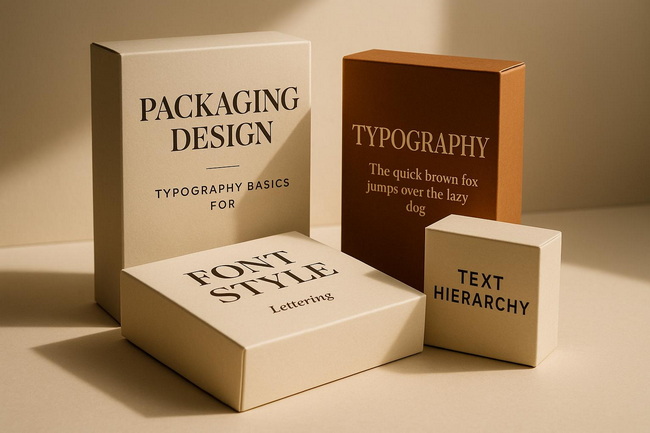
It is tempting to fill every side of the box with product details, but too much text makes fonts smaller and harder to read, weakening all of your typography decisions. Minimalist packaging trends show that focusing on only essential information often results in higher perceived value and stronger brand recognition.
Use packaging primarily for what customers need most at the purchase moment (product type, key benefits, size, usage, brand story highlights), and shift secondary details to QR codes, inserts, or your website.
Even the best font becomes useless if color contrast is poor. For packaging typography:
- Ensure high contrast between text and background (dark text on light backgrounds or vice versa) to improve readability and shelf visibility.
- Use contrast to highlight hierarchy: bolder or darker colors for titles, softer tones for supporting text.
- Consider color psychology, matching font colors with your brand mood (greens for eco, blues for trust, metallics for premium).
Always test how your fonts and colors look under different lighting conditions (store lighting, daylight, warm indoor light) and at different distances.
When you design your packaging dielines in software such as Adobe Illustrator, producers often recommend converting text to outlines or vector shapes. This prevents missing font issues during prepress or when files are opened on different computers and ensures that the exact letterforms you chose appear in the final print.
Before sending files to production, also double-check that important text is not too close to die lines or edges; leaving at least 1/8 inch (0.125") offset around text helps avoid cutting off letters during trimming.
Fonts can look very different on kraft, coated, uncoated, or flexible film materials than on a digital screen. Conduct small print runs or sample tests to check:
- Legibility of small text sizes.
- Color consistency and ink density.
- Sharpness of fine strokes in serif or script fonts.
Working closely with an experienced packaging manufacturer like HLun Pack helps you align font choices with the most suitable substrates, coatings, and printing technologies for your project.
Certain sectors (food, cosmetics, pharmaceuticals, electronics) require mandatory text, such as ingredients, warnings, or certifications, which limit your freedom in font sizing and placement. In these cases, use a highly legible sans serif for mandatory information and reserve decorative styles for brand elements and headlines.
You can still maintain strong visual branding by adjusting weight, case, and spacing within the same font family instead of constantly changing typefaces. This keeps packaging visually clean while satisfying regulatory requirements.
Recent font trend reports and design showcases highlight several directions relevant to packaging fonts in 2026.
Key trends include:
- Clean, neo-grotesque and geometric sans serif fonts for tech, wellness, and lifestyle packaging.
- Retro and vintage-inspired typefaces for nostalgia-driven food, beverage, and gift boxes.
- Expressive display fonts used very selectively for hero words, combined with quieter supporting fonts.
- Variable fonts and flexible styles that adapt across digital and physical touchpoints, maintaining a seamless brand identity.
Brands that align font choices with these trends while staying faithful to their core identity often achieve a fresher and more relevant shelf presence without confusing loyal customers.
Use this simple process when choosing fonts for custom packaging boxes:
1. Define the brand tone and audience
Clarify your key attributes (for example, youthful, minimal, scientific, artisanal) and target buyers.
2. List font roles
Decide what you need: a brand font, body text font, and optional accent font.
3. Shortlist 3–5 font pairings
Combine serif + sans serif, sans serif + script, or sans serif + display, always testing for readability.
4. Mock up on real dielines
Place fonts on actual box layouts, including front, sides, and back panels in realistic sizes.
5. Print and test
Print prototypes on your target material and evaluate from one to two meters away under varied lighting conditions.
6. Standardize in a typography guideline
Document font families, sizes, colors, and hierarchy rules in a simple brand or packaging style guide for consistent future use.
Packaging scenario | Recommended font strategy |
Eco-friendly kraft food box | Friendly sans serif for titles, simple serif for story text, high contrast dark ink on kraft. |
Premium cosmetics folding carton | Elegant serif for brand name, clean sans serif for details, subtle script accent for taglines. |
Tech gadget rigid box | Geometric sans serif for everything, clear hierarchy in size and weight, restrained color palette. |
Kids' toy or collectible box | Playful display font for product name, sans serif for readability, bright colors with strong contrast. |
Subscription box for lifestyle products | Modern sans serif pairing, bold headings and generous white space, QR for extended info. |
This table shows how different font combinations can match specific market segments while keeping packaging practical to produce at scale.
Good typography is not only about font choice; placement also shapes user experience.
Consider these best practices:
- Front panel: brand name, product name, and one main benefit or descriptor in largest and clearest fonts.
- Side panels: secondary information such as features, usage instructions, or short brand story in smaller but readable fonts.
- Back or bottom: detailed ingredients, legal text, barcodes, and manufacturing information in a consistent, legible body font.
For e-commerce packaging, ensure that key text remains readable at thumbnail size; this often means emphasizing short, bold titles and avoiding overly long product names on the front.
As a professional packaging materials factory offering packaging machinery and integrated packaging solutions, HLun Pack can help you translate font choices into efficient, high-quality mass production.
Working with HLun Pack, you can:
- Align font styles with suitable substrates (corrugated, rigid board, folding carton, flexible films) and coatings to preserve clarity.
- Optimize dieline layouts for typography, ensuring no critical text falls into glue areas, creases, or cut-outs.
- Integrate typography with automated packaging machinery, so printed boxes and labels feed smoothly without smearing or misalignment.
This combination of design guidance plus engineering support helps brands avoid costly mistakes between creative concept and factory floor.
If you are planning a new product launch or a packaging refresh, you do not have to figure out fonts for custom packaging boxes alone. HLun Pack can support you from font strategy and dieline layout to materials, printing, and automated packing solutions so your typography looks sharp in real-world production.
Contact HLun Pack today to share your brand guidelines or existing designs, and the HLun Pack team will help you refine your packaging fonts, box structures, and machinery setup into a scalable, cost-efficient packaging system that works across your entire product line.
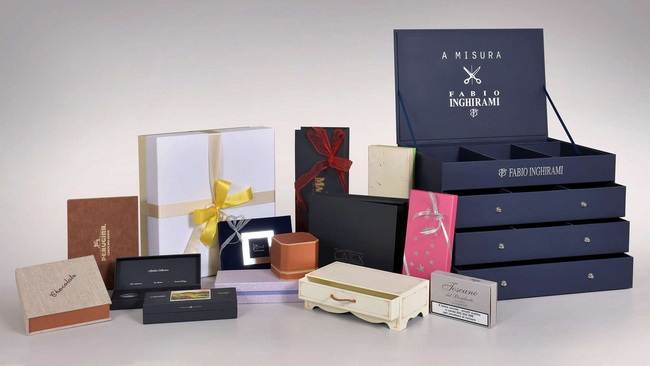
The best fonts for custom packaging boxes are those that balance brand personality and readability, often combining a clean sans serif for core text with a serif, script, or display font used sparingly for accents.
Many packaging experts recommend at least 10 pt for shipping and tuck-top boxes and 6 pt or above for folding cartons, with print tests to confirm legibility on your specific material.
A practical rule is to limit yourself to two or three fonts per package: one for the brand name, one for body text, and an optional accent font for highlights, to keep the design clean and consistent.
Outline fonts in your design files, keep important text within safe margins, and run sample prints on the final substrate to check small sizes, fine strokes, and color contrast before full production.
Yes, HLun Pack can work with your brand team or agency to review font choices, optimize dieline layouts, recommend suitable materials and print methods, and coordinate with packaging machinery to ensure your typography looks sharp and consistent in mass production.
1. https://packmojo.com/blog/3-tips-for-designing-fonts-for-your-custom-packaging-boxes/
2. https://custompackagingla.com/packaging-fonts/
3. https://www.packink.co/blogs/inkspiration/fonts-that-stand-out-to-consider-for-your-custom-packaging
4. https://pakfactory.com/blog/the-best-typeface-for-custom-packaging/
5. https://hotcustomboxes.com/blog/typography-tips-for-custom-box-printing/
6. https://www.pack.ly/en/blog/post/font-packaging-the-secret-power-box-2
7. https://www.pakingduck.com/post/typography-basics-for-packaging-design
8. https://www.kittl.com/blogs/top-font-trends-dsi/
9. https://www.behance.net/
10. https://www.hlunpack.com


