


close
Choose Your Site
Global
Social Media
Views: 222 Author: Amanda Publish Time: 2026-01-30 Origin: Site


Content Menu
● What Is Packaging Filler (Void Fill)?
● Types of Packaging Fillers and Their Best Uses
● Internal Inserts (Cardboard Fitments)
● Bio Foam Fillers (Plant‑Based Packing Peanuts)
● How to Choose the Right Packaging Filler for Your Product
>> Step 1: Evaluate Product Fragility and Weight
>> Step 2: Measure the Void Volume
>> Step 3: Define Your Sustainability Priorities
>> Step 4: Align With Branding and Unboxing Experience
● Comparison of Common Packaging Fillers
● Latest Market Trends in Void Fill & Packaging Fillers
● How HLun Pack Helps You Optimize Packaging Fillers
● Partner with HLun Pack for Smarter Void Fill
● FAQs About Packaging Fillers and Void Fill
>> FAQ 1: What is the difference between protective packaging and void fill?
>> FAQ 2: Which packaging filler is the most eco‑friendly?
>> FAQ 3: How do I know if I am using too much void fill?
>> FAQ 4: Are air pillows still a good choice if my brand is going green?
>> FAQ 5: Can automated void fill systems work for small and medium‑sized e‑commerce businesses?
Effective packaging fillers (also called void fill or box cushioning) are essential to protect products in transit, reduce damage rates, and create a branded unboxing experience that customers remember and share. For growing e‑commerce brands, the right void fill also cuts shipping costs and supports sustainability goals in a competitive market.
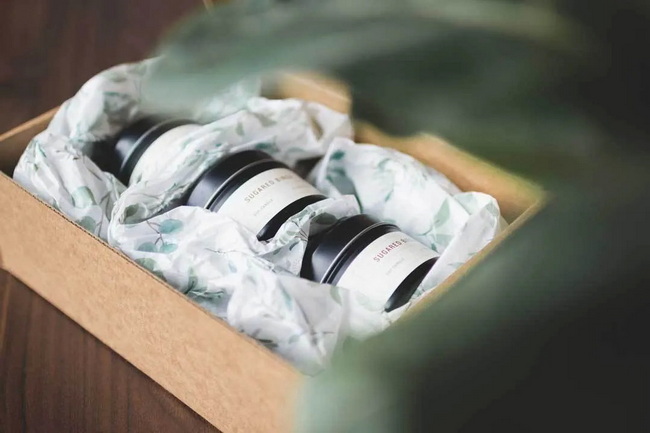
Packaging filler or void fill is any material used to fill empty space inside a shipping box so that the product cannot move, shake, or hit the walls of the carton during transport. By locking the product in place and absorbing shock, void fill reduces breakage, returns, and negative reviews.
Key roles of packaging fillers include:
- Shock absorption during drops, vibration, and stacking.
- Limiting internal movement and preventing corner or edge damage.
- Improving the perceived value and unboxing experience through color and texture.
- Supporting sustainability and compliance by replacing non‑recyclable or single‑use plastics.
For HLun Pack customers, void fill is part of a complete packaging system that includes shipping cartons, inner structures, and automated filling equipment.
You should use void fill whenever there is noticeable empty space between your product and the inner walls of the box.
Typical scenarios include:
- Fragile products such as glass, ceramics, electronics, and cosmetics.
- Heavy items that can wear through the bottom of the box due to vibration.
- Sharp or pointed products that may pierce corrugated board without an extra cushion layer.
- Standardized off‑the‑shelf boxes that are larger than the product, leaving side voids.
If you shake a packed box gently and feel the product moving, you almost certainly need more or better void fill.
The main void fill categories are paper‑based, plastic‑based, foam‑based, and molded fiber or cardboard systems. Below is an overview of the most common materials used by e‑commerce brands and fulfillment centers.
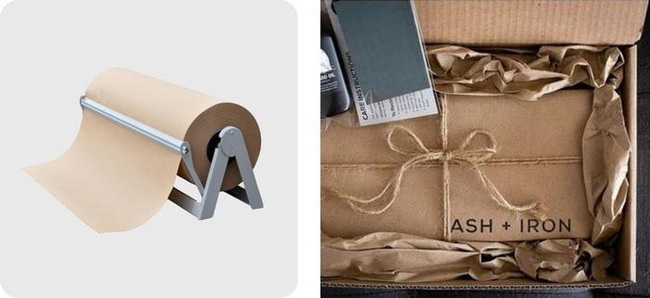
Packing paper is a thin kraft material that can be folded around a product or scrunched to create cushioning void fill. It offers moderate protection and a clean, minimalist appearance suitable for many consumer products.
Best for:
- Adding a rustic, minimalist branding touch for books, apparel, and accessories.
- Wrapping inner boxes to build anticipation during unboxing.
- Eco‑conscious brands that prefer recycled and easily recyclable materials.
For automation, HLun Pack can integrate paper void fill systems that dispense crumpled kraft paper directly at the packing station to save labor and reduce waste.
Internal inserts are engineered cardboard structures that hold products and accessories in fixed positions inside the outer box. They can be custom‑cut to match product geometry, preventing any internal movement.
Best for:
- Mobile phones, electronics, and tools with multiple accessories.
- High‑end, luxury packaging where precise presentation is critical.
- Extremely fragile and delicate items like glassware or porcelain.
With CAD design and cutting, HLun Pack can design inserts that reduce or even eliminate loose void fill, optimizing both material usage and user experience.
Custom tissue paper is a lightweight, decorative paper often branded with logos, patterns, or seasonal artwork. It adds limited physical protection but a strong emotional and branding impact, particularly for fashion and beauty brands.
Best for:
- Building an unboxing experience for boutique apparel, lingerie, and accessories.
- Keeping folded clothing or shoes tidy during transit when sealed with stickers.
- Maximizing brand visibility inside the package with repeated logo prints.
Pair tissue with another protective void fill, such as honeycomb or padding, if the product is fragile or shipped internationally.
Honeycomb paper is a kraft or tissue‑based material engineered with a hexagonal cell structure that expands into a cushion, similar to a paper “net”. It combines physical protection, sustainability, and distinctive aesthetics.
Key benefits:
- Lightweight yet strong cushioning for fragile items.
- Fully recyclable and often made from recycled fibers, supporting sustainability goals.
- Space‑saving: stored flat and expanded on demand, ideal for warehouses with limited space.
Best for:
- Glass candles, cosmetics, and home décor items.
- Brands that want a natural, warm visual inside the box.
- Eco‑conscious brands transitioning away from bubble wrap.
Flexi‑Hex is a specialized honeycomb‑style sleeve made from kraft and tissue paper that stretches to fit around bottles and other cylindrical products. It delivers high‑level protection while remaining plastic‑free.
Advantages:
- Strong, expandable honeycomb sleeve that conforms tightly to the product.
- Versions optimized for light items and heavier bottles.
- Ships flat, then expands around the product to save storage and freight.
Best for:
- Fragile, thick, and heavy items such as wine, spirits, premium oils, or electronics.
- Brands that want to emphasize an innovative, design‑driven approach to packaging.
- Creating a secure air layer around products during long‑distance transport.
Wood wool consists of thin, curly wood shavings used as loose fill for cushioning and decorative presentation. It has a rustic, artisanal feel and can even carry a natural scent.
Best for:
- High‑end candle, gift, and gourmet food packaging that needs a natural look.
- Brands wishing to engage the sense of smell as part of the unboxing experience.
If you pack textiles or soft goods, consider potential odor transfer by testing before full rollout.
Modern packing peanuts are often made from corn or other plant‑based materials instead of traditional polystyrene. These bio foams are compostable or rapidly biodegradable in appropriate conditions.
Benefits:
- Lightweight, non‑toxic loose fill for irregularly shaped fragile items.
- Better environmental profile than conventional polystyrene peanuts.
- Quick, off‑the‑shelf solution when you need protection at scale with no customization.
Best for:
- Brands that care about the environment but need a simple, ready‑to‑use filler.
- Fulfillment centers shipping many different product shapes and sizes daily.
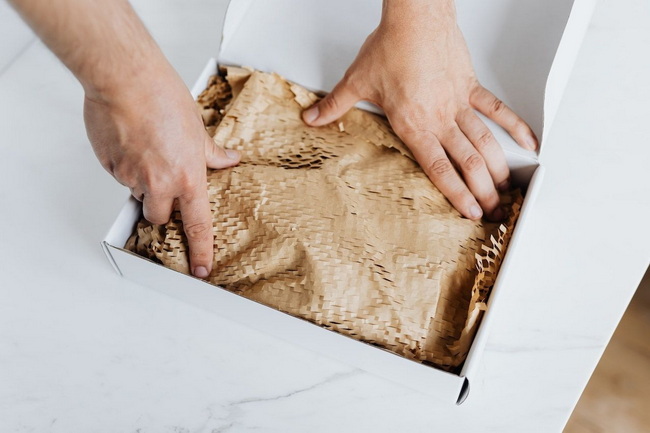
Shredded cardboard is made by processing end‑of‑life corrugated into strips or chips that work as a recycled void fill. It extends the life of cardboard materials and reduces waste going to landfill.
Best for:
- Small but relatively heavy items like jars or bottles that need firm support.
- Brands that want to highlight recycled content and a natural, raw appearance.
HLun Pack can help you integrate shredding solutions so you can reuse your own cardboard offcuts as void fill.
Partitions are rigid cardboard or light wood structures used to separate and stabilize multiple items within a single box. They prevent products from knocking against each other.
Best for:
- Glass bottles, cosmetics, and food jars that are shipped in sets.
- Large, heavy shipping boxes containing multiple identical products.
Partitions are often combined with top and bottom pads plus a small amount of loose void fill for optimal performance.
Air pillows are plastic or bio‑plastic bags inflated with air to fill larger voids inside shipping boxes. They are widely used in e‑commerce because they are light, fast to deploy, and suitable for many product categories.
Advantages:
- High volume‑to‑weight performance, using minimal material to protect large gaps.
- On‑demand production at packing stations, saving storage space.
- Increasing availability of biodegradable and recycled‑content films.
Traditional air pillows made from non‑recyclable plastic are a sustainability concern, but bio‑based and recyclable options can significantly reduce environmental impact.
Bubble wrap is a flexible plastic film containing air bubbles that provide cushioning. It is still common in many warehouses but is increasingly scrutinized due to its plastic content.
Best for:
- Brands on a tight budget that need versatile protection for many SKUs.
- High‑volume fulfillment operations where speed is the main priority.
To align with sustainability goals, companies are gradually replacing conventional bubble wrap with paper‑based or recycled‑content alternatives.
Selecting the best void fill depends on your product properties, logistics model, and brand positioning. A structured, step‑by‑step approach will help you avoid over‑ or under‑protection.
- For light and non‑fragile products such as textiles or durable plastic items, paper and tissue are usually sufficient.
- For medium‑weight or semi‑fragile items such as tools or small electronics, consider foam, honeycomb paper, or engineered inserts.
- For heavy or very fragile products such as large glass items or industrial components, combine inserts, partitions, and robust void fill like Flexi‑Hex, molded fiber, or dense paper.
- Small voids under about 2–3 cm around the product can be filled with packing paper or tissue wrapping.
- Medium voids are ideal for crumpled kraft paper, wood wool, or shredded cardboard.
- Large voids are best filled with air pillows, bio foam peanuts, or custom cardboard structures.
- If sustainability is critical, prioritize recycled and recyclable paper void fill, honeycomb, molded fiber, and plant‑based foams.
- If operational speed and cost dominate, consider automated paper systems or on‑demand air pillow machines using recyclable films.
- Premium and lifestyle brands benefit from custom tissue, colored papers, and wood wool for visual and sensory impact.
- B2B or industrial brands may focus more on structural protection and cost efficiency with partitions, inserts, and shredded cardboard.
HLun Pack can help you test drop resistance, compression, and vibration so you can calibrate protection levels without over‑packing.
Filler Type | Protection Level | Sustainability | Branding & Aesthetics | Best Use Cases |
Packing paper | Medium for light items | High (recycled, recyclable) | Rustic, minimalist look | Books, apparel, general e-commerce |
Custom tissue | Low–medium | Medium (paper-based) | High, strong branding impact | Boutique fashion, cosmetics |
Honeycomb paper | High for fragile items | High (recyclable, lightweight) | Warm, natural look | Glassware, candles, décor |
Flexi-Hex sleeves | Very high, form-fitting | High (recycled paper) | Innovative, premium feel | Bottles, premium fragile items |
Wood wool | Medium cushioning | High (wood-based) | Rustic, sensory impact | Candles, gift sets, gourmet foods |
Bio foam peanuts | Medium–high loose fill | High (biodegradable) | Basic, functional | Mixed fragile items, fulfillment centers |
Shredded cardboard | Medium, firm support | High (recycled cardboard) | Raw, eco-focused look | Jars, small heavy items |
Partitions & inserts | Very high for sets | High (paper/wood) | Clean, organized presentation | Bottle sets, electronics kits |
Air pillows | Medium–high for large gaps | Medium–high with bio/recycled films | Simple, industrial look | General e-commerce, large voids |
Bubble wrap | High cushioning | Low (plastic-based) | Standard, low-brand impact | Budget-conscious, high-volume use |
Recent industry data shows that the global packaging void filler market is expanding rapidly, driven by e‑commerce growth and stricter sustainability regulations. The market is projected to reach billions of dollars in value in the coming years, with strong growth for loose‑fill and protective solutions.
Key trends to watch:
- Strong sustainability push with rapid adoption of biodegradable, compostable, and recycled void fills.
- Automation and systems, as more brands integrate automated void fill systems to reduce labor and material usage.
- Shift from plastic to paper, with kraft paper systems and molded fiber increasingly replacing traditional plastic air pillows and bubble wrap.
By updating your packaging fillers now, you not only reduce environmental impact but also future‑proof your supply chain against regulatory changes.
As a professional packaging materials factory, HLun Pack offers both packaging materials and machinery to build an integrated, efficient void fill strategy tailored to your products.
We can support you in three major areas:
- Engineering and design: custom inserts, partitions, and carton designs that minimize voids and material usage.
- Material selection: guidance on paper, bio foam, honeycomb, and hybrid solutions that balance cost, sustainability, and protection.
- Machinery integration: on‑demand paper crumpling systems, air pillow machines, and automated void fill equipment compatible with your existing lines.
By combining materials and machinery, HLun Pack helps you reduce damage rates, shipping costs, and manual packing time.
If you are rethinking your packaging fillers to cut damage, reduce waste, and improve your unboxing experience, HLun Pack can support you from concept to implementation. Our team will review your products, current cartons, and shipping routes, then propose a tailored combination of materials and machinery that fits your budget and sustainability targets.
Contact HLun Pack today to request a free packaging filler assessment and discover how much you can save in damage, material, and labor on your next shipment.
Protective packaging refers to the entire system that shields your product, including outer cartons, inner boxes, inserts, and cushioning layers. Void fill is a subset of protective packaging focused specifically on filling empty spaces to prevent movement and shock during transit.
Paper‑based void fills such as kraft paper, honeycomb, and molded pulp, as well as plant‑based bio foams, generally offer the best environmental profiles because they use renewable fibers and can be recyclable or biodegradable. The exact impact depends on sourcing, local recycling infrastructure, and how your customers dispose of the materials.
If your box is significantly larger than the product, requires multiple layers of filler, or feels excessively light compared to its size, you may be over‑packing. A packaging audit can often reduce void fill usage by resizing cartons or adding simple inserts and partitions.
Conventional plastic air pillows are less aligned with aggressive sustainability goals, but new versions using recyclable or bio‑based films can be a reasonable compromise. You can also pair them with downsized cartons and paper‑based solutions for a more balanced environmental footprint.
Yes, modern systems scale from compact tabletop paper dispensers to fully integrated high‑speed lines, making them accessible to small and growing brands. Many businesses recover the investment through lower labor costs, reduced damage, and optimized material usage.
1. https://packhelp.com/what-are-packaging-fillers/
2. https://www.webstaurantstore.com/guide/1023/types-of-void-fill.html
3. https://www.futuremarketinsights.com/reports/void-fill-packaging-systems-market
4. https://www.hexcelpack.com/sustainable-packaging-blog/how-does-void-fill-work
5. https://xetgo.com/honeycomb-packing-paper-the-ultimate-sustainable-choice/
6. https://www.ecoenclose.com/shop/flexi-hex/
7. https://www.flexi-hex.com
8. https://www.optioryx.com/blog/void-fill
9. https://www.futuremarketinsights.com/reports/void-fill-packaging-systems-market-share-analysis
10. https://www.orconind.com/what-type-of-void-fill-suits-your-specific-product-weight/
11. https://www.strategicpackaginginsights.com/report/void-fill-packaging-market
12. https://www.gminsights.com/industry-analysis/loose-fill-packaging-market


