


close
Choose Your Site
Global
Social Media
Views: 222 Author: Amanda Publish Time: 2026-02-15 Origin: Site


Content Menu
● Why Shipping Fragile Products Safely Matters More Than Ever
● Understand What Counts as a Fragile Product
● Step 1: Choose the Right Shipping Box Size
● Step 2: Select the Best Cushioning and Void Fill for Fragile Items
● Step 3: Wrap Fragile Items Correctly
● Step 4: Pack, Pad, and Seal the Box
● Step 5: Label Fragile Packages Clearly and Accurately
● Step 6: Choose the Right Carrier Services and Shipping Insurance
● Data‑Driven Ways to Reduce Fragile Shipping Damage
● Sustainability Considerations for Fragile Packaging
● Customer Communication and Expectations Management
● Actionable Checklist: How to Safely Ship Fragile Products
● How HLun Pack Can Help You Ship Fragile Products Safely
● FAQs About Shipping Fragile Products Safely
>> 1. What is the best way to safely ship fragile products?
>> 2. How much cushioning do I need for fragile items?
>> 3. Are eco‑friendly materials safe enough for fragile shipping?
>> 4. Do “Fragile” labels really make a difference?
>> 5. How can I reduce fragile damage without dramatically increasing costs?
If your business relies on fragile products, every damaged parcel is not just a broken item, but a direct hit to your profit, brand reputation, and customer loyalty. With e‑commerce volumes rising and parcels moving through increasingly complex logistics networks, designing a robust fragile‑shipping strategy is now essential for any brand that wants to scale confidently.
When fragile items are not properly protected, the cost goes far beyond a single replacement. You pay for additional customer service time, reverse logistics, wasted materials, and, in many cases, the loss of future orders from disappointed customers. Poor packaging also leads to negative reviews and social media exposure that damage your reputation. Treating safe shipping as a strategic investment, rather than just an expense, is one of the fastest ways to protect your margins and strengthen your brand.
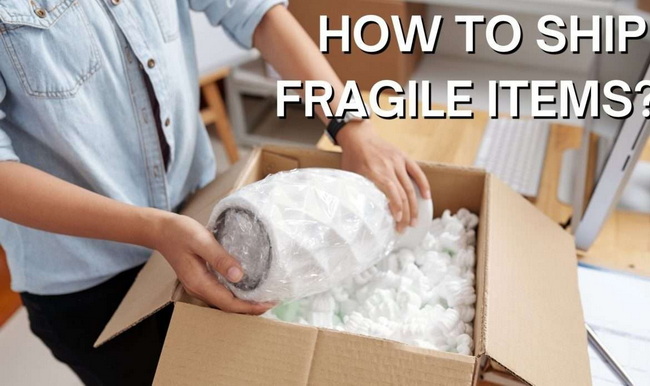
Many items behave like fragile products during transportation, even if they do not obviously look fragile. Typical fragile categories include:
- Glass bottles, jars, tableware, mirrors, and vases
- Ceramics, porcelain, pottery, and artworks
- Electronics, PCBs, and precision instruments
- Cosmetics in glass containers, droppers, or airless pumps
- Lab samples, medical devices, and diagnostic kits
- Luxury items such as perfumes, candles, and decor pieces
Because parcels are handled by conveyor belts, forklifts, and manual sorting, even sturdy‑looking products can suffer shocks, falls, and crushing forces. If an item could crack, deform, leak, or malfunction after a drop or heavy stacking, it should be treated as fragile in your packaging design.
Choosing the correct outer carton is the foundation of safe fragile shipping. A box that is too large invites excessive void space, forcing you to use more filler and increasing the chance that items shift during transit. A box that is too small leaves no room for cushioning layers and transmits impacts directly to the product.
A practical rule of thumb is to select a box that leaves about 5 cm (2 inches) of clearance on each side of the product after it has been wrapped. This clearance allows you to add cushioning to the bottom, sides, and top while avoiding unnecessary air. When measuring your product, include any inner packaging, then add at least 4–5 cm to each dimension. Always check that the chosen box is strong enough for the total packed weight.
For particularly high‑value or extremely fragile products, consider a double‑boxing approach. In this method, the item is first packed into a snug inner carton, which is then suspended inside a larger outer box with cushioning between the two cartons. This system dramatically improves protection by spreading impacts across multiple layers.
Cushioning and void fill work together to absorb shocks and stop products from moving inside the box. There is no single “best” material; the ideal choice depends on the weight, shape, and sensitivity of your products, as well as your sustainability goals.
Material | Best Use Case | Key Advantages | Limitations |
Bubble wrap | Glass, ceramics, bottles, irregular shapes | Strong cushioning, flexible, lightweight | Not always eco-friendly, usually needs extra void fill |
Packing peanuts | Filling gaps around already wrapped items | Good for irregular voids, low weight | Can shift, messy unboxing, less protection against direct shocks |
Air pillows | Blocking movement in outer box | Very lightweight, quick to use, store flat | Lose effect if punctured, not ideal alone for very fragile items |
Crumpled paper | Layering, base and top cushioning, eco-friendly sets | Recyclable, clean unboxing, versatile | Less shock absorption than foam or multi-layer bubble |
Foam inserts / molded foam | High-value electronics, instruments, lab equipment | Excellent product immobilization and shock absorption | Higher tooling cost, less flexible for frequent SKU changes |
Sustainable foams / paper honeycomb | Brands with strong sustainability goals | Improved recyclability and premium brand perception | May require testing to match traditional foam performance |
Whichever material you choose, the key is to ensure the product is fully immobilized. After packing, gently shake the box in different directions. If you feel or hear movement, you need more or better‑placed void fill.
Good packaging is about more than filling a box. The way you wrap each item before it goes into the carton is critical for preventing scratches, cracks, and pressure damage.
Use this wrapping sequence:
1. Fill internal voids
For cups, bowls, glassware, and hollow decor, insert crumpled paper or small pieces of bubble wrap to support the structure and reduce internal shock.
2. Primary wrap with paper
Wrap the entire item in kraft or tissue paper to protect surfaces and finishes from scratches and abrasion.
3. Secondary wrap with bubble or foam
Add one to three layers of bubble wrap or foam around the item, focusing on corners, rims, and protruding parts. Secure the wrap with minimal tape so the customer can unwrap easily.
4. Separate and bundle sets carefully
Never allow fragile pieces to touch each other directly. Use dividers, cardboard pads, or individual wraps between items when packing sets into the same box.
Avoid covering every layer with excessive tape, which can frustrate customers and cause them to use sharp tools or too much force during unboxing.
Once each product is wrapped, you can build a consistent protection system inside the carton. A simple internal structure can dramatically reduce breakage.
Use this checklist:
- Add a thick cushioning layer at the bottom of the box before placing any items inside.
- Place the heaviest products at the bottom and lighter products on top to create a stable base.
- Maintain even spacing between products and the walls of the box, using dividers or additional wraps as needed.
- Fill all remaining voids with suitable void fill so that nothing can move when you shake the box.
- Add a top cushioning layer to protect against compression when parcels are stacked.
- Seal the box with strong packing tape using the H‑taping method, covering the central seam and both edges.
A well‑packed box closes without bulging and does not transmit noticeable movement when handled or rotated.
Labeling complements good packaging by guiding handlers and supporting any claims in case of damage. Clear, visible labels signal that the parcel needs careful stacking and handling.
Best practices for labeling fragile parcels include:
- Applying “Fragile” and “Handle With Care” labels on at least two sides and the top of the box.
- Using “This Side Up” arrows whenever orientation matters, matching the direction that best protects the product.
- Keeping shipping labels and barcodes flat and unobstructed, so scanning equipment can read them quickly.
While labels alone will not save a poorly packed parcel, they do help warehouse staff and carriers prioritize safe handling, especially when combined with proper packaging and insurance.
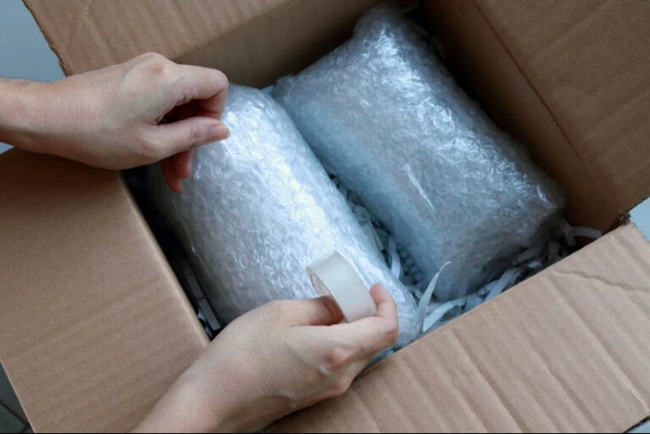
Carriers differ in their service levels, handling practices, and claims processes. For fragile products, it is worth reviewing these details instead of simply choosing the lowest rate.
Key points to consider:
- Review packaging requirements and exclusions in each carrier's current terms, especially for glass, liquids, or high‑value electronics.
- Purchase additional coverage when shipping items whose value exceeds the carrier's standard liability limit.
- Explore packaging services or certified packaging programs where available, which may improve claim outcomes.
- Track damage incidents by carrier and service, then adjust your mix to favor options that consistently protect your products better.
Even highly optimized operations experience some damage, but combining the right carrier, appropriate insurance, and consistent packaging practices can dramatically reduce your financial risk.
Leading brands now treat fragile‑shipping performance as a measurable, improvable metric rather than a fixed cost of doing business. By tracking key data points, you can continuously refine your packaging and shipping strategy.
Practical, data‑driven actions include:
- Measuring damage rate per product, packaging configuration, and carrier to identify problem areas.
- Reviewing damage patterns by season and destination, as long distances, cross‑border routes, and peak periods often show higher breakage.
- Running A/B tests on packaging, comparing different box strengths, inserts, or cushioning systems over a defined sample size.
- Calculating total damage cost, including product value, freight, labor, and potential loss of lifetime customer value.
With this information, you can justify targeted investments in better boxes, customized inserts, or upgraded machinery where they will have the greatest financial impact.
Customers increasingly care about packaging waste and recyclability, even when they know fragile items need extra protection. The challenge is to balance safety with sustainability in a transparent, credible way.
Effective strategies include:
- Switching from traditional plastic peanuts to biodegradable or starch‑based loose fill for suitable products.
- Using recyclable paper‑based void fill and corrugated inserts in place of mixed‑material systems that are difficult to recycle.
- Optimizing box sizes to reduce excess air and material usage, while keeping at least 2 inches of protective space around the product.
- Testing paper‑based honeycomb boards, molded pulp, and other sustainable cushioning solutions in your drop‑tests.
Highlighting these choices on your website, product pages, and packaging helps you stand out to eco‑conscious customers while maintaining protective performance.
Even the best packaging cannot eliminate every risk in transit. Clear customer communication before and after shipping can turn potential complaints into positive experiences and protect your brand reputation.
Consider integrating the following practices:
- Adding a short note at checkout and in order confirmations explaining that the product is fragile and packed with extra care.
- Providing transparent tracking information and realistic delivery timeframes so customers know what to expect.
- Publishing a simple, visible damage policy that explains how to report issues, what evidence is needed, and how quickly you respond.
- Offering clear resolutions such as replacement, refund, or store credit when legitimate damage occurs.
When customers see that you take fragile shipping seriously and stand behind your packaging, they are more likely to give you another chance even after a problem.
To help your warehouse or fulfillment team, convert your fragile‑shipping process into a standard checklist they can follow every time.
1. Identify the item as fragile and note any special requirements such as orientation or temperature.
2. Measure the product and select a box that allows at least 5 cm of cushioning on all sides.
3. Wrap the item: fill internal spaces, then wrap with paper and bubble or foam, using minimal tape.
4. Prepare the box: add a bottom cushioning layer and place the wrapped item on top.
5. Arrange multiple items with heavier pieces at the bottom and lighter pieces on top.
6. Fill all remaining voids with suitable void fill so nothing can move inside the box.
7. Add a top cushioning layer and seal the box using the H‑taping method.
8. Apply “Fragile”, “Handle With Care”, and, if needed, “This Side Up” labels in visible positions.
9. Choose the carrier service and insurance level according to the value, route, and historical damage rate.
10. Send tracking and a brief care note to the customer, including instructions in case of damage.
By turning this checklist into a training tool and regular audit standard, you can keep packaging quality high and consistent across teams and locations.
As a professional packaging materials factory with packaging machinery and integrated solution capabilities, HLun Pack can help you build a fragile‑shipping system that is both reliable and scalable. Our team can work with you to design and supply custom corrugated boxes, cardboard inserts, and dividers tailored to your product dimensions and risk profile. We can also support you in selecting cushioning and void‑fill solutions that fit your performance and sustainability goals, from traditional foams to paper‑based alternatives.
In addition, HLun Pack can recommend, configure, or upgrade packaging machinery that automates box forming, filling, and sealing, ensuring consistent protection even at high throughput. Through pilot runs and drop‑tests, we help you validate packaging configurations before full rollout, reducing the risk of damage‑related surprises in the field.
If you are dealing with frequent damage, high return rates, or uncertain packaging performance for fragile products, you do not have to solve it alone. Contact HLun Pack today to share your product range, shipping challenges, and target damage rate, and our packaging specialists will propose tailored materials and machinery solutions that help you safely ship fragile products, reduce breakage, and protect your profit as you grow.
Contact us to get more information!
The most effective way is to combine a correctly sized, strong outer box with proper wrapping, high‑quality cushioning, and complete void fill, plus clear fragile labeling and suitable carrier services. Each layer of this system controls different risks, from shocks and vibration to stacking and manual handling, resulting in far fewer damaged parcels.
As a general rule, you should aim for at least 5 cm (2 inches) of cushioning on all sides of the wrapped item, including the bottom and top of the box. Extremely fragile or high‑value products may require extra layers or a double‑boxing method to deliver consistent protection and acceptable damage rates.
Modern eco‑friendly materials, including paper‑based void fill, molded pulp, and biodegradable foams, can provide excellent protection when used correctly. The key is to test them on your specific products through drop‑tests and pilot shipments, then fine‑tune the combination of box strength, cushioning thickness, and void fill until performance matches or exceeds traditional plastics.
“Fragile” and “Handle With Care” labels support good packaging by signaling to handlers that the parcel needs extra attention. While labels alone cannot prevent damage if the packaging is weak, they can improve stacking decisions, reduce rough handling, and support your claims when you need to document that a product was shipped with appropriate warnings.
The most efficient approach is to analyze your damage data, identify the worst‑performing SKUs, packaging setups, and routes, and then apply targeted improvements. This might mean upgrading the box grade, adding a custom insert, or switching void‑fill materials only where they are needed most, rather than raising packaging costs across your entire catalog.
1. https://pakfactory.com/blog/how-to-safely-ship-fragile-products-and-avoid-breakage/
2. https://amzprep.com/shipping-fragile-items/
3. https://opensend.com/post/shipping-damage-rate-statistics
4. https://www.mod24.com/blog/ultimate-guide-to-cushioning-and-void-filling
5. https://orconind.com/void-fill-methods-work-best-for-fragile-items/
6. https://impactograph.com/best-practices-protect-fragile-items-in-shipping/
7. https://www.sendfromchina.com/NewsCenter/how-to-prevent-shipping-damage.html
8. https://www.veho.com/blog/what-is-the-true-cost-of-failed-deliveries-in-e-commerce
9. https://www.youtube.com/watch?v=bW_2Ab7u4wE
10. https://www.youtube.com/watch?v=GIMdm3ymxM0


