


close
Choose Your Site
Global
Social Media
Views: 222 Author: Amanda Publish Time: 2026-02-05 Origin: Site


Content Menu
● What Are Box Dimensions and Why They Matter
● Standard Dimension Order: L × W × H
● Internal vs External Box Dimensions
● Step-by-Step: How to Measure a Box Correctly (Inside)
>> 1. Identify the Top Opening of the Box
>> 4. Measure Height / Depth (H)
>> 5. Record Dimensions in Order L × W × H
● How Box Dimensions Affect Volume and Space Usage
● Corrugated Boxes: Why Thickness and Style Matter
● Internal Dimension Tolerance and Safety Margin
● Measuring External Dimensions for Shipping and Logistics
● Dimensional Weight: How Carriers Charge for Space
● Practical Measurement Tips for Different Box Styles
● How to Choose the Right Box Size for Your Product
● When to Use Custom Packaging Solutions
● Example Dimension Table for Common Box Uses
● Clear Action Call: Work With a Packaging Expert
● FAQs
>> 1. Why are internal dimensions more important than external dimensions for packaging?
>> 2. What is the standard order when listing box dimensions?
>> 3. How much extra space should I allow around my product inside the box?
>> 4. How do box dimensions affect shipping cost?
>> 5. Can I use the same box for different products?
Getting your box dimensions wrong does not just cause minor inconvenience – it can lead to damaged products, higher shipping costs, and wasted materials. This guide shows you exactly how to measure length, width and height (depth), when to use internal vs external dimensions, and how to choose the right box size for shipping and production.

Box dimensions describe the size of a box in three directions: length, width, and height (or depth). Most packaging and shipping companies record dimensions in the order L × W × H (or D).
Accurate dimensions are essential because they:
- Ensure the product fits safely without crushing or excessive empty space.
- Affect material usage, die-cut layout, and overall packaging cost.
- Determine shipping dimensional weight (DIM) and directly impact freight charges.
- Help maintain consistent quality when reordering or scaling production.
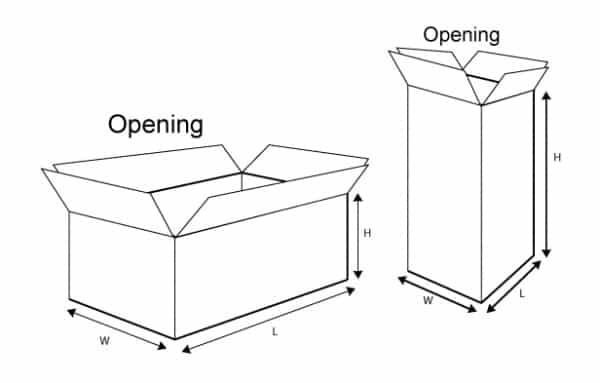
In packaging, dimensions follow a strict and widely recognized order:
◆ Length (L) – The longest side of the box at the opening.
◆ Width (W) – The shorter side of the box at the opening, perpendicular to the length.
◆ Height / Depth (H or D) – The side that runs from the base to the top opening, the vertical distance.
Whether a company uses “height” or “depth”, the principle is the same: it is the dimension from bottom to top.
For professional packaging projects, it is critical to distinguish between internal and external dimensions.
◆ Internal dimensions:
- Measure the usable space inside the box.
- Are used by packaging manufacturers to ensure the product fits correctly.
- Are typically expressed as L × W × H in box specifications and quotes.
◆ External dimensions:
- Measure the outside size of the assembled box.
- Are important for shipping, palletizing, and warehouse storage planning.
- Are used by carriers to calculate space usage in trucks and containers.
For custom packaging that must fit a product, always start from internal dimensions and then convert to external if needed.
Follow this sequence to get reliable internal measurements for a rectangular box.
Place the box so the flaps or lid are on top. This orientation defines how length, width and height are read and communicated.
Use a ruler or tape measure along the longest side of the opening. Place the tape inside the box, from inner wall to inner wall.
Measure the shorter side of the opening, again from inside wall to inside wall. Keep the tape as straight and level as possible.
Measure from the inner base to the top edge of the box, keeping the tape vertical. This value defines how much vertical space your product and any cushioning will have.
Write your measurements in the standard order, for example: 10" × 8" × 4" (L × W × H). Note the unit (inches, centimeters or millimeters) and stay consistent across all projects.
For corrugated boxes, measuring from the inside avoids overestimating usable space due to board thickness.
Once you know length, width and height, you can calculate box volume:
Volume = Length × Width × Height
This gives the internal or external cubic volume of the box, depending on which set of dimensions you used.
Example:
- Box size: 10 in (L) × 8 in (W) × 4 in (H)
- Volume = 10 × 8 × 4 = 320 cubic inches
Volume helps you to:
- Check whether multiple items can fit in one box.
- Optimize void space and choose the right inserts.
- Plan storage capacity and container loading.
Corrugated board has a fluted medium between liners, which adds measurable thickness. This means external and internal dimensions can differ by several millimeters on each side.
Key points for corrugated packaging:
- Different flute types have different thicknesses, changing the gap between inner and outer sizes.
- Internal dimensions determine how snugly the product fits.
- External dimensions affect how many boxes fit on a pallet or into a container.
In many projects, the internal size is defined from product dimensions, then a small tolerance is added on each side to allow for packing and production variation.
For professional packaging, you rarely design a box to match product size exactly. You need a safety margin to accommodate:
- Dimensional variation in manufacturing and board thickness.
- Extra space for cushioning material such as foam, bubble wrap, or paper fill.
- Slight differences between product batches or product wrapping.
A common rule of thumb for corrugated boxes is:
- Internal dimension = product dimension + 3–5 mm on each side.
If your product is very fragile or requires thick cushioning, you may need a larger margin. The more sensitive the product, the more carefully you should define this tolerance.
While internal dimensions protect the product, external dimensions are critical for logistics and cost control.
Measure external size by:
- Running the tape along the outside length and width of the box.
- Measuring the outer height, from bottom to top edge.
External dimensions are used to:
- Calculate pallet layout and stacking patterns.
- Check whether boxes fit into shelves, bins, or automated systems.
- Estimate shipping dimensional weight with common carriers.
When you provide external measurements to carriers and logistics partners, they can plan vehicle space and storage much more accurately.
Most major carriers use dimensional weight to price shipments. This means they compare:
- The actual weight of the parcel.
- The dimensional weight, based on box volume.
The carrier charges whichever is higher.
A typical formula example for dimensional weight is:
Dimensional weight = (Length × Width × Height) ÷ DIM factor
The DIM factor is a constant set by each carrier. For many services, it is a number that represents how many cubic units equal one billing unit of weight.
For example, an 18 × 14 × 12 in box has:
- Volume = 18 × 14 × 12 = 3024 cubic inches
- Dimensional weight ≈ 3024 divided by the applicable DIM factor, rounded up to the next whole number
Choosing a more compact box can dramatically reduce shipping costs, even if the product itself is light.
Different packaging styles may require small adjustments to how you measure.
- Regular slotted cartons (RSC): Measure between scores on the inside for precise corrugated box manufacturing.
- Mailer boxes and folding cartons: Use internal dimensions at the open side where the product is inserted.
- Tapered, heart-shaped or polygonal boxes: Break the shape into simpler sections and measure each part as clearly as possible.
- Boxes with lids: Measure the base and lid separately to ensure the correct fit and stacking height.
When in doubt, provide clear sketches or 3D drawings alongside measured numbers to your packaging supplier.
Selecting the right box goes beyond just matching length, width and height.
Key considerations:
- Product size and shape – Always measure the bare product in all three dimensions.
- Protective packaging – Add space for the thickness of padding on each side.
- Fragility – More delicate items often need extra void space plus inserts or foam.
- Order configuration – Consider whether the box is for single items, multi-packs, bundles, or subscription kits.
A useful formula for padded internal size is:
Padded internal dimension = product dimension + 2 × padding thickness
Apply this to length, width and height to get the minimum inner size of the box.
Stock boxes rarely match product dimensions perfectly, especially for premium brands or complex product sets. Custom packaging is recommended when:
- You need tight control over internal dimensions for protection and unboxing experience.
- Branding, printing and structural features are part of your product strategy.
- You want to reduce overall freight and warehousing costs by optimizing dimensions at scale.
An experienced packaging partner can translate your product measurements into feasible, production-ready box specifications with the right tolerances and board grades.
Box type | Typical internal size (L × W × H) | Main purpose |
Small accessory mailer | 150 × 100 × 50 mm | Light items like cosmetics or gadgets with minimal padding. |
Standard RSC shipping box | 300 × 200 × 200 mm | Mixed products and general e commerce fulfillment. |
Bottle or jar shipper | 330 × 110 × 110 mm | Single bottled products with protective inserts. |
Heavy-duty corrugated box | 400 × 300 × 250 mm | Industrial or bulk items requiring stronger board. |
Large lightweight carton | 500 × 400 × 200 mm | Voluminous but light goods, optimized for dimensional weight. |
Dimensions are typical examples only; final sizes should always be adjusted to your exact product and cushioning requirements.
Accurately measuring a box is the first step; turning those measurements into optimized packaging, compatible machinery, and cost-effective logistics requires professional support. If you want to reduce damage rates, control material usage, and improve shipping efficiency, partnering with a specialist packaging manufacturer is the most reliable path.
If you are planning a new packaging project or want to audit your current box sizes, contact our expert team at HLun Pack today. We will review your product dimensions, recommend the ideal internal and external box sizes, and design integrated packaging and machinery solutions tailored to your operations. Reach out now to get a precise, custom-defined box specification that protects your products and reduces your total packaging cost.
Contact us to get more information!
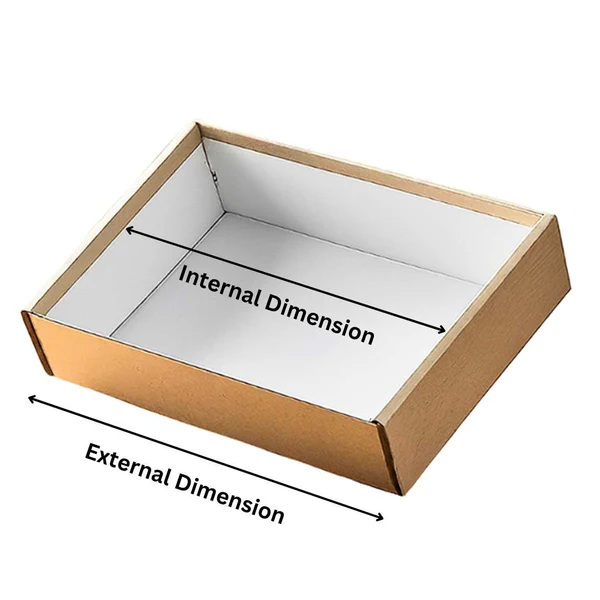
Internal dimensions define the usable space inside a box and ensure your product fits with the correct protective clearance. External dimensions are derived from the structure and board thickness, and are more relevant for storage planning and shipping. For product fit and protection, internal dimensions should always be your starting point.
The standard order is Length × Width × Height (L × W × H), where length is the longest side at the opening, width is the shorter side at the opening, and height is the vertical measurement from base to opening. Using a consistent order prevents misunderstandings between your design, production, and logistics teams.
For many corrugated packaging projects, a common guideline is to add about 3–5 mm to each product dimension for internal box size, plus additional space for cushioning when necessary. However, delicate or high-value products may require a larger margin and more sophisticated inserts to ensure safe transport.
Box dimensions affect shipping cost because carriers use dimensional weight, calculated from external box volume, and compare it to actual weight to determine the chargeable weight. Larger boxes can cost more to ship even if the product is lightweight, so optimizing dimensions is crucial for cost control.
You can use a single box style for multiple products, but you must balance fit, protection, and cost. Oversized universal boxes increase filler usage and dimensional weight, while boxes that are too tight may not protect fragile products sufficiently. Often, a small set of well-optimized box sizes works better than one “one-size-fits-all” solution.
1. https://www.sttark.com/blog/how-to-measure-dimensions-of-a-box
2. https://packmojo.com/help/how-do-you-measure-box-dimensions/
3. https://imhpackaging.com/how-to-measure-box-dimensions/
4. https://www.gentlepk.com/how-measure-box-dimensions/
5. https://www.mtdpack.com/corrugated-box-size-and-thickness-guide/
6. https://customboxesnow.com/blog/how-to-measure-box-dimensions/
7. https://cratpackaging.com/how-to-measure-inserts-internal-and-external-box-dimensions/
8. https://www.boxmaker.com/blog/measure-corrugated-box
9. https://www.imperialdade.com/blog/how-to-calculate-the-right-box-size-for-shipping
10. https://www.icustomboxes.com/blog/how-to-measure-a-box-dimensions/
11. https://www.upack.in/blog/post/complete-guide-on-corrugated-box-dimension-tolerance
12. https://phasev.com/blog/box-dimensions-for-shipping/
13. https://cnlipack.com/how-to-read-box-dimensions/
14. https://www.linkedin.com/pulse/dimension-conversions-corrugated-boxes-internal-moss-ha5zc


