


close
Choose Your Site
Global
Social Media
Views: 222 Author: Amanda Publish Time: 2026-02-04 Origin: Site


Content Menu
● What Is Custom Pouch Packaging? (And Why It Matters Now)
● Key Benefits of Flexible Pouches for Modern Brands
>> Cost and Operational Efficiency
>> Brand Visibility and Shelf Impact
>> Product Protection and Shelf Life
● Premade vs Custom Pouches: Which Is Right for You?
>> When Premade Pouches Make Sense
>> When Custom Pouch Packaging Is Essential
● Types of Custom Pouches and Their Best Applications
>> Flat Pouch / Lay‑Flat Pouch
>> Roll Stock
● How to Choose the Right Pouch Material
>> Plastic Films: Durability and Versatility
>> Metal Foil: Maximum Barrier Performance
>> Kraft Paper: Natural and Sustainable Look
>> Bioplastics: Lower Environmental Footprint
● Customization Options That Drive Usability and Brand Value
>> Material Structures and Multi‑Layer Design
● Filling and Treatment Methods for Pouch Packaging Lines
● Printing Techniques for High‑Impact Custom Pouches
● A Practical 6‑Step Process to Plan Your Custom Pouch Project
● Common Mistakes to Avoid in Custom Pouch Packaging
● Choosing the Right Custom Pouch Partner and Machinery
● Take the Next Step: Build a Smarter Pouch System With HLun Pack
● FAQs About Custom Pouch Packaging
>> 1. What is the difference between flexible pouch packaging and traditional rigid packaging?
>> 2. How do I choose between stand up pouches and flat pouches?
>> 3. Which materials are most sustainable for custom pouch packaging?
>> 4. What filling method should I use for my product?
>> 5. How do printing methods impact cost and quality?
Custom pouch packaging has become one of the most effective ways to reduce costs, boost shelf impact, and improve sustainability across modern packaging lines. As a professional packaging materials manufacturer focused on packaging machinery and turnkey solutions, this in‑depth guide is designed to help you design, source, and run custom pouches with confidence.

Custom pouch packaging refers to flexible packages made from plastic films, paper, foil, or bioplastics that are engineered to your product's exact size, performance, and branding needs. Instead of relying on generic premade bags, brands now use tailored pouches to stand out on shelf, cut material usage, and streamline filling and logistics.
Key reasons custom pouches are winning across industries:
- Stronger shelf presence thanks to upright formats and 360° printable surfaces.
- Lower material consumption compared with rigid containers.
- Better protection and extended shelf life with engineered barrier layers.
- Lighter weight for cheaper transport and lower emissions.
The flexible pouch format is growing rapidly because it delivers a powerful mix of performance, efficiency, and sustainability for both food and non‑food sectors.
- Reduced material usage compared with glass or rigid plastic containers.
- Fewer truckloads needed for empty packaging, significantly lowering logistics costs.
- Lower storage space requirements in warehouses and at co‑packers.
- Upright formats ensure high visibility on crowded retail shelves.
- Large printable front, back, and side panels support bold branding, claims, and regulatory information.
- Custom shapes and windows help communicate product quality and differentiate from competitors.
- Multi‑layer barrier structures control oxygen, moisture, light, and aroma transfer.
- Suitable for everything from snack foods and beverages to pharmaceuticals and household chemicals.
- Extended shelf life helps reduce food waste and product returns.
- Flexible pouches can use significantly less energy and emit far less CO₂ in production than comparable rigid containers.
- Lightweight formats greatly reduce transport‑related emissions.
- Options like kraft paper and bioplastics support eco‑positioning when designed and disposed of correctly.
Premade stock pouches can be a good entry‑level option, but they offer limited flexibility in size, features, and branding. In a competitive market, this often becomes a disadvantage for brands seeking strong shelf differentiation and optimal line efficiency.
- Very low volumes or early product validation.
- Limited SKUs, basic artwork, and standard features.
- Tight timelines where speed is more important than optimization.
Custom stand up pouches are engineered from scratch to match your product's dimensions, barrier needs, branding, and filling equipment.
Choose custom flexible pouches when you need:
- Precise fill weights and minimized headspace.
- Specific barrier performance against oxygen, moisture, aroma, and grease.
- Integrated fitments such as spouts, zippers, degassing valves, and handles.
- Structural compatibility with your existing or planned pouch filling machinery.
Choosing the right pouch format is one of the highest‑impact decisions for both user experience and line efficiency.
Stand up pouch bags are ideal for retail products that must stand vertically on shelves or in displays.
Pouch type | Key features | Best for |
Block bottom (flat bottom) | Rectangular flat base, excellent stability, 360° printable area. | Coffee, pet food, frozen foods, high-density products. |
Bottom gusset | Rounded bottom gusset, high volume, strong load-bearing capacity. | Snacks, candy, coffee, liquids, hygiene and medical products. |
Side gusset | Gusseted sides, flat front and back panels, compact footprint. | Snacks, dry ingredients, frozen food, coffee and tea. |
Flat pouches are the most economical custom pouch packaging option and are designed to lay flat while still offering good print area.
- Pillow pouches expand in the middle when filled and are ideal for single‑serve products, frozen foods, and meal kits.
- Three‑side seal pouches are sealed on three sides and folded on one, offering more volume than four‑side seal while remaining cost‑effective.
- Four‑side seal pouches are sealed on all four sides, providing maximum leak protection for liquids, medical products, or samples.
Roll stock is printed, laminated film supplied on rolls to be run on Form‑Fill‑Seal (FFS) machines. It is ideal for brands owning or accessing high‑speed machinery and seeking maximum throughput on bars, small snacks, samples, or stick packs.
Custom‑shaped pouches allow you to align the pouch contour with your brand identity or product usage. This can include ergonomic grips, spout areas, or unique silhouettes that immediately catch the consumer's eye on shelf.
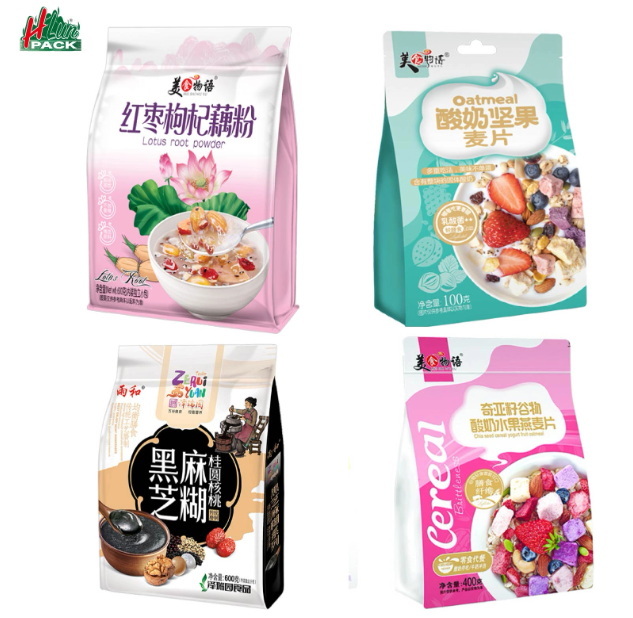
The material structure you select has a direct impact on durability, print quality, recyclability, and shelf life.
Plastic films provide strong barriers against oxygen, moisture, dust, and UV light while remaining flexible and clear or opaque as needed.
Common plastics in custom pouch packaging include:
- Polyethylene (PE) for sealant layers and flexibility.
- Polyethylene terephthalate (PET) for strength and print quality.
- Nylon for toughness and puncture resistance.
- High‑density and low‑density polyethylene (HDPE/LDPE) for specific performance.
- Oriented or cast polypropylene (OPP/CPP) for clarity and stiffness.
Trade‑offs include lower heat resistance than some rigid materials, shorter life cycles than glass or metal, and environmental challenges in waste and recycling.
Metal foil layers help achieve very low transmission of moisture, oxygen, and light, dramatically extending shelf life. Foil structures are durable and puncture‑resistant but cannot be microwaved and are more expensive than paper or plastic.
Kraft paper pouches offer a naturally sustainable aesthetic, with options in brown or white, and can be compostable depending on construction. They still provide solid barrier performance against UV rays, oxygen, and pests, though they have weaker water resistance and mechanical strength compared with plastics or foil.
Bioplastics such as PLA provide similar protection to some conventional plastics but are made from biological sources and can be biodegradable under controlled conditions. They often cost more and may have shorter lifespans, and proper industrial composting or recycling infrastructure is needed to realize environmental benefits.
The real power of custom pouch packaging lies in feature engineering, including fitments, closures, coatings, and structures that improve consumer experience and product protection.
Well‑designed closures directly impact product freshness, dosing accuracy, and user convenience.
Popular closure and fitment options:
- Tear notches for easy opening, often combined with zippers.
- Press‑to‑close zippers for low‑cost resealability.
- Slider zippers for fast and intuitive opening and closing.
- Spout pouches with reclosable nozzles for liquids and semi‑liquids.
- Resealable films with tamper‑evident features for safety.
- Degassing valves for coffee and other gas‑emitting products.
- Tin ties for baked goods and dry ingredients.
To optimize shelf and peg display, consider:
- Hang or peg holes for hook displays.
- Transparent windows to show the product inside.
- Carry handles or die‑cut holes for larger or heavier pouches.
Barrier coatings and films are applied to enhance performance against specific threats.
Key barrier functions include:
- Moisture protection for both dry and moist products.
- Grease resistance to prevent staining and hygiene issues.
- Gas and aroma barriers to prevent oxygen ingress or odor escape.
- Additional heat resistance for hot filling or higher temperature logistics.
Typical coating or barrier materials include aluminum foil, EVOH resin, transparent films, nylon, PET, PE, and breathable barrier films.
Most custom pouch packaging uses several layers combined for branding, strength, barrier, and sealing performance.
Typical layers:
- The print and coating layer for graphics and surface protection.
- Structural layers for strength and puncture resistance.
- Barrier layers against oxygen, light, moisture, and bacteria.
- Sealant layers that enable secure seals and support closures.
- Tie layers to bond barrier and structural layers together.
Choosing the right filling and treatment method is critical for food safety, pharmaceuticals, and any application requiring extended shelf life.
Manual filling uses scoops or basic tools to load product, followed by impulse or direct heat‑sealing equipment. It offers high control and low upfront cost but is only suitable for small‑scale or early‑stage operations.
Aseptic packaging sterilizes the product via high‑temperature, short‑time treatments such as flash pasteurization and then fills it into sterilized pouches in a sterile environment. This can achieve very long shelf life, especially for high‑acid beverages and liquid dairy in suitable containers.
Retort packaging fills non‑sterile product into heat‑resistant, retortable pouches and then sterilizes them using pressurized steam in a retort chamber. It is ideal for low‑acid foods with higher pH values, such as meats, sauces, and ready meals.
Hot filling sterilizes the product via high heat, fills it into non‑sterile containers, and rapidly cools it to preserve taste and quality. It works best for high‑acid foods and beverages, including juices, teas, and soft drinks.
Your printing method affects cost per unit, image quality, and speed to market.
Flexography is widely used for kraft and film pouches, running the web through several print units. It has higher setup costs but offers the lowest per‑unit price at large volumes, with quick turnaround for simple, limited‑color designs.
Rotogravure engraves images on cylinders and transfers ink onto the pouch material. Although it has high setup costs, it delivers exceptionally crisp colors and image quality, making it ideal for premium, high‑volume SKUs.
Digital printing applies digital artworks directly to the pouch, with no plates or cylinders. It offers the fastest turnaround, high print quality, and is perfect for small runs, seasonal designs, and variable data, though the per‑unit cost is typically higher than flexography or gravure for large volumes.
To reduce project risk and secure consistent results, brands should follow a structured approach when moving into custom pouch packaging.
- Define your product and market
Product type, pH, required shelf life, and distribution temperature. Clarify target channels such as e‑commerce, grocery, pharmacy, or foodservice.
- Set performance and sustainability goals
Outline shelf life targets, barrier levels, and breakage tolerances. Define sustainability KPIs such as material reduction, recyclability, or carbon footprint.
- Select pouch type and format
Choose stand up, flat, roll stock, or shaped pouches based on display needs, product density, and filling equipment.
- Engineer material structure and features
Decide on plastic, foil, paper, or bioplastics and the required barrier coatings. Add closures, windows, valves, and merchandising features aligned with user experience and brand messaging.
- Match packaging to machinery
Confirm that your pouch design runs reliably on existing or planned filling, sealing, and cartoning lines. Engage a packaging machinery partner early to optimize speed, waste, and overall equipment effectiveness.
- Pilot, test, and validate
Conduct transit tests, drop tests, and shelf‑life studies. Test with real consumers and adjust structure, graphics, and closure selection based on feedback.
Drawing from real projects, several recurring errors can undermine performance and costs.
- Over‑ or under‑specifying barrier levels, either inflating cost or causing spoilage and staling.
- Choosing closures without considering actual consumer behavior, such as omitting a zipper on multi‑use snacks.
- Ignoring machinery compatibility, resulting in poor seals, jams, or reduced line speed.
- Underestimating color management challenges when combining labels, pouches, and rigid components.
- Neglecting regulatory and food safety requirements tied to filling method and material choice.
A strong pouch packaging partner should support you from concept through production, including material selection, structural design, and machinery integration. Look for engineers who understand both flexible materials and the realities of high‑speed filling and sealing.
Key capabilities to look for:
- Technical support across materials, closures, and regulatory requirements.
- In‑house or partnered converting for consistent quality and reliable lead times.
- Experience integrating pouches with form‑fill‑seal, premade pouch fillers, and secondary packaging equipment.
If you are planning to upgrade to custom pouch packaging or optimize your existing pouch line, now is the ideal time to partner with a team that understands both materials and machinery. As a professional packaging materials factory focused on packaging equipment and integrated packaging systems, HLun Pack can align your pouch structure, printing method, and production line to maximize performance, yield, and sustainability. Contact our expert team today to share your product details and project goals, and receive a tailored custom pouch and machinery proposal that fits your market, budget, and growth plan.
Contact us to get more information!
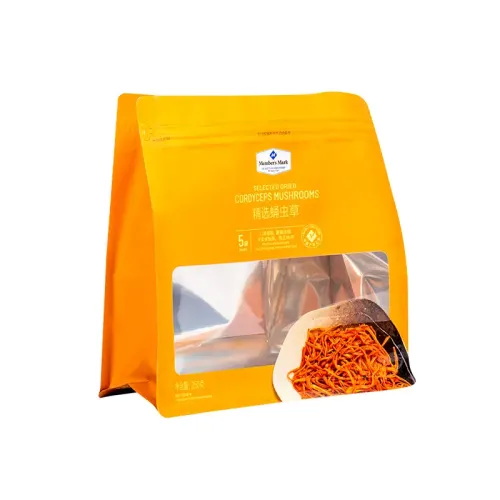
Flexible pouch packaging uses laminated films, paper, or foil to create lightweight, collapsible packs, while rigid packaging uses materials such as glass, cans, or hard plastics. Pouches typically use less material, cost less to ship, and offer more customization options in shape and closures than rigid containers.
Stand up pouches are best when shelf display and visibility are priorities, while flat pouches work well for single‑serve or compact items. Your choice should reflect product size, merchandising strategy, and how the package will run on your filling and sealing machinery.
Options such as kraft paper and bioplastics can improve sustainability perception when engineered correctly, while lightweight plastic structures significantly reduce material and transport footprint compared with rigid packaging. The most sustainable option for your brand will depend on local recycling or composting infrastructure and the shelf‑life requirements of your product.
High‑acid beverages often use aseptic or hot‑fill processes, while low‑acid foods are more suited to retort pouch packaging. For very small runs or early validation, manual filling can be a practical starting point before transitioning to automated or semi‑automated equipment.
Flexography and rotogravure are cost‑efficient at scale but require higher upfront setup costs, while digital printing is ideal for short runs and frequent design changes. Rotogravure delivers the highest image quality, flexography works well for simpler designs, and digital excels for rapid, low‑volume campaigns.


