


close
Choose Your Site
Global
Social Media
Views: 222 Author: Amanda Publish Time: 2026-02-02 Origin: Site


Content Menu
● What Is Packaging Strength Testing?
● Core Packaging Strength Tests You Should Know
>> What ECT Measures and Why It Matters
>> How Edge Crush Tests Are Performed
>> ECT vs Burst Test: When to Choose Which
● 3. Burst Test (Mullen Burst Test)
>> Why Burst Strength Still Matters
>> ECT vs Mullen: Quick Reference
>> What a Vibration Test Involves
● 5. Moisture and Humidity Testing
>> Why Moisture Testing Is Essential
● Compression Testing for Stacking Strength
>> How Box Compression Testing Works
● Aligning with Recognized Test Standards
>> Why Standardized Testing Adds Credibility
● How to Build a Practical Packaging Test Plan
>> Step‑by‑Step Testing Roadmap
>> Sample Test Matrix for Different Products
● Call to Action: Test and Upgrade Your Packaging with HLun Pack
● Frequently Asked Questions About Packaging Strength Testing
>> 1. Which packaging strength test should I start with?
>> 2. How often should I test my packaging?
>> 3. Do I need formal certification for my packaging tests?
>> 4. How does humidity affect corrugated boxes?
>> 5. Can I reduce material cost without compromising strength?
Strong packaging does more than protect your product; it protects your brand and bottom line by reducing breakages, returns, and negative customer experiences. In this guide, we'll walk through five core strength tests for corrugated packaging, explain when to use each one, and show how to build a practical test plan you can implement in your factory.

Packaging strength testing is the process of applying controlled stress to your box or mailer to understand how it behaves in real-world conditions such as stacking, drops, vibration, and humidity. Instead of guessing, you use standardized test methods to validate whether your packaging can survive your supply chain from warehouse to end customer.
Key goals of packaging strength testing include:
- Reducing product damage, returns, and refund costs.
- Ensuring boxes can tolerate stacking and compression in storage.
- Verifying that packaging performs under shipping shocks and vibration.
- Meeting customer, retailer, and regulatory requirements via recognized procedures and standards.
Below are five widely used tests that form the backbone of most corrugated packaging validation programs. Together, they help you evaluate impact, compression, vibration, and environmental performance.
The drop test checks how well your packaging protects the product from impact when cartons are dropped during handling and transit. It simulates common accidents such as a worker dropping a box from waist height or parcels falling off a conveyor.
Typical steps include:
1. Define the test height based on package weight and applicable shipping standards.
2. Fill the packaging with the actual product or a realistic dummy load.
3. Drop the package on flat faces, edges, and corners in a controlled sequence.
4. Inspect the box for structural damage and the product for functional damage.
Common outcomes you track:
- Visible crushing or tearing of the box.
- Product misalignment, cracks, or breakage.
- Seal integrity for tapes, flaps, and internal inserts.
Drop tests are especially critical for:
- E‑commerce parcels handled many times by couriers.
- Fragile products such as glass, ceramics, electronics, and cosmetics.
- Shipments with complex inserts or fragile internal components.
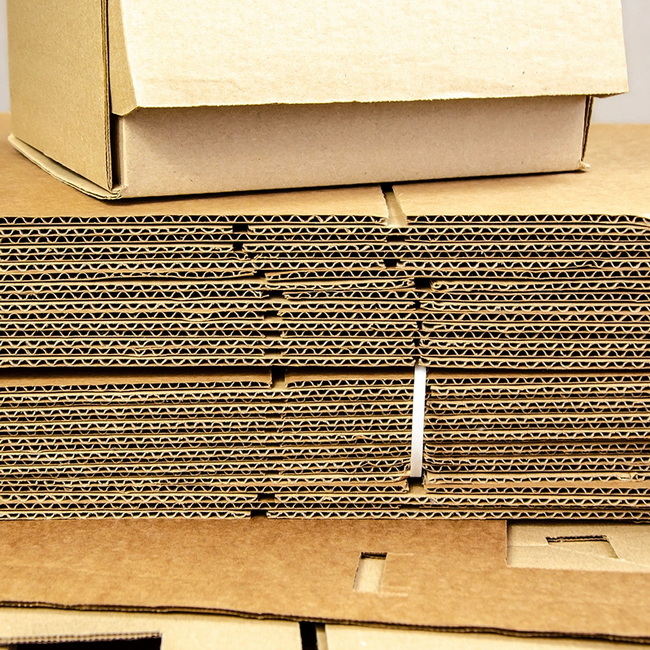
The Edge Crush Test measures how much compressive force corrugated board can withstand on its edge before it buckles. It is directly linked to how well your cartons perform in stacking conditions on pallets and in warehouses.
In an ECT, a small rectangular sample of board is placed vertically between two platens, and force is applied until the sample crushes. The maximum force is recorded as the ECT value, typically expressed in pounds per inch or kilonewtons per meter.
A higher ECT value indicates stronger resistance to compression, which means:
- Better stacking performance on pallets.
- Less risk of cartons collapsing at the bottom of a stack.
- Potential material optimization by choosing the right flute and board grade.
A typical procedure:
1. Cut a clean, accurately sized sample of corrugated board.
2. Place it vertically between the platens of the test machine.
3. Apply a steadily increasing compressive force until the sample buckles.
4. Record the maximum force before failure as the ECT value.
Some labs may use waxed and unwaxed samples to understand different edge conditions, but for most brands the key output is simply the ECT rating that guides board selection and stacking design.
ECT is best when:
- Stacking strength is critical in palletized shipping or warehouse storage.
- You want to optimize board grade cost without sacrificing stability.
Burst tests (covered next) are more suitable when puncture or localized impact is the main risk. Many companies use both tests within a broader test plan.
The Mullen Burst Test measures how much pressure the board can take before it ruptures, representing resistance to punctures and rough handling. A rubber diaphragm inflates against the material until it bursts, and the burst pressure is recorded.
Burst strength is crucial when your packaging faces:
- Sharp or concentrated impacts during manual handling.
- Heavy items that can push against walls from the inside.
- Environments where boxes may be hit by tools, corners, or other cartons.
Typical outputs are expressed as burst strength in pounds per square inch or similar pressure units. This helps you judge whether the box can tolerate the stress levels expected in your logistics network.
Test type | Main risk addressed | Best for |
Edge Crush Test | Compression and stacking load | Palletized shipping, warehouse storage, stacked pallets |
Burst (Mullen) | Local impact and puncture resistance | Heavy, sharp, or irregular products, rough handling conditions |
Vibration tests simulate the continuous shaking your packages experience in trucks, planes, and conveyor systems. Even if a box looks fine after shipping, vibration can cause hidden product damage, loose components, or gradual fatigue of seals.
Most modern labs use two main vibration modes:
- Random vibration: Mimics real transport conditions by combining many frequencies at once, similar to a truck ride.
- Sine vibration: Sweeps through individual frequencies to find the natural frequency at which your packaging system resonates and becomes more vulnerable.
Each package has a natural frequency, and when transport vibration aligns with it, damage risk increases sharply due to resonance. Vibration tests help you identify these weak spots and improve cushioning, inserts, or product orientation.
In a standard vibration test:
1. A filled package is placed on a vibration table.
2. The table is programmed with a vibration profile such as random vibration or a sine sweep.
3. The test runs for a specific duration and frequency range according to the chosen standard.
4. After testing, you assess the packaging and product for visible and functional damage.
Moisture tests evaluate how your packaging performs when exposed to high humidity, condensation, or wet conditions over time. Corrugated board absorbs moisture, which can reduce stiffness and make boxes feel flimsy, even if their core strength has not fully degraded yet.
You should incorporate moisture or humidity testing if your cartons:
- Are stored in non‑climate‑controlled warehouses.
- Travel by sea freight or through tropical climates.
- Are used for chilled or refrigerated supply chains.
A typical workflow includes conditioning samples at controlled temperature and humidity, then running ECT or burst tests to see how performance changes compared to dry conditions. In some cases, allowing boxes to dry in a suitable environment can restore much of their perceived stiffness.
Beyond ECT on board samples, box compression tests evaluate how much vertical load a fully assembled carton can bear before collapsing. This is critical when cartons are stacked in multiple layers on pallets or in racking.
In a compression test:
1. A filled, sealed box is placed between two plates.
2. The top plate moves down at a controlled speed, applying vertical force.
3. The machine records the peak load before the box fails, which is the maximum compression strength.
This helps you answer questions such as:
- How many layers can I safely stack on a pallet?
- Does a lighter board grade still meet my load requirements?
- Do I need corner posts or internal supports for tall stacks?
To align with global best practices, many brands follow recognized packaged‑product test procedures for transport simulation. These standards define test sequences combining drop, vibration, compression, and environmental conditioning to simulate real‑world shipping conditions.
Standardized test series can provide:
- Defined test levels for different package weights and formats.
- Methods that are widely accepted by shippers, retailers, and accredited test labs.
- A clear way to document that your packaging is tested and validated for your shipping environment.
For example, some procedures focus on small parcel shipments and include vibration, drop, and compression tests tailored to courier networks. Others specify basic performance tests suitable for a wide range of packaged products.
Instead of running tests in isolation, combine them into a simple, repeatable test plan that fits your business size and risk profile. A structured approach makes it easier to justify costs and track improvements over time.
Use this as a starting framework for corrugated shipping cartons:
1. Define use case and risk level
- Consider product fragility, selling price, and typical shipping method.
2. Select core tests
- Low risk: ECT plus occasional drop tests.
- Medium risk: Drop, vibration, and ECT.
- High risk: Full sequence including drop, vibration, compression, and humidity.
3. Create test samples
- Use production‑grade board, real products, and actual void fill or inserts.
4. Run tests and document
- Record test conditions, failure modes, and photos of damage.
5. Optimize design
- Adjust board grade, flute, inserts, or dimensions based on results.
6. Re‑test after design changes
- Confirm improvements before scaling to full production.
Product type | Key risks | Recommended tests |
Lightweight apparel | Crushing in transit | ECT, basic compression, random sample drop tests |
Glass bottles in carton | Impact and vibration | Drop, vibration, burst, compression |
Consumer electronics | Shock, vibration, and movement | Drop, vibration, compression, humidity where relevant |
Heavy machinery parts | Stacking and puncture | Compression, ECT, burst, pallet-level tests |
Even the most attractive box design can fail under real‑world logistics if it is not properly tested. The most efficient way to reduce damage, protect your brand, and control packaging costs is to build a testing program that matches your supply chain.
HLun Pack is a professional packaging materials manufacturer focused on packaging machinery and integrated packaging solutions. Our team can help you select suitable board grades, design structures that balance strength and cost, and connect you with the right testing methods to validate performance for your products and shipping conditions.
If you are planning a new packaging project, struggling with damage in transit, or looking to standardize your test procedures, now is the ideal time to act. Contact HLun Pack today to discuss your packaging strength challenges and get a tailored, test‑driven improvement plan for your next production run.
Contact us to get more information!
If you ship standard corrugated cartons, it is usually best to start with ECT for board selection and drop tests for basic impact resistance. For fragile or high‑value items, add vibration and compression tests to capture more demanding real‑world conditions.
You should test whenever you change materials, suppliers, or product configuration, and then perform periodic spot checks on regular production. This helps you maintain consistent packaging performance and detect quality drift early.
Not every business requires formal certification, but following well‑recognized test procedures can significantly improve reliability and documentation. If you work with major retailers or ship globally, they may specify particular test methods or performance requirements.
High humidity can reduce board stiffness, making cartons feel weaker and more prone to deformation under load. Conditioning samples and running ECT or compression tests at controlled humidity levels shows how your packaging behaves in realistic environments.
Yes, but you should base those decisions on test data. By combining ECT, compression, and drop or vibration results, you can often move to an optimized board grade or structural design while keeping product protection within acceptable safety margins.
1. https://packmojo.com/blog/5-ways-to-test-the-strength-of-your-packaging/
2. https://www.bizongo.com/blog/corrugated-box-testing
3. https://www.xometry.com/resources/materials/edge-crush-test/
4. https://westpak.com/test-standards/ista-3a/
5. https://www.desolutions.com/resources/ista-1-package-testing-standards
6. https://www.packsize.com/blog/methods-available-for-testing-packaging-strength
7. https://www.wadpack.com/10-methods-to-assess-the-strength-of-your-packaging/
8. https://ista.org/docs/ISTA_2017_Guidelines.pdf


