


close
Choose Your Site
Global
Social Media
Views: 222 Author: Amanda Publish Time: 2026-02-04 Origin: Site


Content Menu
● What Is Die Cutting in Packaging?
● Understanding the Dieline and Design Stage
● Can Dies Be Used More Than Once?
● How the Die Cutting Process Works (Step by Step)
>> 1. Structural Design and Dieline Creation (CAD)
>> 2. Die Board Preparation and Laser Cutting
>> 3. Rule Bending, Insertion, and Rubbering
>> 4. Press Setup and Registration
>> 5. Die Cutting: Cutting, Creasing, and Perforating
>> 6. Stripping, Blanking, and Downstream Converting
● Key Die Cutting Functions in Packaging
● Main Types of Die Cutting Methods
● Types of Die Cutting Machines for Packaging
>> Flatbed (Platen) Die Cutting Machines
>> Rotary Die Cutting Machines
>> Digital and Laser Die Cutting Systems
● Die Cutting Materials in Packaging
● Finishing Options After Die Cutting
● Advantages of the Die Cutting Process in Packaging
● Common Challenges and How to Avoid Them
● Practical Checklist: Preparing for a Die Cut Packaging Project
● Where to Use Die Cut Packaging in Your Product Line
● Why Partner With HLun Pack for Die Cut Packaging Solutions?
● Take the Next Step With HLun Pack
● Frequently Asked Questions (FAQ)
>> 1. What is die cutting in packaging?
>> 2. Is die cut packaging only for large production runs?
>> 3. How long does a packaging die last?
>> 4. Can dies be reused for different products?
>> 5. What information do I need before starting a die cut packaging project?
Die cutting in packaging is the key technology that turns flat materials into precise, branded boxes, inserts, and labels at industrial scale, combining speed, accuracy, and flexibility for modern packaging lines.
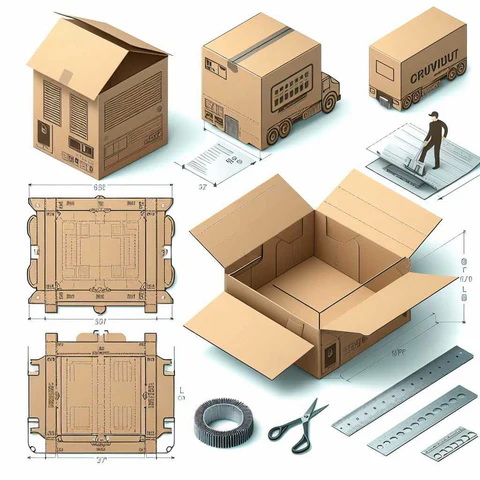
Die cutting is a manufacturing process that uses a custom-made die to cut, crease, and shape materials like paperboard, corrugated board, film, or plastic into specific packaging structures and designs.
In packaging, die cutting enables:
- Consistent high-volume box production
- Complex shapes and windows that cannot be achieved with straight-line cutting
- Fast, repeatable conversion of sheets or rolls into finished packaging components
This makes die cutting a foundation process for brands that need both efficiency and distinctive packaging.
A die is a specialized tool, similar to an industrial cookie cutter, designed to cut and shape packaging materials using a press.
A typical packaging die includes:
- A die board (often wood) that holds the cutting and creasing rules
- Steel rules shaped to match the dieline for cutting and creasing
- Rubber or foam pieces to help eject material and reduce damage during cutting
In short, the die is the physical embodiment of your dieline and packaging structure.
Before any die is manufactured, packaging engineers create a dieline, a 2D technical drawing that defines the final 3D structure of the packaging.
A professional dieline typically includes:
- Cut lines (outer shape of the box or insert)
- Fold or score lines (where the board is creased)
- Bleed areas (extra print area that extends beyond the cut)
- Safe zones (areas where critical text or logos must stay inside)
Well-designed dielines ensure structural integrity, easy assembly, and efficient material usage, which are critical for cost-effective die cutting.
Yes, and this is one of the biggest cost advantages of the die cutting process in packaging.
- A custom die is usually a one-time investment per structure.
- Once built, it can be reused to produce thousands or even millions of boxes or components.
- If you have multiple SKUs that share the same structure but only differ in artwork, the same die can be used for all of them.
For example, three cosmetic products in the same folding carton structure but different designs can all run on one die, significantly reducing long-term tooling costs.
This is how the packaging die cutting process typically runs from concept to finished piece.
- Packaging engineers use Computer-Aided Design (CAD) software to create the dieline.
- The digital file defines the precise geometry of the packaging, including cut and fold lines.
- This file is then used to program tooling and set up the die board layout.
- The dieline is transferred to a wooden die board.
- Laser cutters burn the precise outline of each rule position into the board.
- This ensures tight tolerances and repeatable accuracy, which is essential for high-speed packaging lines.
- Steel cutting and creasing rules are bent to shape and inserted into the laser-cut channels in the die board.
- Foam or rubber strips are added around key areas to help eject the cut parts and protect the substrate, especially for corrugated board.
- The finished die is mounted onto a die cutting press.
- A matching counterplate or make-ready is installed under the sheet to support accurate creasing and cutting.
- Registration is carefully adjusted so printed artwork aligns perfectly with cuts and windows.
Once set up, the press cycles through sheets or webs:
- The die is pressed into the material with controlled force.
- It performs cutting, creasing, scoring, and perforating in a single pass.
- Excess material (skeleton) is stripped and can be collected for recycling when feasible.
- Stripping removes the waste matrix from around the cut parts.
- Blanking separates individual pieces from the sheet into stacks, ready for folding, gluing, or further finishing.
This integrated workflow makes die cutting in packaging highly efficient for medium to large production runs.
During the die cutting process in packaging, multiple functions can be combined in a single pass.
Function | What It Does | Typical Application in Packaging |
Through cutting | Cuts fully through the material along the dieline | Outer shape of cartons, windows, handle cutouts |
Scoring | Creates partial cuts or impressions without fully cutting through | Creating fold lines on folding cartons and sleeves |
Creasing | Forms controlled fold lines with a male or female setup | Corrugated boxes, mailer boxes, display stands |
Perforating | Produces a series of small cuts for easy tearing or opening | Tear-off coupons, easy-open strips, tear tapes on packaging |
Each function is tuned for the substrate thickness, grain direction, and desired packaging performance.

Beyond basic flat cutting, the packaging die cutting process uses several methods to achieve different structural effects.
- Blanking – Clips flat material from its outer edge to create clean, flat blanks with tight dimensional tolerance.
- Drawing – Pulls material into a die cavity to form longer, deeper shapes, used for lean or extended packaging components.
- Forming – Shapes material over a curved surface, often combined with drawing to form rounded or cylindrical shapes.
- Coining – Uses high pressure to create precise circular holes or embossed details, ideal for intricate structural features.
- Broaching – Uses multiple cutting teeth to process particularly hard or thick materials that cannot be cut effectively by other methods.
These methods expand what is possible beyond simple boxes, enabling advanced structural packaging and specialty components.
Different production volumes, materials, and packaging formats often require different die cutting machines.
- Use flat dies and a flatbed press motion.
- Ideal for folding cartons, corrugated boxes, and thicker substrates.
- Suitable for medium to high volume production with excellent crease quality.
- Use cylindrical rotary dies that rotate against an anvil roll.
- Ideal for labels, flexible packaging, and high-speed web applications.
- Excellent for continuous, very high-speed production runs.
- Use lasers or digital blades to cut without physical dies.
- Perfect for short runs, samples, and rapid prototyping.
- Reduce tooling costs and lead times for frequent design changes.
For integrated packaging solutions providers such as HLun Pack, combining conventional and digital die cutting technologies allows you to cover both large-scale production and agile, on-demand projects.
The die cutting process in packaging can be applied to almost any common packaging material.
Typical materials include:
- Folding carton (SBS, FBB) for retail boxes
- Corrugated board for shipping cartons and e-commerce mailers
- Paper and specialty boards for sleeves, inserts, and gift boxes
- Plastic films and rigid plastics for blisters, clamshells, and windows
- Laminated structures for flexible packaging
Selecting the right material and die combination is critical to avoid cracking, dusting, or poor crease performance.
Once your packaging has been die cut, various finishing techniques can elevate both aesthetics and functionality.
Common finishing processes include:
- Foil stamping (metallic, holographic)
- Embossing or debossing for tactile logos and patterns
- Spot UV or overall coating for gloss, matte, or soft-touch effects
- Window patching to apply PET film to cut-out windows
- Laminating for extra durability and barrier performance
In luxury packaging, combining die cut windows, foil, and embossing can significantly enhance perceived value while preserving structural integrity.
Die cutting remains a core technology because it combines precision, scalability, and versatility.
Key benefits:
- High repeatability for consistent brand presentation
- Fast throughput for large-volume orders
- Capability to integrate multiple functions in one pass
- Custom shapes and structures that differentiate from stock packaging
- Long-term cost savings once the initial die investment is made
This is why many brands treat custom die cut packaging as a strategic brand asset, not just a cost center.
To achieve reliable performance, the die cutting process must be engineered and controlled carefully.
Top challenges and solutions:
1- Cracking on folds
- Use appropriate board grade and grain direction, adjust crease depth, and optimize score widths.
2- Inconsistent creasing
- Use proper make-ready, ensure even pressure, and verify rule heights.
3- Poor registration between print and die
- Tighten print and die alignment, use registration marks, and regularly calibrate equipment.
4- High waste rates
- Optimize nesting in the dieline, maintain dies frequently, and monitor machine settings.
An experienced packaging partner can audit these variables and ensure your packaging consistently meets brand and logistics requirements.
Use this practical checklist when planning a new die cut packaging project with a manufacturer like HLun Pack:
1. Define objectives: branding goals, protection level, retail or e-commerce, sustainability targets.
2. Confirm product dimensions and tolerances, including any accessories such as leaflets, inserts, or trays.
3. Select materials: board grade, fluting, finishes, and recyclability demands.
4. Work with structural designers to develop a dieline that balances appearance, strength, assembly speed, and pallet efficiency.
5. Align artwork with the dieline to ensure bleed, safe zones, and key visuals are correctly positioned.
6. Plan for finishing, including foil, embossing, coatings, or windows, early in the process.
7. Confirm volumes and run frequency to determine whether traditional or digital die cutting is more cost-effective.
Having this information ready shortens lead time and ensures smoother industrialization.
Die cut packaging is especially powerful in:
- Consumer goods: folding cartons for cosmetics, personal care, food, and beverages
- Electronics: corrugated or rigid boxes with custom die cut inserts for protection
- E-commerce: brandable mailer boxes with tear strips and easy-open features
- Point-of-sale displays: die cut display units, headers, and shelf-ready packaging
By standardizing a few core die cut structures and varying artwork, brands can maintain visual consistency while controlling costs.
As a professional packaging material manufacturer and integrated packaging machinery and solutions provider, HLun Pack can support the full lifecycle of your die cut packaging projects, from design to mass production.
With combined expertise in materials, structural engineering, and packaging equipment, HLun Pack can:
- Optimize dielines for both print quality and machine efficiency
- Recommend suitable substrates and finishes for your product and channel
- Integrate die cutting processes into automated packaging lines to reduce labor and errors
- Scale from pilot runs to large-volume global programs
This combination of materials, machinery, and solution design is what transforms die cutting from a single process into a competitive advantage for your brand.
If you are planning a new packaging project or want to upgrade from standard boxes to high-performance, custom die cut packaging, HLun Pack can help you design, optimize, and industrialize your solution.
Contact our team today to review your current packaging, identify cost or performance improvements, and co-develop efficient dielines tailored to your products. By integrating advanced die cutting processes and packaging machinery, we help you shorten time to market, reduce waste, and enhance your customer's unboxing experience.
Reach out to HLun Pack now to schedule a free die cut packaging consultation and turn your next packaging project into a powerful brand experience.
Contact us to get more information!

Die cutting in packaging is a process that uses a custom tool called a die to cut, crease, and shape materials into specific packaging forms, such as boxes, inserts, or displays.
Die cut packaging is ideal for medium and large volumes, but with digital and laser die cutting, it can also be economical for short runs, samples, or frequent design changes.
With proper use and maintenance, a quality die can produce thousands or even millions of impressions before needing repair or replacement, making the tooling cost highly amortized over time.
Yes, as long as the structural design remains the same, the same die can be used for multiple SKUs that only differ in artwork or minor internal fit adjustments.
You should prepare product dimensions, weight, desired materials, branding goals, preferred finishes, and estimated volumes to allow your packaging partner to propose optimal structures and tooling.


